
Chianti Wine Region Guide: Best Wineries, Towns & Places to Stay (2026)
Timeless Wanderers: Published May 29, 2026
If someone asked us to picture Tuscany, we’d probably be thinking about Chianti.
Not Florence, not Pisa, and not even the famous hill towns further south.
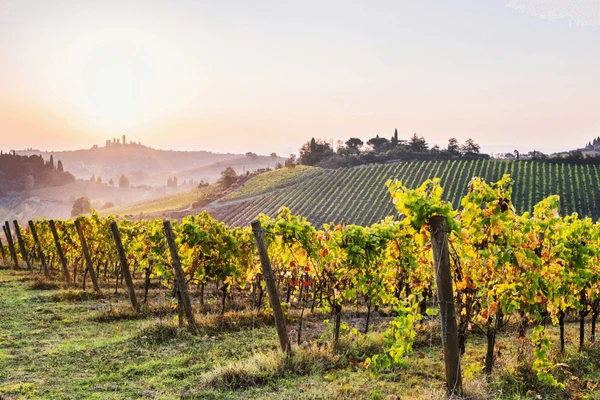
We’d be thinking about quiet roads winding through vineyards, rows of cypress trees stretching across the hills, long lunches overlooking the countryside, and a glass of Chianti enjoyed at a winery that has been producing wine for generations.
Why We Keep Coming Back to Chianti
Over the years, we’ve spent a lot of time exploring Chianti, both as day-trippers from Florence and on longer road trips through Tuscany.
It’s one of those places that somehow feels different every time you visit.
One day you might be tasting wine at a historic estate, and the next you’re wandering through a small village you hadn’t even planned to stop in.
What we love most about Chianti is that it doesn’t feel like a destination you rush through.
The best days here are often the ones with very little planned beyond a winery visit, a good lunch, and enough time to enjoy the drive between them.
Whether you’re visiting Tuscany for the first time or returning for another wine adventure, Chianti is a wonderful place to slow down and experience a different side of Italy.
In this guide, we’ll share our favourite towns, wineries, places to stay, and practical tips to help you plan your own trip through Tuscany’s most famous wine region.
Table of Contents
What Exactly Is Chianti?
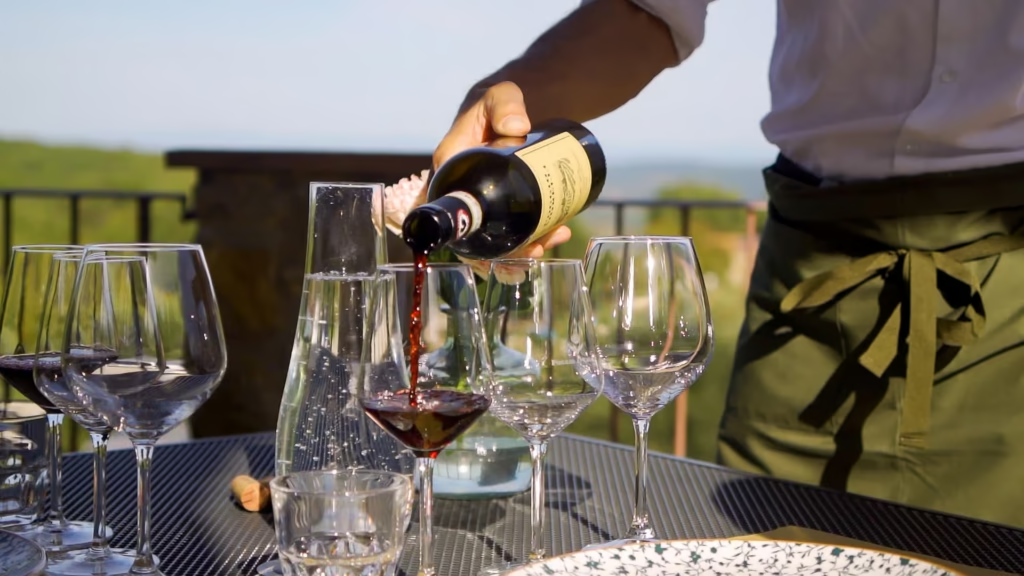
One thing that surprises many first-time visitors is that Chianti isn’t a town.
It’s a large wine-producing region in central Tuscany that stretches between Florence and Siena.
Within the region you’ll find:
- vineyards and olive groves
- medieval villages
- historic wine estates
- country roads with some of Tuscany’s most recognisable scenery
At the heart of the region is Chianti Classico, considered by many to be the historic core of Chianti wine production.
This is where you’ll find many of the wineries and villages that travellers come to Tuscany to see.
What makes Chianti particularly appealing is how easy it is to explore.
You don’t need to travel far between wineries, villages, and viewpoints, which makes it ideal for both day trips and longer stays.
And unlike some wine regions that revolve around a single town, Chianti feels more like a collection of villages, vineyards, and countryside experiences tied together by a shared wine culture.
For us, that’s part of the appeal. There isn’t one “must-see” place. The whole region is the attraction.
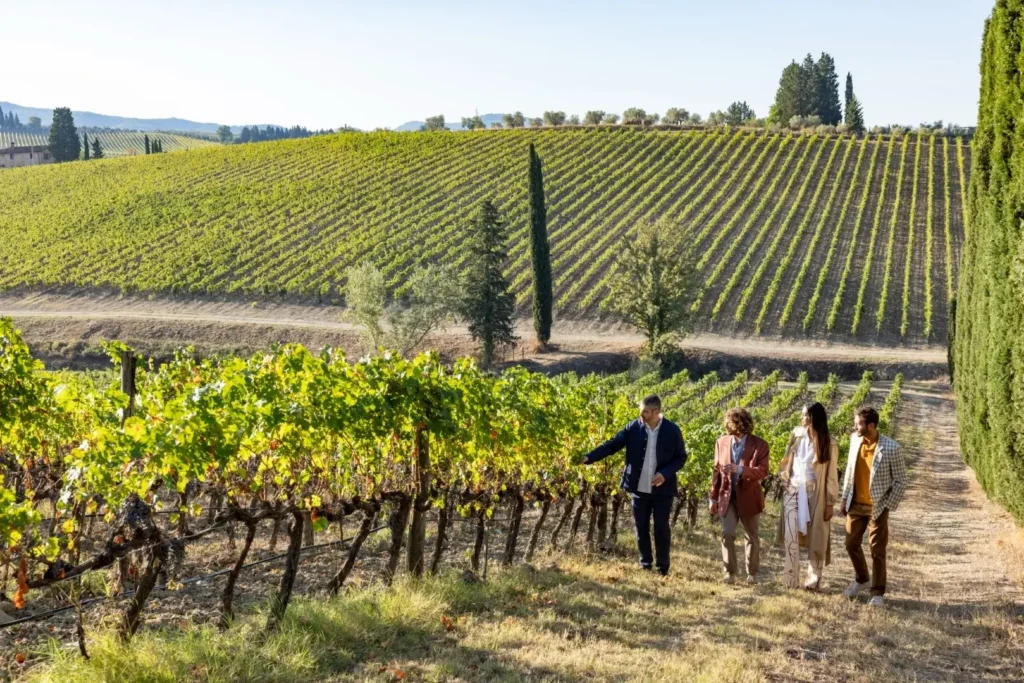
We can help you plan your dream trip to Tuscany, with a personalised itinerary designed just for you.
After more than 20 years of travelling to Tuscany—and loving it so much we decided to make it our home—we now live here and explore the region at a relaxed, local pace.
Planning a trip to Tuscany is exciting, but choosing where to go, how long to stay, and how to get around can quickly become overwhelming.
That’s where we come in.
We offer a personalised planning service that helps you decide exactly how to explore Tuscany, based on your travel style, budget, and pace.
Plus, we can help you plan scenic drives, time in hilltop towns, food and wine experiences, and those small local moments that make a trip truly special—making your Tuscany holiday easier, smoother, and full of memories you’ll treasure long after you return home.
“Let us plan your perfect trip with a custom itinerary designed just for you. Fill out the form and let’s begin.”
Chianti vs Chianti Classico: What’s the Difference?
This confused us on our first visit to Tuscany.
We kept seeing bottles labelled Chianti and others labelled Chianti Classico, and honestly, we assumed they were pretty much the same thing.
They’re related, but there is an important difference.
The easiest way to think about it is that Chianti Classico is the historic heart of the Chianti wine region.
It’s the original wine-producing area located between Florence and Siena, covering some of the most famous wine villages in Tuscany, including Greve in Chianti, Radda in Chianti, Gaiole in Chianti and Castellina in Chianti.
When most travellers picture rolling vineyards, historic wineries, and quiet country roads, they’re often imagining Chianti Classico.
How to Spot a Chianti Classico Wine
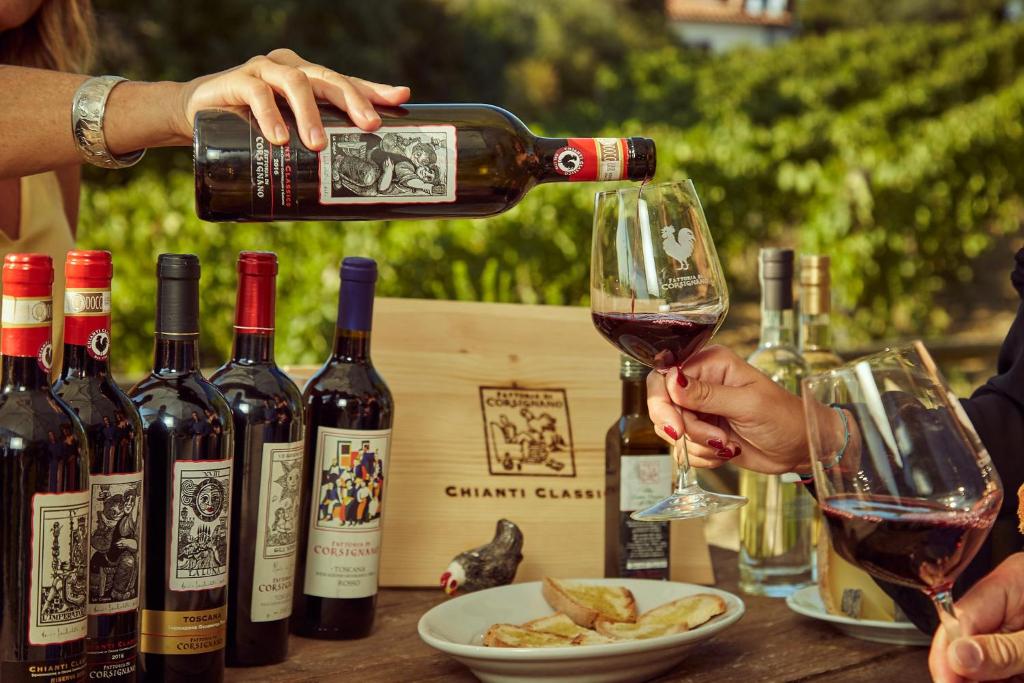
One of the easiest ways is to look for the famous Black Rooster symbol (Gallo Nero) on the bottle.
This symbol tells you the wine comes from the Chianti Classico zone and meets stricter production standards than regular Chianti wines.
You’ll see it everywhere once you start visiting wineries throughout the region.
Is Chianti Classico Better?
Not necessarily better, but it is generally considered the premium and more historic part of the region.
Many of Tuscany’s best-known wineries are located here, and it’s where most visitors spend their time when exploring Chianti.
For wine lovers, Chianti Classico is often the place to start.
For travellers, it’s also where you’ll find some of the most beautiful drives, villages, and winery experiences.
Does the Difference Matter to Visitors?
Honestly, not as much as people think.
If you’re visiting Chianti for a few days, you’ll naturally spend most of your time within the Chianti Classico area anyway.
The bigger decision is usually:
- which towns to visit
- which wineries to book
- where to stay
- and how much time to allow
The wine terminology becomes easier to understand once you’re actually there.
Our Advice
Don’t get too caught up in the labels before you arrive.
Instead, focus on exploring the region itself.
Visit a few wineries, talk to the people producing the wine, and enjoy the countryside. By the end of your trip, you’ll have a much better understanding of Chianti than any wine guide could ever teach you.
For us, that’s one of the reasons we keep returning. There’s always something new to discover, even after multiple visits.
Best Towns to Visit in Chianti
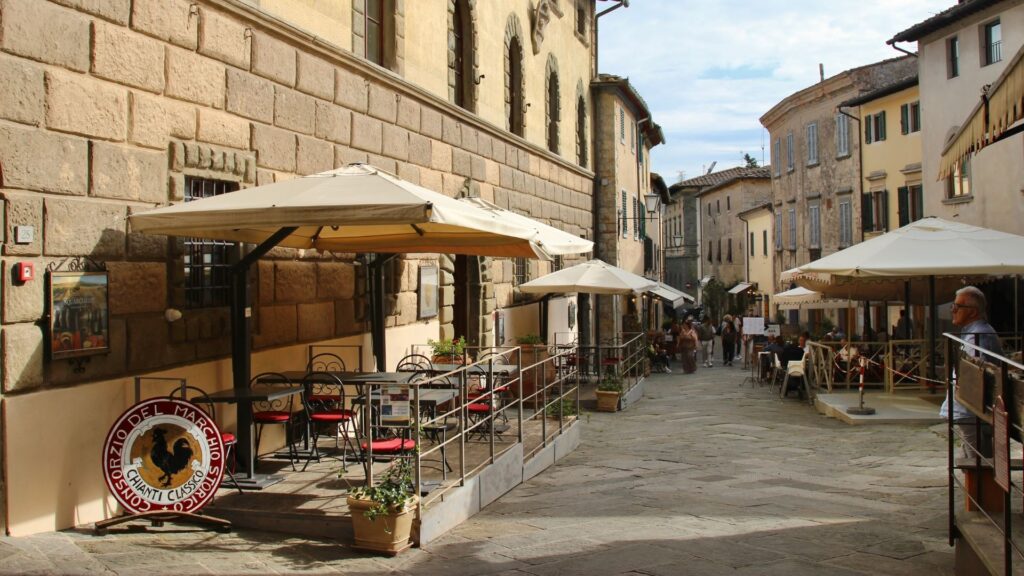
One of the things we enjoy most about exploring Chianti is that every town feels a little different.
Some are lively with cafés and wine bars spilling out onto the main square, while others are quieter places where life seems to move at its own pace.
The good news is that the towns are fairly close together, so it’s easy to visit several during a trip.
That said, we wouldn’t try to see them all in one day.
Chianti is best enjoyed slowly.
These are the towns we find ourselves returning to again and again.
Greve in Chianti
If it’s your first visit to Chianti, start with Greve in Chianti.
It’s often considered the gateway to the region and is one of the easiest towns to reach from Florence.
The large central square is surrounded by cafés, wine bars, and local shops, making it a pleasant place to wander for a few hours.
It’s also a convenient base if you’re planning winery visits nearby.
Things we enjoy doing in Greve:
Browsing local wine shops
Having lunch in the main piazza
Visiting nearby wineries
Stocking up on wine and local produce
If you’re short on time, Greve is probably the one Chianti town you shouldn’t miss.
Radda in Chianti
For us, Radda in Chianti feels a little more traditional and less busy than Greve.
Surrounded by vineyards and rolling hills, it’s where you can spend an afternoon wandering narrow lanes and enjoying the views.
Radda also sits close to several excellent wineries, making it a favourite stop.
What we like about Radda:
Beautiful countryside setting
Relaxed atmosphere
Excellent local restaurants
Easy access to wineries
If you’re staying overnight in Chianti, Radda is one of our favourite choices.
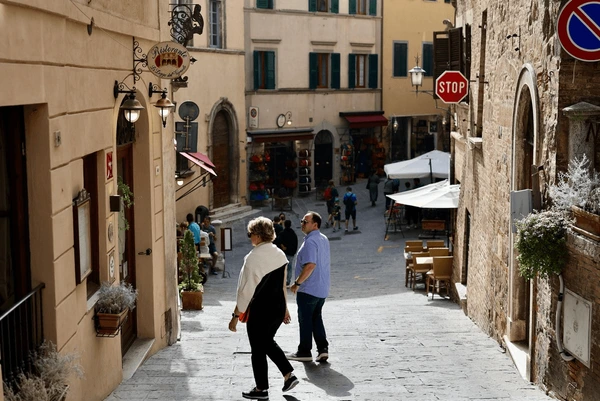
Castellina in Chianti
Castellina in Chianti often gets overlooked by visitors rushing between Florence and Siena, which is a shame.
The historic centre is compact and easy to explore, with stone buildings, small shops, and a pleasant main street lined with restaurants and wine bars.
One of the things we love here is simply getting a coffee or a glass of wine and watching daily life.
Castellina is also a good base if you’re planning to explore several parts of Chianti.
Gaiole in Chianti
Of the four main Chianti towns, Gaiole in Chianti feels the most rural.
It’s surrounded by vineyards, castles, and wine estates, making it an excellent choice for travellers who want to spend more time in the countryside.
Many of the wineries around Gaiole are among the most respected in the region, and some of Tuscany’s most scenic drives begin here.
We often recommend Gaiole to travellers who are more interested in wine and scenery than shopping or sightseeing.
Which Chianti Town Is Best?
If we were visiting Chianti for the first time:
Greve is best for first-time visitors.
Radda is our favourite all-round town.
Castellina is great for a relaxed afternoon stop.
Gaiole is ideal for winery visits and countryside stays.
The good news is that you don’t have to choose just one.
Part of the fun is driving between them and discovering your own favourite.
Best Wineries to Visit in Chianti
One thing you’ll quickly discover in Chianti is that there are wineries everywhere.
Some are world-famous estates producing thousands of bottles each year, while others are small family-run properties where you might find yourself chatting with the owner during a tasting.
We’ve visited both, and honestly, there’s room for each.
Some days we’re in the mood for a well-organised winery tour with beautiful facilities, and other times we’d rather spend an afternoon somewhere smaller and more personal.
If it’s your first visit to Chianti, these are the wineries we’d suggest looking at.
Antinori nel Chianti Classico
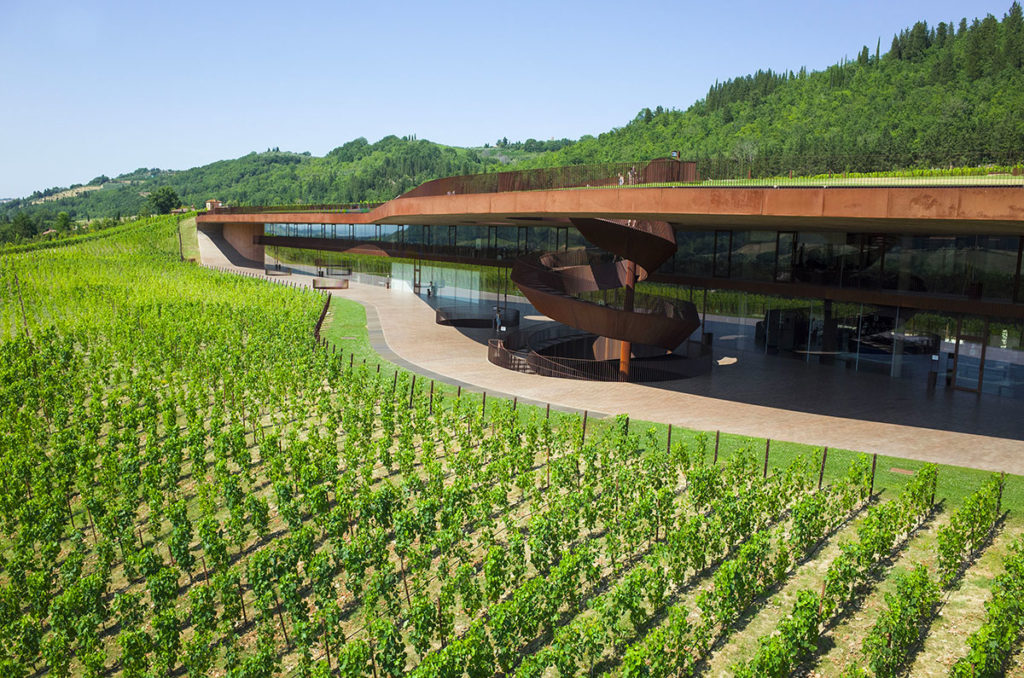
If you’re looking for a winery that combines tradition with modern design, Antinori nel Chianti Classico is one of the most impressive places in Chianti.
Built into the hillside just south of Florence, the winery almost disappears into the landscape.
Even people who aren’t particularly interested in wine often leave impressed by the architecture alone.
The tours are well organised, the tastings are excellent, and the views across the vineyards are worth taking your time over.
Why visit:
- Easy to reach from Florence
- Modern winery design
- Excellent guided tours
- Great introduction to Chianti wines
Castello di Verrazzano
This is one of our favourite winery visits in Chianti.
Located just outside Greve in Chianti, Castello di Verrazzano estate combines history, wine, and some of the best views in the region.
The winery offers tours of its historic cellars followed by tastings paired with local food. It feels welcoming rather than formal, which is something we always appreciate.
If you’re only visiting one winery near Greve, this is a very good choice.
Why visit:
- Historic wine estate
- Excellent food and wine pairings
- Beautiful views
- Close to Greve in Chianti
Castello di Ama
Tucked away in the hills near Gaiole in Chianti, Castello di Ama offers something a little different.
Alongside its wines, the estate is known for contemporary art installations scattered throughout the property. The result is a winery visit that feels both traditional and modern at the same time.
It’s a quieter experience than some of the larger estates and one we always recommend to travellers looking for something a little different.
Why visit:
- Wine and art combined
- Beautiful countryside setting
- Smaller visitor numbers
- Premium tasting experiences
Badia a Coltibuono
This historic abbey has been producing wine for centuries and feels very different from the larger commercial estates.
Badia a Coltibuono setting is peaceful, the grounds are beautiful to explore, and the winery has a long connection to Chianti’s winemaking history.
It’s the sort of place where you can slow down, enjoy a tasting, and spend a little longer than planned.
Why visit:
- Historic abbey setting
- Traditional Chianti experience
- Beautiful gardens and grounds
- Rich winemaking history
Rocca delle Macìe
Founded by an Italian film producer in the 1970s, Rocca delle Macìe has grown into one of the region’s best-known wineries.
Despite its size, it remains approachable and visitor-friendly, making it a good option for first-time wine travellers.
The estate offers a range of tasting experiences and is surrounded by some classic Chianti scenery.
Why visit:
- Well-known Chianti producer
- Good range of tasting options
- Easy for first-time visitors
- Beautiful vineyard setting
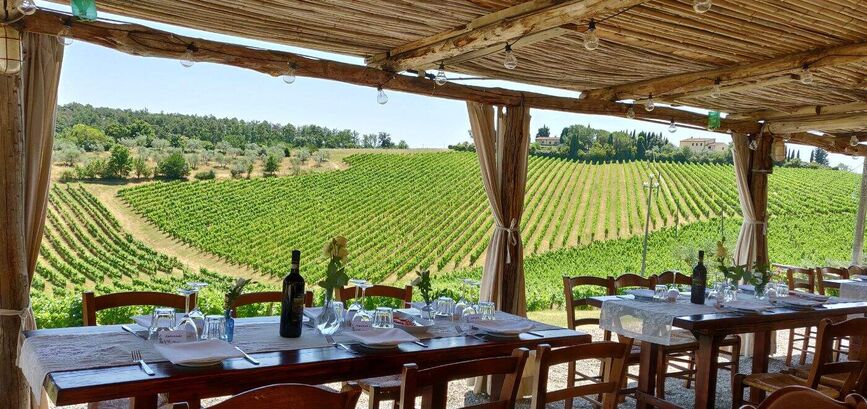
Don’t Be Afraid to Visit Smaller Wineries
Some of our most memorable wine tastings haven’t happened at famous estates.
They’ve happened at small wineries tucked away down country roads where the tasting feels more like being welcomed into someone’s home.
If you’re driving through Chianti, leave room in your itinerary for the occasional spontaneous stop.
You won’t always find the most famous wines, but you may find some of the most enjoyable experiences.
That’s one of the things we love about Chianti—there’s always something waiting around the next corner.
Our Advice
If you’re spending a day in Chianti, aim for two wineries.
Choose one larger estate such as Antinori or Verrazzano, then balance it with a smaller family-run winery nearby.
That combination gives you a much better feel for the region than visiting three or four large estates in a hurry.
After all, Chianti is about more than wine.
It’s about the countryside, the villages, the food, and taking the time to enjoy it all.

Our Full Guide On
The 7 Best Wineries in Chianti You Can Actually Visit (2026 Guide)
Where to Stay in Chianti
One of the biggest decisions you’ll make when visiting Chianti is whether to stay in a town or out among the vineyards.
We’ve done both over the years, and each offers a completely different experience.
Staying in one of the main towns gives you easy access to restaurants, wine bars, and local life.
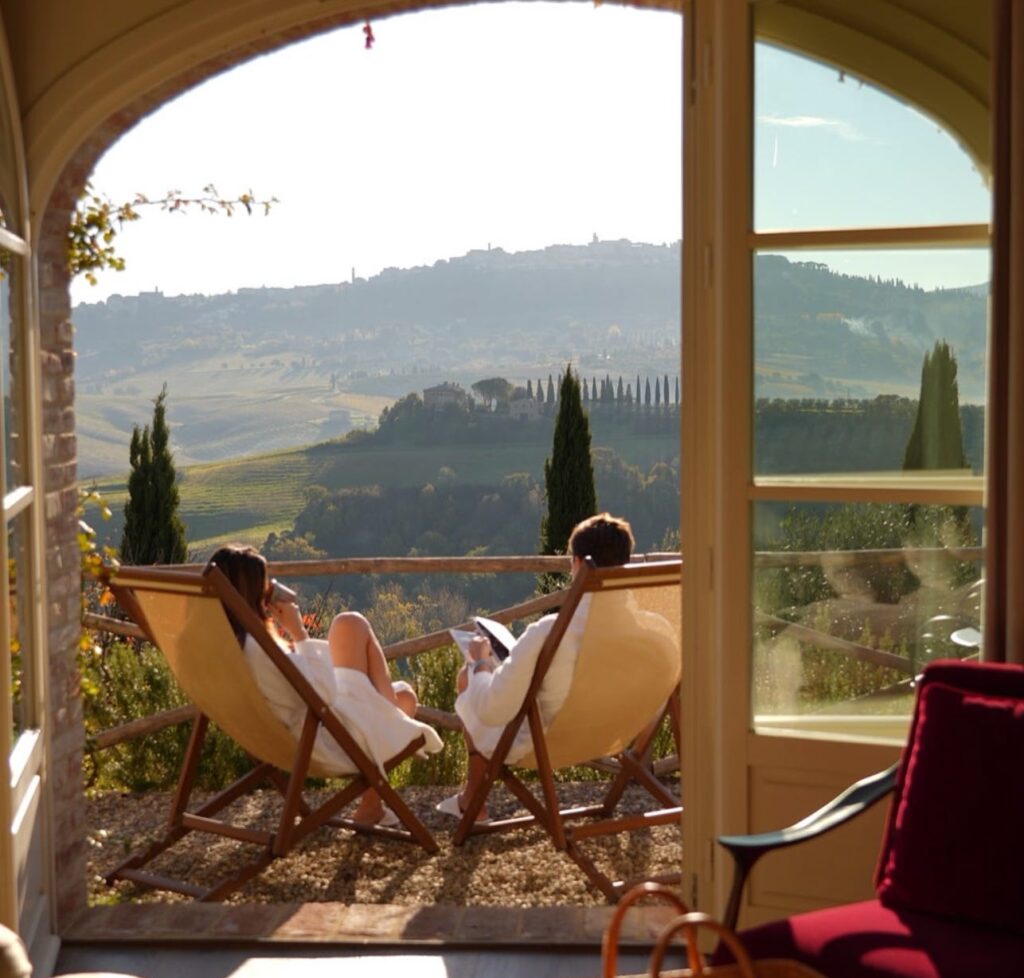
Staying in the countryside, on the other hand, means waking up to vineyard views, enjoying quiet evenings, and experiencing a slower side of Tuscany.
If it’s your first visit, we’d suggest spending at least two or three nights in Chianti.
A day trip is wonderful, but staying overnight allows you to experience the region after the day visitors have gone home.
Best Town for First-Time Visitors: Greve in Chianti
If you’re new to the region, Greve in Chianti is probably the easiest place to base yourself.
It’s close to Florence, has plenty of restaurants and wine bars, and makes a good starting point for exploring the surrounding wineries.
You’ll find:
- Boutique hotels
- Small guesthouses
- Agriturismos nearby
- Easy access to wineries and scenic drives
Greve strikes a nice balance between convenience and countryside.
Best All-Round Base: Radda in Chianti
If we were choosing just one town to stay in, it would probably be Radda in Chianti.
It’s surrounded by vineyards, sits right in the heart of Chianti Classico, and feels a little quieter than Greve.
From here, you’re within easy reach of many of the region’s best wineries, while still having restaurants and cafés within walking distance.
For us, Radda feels like the sort of place where you settle in for a few days rather than simply passing through.
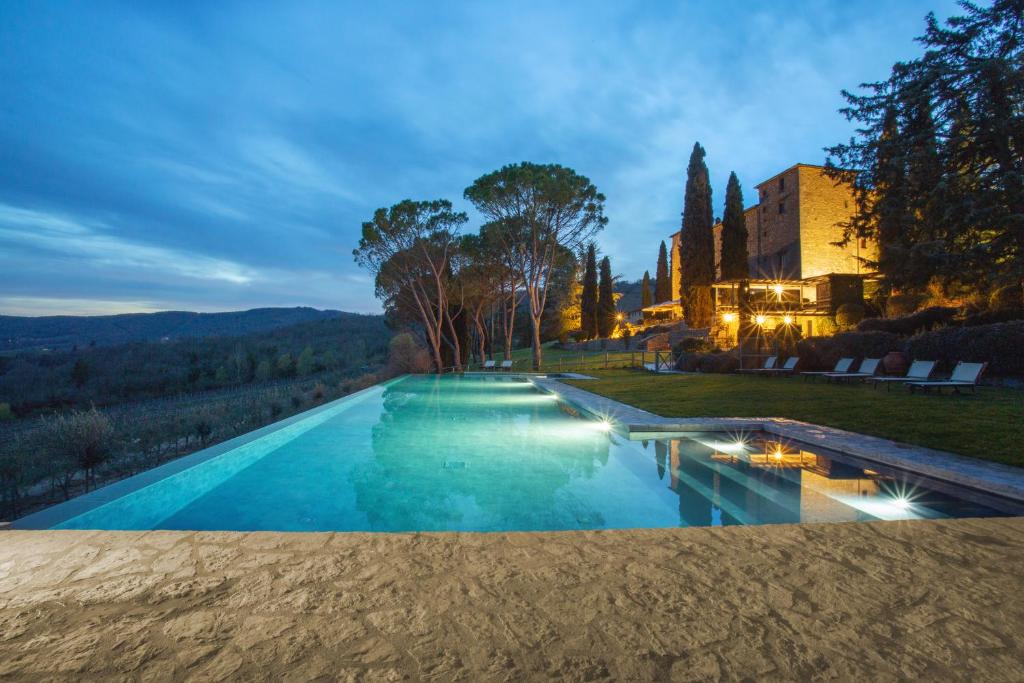
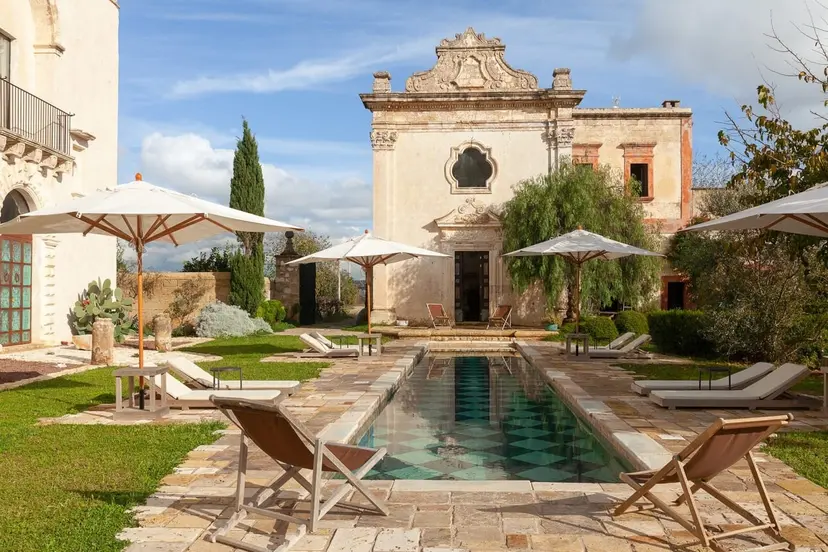
Best for Wine Lovers: Stay on a Vineyard Estate
If your trip revolves around wine, consider staying at a vineyard hotel or agriturismo.
There’s something special about ending a winery visit and simply walking back to your room rather than getting back in the car.
Many vineyard stays offer:
- Wine tastings on-site
- Vineyard views
- Swimming pools
- Traditional Tuscan restaurants
- Quiet countryside settings
It’s one of the best ways to slow down and enjoy Chianti at a different pace.
Our Favourite Vineyard Hotels in Chianti
Borgo Del Cabreo
Set among vineyards and olive groves, Borgo Del Cabreo offers beautiful countryside views while remaining close to Greve.
What we like:
- Vineyard setting
- Comfortable rooms
- Swimming pool
- Good location for exploring Chianti
Borgo Scopeto Wine & Country Relais
Located between Florence and Siena, this is a good option for travellers wanting a little luxury while still being close to wineries.
What we like:
- Large estate grounds
- Spa facilities
- Excellent views
- Easy access to Chianti wineries
Castello di Spaltenna
Near Gaiole in Chianti, this former monastery has been transformed into one of the most memorable places to stay in the region.
What we like:
- Historic setting
- Countryside location
- Excellent restaurant
- Great base for winery visits
Othe Vineyard Hotels in Chianti
Should You Stay in Florence or Chianti?
We often get asked this.
If you’re only planning one wine day trip, staying in Florence works perfectly well.
However, if wine, food, and the countryside are a major part of your Tuscany trip, we’d strongly consider spending a few nights in Chianti itself.
The experience changes completely when you’re not trying to fit everything into a single day.
You can enjoy longer lunches, evening wine tastings, and quiet mornings before the roads get busy.
Our Advice
For a first trip:
- Stay in Florence if you’re short on time.
- Stay in Greve if you want convenience.
- Stay in Radda if you want the best overall Chianti experience.
- Stay at a vineyard hotel if wine is the main reason you’re visiting.
Whichever option you choose, giving yourself at least a couple of nights in the region will make a huge difference.
Where to Eat in Chianti
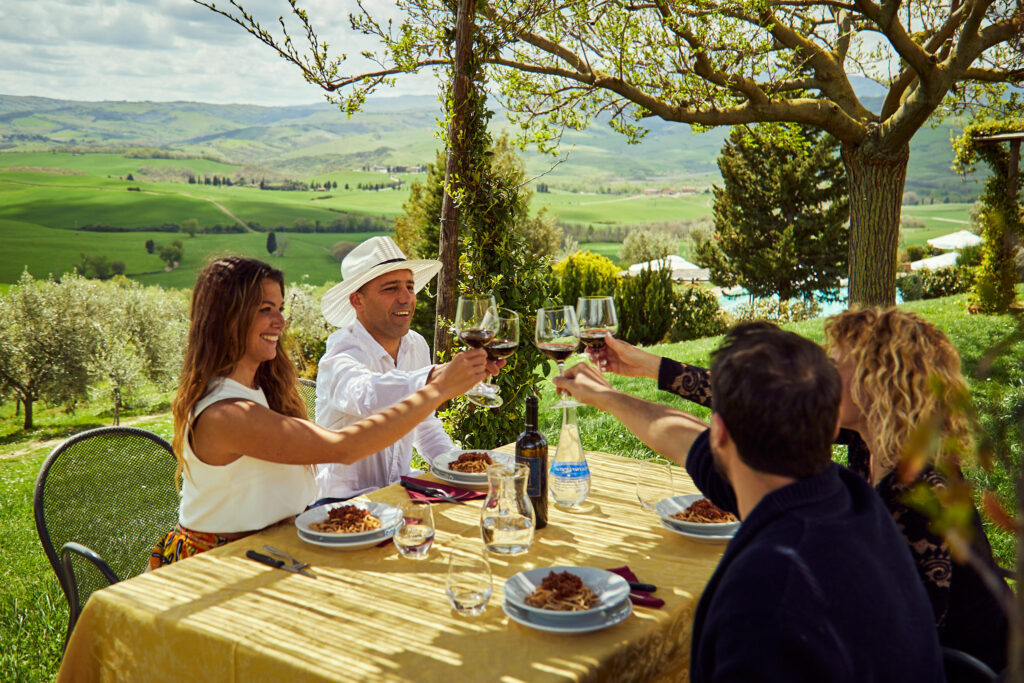
Food in Chianti is one of those things that tends to sneak up on you.
You go for the wine, of course, but you end up remembering the long lunches, simple dishes done really well, and those little family-run places where nobody is in a rush to turn the table.
We’ve had some of our best meals in Tuscany in this part of the world, often without much planning at all.
The key here isn’t chasing fancy restaurants — it’s about slowing down and eating where the locals eat, especially in towns like Greve in Chianti, Radda in Chianti, and Castellina in Chianti.
Long Lunches Are Part of the Experience
One thing we learned quickly in Chianti is that lunch isn’t something you squeeze in between wineries.
It is part of the day.
Most good lunches here are:
- slow
- seasonal
- simple but full of flavour
- paired naturally with local wine
You’ll often find yourself sitting longer than planned, which is exactly how it should be.
What to Expect on the Menu
You don’t need anything complicated when eating in Chianti.
Most menus focus on traditional Tuscan dishes like:
- handmade pasta
- grilled meats
- local cheeses and cured meats
- ribollita or hearty soups (in cooler months)
- simple desserts like cantucci with dessert wine
It’s not about variety — it’s about doing a few things really well.
Where We Like to Eat in Chianti Towns
Rather than chasing “top restaurants”, we usually just pick places that feel comfortable and local in each town.
Greve in Chianti
Greve has plenty of casual trattorias around the main square. It’s a great place to stop for a relaxed lunch before or after winery visits.
Radda in Chianti
Radda is where we tend to slow down a bit more.
Evenings here are particularly nice, with small restaurants serving seasonal menus and good local wine lists.
Castellina in Chianti
Castellina is ideal for an unplanned stop.
We’ve often ended up here just for a coffee or glass of wine and stayed longer than expected.
Dining at Wineries
One of the best experiences in Chianti is eating at a winery itself.
Some estates offer full lunches or food pairings, and this is where wine and food really come together properly.
You might find:
- wine paired with local olive oil and cheese
- multi-course Tuscan lunches
- simple plates designed to match the estate wines
It’s worth booking ahead for these, especially at popular estates.
Our Advice
Don’t over-plan your meals in Chianti.
Pick one lunch reservation if you want structure, then leave the rest of the day flexible.
Some of our favourite meals have come from simply stopping somewhere that looked right at the time.
Chianti isn’t really a place where you rush from reservation to reservation — it works better when food becomes part of the day.
How to Get Around Chianti
Getting around Chianti is fairly straightforward once you understand how the region works, but it does help to plan a little ahead.
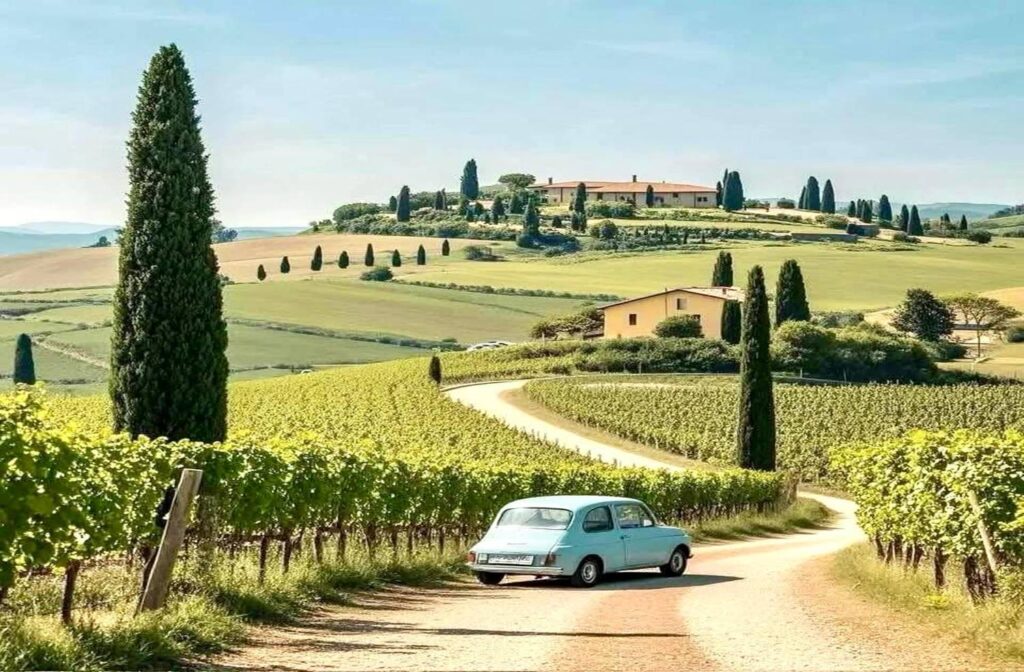
The short version is this: a car makes everything easier, especially if you want to visit wineries, small villages, and countryside roads without being tied to a schedule.
We’ve tried Chianti both with and without a car over the years, and while tours can work well, having your own vehicle gives you a completely different level of freedom.
Car rental – If you plan to visit countryside towns and vineyards, a rental car is invaluable.
Driving in Chianti
Most visitors explore Chianti by car, and for good reason.
From Florence, you can reach the heart of the region in around 45–75 minutes depending on where you’re heading.
The roads are generally well-maintained, but they do change character quickly:
- main roads between towns are easy to follow
- smaller roads can be narrow and winding
- signage is usually clear but not always frequent
Once you leave the main routes, the drive becomes slower — but that’s part of the experience. You’re not really here to rush anywhere.
Parking at Wineries and Towns
One thing that surprises first-time visitors is how easy parking usually is.
Most wineries in Chianti have their own parking areas, especially larger estates.
In towns like Greve in Chianti, Radda in Chianti, and Castellina in Chianti, you’ll often find:
- small public car parks just outside the centre
- short walks into the main streets
- free or low-cost parking in many areas
You rarely need to stress about it, which makes self-driving much more appealing.
Can You Visit Chianti Without a Car?
Yes — but it takes more planning.
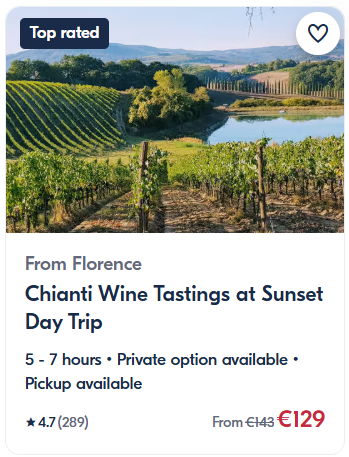
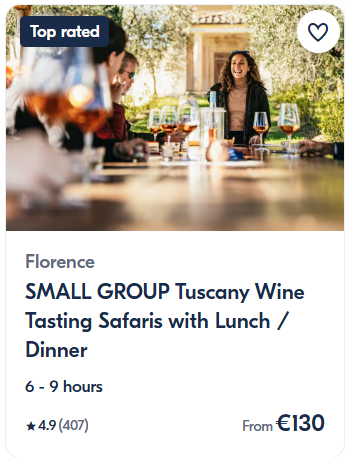
There are guided wine tours from Florence that take care of transport and winery visits, which is a great option if you don’t want to drive.
However, public transport in Chianti itself is limited. Buses connect the larger towns, but they don’t make it easy to hop between wineries or explore freely.
If your goal is to visit multiple wineries or small villages in one day, a tour or a car is really the only practical option.
Car rental – If you plan to visit countryside towns and vineyards, a rental car is invaluable.
Tours From Florence

Wine Tours vs Driving (Quick Reality Check)
We’ve done both, and they each have their place.
- Wine tours are simple, structured, and stress-free
- Driving yourself gives you freedom to explore and stop whenever you want
If it’s your first time in Tuscany, a tour from Florence is often the easiest way in.
But if you’ve already got a feel for the region, driving yourself through Chianti is where things really open up.
A Simple Way to Plan Your Route
If you’re self-driving, don’t try to overcomplicate it.
A good approach is:
- pick one base town (Greve, Radda, or Castellina)
- choose one or two wineries nearby
- allow time to simply drive without a strict plan
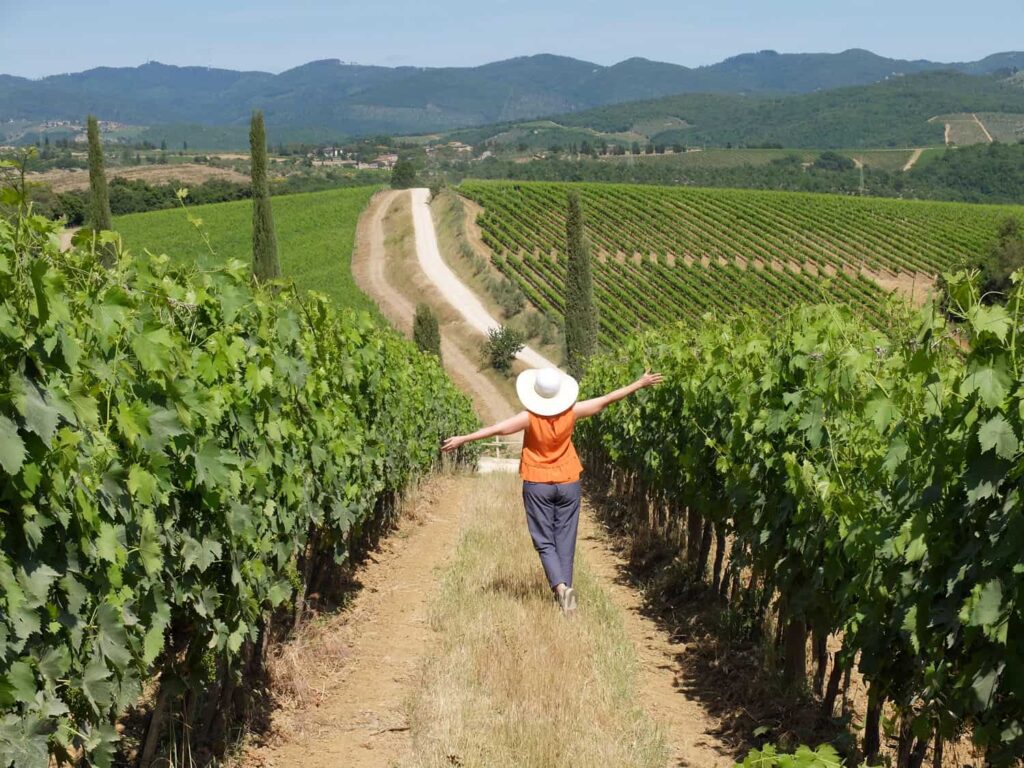
Some of the best parts of Chianti happen between the stops, not just at them.

Best Time to Visit Chianti
Chianti is one of those places you can visit all year round, but the experience changes quite a bit depending on the season.
While there’s no bad time, there are definitely a couple of windows that feel better than the rest.
It really comes down to what kind of trip you want — quiet countryside roads, busy vineyard activity, or warm evenings sitting outside with a glass of wine.
Spring (April to June)
For us, this is one of the nicest times to be in Chianti.
The countryside is green, the vineyards are coming back to life, and temperatures are comfortable enough to spend long days outdoors.
It’s also before the peak summer crowds arrive, so driving between places like Greve in Chianti, Radda in Chianti, and Castellina in Chianti feels much easier.
Summer (July and August)
Summer is the busiest and hottest time of year.
The vineyards are full, restaurants are busy, and there’s a lively feel in the evenings — but midday heat can be intense, especially if you’re visiting wineries or driving between towns.
If you’re here in summer, the key is to:
- start your day early
- plan winery visits in the morning or late afternoon
- take long breaks for lunch or shade during the hottest part of the day
It’s still enjoyable, just a bit more energetic.
Autumn (September to October)
This is harvest season, and it’s one of the most interesting times to visit Chianti.
Wineries are active, grapes are being picked, and there’s a sense that things are happening all around you.
The weather is still warm enough for outdoor lunches, but not as intense as summer, which makes it a great balance overall.
It’s also one of the most popular times to visit, so booking wineries ahead is important.
Winter (November to March)
Winter is the quietest time in Chianti.
Some wineries reduce opening hours, and a few smaller places may close for part of the season, but the ones that stay open often feel more personal and relaxed.
The roads are empty, the villages are calm, and you’ll rarely feel rushed anywhere.
It’s not the classic “vineyard experience” people imagine, but it can be a very peaceful way to see the region.
Our Honest Take
If we had to pick the best times overall, we’d go for:
late May to early June
late September to early October
Both give you a good balance of weather, atmosphere, and accessibility without things feeling too busy.

Suggested Chianti Itinerary (2–3 Days)
One of the best things about Chianti is that you don’t need to rush it.
Even a couple of days here feels like enough time to slow down, visit a few wineries, explore a couple of towns, and settle into the rhythm of the countryside.
We’ve done Chianti as a day trip from Florence a few times, but staying overnight changes everything.
The roads are quieter, the evenings are slower, and you get a much better feel for the region.
Here’s a simple way to structure a relaxed visit.
Day 1: Florence to Greve & Central Chianti
Start your journey by leaving Florence in the morning and heading straight into Greve in Chianti.
Take your time on the drive — this is where the scenery starts to change and the city slowly fades behind you.
In Greve, spend a couple of hours:
- walking around the main square
- visiting local wine shops
- stopping for coffee or a light lunch
From here, head out to your first winery of the trip.
Something like Castello di Verrazzano works well for a first introduction to Chianti wine.
Finish the day by heading towards your base in the countryside or nearby town.
Day 2: Radda, Wineries & Slow Countryside Driving
This is the day to really explore the heart of Chianti.
Start in Radda in Chianti, which is ideal for a slow morning walk and a relaxed coffee.
From there, plan one or two winery visits nearby.
This is where Chianti really opens up — winding roads, small estates, and long views across the vineyards.
Don’t over-plan this day.
It works best when you leave space between stops.
End the day with a quiet dinner in Radda or Castellina.
Optional Day 3: Castellina & Hidden Corners of Chianti
If you have a third day, slow things down even more.
Spend time in Castellina in Chianti, which is perfect for a relaxed morning coffee or gentle wander through the centre.
Then head out into the countryside for:
- a final winery visit
- scenic driving between villages
- or simply revisiting a favourite spot from earlier in your trip
This is often the day where people stop “doing” things and just enjoy being in Chianti.
A Simple Way to Think About Your Trip
We’ve learned that Chianti works best when you don’t try to turn it into a checklist.
A good day looks like:
- one town in the morning
- one winery midday
- a long lunch somewhere in between
- and a slow drive in the afternoon
That’s usually more than enough for a very good day.
FAQs: Chianti Wine Region Guide
Do I need a car to visit Chianti?
Not strictly, but in our experience it makes a huge difference.
Chianti is spread out, with wineries, small villages, and countryside roads connecting everything.
There are some wine tours from Florence, which are a great option if you don’t want to drive, but public transport in the region itself is quite limited.
If you want freedom to visit different wineries and towns like Greve in Chianti or Radda in Chianti in one day, a car is by far the easiest way.
How many wineries should I visit in Chianti?
Two wineries in a day is ideal.
It gives you enough time to enjoy each visit properly without rushing, especially when you include travel time, tastings, and lunch.
We’ve tried fitting in more before, but it usually ends up feeling like a schedule rather than a relaxed day in the countryside.
Do I need to book wineries in advance?
In most cases, yes.
Many wineries in Chianti now work on appointment-only visits, especially the smaller or more popular estates.
If you’re visiting in peak months like May to October, it’s a good idea to book at least one or two wineries ahead of time so your day is planned but still flexible.
What is the best base in Chianti?
For first-time visitors, Greve in Chianti is the easiest base.
For a more central and atmospheric stay, Radda in Chianti is our personal favourite.
If you want a quieter countryside experience, staying in a vineyard hotel or agriturismo around Gaiole or Castellina is a great option.
Is Chianti worth visiting as a day trip?
Absolutely.
Even just one day gives you a real feel for the region — vineyards, winding roads, and time in a traditional Tuscan town.
That said, if you have the time, staying overnight is when Chianti really comes into its own.
What wine is Chianti known for?
Chianti is best known for its red wines made primarily from Sangiovese grapes.
The most famous category is Chianti Classico, which comes from the historic heart of the region and is marked by the Black Rooster symbol.
Do wineries in Chianti serve food?
Many do.
Some offer simple tastings with cheese and olive oil, while others provide full lunches or multi-course food pairings designed to match their wines.
It varies a lot from place to place, so it’s always worth checking in advance.
When is the best time to visit Chianti?
The best times are generally late spring (May–June) and early autumn (September–October).
These periods offer a good balance of weather, scenery, and activity without the extremes of summer heat or winter quiet.
Car rental – If you plan to visit countryside towns and vineyards, a rental car is invaluable.
Ready to Turn Your Dream Into a Plan?
If you’ve ever dreamed of travelling Europe for longer than just a holiday, our FREE 90-Day Slow Travel Starter Kit is the perfect place to start.
Inside you’ll discover:
 The first planning steps
Understanding the Schengen Rule
How we choose where to stay
Practical slow travel tips
 Download Your FREE Starter Kit
Want to Go Even Further?
If you’d like to learn the complete system we’ve developed after years of travelling Europe full-time, take a look at our new book.
 How We Actually Travel Europe Long-Term
Discover the Book
Do You Need Travel Insurance for Tuscany?
(Short Answer: Yes — It’s Still a Smart Idea)
Travel insurance isn’t legally required to visit Tuscany, but it’s one of the smartest things you can have when travelling in Italy.
Even in a relaxed destination like Tuscany, things can go wrong — from delayed flights and lost luggage to medical issues, rental car damage, or unexpected trip cancellations.
And while Italy has excellent healthcare, medical treatment for visitors can still be costly without proper coverage.
As long-term travellers living in Italy, we’ve found SafetyWing to be a practical option for trips around Europe, offering coverage for medical care, travel delays, and lost belongings without complicated fine print.
SafetyWing
(Best for Long-Term Travel & Affordability)
We personally use SafetyWing, and have since 2019.
It’s perfect for travelling, spending multiple weeks or a whole year abroad.
You can get a Quote here.
It’s the kind of insurance you hope you never need—but you’ll be very glad you have if something unexpected happens.

Final Thoughts: Chianti Wine Region Guide
Chianti is one of those places that stays with you long after you’ve left.
It’s not just the wineries or the wine itself — it’s the pace of the days.
The slow drives between villages, the long lunches that turn into afternoons, and those quiet moments looking out over the vineyards when you realise there’s nowhere else you need to be.
We’ve visited this region many times over the years, and it never feels the same twice.
Sometimes we come for a quick day trip from Florence, other times we stay longer in places like Radda in Chianti or nearby countryside agriturismos.
If it’s your first time, don’t try to see everything.
Pick a couple of towns, visit a winery or two, and give yourself time to enjoy the drive in between.
Chianti is best experienced slowly — and that’s usually when it leaves the biggest impression.
PLAN YOUR TUSCANY ADVENTURE
These are our favorite companies we use when planning a trip, they consistently have the best prices, great customer service, and overall, are better than their competitors.
BOOK YOUR FLIGHT – Going is a great search engine if you are flexible about your travel destination and dates. Sign up for their newsletter and get the latest deals on destinations around the world. GOING is our new go to.
CAR RENTAL – We recommend using Discover Cars or Rental Cars when booking a car rental, they work with hundreds of companies worldwide to help you find the best car for your needs.
TRAINS – TRAINLINE – is our favorite, this site is very reliable and easy to use.
BUS – OMIO – this website allows you to book train or bus tickets to travel from city to city the best and cheapest way. FLIXBUS is another terrific website with routes between 20 European countries.
ACCOMMODATIONS
BOOKING.com – is our go to for hotel searches around the world, we find they always have the cheapest rates and offer different payment options. In addition, VRBO is another terrific website for all types of accommodations.
HOSTELWORLD – is great if you’re traveling on a budget, and if you need a cheap place to stay.
SIGHTSEEING TOURS
GET YOUR GUIDE – is our favorite; they have stacks of tours and excursions available in cities all over the world. VIATOR is another great website for all types of tours.
TAKE WALKS – This walking tour company provides inside access to attractions and places you can’t get elsewhere.
TRAVEL INSURANCE
SAFETY WING – is our go to travel medical insurance company, especially for longer trips. You can either purchase a monthly plan or a plan for specific trip dates (i.e. 1-2 week trips). They cover people from all over the world, while outside their home country.
ARC’TERYX – is a go to reliable brand for outdoor adventure and travel, their wide range includes light weight durable, easy to clean travel gear.
Check out our RESOURCE PAGE for more additional planning.