Best Ski Resorts in Europe for Intermediate Skiers: 10 Fantastic Destinations
Timeless Wanderers: Posted October 29, 2026

Finding the Best European Ski Resorts for Intermediate Skiers
If you’re an intermediate skier, choosing the right resort can make all the difference to your holiday.
You want plenty of blue and red runs, long cruising pistes, reliable lift connections and enough variety to explore somewhere different each day.
Europe has some fantastic ski resorts for intermediate skiers, from the wide, open slopes of the French Alps to the beautiful mountain scenery of Austria, Switzerland and Italy.
Some resorts are particularly good for those who have recently progressed beyond beginner slopes and want to build their confidence.
Others are better suited to confident intermediates who enjoy longer red runs, exploring extensive ski areas and covering plenty of kilometres each day.
We’ve selected ten European ski resorts that offer excellent skiing for intermediate levels, looking at the variety of pistes, the layout of the ski areas and what makes each destination worth considering for your next ski holiday.
Whether you’re planning your first ski trip beyond the beginner slopes or you’re already comfortable tackling most red runs, there’s a resort here that could be just right for you.
Table of Contents
What Should Intermediate Skiers Look for in a Ski Resort?
Not all ski resorts are equally suited to intermediate skiers.
Some have plenty of easy blue runs but limited opportunities to progress, while others have a wonderful selection of longer red pistes and extensive ski areas to explore.
When choosing a resort, it’s worth looking beyond the total number of kilometres of pistes.
The layout of the mountain, the quality of the lift connections and the variety of runs can make a big difference to how much you enjoy your holiday.
Here are a few things worth considering:
A good choice of blue and red runs: Plenty of blues for relaxed skiing, along with reds to help build confidence and improve technique.
Long, enjoyable pistes: Wide, well-groomed runs where you can settle into a comfortable rhythm and enjoy the scenery.
Well-connected ski areas: Lift systems that make it easy to explore different mountains and valleys without complicated transfers.
Variety throughout the week: Enough different terrain to keep things interesting, particularly if you’re staying for seven days or longer.
Suitable runs for different abilities: Particularly important when travelling with friends or family who may have different levels of confidence.
For this guide, we’ve included resorts that cater to both early intermediates and more confident skiers who are comfortable on red runs.
We can plan your Dream Ski Trip to Europe: Custom Itineraries for the Perfect winter Holiday.
With over 25 years of experience skiing in over 50 different ski resorts in Europe, we can help you plan your perfect winter escape.
Planning a ski trip to Europe can be exciting, but choosing the right resort and organising the perfect itinerary can quickly become overwhelming.
That’s where we come in.
We offer a personalised planning service that helps you decide exactly where to ski, based on your style, budget, and experience.
“Plus, we can help you plan a fun week of European sightseeing around your ski trip, making your winter holiday easier, smoother, and full of unforgettable memories.”
“Let us plan your perfect trip with a custom itinerary designed just for you.
Fill out the form and let’s begin your dream.”
1. Méribel, France – Excellent Intermediate Skiing in the Three Valleys
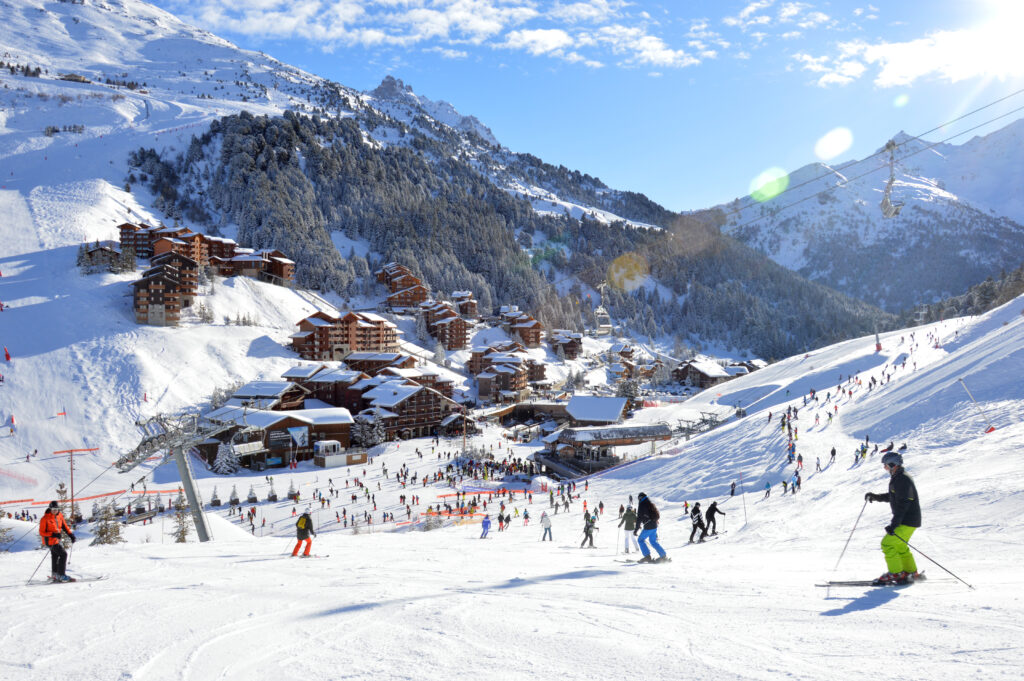
Méribel is a fantastic choice for intermediate skiers who enjoy exploring a large ski area with plenty of variety.
Situated in the heart of the French Three Valleys, it gives you access to an extensive network of pistes, with Courchevel, Les Menuires and Val Thorens all connected by lifts and ski runs.
The local Méribel ski area has approximately 150 km of pistes, with a good selection of blue and red runs.
This makes it an excellent place for skiers who have moved beyond beginner slopes and want to build their confidence while enjoying longer days on the mountain.
The Tougnète sector is particularly appealing for intermediates, with a mixture of blue and red runs across open mountainsides.
The Saulire sector also has some enjoyable longer descents, with routes back towards Méribel and connections across to Courchevel.
More confident skiers can explore the higher slopes around Mont Vallon, where the terrain becomes more challenging.
One of Méribel’s biggest advantages is its central location.
With a Three Valleys lift pass, you can explore around 600 km of interconnected pistes, giving confident intermediates plenty of opportunities to discover different mountains and valleys throughout their holiday.
Away from the slopes, Méribel has a traditional Alpine feel, with chalet-style buildings, mountain restaurants and a good choice of accommodation.
Méribel Centre is the main village, while Méribel-Mottaret is higher up the valley and offers convenient access to the ski area.
Why intermediate skiers will love Méribel:
A generous choice of blue and red pistes.
Wide, enjoyable runs for improving confidence and technique.
Access to the enormous Three Valleys ski area.
Plenty of variety for a week or longer on the slopes.
A traditional French Alpine resort with restaurants, shops and attractive chalet-style accommodation.
Our verdict:
Méribel is particularly well suited to confident intermediates who are comfortable skiing red runs and want to explore a large, interconnected ski area.
Early intermediates can also enjoy the easier blues, although it’s worth planning routes carefully before venturing into unfamiliar parts of the Three Valleys.
2. La Plagne, France – A Huge Choice of Blue and Red Runs
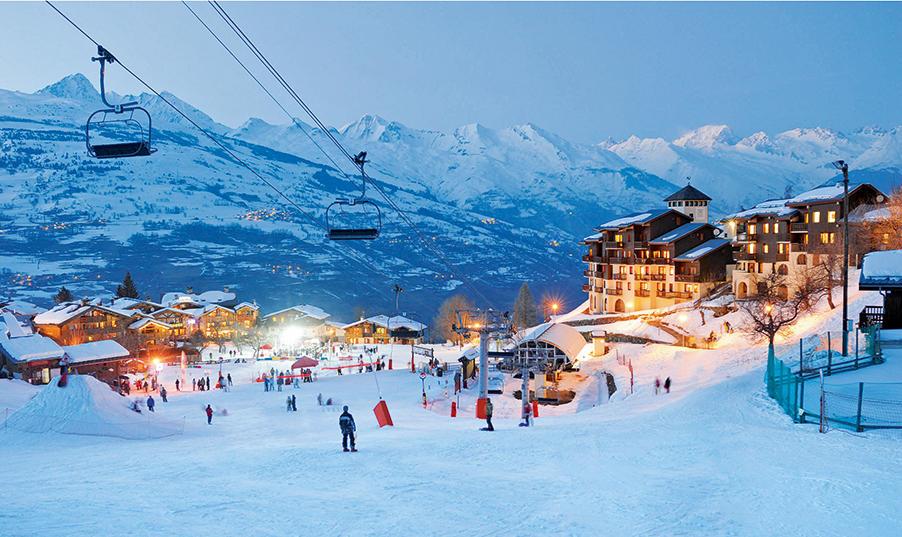
La Plagne is one of the best French ski resorts for intermediate skiers, with an extensive choice of blue and red pistes spread across several different mountain sectors.
Whether you’re building confidence on longer blue runs or enjoying more challenging red descents, there’s plenty here to keep you busy throughout your holiday.
The local La Plagne ski area has approximately 225 km of pistes, with around 78 blue runs and 35 red runs.
This gives intermediates an enormous amount of terrain to explore without necessarily needing to venture onto difficult slopes.
One of the things we particularly like about La Plagne for intermediate skiing is the variety of its different sectors.
Plagne Centre and Belle Plagne provide convenient access to a wide selection of runs, while the Montchavin and Les Coches areas are worth exploring for their lovely tree-lined pistes.
Champagny-en-Vanoise is another excellent area to visit, with sunny slopes and some enjoyable longer descents.
For confident intermediates, there’s also the option of extending your skiing into Paradiski.
Connected to Les Arcs and Peisey-Vallandry by the impressive Vanoise Express cable car, the wider ski area has approximately 425 km of linked pistes.
You could spend an entire week exploring and still find new runs to try.
La Plagne is made up of several villages and purpose-built resort areas, each with a slightly different feel.
Plagne Centre is convenient for accessing the slopes and facilities, Belle Plagne has a traditional Alpine-style appearance, while Montchavin offers a quieter village atmosphere.
Why intermediate skiers will love La Plagne:
A huge selection of blue and red pistes.
Wide, well-groomed runs suitable for building confidence.
Different mountain sectors to explore throughout the week.
Lovely tree-lined skiing around Montchavin and Les Coches.
The option to explore the wider Paradiski area, including Les Arcs.
Our verdict:
La Plagne is an excellent choice for both early and confident intermediates.
Its large selection of blue runs makes it particularly appealing to those still building their confidence, while the red pistes and extensive Paradiski connections provide plenty of variety for more experienced skiers.
One thing to watch is that some popular blue runs can become busy, particularly during school holidays.
3. Val d’Isère, France – A Fantastic Choice for Confident Intermediate Skiers
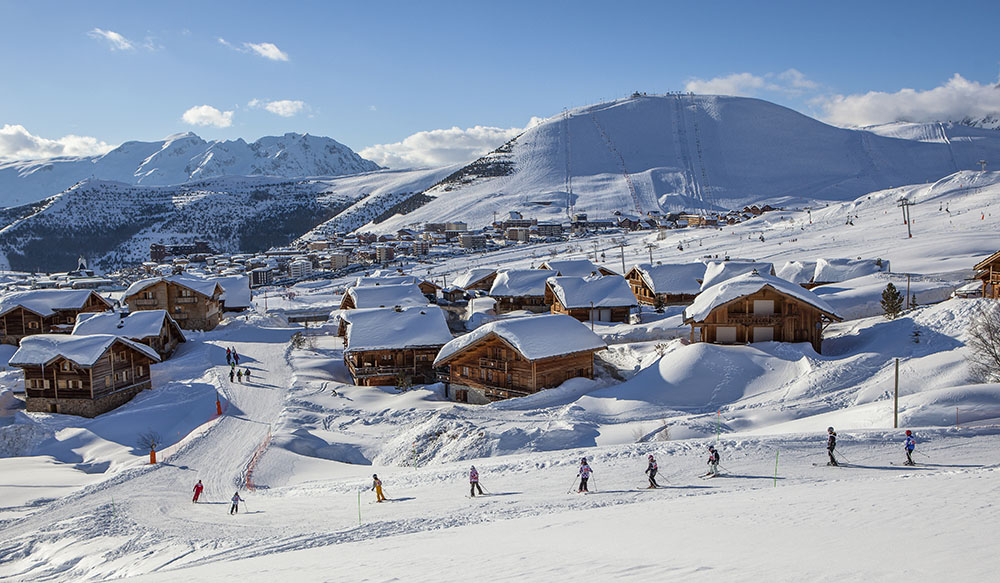
Val d’Isère is one of the best-known ski resorts in the French Alps, and for good reason.
With its high-altitude skiing, extensive mountain terrain and connection to neighbouring Tignes, it offers plenty of variety for intermediate skiers who want to explore a large ski area.
The combined Tignes–Val d’Isère ski area has approximately 300 km of pistes, with a good selection of blue and red runs alongside more challenging black pistes.
While the resort has a reputation for demanding skiing, there is much more to it than steep slopes and expert terrain.
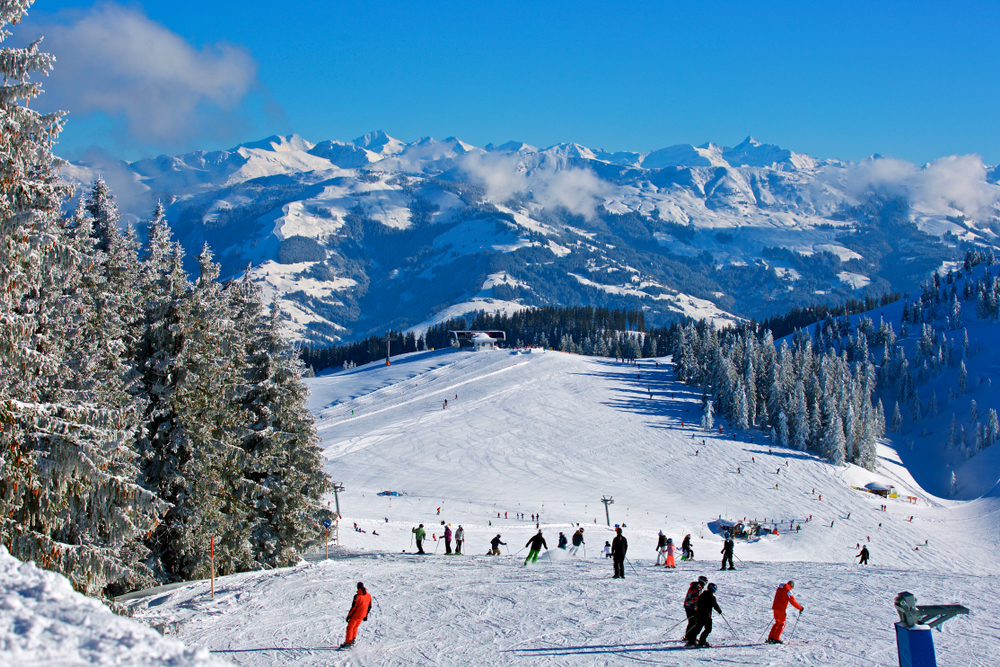
The Solaise sector is a particularly good starting point for intermediates, with accessible blue runs and some lovely longer descents.
Over towards Bellevarde, you’ll find more challenging terrain, including enjoyable red runs for skiers looking to push themselves a little further.
One run worth knowing about is the famous OK piste, a long red descent from the Bellevarde area.
It’s a good option for confident intermediates who enjoy a sustained run with plenty of vertical descent.
The Face de Bellevarde, on the other hand, is a challenging black run and is best left to experienced skiers.
Another advantage is the connection to Tignes.
With a combined lift pass, you can explore both resorts, giving you a huge choice of mountains and pistes throughout the week.
The high altitude also makes Val d’Isère an appealing choice for those looking for reliable snow conditions throughout much of the winter.
Away from the slopes, Val d’Isère has a traditional Alpine village atmosphere, with attractive chalets, excellent restaurants, lively après-ski and a wide choice of accommodation.
It’s certainly one of the more upmarket French ski resorts, although there are options for different budgets.
Why intermediate skiers will love Val d’Isère:
Access to approximately 300 km of linked pistes with Tignes.
A good selection of blue and red runs.
Long descents and varied mountain terrain.
High-altitude skiing and generally reliable snow conditions.
A traditional Alpine village with excellent restaurants and après-ski.
Our verdict:
Val d’Isère is particularly suited to confident intermediate skiers who are comfortable on red runs and enjoy exploring a large ski area.
Less experienced intermediates should concentrate on the easier routes around Solaise and check the piste map carefully before venturing onto unfamiliar terrain.
It’s a wonderful choice for skiers who want to challenge themselves while still having plenty of enjoyable runs to explore.
For more comfort and convenience, compare these car rentals: DISCOVER CARS
4. Lech, Austria – Beautiful Alpine Skiing for Intermediate Skiers
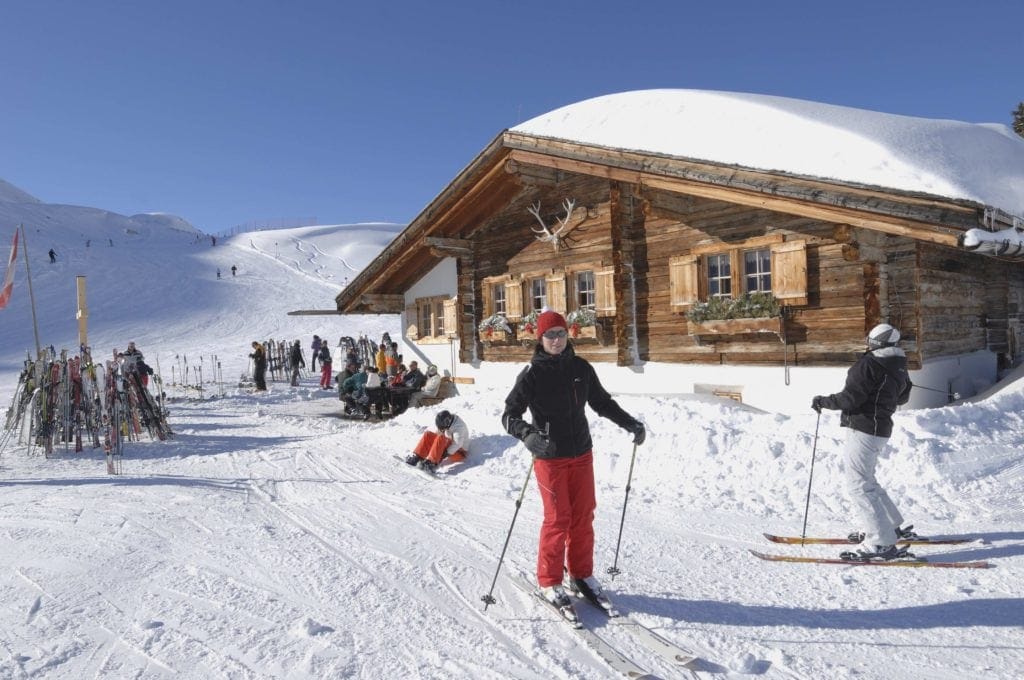
Lech is one of Austria’s most beautiful ski resorts and a wonderful choice for intermediate skiers.
Set in the Arlberg region, it combines an attractive traditional village with an extensive ski area, offering a lovely mixture of wide cruising pistes, long descents and more challenging runs for those looking to improve their technique.
Lech is part of Ski Arlberg, Austria’s largest interconnected ski area, with approximately 300 km of pistes and 85 lifts.
There is a good selection of blue and red runs, making it particularly appealing to skiers who enjoy covering plenty of ground without having to tackle difficult terrain every day.
The skiing around Lech, Oberlech and Zürs provides plenty of variety.
The blue runs around Oberlech and the Mohnenfluh area are good options for relaxed skiing, while more confident intermediates can enjoy the longer red descents around Zürs.
The famous White Ring circuit is another highlight, linking Lech, Zürs, Zug and Oberlech in a scenic ski journey through the mountains.
For those who enjoy exploring, the wider Ski Arlberg area also provides access to Warth-Schröcken and the St Anton side of the region.
However, the terrain becomes more challenging in some areas, so it’s worth checking the piste map and choosing routes that suit your ability.
Away from the slopes, Lech has a very different feel from some of Austria’s livelier ski resorts.
You’ll find elegant hotels, traditional mountain restaurants, lovely village streets and a relaxed atmosphere.
It’s an upmarket destination, but its appeal goes well beyond luxury accommodation.
Why intermediate skiers will love Lech:
A wonderful selection of blue and red pistes.
Long cruising runs and beautiful mountain scenery.
Access to approximately 300 km of Ski Arlberg pistes.
The scenic White Ring ski circuit.
Excellent mountain restaurants and a beautiful traditional village.
Our verdict:
Lech is an excellent choice for intermediate skiers, particularly those who enjoy long cruising runs and exploring different parts of a large ski area.
Early intermediates can enjoy the gentler slopes around Lech and Oberlech, while confident skiers will appreciate the wider Arlberg connections and more demanding red runs.
It’s a resort that combines excellent skiing with a lovely village atmosphere.

5. Saalbach, Austria – An Excellent Resort for Exploring on Skis
Saalbach is one of Austria’s best ski resorts for intermediate skiers, offering an enormous choice of pistes, modern lift connections and plenty of variety across the mountains.
Together with Hinterglemm, Leogang and Fieberbrunn, it forms the Skicircus, one of Austria’s largest interconnected ski areas.
The Skicircus has approximately 270 km of pistes, including 140 km of blue runs, 112 km of red runs and 18 km of black runs.
This is a particularly appealing mix for intermediate skiers, with plenty of easier slopes for relaxed cruising and enough red runs to keep more confident skiers interested throughout the week.
One of the best things about skiing here is the way the different mountain sectors link together.
Around Saalbach, the Kohlmais and Bernkogel areas have some enjoyable blue runs, while the Schattberg offers longer and more challenging descents.
Over in Hinterglemm, the Reiterkogel and Zwölferkogel provide further opportunities to explore, with a good mixture of blue and red pistes.
For confident intermediates, the circuit around the Skicircus is a wonderful way to discover the wider area.
You can ski between Saalbach, Hinterglemm, Leogang and Fieberbrunn, taking in different mountains and villages along the way.
There are also more than 60 mountain huts across the ski area, making it easy to stop for lunch or a traditional Austrian mountain meal.
Away from the slopes, Saalbach has a lively atmosphere, with plenty of restaurants, bars and après-ski venues.
Hinterglemm is another popular base, while Leogang offers a quieter alternative for those who prefer a more relaxed village setting.
Why intermediate skiers will love Saalbach:
Approximately 270 km of interconnected pistes.
A particularly good choice of blue and red runs.
Modern lifts connecting four different ski areas.
Plenty of long cruising runs and opportunities to explore.
More than 60 mountain huts and plenty of places to stop for lunch.
A lively après-ski scene and several villages to choose from.
Our verdict:
Saalbach is an excellent choice for both early and confident intermediate skiers.
The extensive blue runs make it possible to explore much of the area without tackling difficult terrain, while the red pistes provide plenty of variety for those who enjoy a little more challenge.
If you like spending your ski holiday discovering different mountains rather than repeating the same runs, Saalbach is well worth considering.
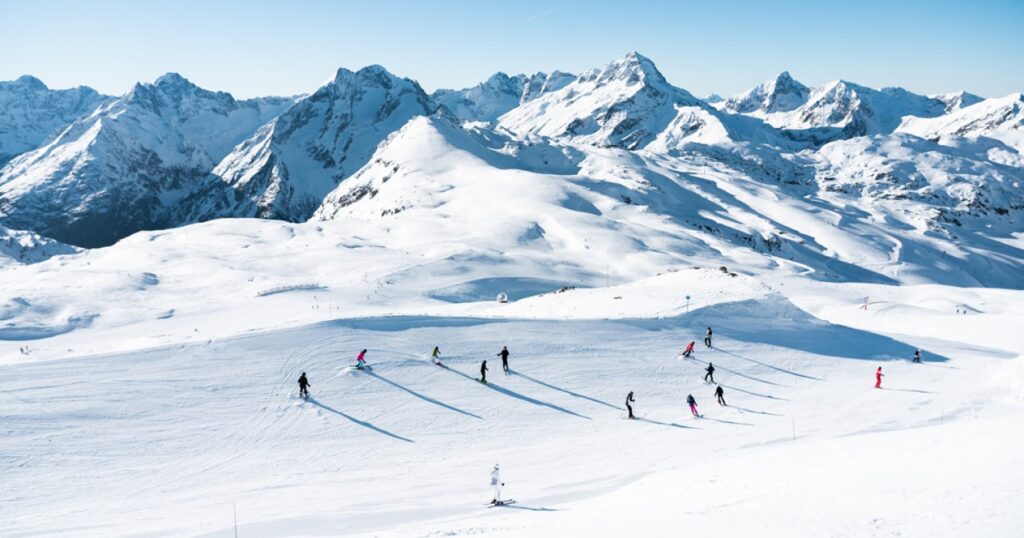
6. Ischgl, Austria – Long Red Runs and Excellent Skiing for Confident Intermediates
Ischgl is one of Austria’s most popular ski resorts, known for its extensive ski area, modern lift system and lively après-ski.
But there’s much more to this resort than its nightlife.
For intermediate skiers, the Silvretta Arena offers an impressive choice of long red runs, wide cruising pistes and plenty of opportunities to explore.
Shared with the Swiss resort of Samnaun, the Silvretta Arena has approximately 239 km of pistes, stretching across the mountains on both sides of the Austrian-Swiss border.
The area includes around 47 km of blue runs, 140 km of red runs and 37 km of black runs, making it particularly appealing to confident intermediates who are comfortable skiing red pistes.
The Idalp area is a good starting point, with access to several blue runs and a network of lifts connecting different parts of the mountain.
As your confidence grows, you can explore the longer red descents around Pardatschgrat, Höllboden and Palinkopf.
One of the highlights is skiing across to Samnaun in Switzerland.
The journey takes you through some beautiful mountain scenery, with plenty of opportunities to enjoy the wide, well-groomed pistes along the way.
The long red descent from Palinkopf towards Samnaun is particularly appealing for stronger intermediates.
The resort’s high-altitude location, with skiing reaching almost 2,900 metres, also makes it a good choice for a longer ski season.
Away from the slopes, Ischgl has a lively atmosphere, with excellent restaurants, stylish hotels, mountain huts and some of the most famous après-ski venues in Austria.
Why intermediate skiers will love Ischgl:
Approximately 239 km of pistes across Austria and Switzerland.
A particularly large selection of red runs.
Wide, well-groomed pistes for confident cruising.
The opportunity to ski across the border into Samnaun.
Modern lifts and high-altitude skiing.
Excellent mountain restaurants and lively après-ski.
Our verdict:
Ischgl is best suited to confident intermediate skiers who enjoy longer red runs and exploring a large ski area.
Early intermediates can enjoy some of the easier blue runs around Idalp and Alp Trida, but the overall balance of pistes makes this a better choice for those who are already comfortable on red runs.
If you enjoy covering plenty of kilometres during your ski holiday, Ischgl is well worth considering.
For more comfort and convenience, compare these car rentals: DISCOVER CARS
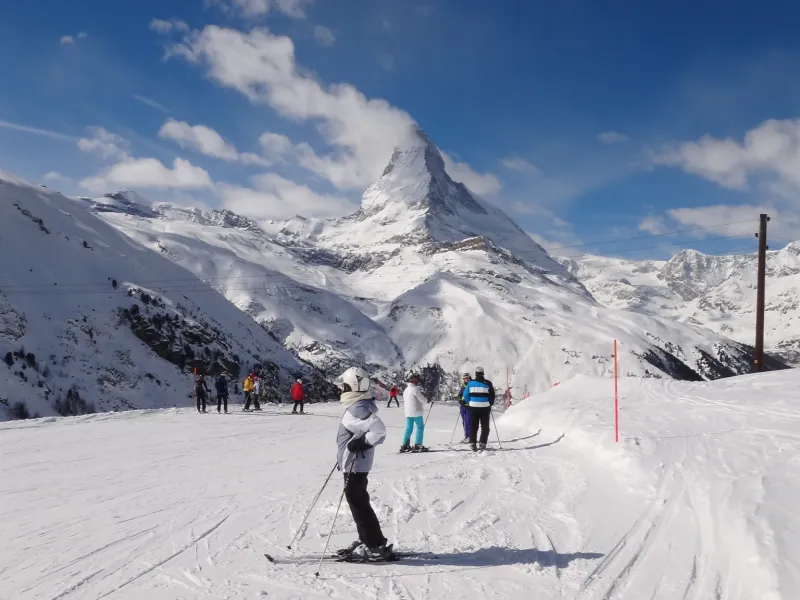
7. Zermatt, Switzerland – Spectacular Skiing Beneath the Matterhorn
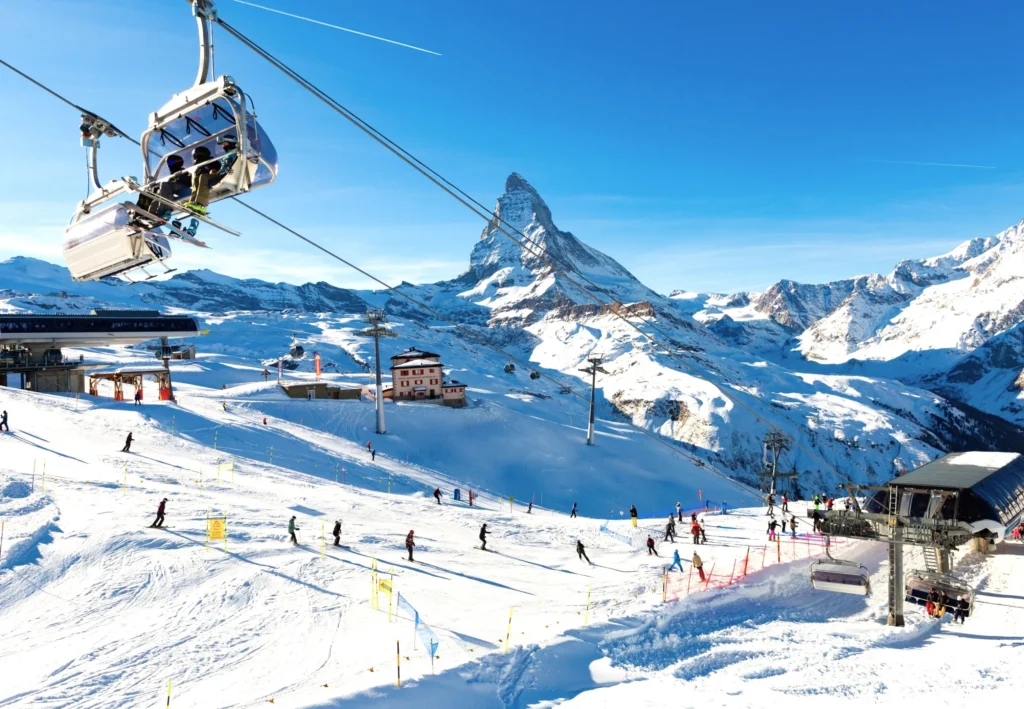
Zermatt is one of Switzerland’s most famous ski resorts, and skiing beneath the Matterhorn is an experience in itself.
But beyond the spectacular scenery, it also has an extensive ski area with plenty of long runs, varied terrain and excellent opportunities for intermediate skiers.
The Swiss side of the Matterhorn Ski Paradise has approximately 200 km of pistes, with a further 160 km available across the border in Italy at Cervinia and Valtournenche when you purchase an international ski pass.
This gives confident intermediates an enormous area to explore, with the added attraction of skiing between two countries during the same holiday.
The Sunnegga–Blauherd–Rothorn sector is a particularly good area for intermediates, with sunny slopes, long descents and wonderful views of the Matterhorn.
The Gornergrat area is another highlight, offering a selection of enjoyable runs through some of the most impressive mountain scenery in the Alps.
For more confident skiers, the high-altitude terrain around Matterhorn Glacier Paradise provides another dimension to the skiing.
The runs are more exposed to alpine weather conditions, so it’s important to check the weather and lift reports before heading up.
One of Zermatt’s biggest attractions is the opportunity to ski across into Italy.
With the appropriate international ski pass and suitable lift and piste conditions, you can enjoy a day exploring Cervinia and Valtournenche, where the skiing is generally more open and offers some wonderful long cruising runs.
Away from the slopes, Zermatt is a beautiful, car-free mountain village with traditional chalets, excellent hotels, fine dining and plenty of mountain restaurants.
It’s an expensive destination, but the combination of outstanding scenery, skiing and village atmosphere makes it a memorable place to visit.
Why intermediate skiers will love Zermatt:
Approximately 200 km of pistes on the Swiss side.
Access to a further 160 km in Italy with an international ski pass.
Long runs and varied terrain around Sunnegga, Rothorn and Gornergrat.
High-altitude skiing reaching almost 3,900 metres.
Spectacular Matterhorn views throughout the ski area.
A beautiful car-free village with excellent restaurants and accommodation.
Our verdict:
Zermatt is particularly well suited to confident intermediate skiers who enjoy long descents, exploring extensive ski areas and skiing in spectacular surroundings.
Early intermediates will find suitable blue runs, particularly around Sunnegga, but should plan their routes carefully as some connections and higher mountain runs are more demanding.
If you enjoy combining excellent skiing with a beautiful mountain village, Zermatt is hard to beat.
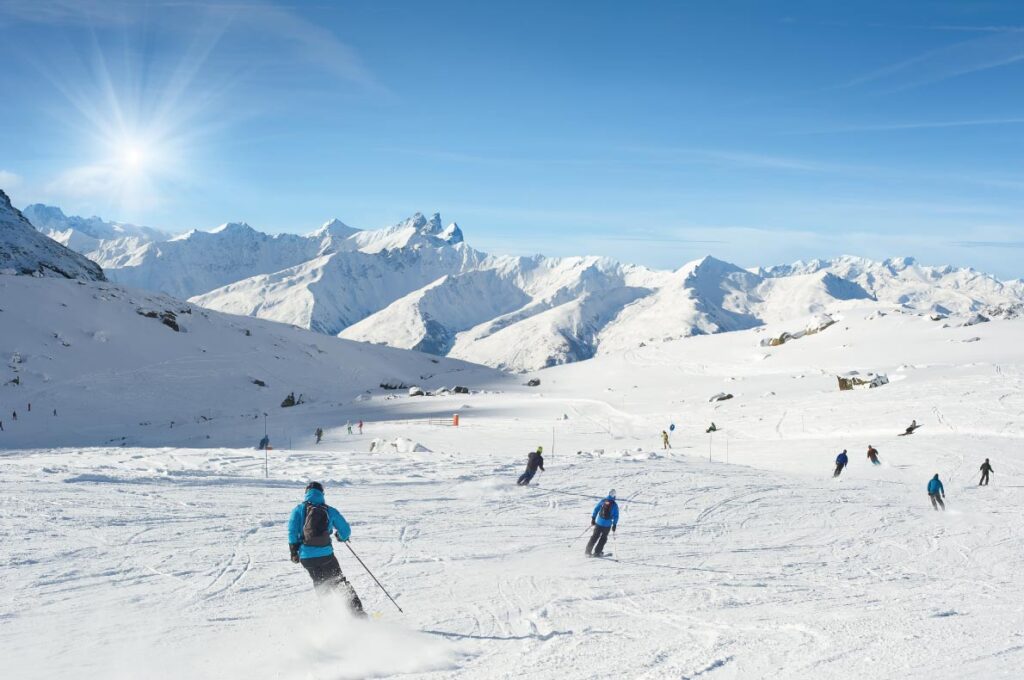
8. Cervinia, Italy – Long Cruising Runs and Spectacular Matterhorn Views
Cervinia is one of Italy’s best ski resorts for intermediate skiers, particularly those who love long, wide pistes and plenty of space to enjoy their skiing.
Sitting beneath the Matterhorn in the Aosta Valley, the resort is known for its high-altitude slopes, reliable snow conditions and spectacular mountain scenery.
The local Cervinia ski area has approximately 103 km of pistes, increasing to around 157 km when combined with neighbouring Valtournenche.
For intermediate skiers, there’s a good selection of long, open runs, with plenty of opportunities to enjoy relaxed cruising across the mountain.
One of Cervinia’s biggest attractions is the famous Ventina run.
Starting at Plateau Rosà at 3,480 metres, this spectacular descent takes you all the way back down to the village, covering approximately 11 km.
It’s a wonderful run for intermediate skiers who enjoy a long descent, with changing views and plenty of opportunities to take in the surrounding mountains.
The Plan Maison area is another excellent place to explore, with a choice of blue and red runs suitable for different levels of confidence.
More experienced intermediates can head higher towards Plateau Rosà, where the wide pistes offer some fantastic skiing beneath the Matterhorn.
Cervinia’s connection with Zermatt in Switzerland adds another dimension to the holiday.
With the appropriate international ski pass and suitable weather and lift conditions, you can cross the border and explore the Swiss side of the Matterhorn Ski Paradise.
It’s a wonderful opportunity to experience two countries during the same ski holiday, although you’ll need to keep an eye on lift closing times when planning your return to Italy.
Away from the slopes, Cervinia is a relaxed mountain village with a good choice of hotels, restaurants and mountain huts.
It doesn’t have the glamour of some of Europe’s more famous Alpine resorts, but its excellent skiing and spectacular setting are its biggest attractions.
Why intermediate skiers will love Cervinia:
Wide, open blue and red pistes.
Long, enjoyable descents with spectacular mountain views.
The famous 11 km Ventina run from Plateau Rosà to the village.
Access to approximately 157 km of pistes with Valtournenche.
The opportunity to ski across into Zermatt, Switzerland.
High-altitude skiing and a long winter season.
Our verdict:
Cervinia is an excellent choice for both early and confident intermediate skiers, particularly those who enjoy long cruising runs rather than steep, demanding terrain.
The wide slopes make it a lovely place to build confidence, while the higher mountain routes and connection to Zermatt provide plenty of variety for stronger skiers.
If you love covering kilometres on beautifully groomed pistes, Cervinia deserves a place on your shortlist.
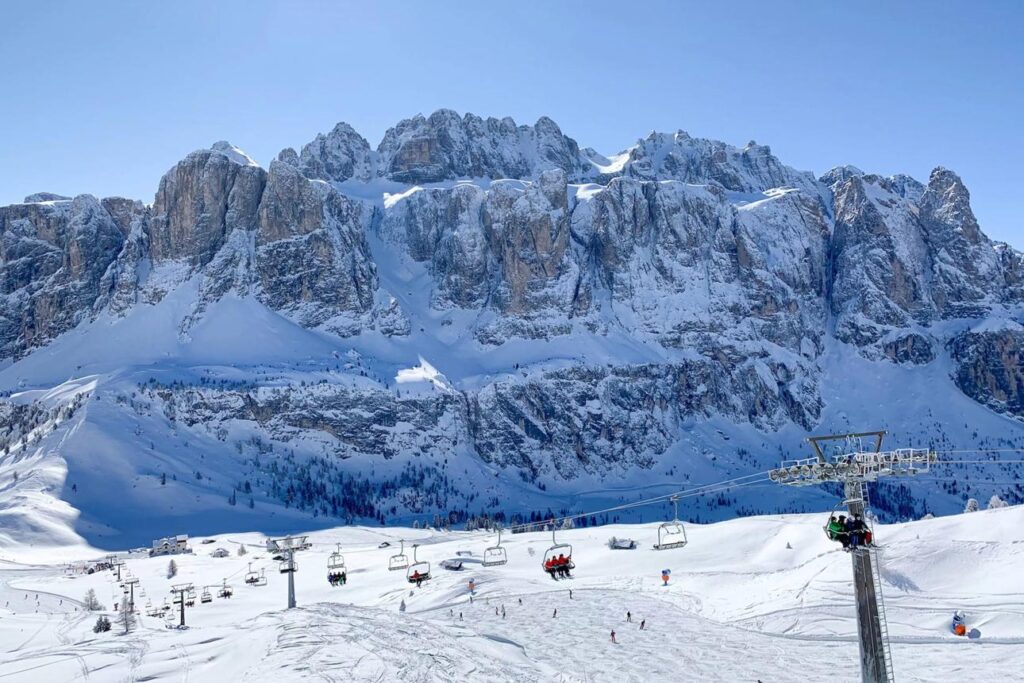
9. Val Gardena, Italy – Wonderful Cruising Runs in the Dolomites
Val Gardena is one of the finest ski destinations in the Italian Dolomites for intermediate skiers.
With its spectacular mountain scenery, beautifully groomed pistes and access to the famous Sella Ronda, it offers a wonderful combination of skiing, village life and Italian mountain hospitality.
The local Val Gardena ski area has approximately 125 km of pistes, including a generous selection of blue and red runs.
When combined with neighbouring Alpe di Siusi, the wider ski area has around 184 km of slopes, giving intermediate skiers plenty of variety throughout their holiday.
One of the highlights is the Seceda area above Ortisei, where you’ll find some beautiful longer descents.
The famous La Longia run is particularly worth mentioning.
At approximately 10.5 km, it takes you from Seceda all the way down towards Ortisei, with wonderful views across the Dolomites along the way.
For more confident intermediates, the Ciampinoi and Plan de Gralba sectors offer some excellent red runs.
From Selva, you can also access the Sella Ronda, a spectacular ski circuit around the Sella massif.
The route can be skied in either direction and takes you through four Dolomite valleys, with plenty of opportunities to enjoy different mountains and scenery.
Val Gardena has three main villages, each offering a slightly different experience.
Ortisei is particularly attractive, with its pedestrian-friendly centre, shops and restaurants.
Santa Cristina is a quieter alternative, while Selva is an excellent base for skiers who want convenient access to the Sella Ronda and surrounding ski areas.
Away from the slopes, you’ll find traditional mountain huts serving delicious South Tyrolean food, welcoming restaurants and plenty of opportunities to enjoy the local Ladin culture.
Why intermediate skiers will love Val Gardena:
A generous choice of blue and red pistes.
The spectacular 10.5 km La Longia descent from Seceda.
Access to the Sella Ronda ski circuit.
Excellent skiing around Ciampinoi, Plan de Gralba and Alpe di Siusi.
Three attractive villages with different accommodation options.
Beautiful Dolomite scenery and wonderful mountain restaurants.
Our verdict:
Val Gardena is an excellent choice for both early and confident intermediate skiers.
Alpe di Siusi and the easier slopes provide a good introduction for those still building confidence, while the longer red runs and Sella Ronda offer plenty of variety for stronger intermediates.
If you enjoy long cruising runs, beautiful mountain scenery and exploring different areas during your ski holiday, Val Gardena is hard to beat.
For more comfort and convenience, compare these car rentals: DISCOVER CARS


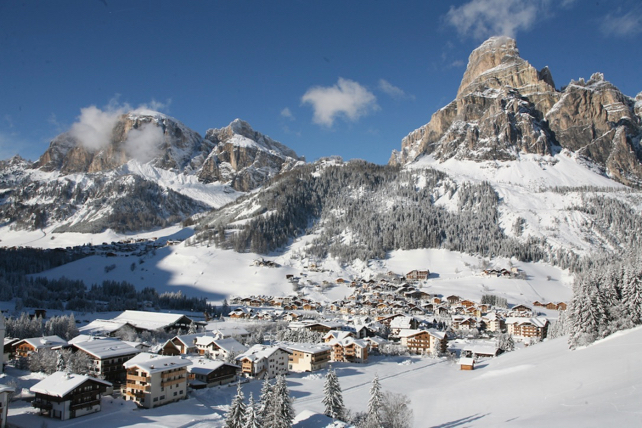
10. Alta Badia, Italy – Beautiful Cruising Runs in the Dolomites
Alta Badia is one of the best ski resorts in Italy for intermediate skiers, particularly if you enjoy wide, well-groomed pistes, long days exploring the mountains and stopping at traditional mountain huts for lunch.
The ski area has 130 km of pistes, including 74 km of blue runs, 47 km of red runs and 9 km of black runs.
This gives intermediate skiers plenty of choice, whether you’re still building confidence on red pistes or are comfortable exploring more challenging terrain.
One of the nicest areas to explore is the Pralongià plateau, between Corvara, La Villa and San Cassiano.
The slopes here are generally wide and rolling, making them ideal for relaxed cruising. There are plenty of opportunities to link runs together and enjoy the scenery without constantly tackling steep sections.
From La Villa, you can also ski around the Piz La Ila area.
This is home to the famous Gran Risa, a challenging black piste used for World Cup racing.
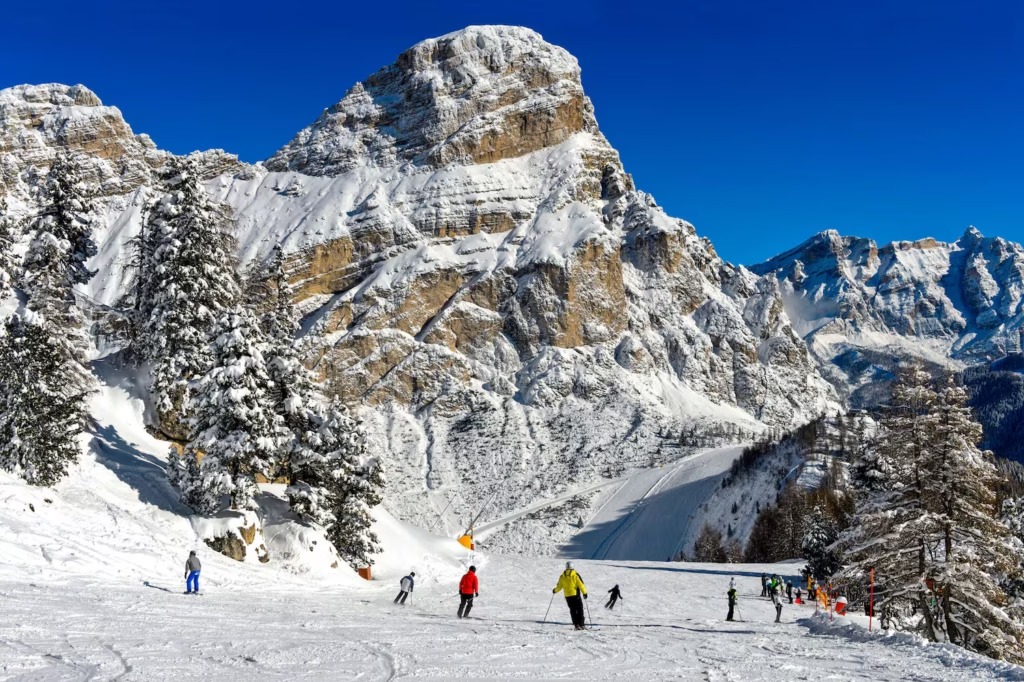
It’s worth knowing about, but intermediate skiers can enjoy the surrounding slopes without having to tackle the Gran Risa itself.
Corvara and Colfosco are particularly good bases for exploring Alta Badia.
Both have convenient lift access, and Corvara is also one of the starting points for the famous Sella Ronda.
This gives confident intermediates the opportunity to ski a much bigger circuit around the Sella mountain group, taking in parts of Val Gardena, Arabba and Val di Fassa.
Just remember that the route includes some more challenging sections, so it’s worth checking the piste map before setting off.
The mountain huts are another reason we love skiing in this part of Italy.
You’ll find plenty of places to stop for lunch, enjoy local South Tyrolean dishes and take in those spectacular Dolomite views.
Why intermediate skiers will love Alta Badia:
130 km of local pistes, with a particularly good choice of blue and red runs.
Wide, well-groomed slopes across the Pralongià plateau.
Plenty of opportunities to explore different sectors during a week’s holiday.
Direct access to the Sella Ronda for confident intermediates.
Traditional mountain huts and some wonderful places to stop for lunch.
Our verdict:
Alta Badia is an excellent choice for both early and confident intermediate skiers.
The wide blue runs and gentle slopes around Pralongià are ideal for building confidence, while the red pistes and Sella Ronda provide plenty of variety for those who are ready to explore further.
We’ve stayed in Corvara and found it a relaxed base, with easy access to the surrounding ski areas.
It’s a place we’d happily return to.
Best Ski Resorts in Europe for Early Intermediates
If you’ve moved beyond the beginner slopes but aren’t quite ready for challenging red runs all day, choosing the right resort is important.
You want plenty of confidence-building blue runs, some gentle reds to practise on and enough variety to keep improving throughout your holiday.
These are our top choices for early intermediate skiers:
1. La Plagne, France
La Plagne has a fantastic selection of blue runs spread across its different sectors.
The wide slopes and choice of easier routes make it a good place to build confidence while gradually trying more challenging pistes.
2. Alta Badia, Italy
Alta Badia is particularly well suited to early intermediates.
The Pralongià plateau has wide, rolling slopes, and there are plenty of blue runs to enjoy at a relaxed pace.
It’s also a lovely area for stopping at mountain huts along the way.
3. Val Gardena, Italy
Val Gardena has a good mixture of blue and red pistes, with easier skiing around Alpe di Siusi and plenty of opportunities to explore further as your confidence grows.
The scenery is another big attraction.
4. Méribel, France
Méribel has a good selection of blue runs, particularly around the Altiport and some of the Tougnète sector.
It also gives early intermediates the opportunity to explore more of the Three Valleys as their ability improves.
It’s worth planning routes carefully, as some connections are more challenging.
Our recommendation:
If you’re a newer intermediate, we’d start with Alta Badia or La Plagne.
Both have plenty of easier terrain, while still offering enough variety to make a full week’s skiing interesting.

Best Ski Resorts in Europe for Confident Intermediates
If you’re comfortable skiing red runs and enjoy covering plenty of ground each day, you’ll probably want a resort with a large, well-connected ski area and a good variety of terrain.
These resorts are particularly good for confident intermediate skiers who want to explore different mountains, tackle longer descents and make the most of their ski holiday.
1. Val d’Isère, France
Val d’Isère is an excellent choice for confident intermediates, with long red runs and access to the extensive Tignes–Val d’Isère ski area.
The Bellevarde sector has some particularly enjoyable descents, while Solaise provides easier alternatives when you want a more relaxed day.
2. Ischgl, Austria
Ischgl is a fantastic resort for skiers who enjoy red runs.
The Silvretta Arena has a particularly large selection of red pistes, with long descents and excellent lift connections linking the Austrian and Swiss sides of the ski area.
3. Saalbach, Austria
The Skicircus is ideal for confident intermediates who enjoy exploring.
Its interconnected areas of Saalbach, Hinterglemm, Leogang and Fieberbrunn provide plenty of variety, and the circuit routes make it possible to spend the day skiing from one village to another.
4. Zermatt, Switzerland
Zermatt has some wonderful skiing for confident intermediates, particularly around Sunnegga, Blauherd and Gornergrat.
The views of the Matterhorn are spectacular, and the international ski area gives you the opportunity to explore towards Cervinia in Italy when conditions and lift connections allow.
5. Lech, Austria
Lech is a wonderful option for confident intermediates who enjoy exploring a large ski area without necessarily seeking the steepest pistes.
The White Ring links Lech, Zürs, Zug and Oberlech, providing a fantastic day out with a mixture of blue and red runs.
Our recommendation:
For confident intermediates who want plenty of red runs and extensive terrain, we’d look closely at Ischgl, Val d’Isère and Saalbach.
If scenery and a memorable day exploring across an international ski area appeal, Zermatt is hard to beat.
Read Our Full Guide On
“The 9 Best Cheap Ski Resorts in Europe: Ultimate Ski Guide for 2026/27”
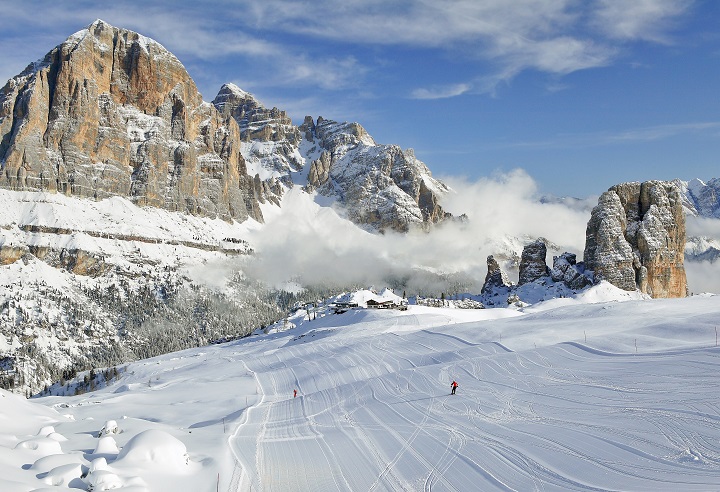
Best Ski Resorts in Europe for Long Runs and Cruising
Some of the best days skiing are spent on long, flowing pistes where you can enjoy the mountain without constantly stopping or changing lifts.
If you love covering kilometres, taking in the scenery and finding a good rhythm on the slopes, these European resorts are particularly worth considering.
Here are five of our favourites from the list.
1. Cervinia, Italy – Long Descents with Matterhorn Views
Cervinia is hard to beat for long cruising runs.
The famous Ventina piste descends approximately 11 km from Plateau Rosà towards the village, with spectacular views of the Matterhorn along the way.
Confident intermediates can also explore the longer cross-border descent towards Valtournenche, subject to the route and lift connections available.
2. Val Gardena, Italy – The Famous La Longia Run
Val Gardena has one of the most enjoyable long descents in the Dolomites.
La Longia runs for approximately 10.5 km from Seceda down to Ortisei, passing through open mountain scenery and wooded sections.
It’s a wonderful run for intermediates who enjoy a long descent, although there are a few steeper sections along the way.
3. Ischgl, Austria – Long Red Runs
Ischgl is a great choice for confident intermediates who enjoy longer red runs.
The famous Eleven descent is approximately 11 km long, starting high on the mountain and eventually bringing you down towards the village.
The route includes a steeper section at the top, so it’s best suited to skiers who are comfortable on red and some more challenging terrain.
4. La Plagne, France – Plenty of Room to Explore
La Plagne has a huge variety of blue and red pistes, with long descents through different parts of the ski area.
The wider Paradiski domain, shared with Les Arcs and Peisey-Vallandry, gives confident intermediates even more terrain to explore.
It’s a good choice if you enjoy skiing different routes each day rather than repeating the same runs.
5. Méribel, France – Exploring the Three Valleys
Méribel is an excellent base for exploring the Three Valleys, with around 600 km of interconnected pistes across the wider ski area.
There are plenty of opportunities to link together long descents and explore neighbouring resorts, including Courchevel, Les Menuires and Val Thorens.
The variety makes it particularly appealing for confident intermediates who enjoy spending the day on the move.
Our recommendation:
For a memorable long descent, we’d put Cervinia and Val Gardena near the top of the list.
If you’d rather have a huge choice of different runs to explore throughout the week, La Plagne and Méribel are excellent choices.
For more comfort and convenience, compare these car rentals: DISCOVER CARS
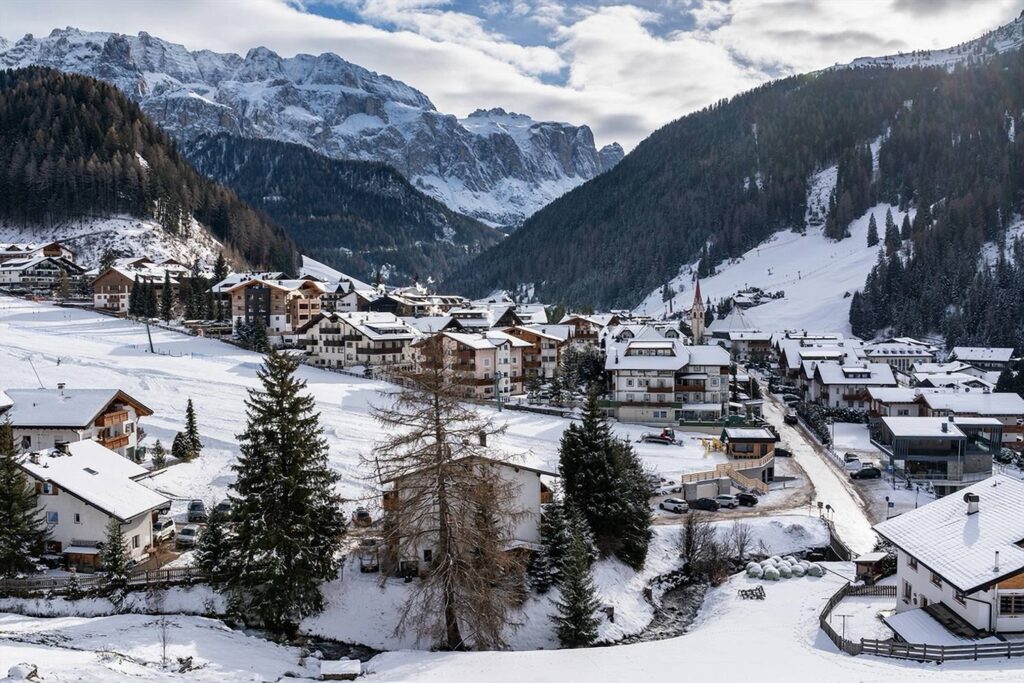
Which European Ski Resort Is Best for Your Skiing Ability?
Choosing the right ski resort depends on how confident you feel on the slopes and what you want from your holiday.
Some resorts have plenty of gentle blue runs, while others are better suited to skiers who are happy tackling red pistes and exploring extensive ski areas.
Here’s a quick comparison to help you decide.
| If you’re looking for… | Our recommended resorts |
|---|---|
| Gentle blue runs and confidence-building terrain | Alta Badia, La Plagne |
| A good mix of blue and red runs | Val Gardena, Méribel |
| Plenty of challenging red runs | Ischgl, Val d’Isère |
| A large ski area to explore | Saalbach, Méribel |
| Long cruising pistes | Cervinia, Val Gardena |
| Spectacular mountain scenery | Zermatt, Alta Badia |
| A relaxed alpine village atmosphere | Lech, Alta Badia |
Our Top Picks by Skiing Ability
Early intermediates: Alta Badia and La Plagne are excellent choices, with plenty of blue runs and easier terrain to help you build confidence.
Improving intermediates: Val Gardena and Méribel offer a good mixture of blue and red pistes, giving you plenty of opportunities to progress.
Confident intermediates: Ischgl, Val d’Isère and Saalbach are particularly good for skiers who enjoy longer red runs and exploring extensive ski areas.
Intermediates who love long descents: Cervinia and Val Gardena are two standouts, with some wonderfully long runs to enjoy.
Remember that ski ability isn’t always easy to categorise.
A skier who is comfortable on wide, groomed red runs may find narrow or steep pistes much more difficult.
Always check the piste map and choose routes that match your confidence, rather than simply the resort’s overall difficulty rating.
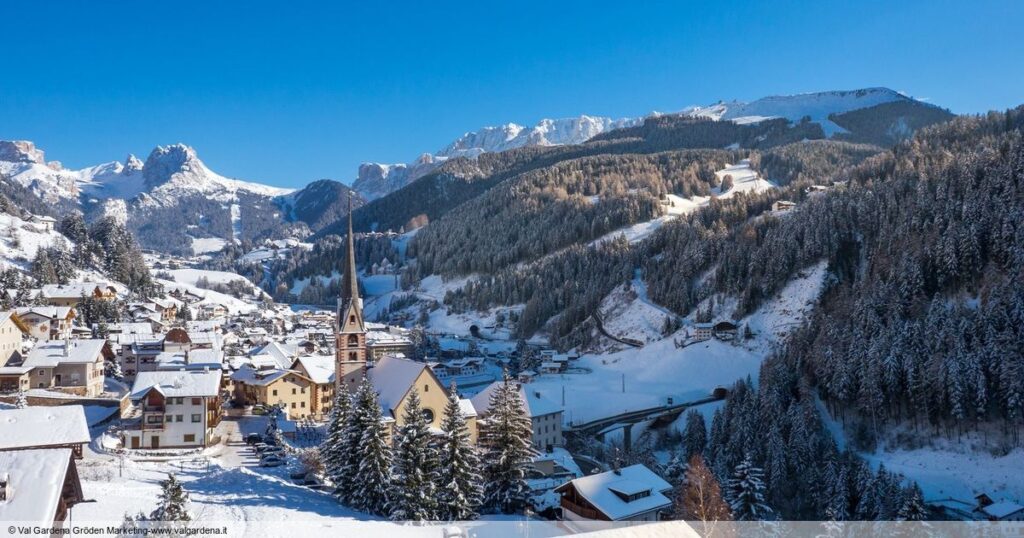
Where to Stay for an Intermediate Ski Holiday in Europe
When choosing accommodation for a ski holiday, it’s worth thinking about more than just the hotel.
Staying close to the right lifts, having easy access to the slopes and choosing a village that suits your holiday style can make a big difference.
Some resorts have several villages and ski sectors, so choosing your base carefully can save time and make exploring the mountain much easier.
Here are some of the best areas to consider in our ten recommended resorts.
Méribel, France
Best areas to stay:
Méribel Centre or Méribel-Mottaret.
Méribel Centre is a good choice if you want restaurants, shops and easy access to the main lift system.
Méribel-Mottaret is higher up the mountain and particularly convenient for getting out onto the slopes. Both provide good access to the wider Three Valleys.
La Plagne, France
Best areas to stay:
Plagne Centre, Belle Plagne or Plagne Villages.
Plagne Centre is a convenient base with plenty of facilities and lift access.
Belle Plagne is popular for its attractive pedestrian village and ski-in/ski-out accommodation.
Plagne Villages is another good option if you prefer a quieter setting.
Val d’Isère, France
Best area to stay:
Val d’Isère village.
Staying in the main village gives you convenient access to the lifts, restaurants and shops.
There are also accommodation options around La Daille, which can be a useful base if you want quick access to the slopes and don’t mind being a little further from the village centre.
Lech, Austria
Best areas to stay:
Lech village or Oberlech.
Lech village is an excellent base, with easy access to the lifts, restaurants and shops.
Oberlech sits above the village and is particularly appealing if you want ski-in/ski-out accommodation and a quieter mountain setting.
Saalbach, Austria
Best areas to stay:
Saalbach or Hinterglemm.
Saalbach is a great choice if you want to be close to restaurants, shops and the main lift connections.
Hinterglemm offers another excellent base, with easy access to different parts of the Skicircus and a lively après-ski scene.
Ischgl, Austria
Best area to stay:
Ischgl village.
Ischgl is a convenient base for accessing the Silvretta Arena, with lifts close to the village centre.
You’ll also find plenty of hotels, restaurants and après-ski options, making it a good choice if you enjoy a lively resort after skiing.
Zermatt, Switzerland
Best areas to stay:
Zermatt village or near the Sunnegga and Gornergrat lift stations.
Zermatt has a good choice of accommodation, from traditional hotels to luxury properties and apartments.
Staying within easy reach of the main lift stations makes getting onto the mountain much easier, particularly if you plan to explore different ski sectors.
Cervinia, Italy
Best area to stay:
Breuil-Cervinia village.
Cervinia is a relatively compact resort, and staying near the village centre gives you convenient access to the lifts, restaurants and shops.
There are also plenty of apartments and hotels close to the slopes, making it a practical choice for a skiing holiday.
Val Gardena, Italy
Best areas to stay:
Selva, Santa Cristina or Ortisei.
Selva is an excellent base if you want direct access to the Sella Ronda and the wider Val Gardena ski area.
Santa Cristina offers a quieter village atmosphere, while Ortisei is particularly appealing if you enjoy browsing shops and exploring the village after skiing.
Alta Badia, Italy
Best areas to stay:
Corvara, Colfosco or La Villa.
Corvara is an excellent central base, with convenient access to the Sella Ronda and the surrounding Alta Badia ski area.
Colfosco is a quieter option close to the slopes, while La Villa is well placed for exploring the Piz La Ila sector.
We stayed in Corvara and found it a relaxed place to base ourselves, with easy access to the surrounding ski areas.
What Type of Accommodation Should You Choose?
Once you’ve decided on your resort, think about the type of accommodation that suits your budget and holiday style.
Luxury hotels: Ideal if you want spa facilities, restaurants and a little extra comfort after a day on the slopes.
Mid-range hotels: A good option if you want comfortable accommodation without paying for all the extras.
Apartments and chalets: Particularly useful for families, groups or anyone who prefers the flexibility of self-catering.
Budget accommodation: Worth considering if you’d rather spend more of your holiday budget on lift passes, ski hire and eating out.
Ski-in/ski-out accommodation: Convenient if you want to get straight onto the slopes without relying on buses or walking to the lifts.
Our advice is to choose your accommodation location before getting too caught up in hotel prices.
A slightly more expensive property close to the lifts can sometimes make the whole holiday easier.
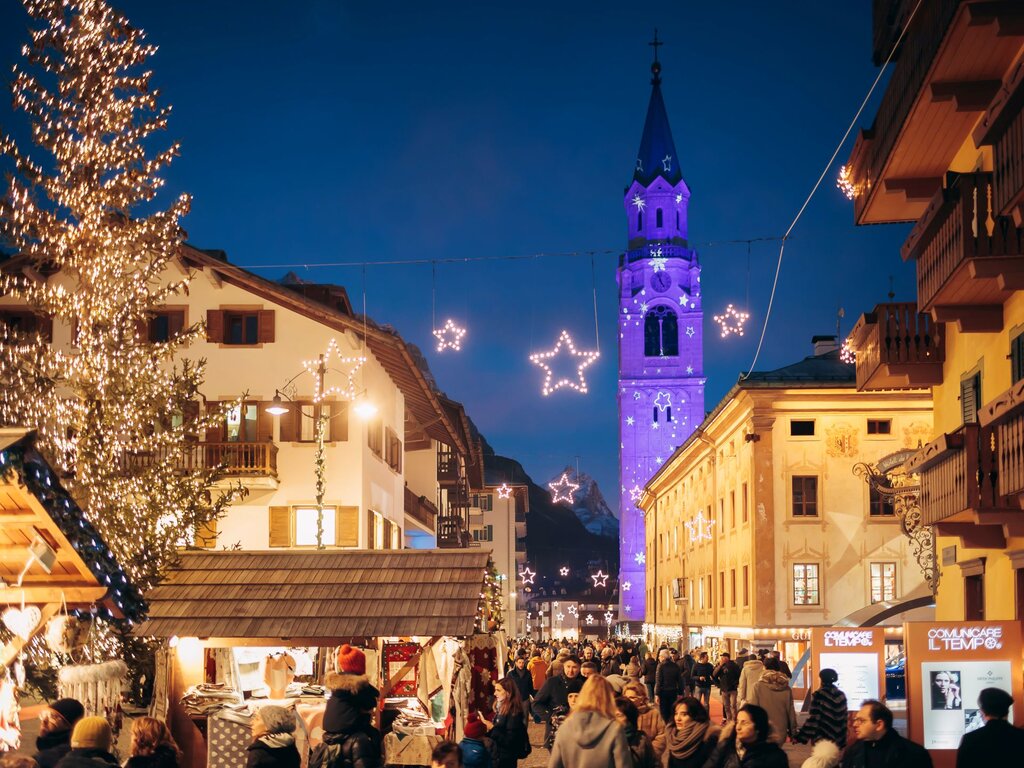
Best Time of Year to Go Skiing in Europe
The European ski season generally runs from December to April, although the exact dates depend on the resort, its altitude and snow conditions.
For intermediate skiers, choosing the right time can make a big difference.
You want good snow coverage, plenty of open pistes and, ideally, enough space to enjoy the slopes without spending half your holiday in lift queues.
Here’s what to expect throughout the season.
December – The Start of the Ski Season
December is an exciting time to head to the mountains, particularly in the run-up to Christmas. However, early-season snow conditions can be unpredictable, especially at lower-altitude resorts.
If you’re planning a December ski holiday, look at higher resorts such as Cervinia, Zermatt, Val d’Isère and Ischgl, where the upper slopes offer better snow reliability.
Christmas and New Year are also very popular, so expect higher accommodation prices and busier pistes.
January – Excellent Snow and Quieter Slopes
January is one of our favourite times for a European ski holiday, particularly after the New Year crowds have gone home.
The snowpack is generally well established, temperatures are colder and the slopes are often quieter outside the school holidays.
The middle and second half of January can be an excellent choice for intermediate skiers who want to spend more time exploring the mountain and less time waiting in queues.
February – Great Snow but Busy Resorts
February is usually a very good month for snow conditions, but it’s also one of the busiest periods of the European ski season.
British and European school holidays bring plenty of families to the mountains, particularly around half term. Accommodation can be expensive, and popular pistes and lifts are often crowded.
If February is your only option, book early and consider choosing a larger ski area where you have plenty of different runs to explore.
March – Longer Days and Spring Skiing
March is another excellent month for intermediate skiers. The days are longer, there’s usually a good base of snow and you can enjoy some lovely sunny afternoons on the mountain.
Higher resorts such as Cervinia, Zermatt, Val d’Isère and Ischgl are particularly good options later in the season.
Snow can soften during the afternoon, especially on lower slopes, but March is a lovely time to enjoy longer days and lunch on a sunny mountain terrace.
April – Choose Your Resort Carefully
April can still be a great time to ski, particularly if you choose a high-altitude resort with good snow coverage.
Cervinia, Zermatt and Val Thorens are worth considering, although the amount of open terrain will depend on the season and scheduled closing dates.
Expect warmer temperatures, softer afternoon snow and fewer people outside the Easter holiday period.
Our recommendation:
For the best combination of snow conditions, quieter slopes and value, we’d look at the second half of January or the first half of March.
If you prefer warmer days and sunshine, March is particularly appealing

Frequently Asked Questions About Skiing in Europe for Intermediate Skiers
1. Which European ski resort is best for intermediate skiers?
Alta Badia, La Plagne, Méribel and Val Gardena are excellent choices for intermediate skiers.
They have a good selection of blue and red runs, well-connected pistes and plenty of variety for a week’s skiing.
2. Which ski resort is best for early intermediate skiers?
Alta Badia and La Plagne are particularly good for early intermediates.
Both have plenty of wide blue runs where you can build confidence, along with easier red pistes to try as your skiing improves.
3. Which European ski resorts are best for confident intermediates?
Ischgl, Val d’Isère, Saalbach and Zermatt are excellent choices for confident intermediates.
They have extensive ski areas, plenty of red runs and opportunities to explore different mountains and valleys.
4. Are the Dolomites good for intermediate skiers?
Absolutely.
The Dolomites are particularly good for intermediate skiing, with wide, well-groomed pistes, beautiful mountain scenery and excellent mountain restaurants.
Val Gardena and Alta Badia are two of our favourite areas, and both provide access to the famous Sella Ronda.
5. Which European ski resort has the longest runs for intermediate skiers?
Cervinia in Italy is famous for its approximately 11 km Ventina descent from Plateau Rosà towards the village.
Val Gardena also has the wonderful 10.5 km La Longia run from Seceda to Ortisei. Both are fantastic choices for skiers who enjoy long descents.
6. Is February a good time for intermediate skiers to go to Europe?
February generally has good snow conditions, but it’s also one of the busiest months of the ski season because of European school holidays.
If you have flexibility, January or March can be quieter alternatives.
7. How many days should an intermediate skier spend at a ski resort?
A week is ideal if you want to explore a larger ski area and get to know the resort.
Five days can also be enough for a smaller ski area, particularly if you’re happy to revisit some of your favourite runs.
8. Do intermediate skiers need to ski red runs?
Not necessarily.
Many intermediate skiers are still building confidence and are perfectly happy spending most of their time on blue runs.
Red pistes provide opportunities to develop your technique, but you should always choose runs that match your ability and confidence.
For more comfort and convenience, compare these car rentals: DISCOVER CARS
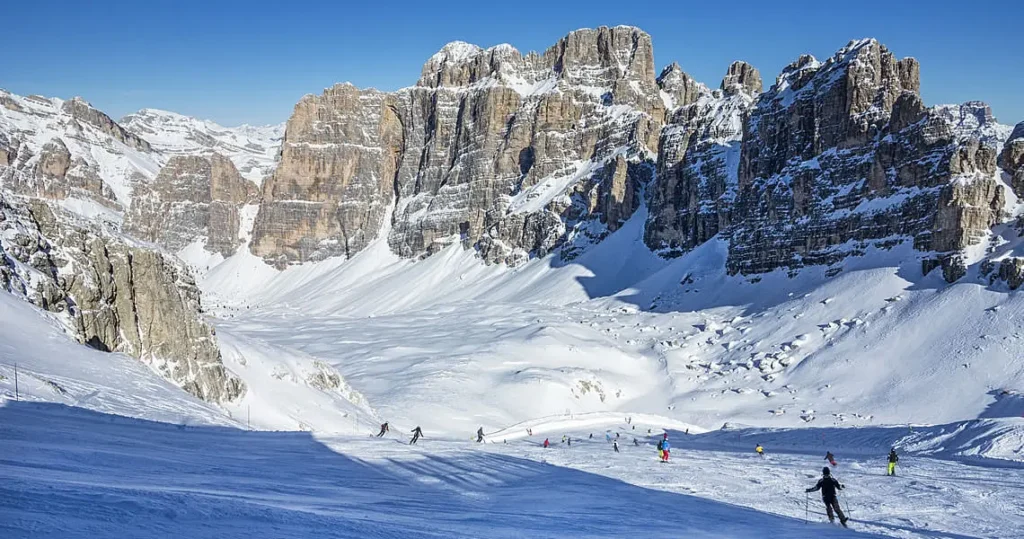
Should You Get Ski Travel Insurance?
(Short Answer: YES)
While ski resorts in Europe don’t legally require you to have travel insurance, buying ski-specific travel insurance is one of the smartest decisions you can make.
Mountain travel comes with real risks — from injuries on icy slopes to delayed flights, lost luggage, or damaged ski gear.
One accident or missed connection can cost far more than a full year of coverage.
As a traveller and skier myself, I’ve consistently found SafetyWing offers some of the best winter-sports coverage for international ski trips.
Best Ski Travel Insurance Companies for 2025/26
Two companies consistently stand out for skiers, each for different reasons.
1. SafetyWing
(Best for Long-Term Ski Travel & Affordability)
We personally use SafetyWing, and have since 2019.
It’s perfect for skiers spending multiple weeks or a whole season abroad.
You can get a Quote here.
When my wife broke her ankle skiing in Wengen, they were fantastic, they paid for all our expenses without any delay.
2. World Nomads
(Best for Adventure Coverage)
If you’re planning a trip that includes off-piste skiing with a guide, winter hiking, or multiple snow sports, World Nomads often provides broader adventure coverage.
They’re a favourite among travellers who want all activities covered under one policy.
Even experienced skiers will tell you — it only takes one icy patch to ruin both a knee and a bank account.
We Can Help Plan Your Adventure
Custom Ski Itineraries in Europe Designed For You
Final Thoughts
Choosing the right ski resort can make all the difference to your holiday, particularly when you’re an intermediate skier.
You want somewhere with plenty of blue and red runs, good lift connections and enough variety to keep you exploring throughout the week.
After skiing in Europe for many years and visiting more than 50 resorts, we’ve found that every destination has its own character.
Some, like Alta Badia and La Plagne, are wonderful for building confidence, while others, including Ischgl, Val d’Isère and Saalbach, are better suited to confident intermediates who enjoy longer red runs and bigger ski areas.
If we had one piece of advice, it would be to choose a resort that suits your ability rather than simply picking the biggest ski area or the most famous name.
You’ll enjoy your holiday far more when you feel comfortable on the slopes and have the confidence to explore.
And don’t forget to leave time for those long mountain lunches, beautiful views and a little après-ski. After all, a European ski holiday is about much more than the kilometres you cover on the mountain!
PLAN YOUR SKI ADVENTURE
Booking a ski trip involves a range of reliable resources to ensure a smooth and enjoyable experience. I have listed below our favorite companies we use when we plan our ski holiday.
BOOK YOUR FLIGHT – GOING is a great search engine if you are flexible about your travel destination and dates. GOING is our new go to.
Booking.com– for accommodation, we rely on Booking.com for its extensive options and user reviews. We find they have the cheapest rates and offer payment options. In addition, VRBO is another terrific website for all types of accommodations.
Train Travel– to European ski resorts is convenient and scenic, popular trips include Glacier express to Zermatt, the Eurostar from London to the French Alps. We find Omio or Rail Europe are the best sites for booking trains in Europe.
Car Hire – we usually hire a car it offers us flexibility and convenience, allowing easy access to most resorts. Companies like Discover Cars or Rentalcars.com provide reliable options with winter equipment.
Travel insurance– Don’t ski without it. If you get hurt on the mountain it could cost you a small fortune if you’re not insured. We use SAFETYWING when my wife broke her ankle a few years ago in Wengen they were terrific.
Ski Equipment. – Bring your own ski gear, its usually cheaper and much better than renting, it ensures you have a perfect fit. Owning also saves time and money in the long run. Equipment like Skis, Pants and Jackets, Gloves, Ski-helmets and Thermal underwear” can all be bought online. You can purchase everything you need from BACKCOUNTRY
ARC’TERYX – is a go to reliable brand for outdoor adventure and travel, their wide range includes light weight durable, easy to clean travel gear.
Check out our RESOURCE PAGE for more additional planning.