Best Ski Areas in Val di Fassa, Italy: Where to Ski in 2026/27
Timeless Wanderers: Posted October 19, 2026
If you’re planning a ski holiday in the Italian Dolomites, Val di Fassa is a wonderful place to start.
This beautiful mountain valley in Trentino has access to a variety of ski areas, spectacular mountain scenery and some of the most enjoyable skiing in northern Italy.
What makes Val di Fassa particularly appealing is the choice.
You can spend your days skiing wide, well-groomed red runs, exploring different mountain areas, tackling more challenging descents or linking up with the famous Sella Ronda.
There are also gentler slopes for beginners and families who want to build their confidence on skis.
But with several ski areas to choose from, deciding where to spend your time can be a little confusing, especially if this is your first visit.
Should you stay in Canazei for easy access to the Sella Ronda?
Is Campitello a better base for your holiday?
What about Pozza di Fassa, Vigo di Fassa or the nearby ski areas of Alpe Lusia and San Pellegrino?
In this guide, we’ll explain what each area offers, who it’s best suited to and what you should consider before booking your accommodation.
We’ll also share practical advice on ski passes and getting around, so you can spend less time working out the logistics and more time enjoying the mountains.
We’ve been skiing in Europe for decades and have visited resorts across the Alps.
In this guide, we’re focusing on helping you choose the right areas for your own ski holiday, whether you’re a beginner, an intermediate skier keen to explore or an experienced skier looking for a week of varied terrain.
Let’s take a closer look at the best ski areas in Val di Fassa and find the right one for you.
Why Choose Val di Fassa for a Ski Holiday?
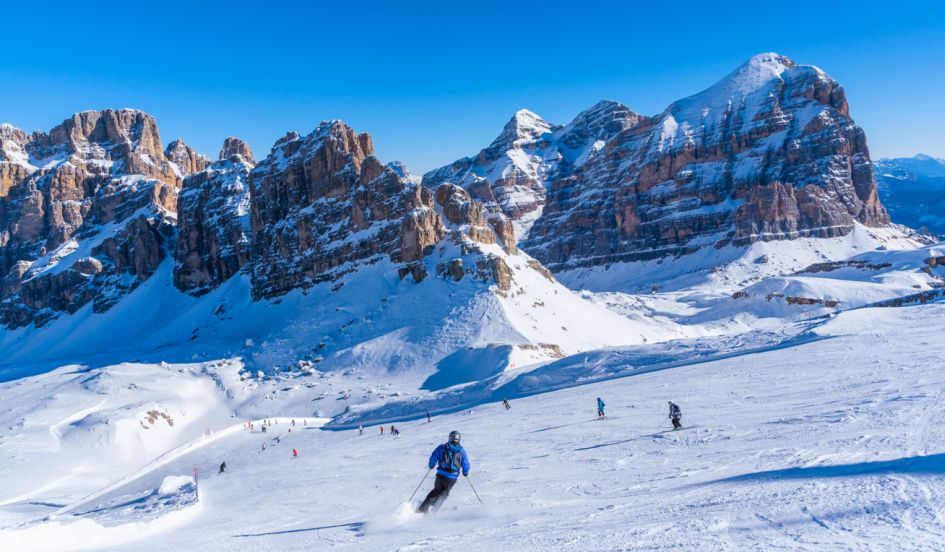
Val di Fassa has plenty going for it, but its biggest advantage is the variety of skiing available within reach of the valley’s villages.
You don’t have to spend your entire holiday on the same handful of runs, and with the right lift pass, you can explore beyond your local ski area.
The scenery is another major attraction.
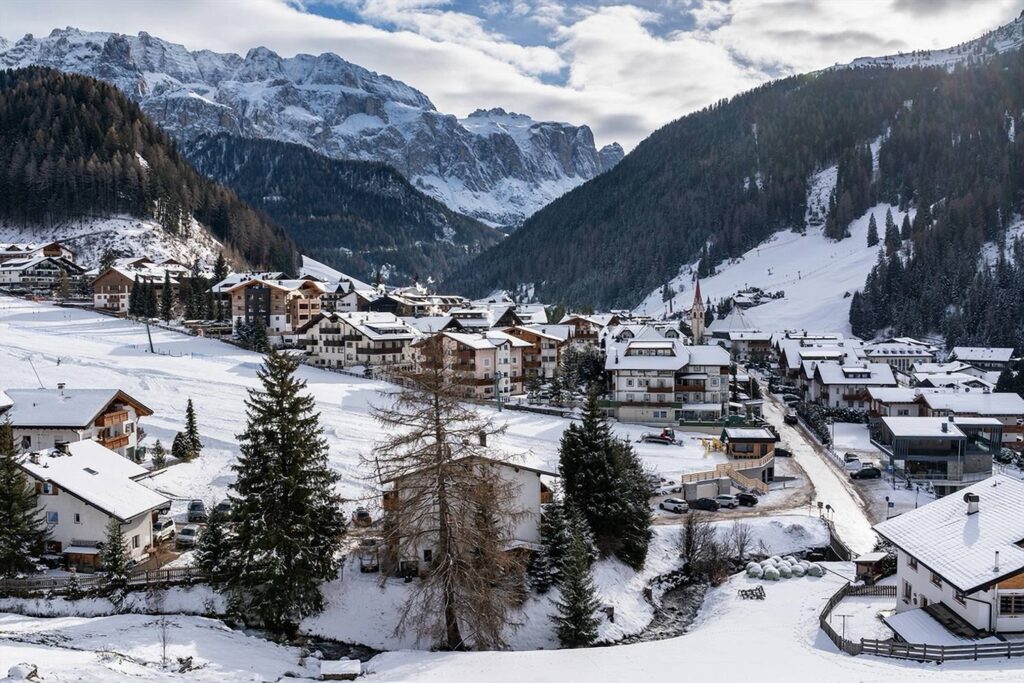
The valley is surrounded by the dramatic peaks of the Dolomites, and the views change as you move between areas.
Add traditional mountain villages, Italian food and welcoming rifugios where you can stop for lunch, and you have the ingredients for a ski holiday that offers much more than time on the pistes.
For many skiers, Val di Fassa is also an excellent base for discovering the wider Dolomites.
Canazei and Campitello provide access to the Sella Ronda, while other villages offer different starting points and a slightly different feel.
The key is choosing the right area for your ability, the kind of skiing you enjoy and how much exploring you want to do.
We can plan your Dream Ski Trip to Europe: Custom Itineraries for the Perfect winter Holiday.
With over 25 years of experience skiing in over 50 different ski resorts in Europe, we can help you plan your perfect winter escape.
Planning a ski trip to Europe can be exciting, but choosing the right resort and organising the perfect itinerary can quickly become overwhelming.
That’s where we come in.
We offer a personalised planning service that helps you decide exactly where to ski, based on your style, budget, and experience.
“Plus, we can help you plan a fun week of European sightseeing around your ski trip, making your winter holiday easier, smoother, and full of unforgettable memories.”
“Let us plan your perfect trip with a custom itinerary designed just for you.
Fill out the form and let’s begin your dream.”
Understanding the Val di Fassa Ski Areas
One of the best things about skiing in Val di Fassa is the variety of terrain you can explore.
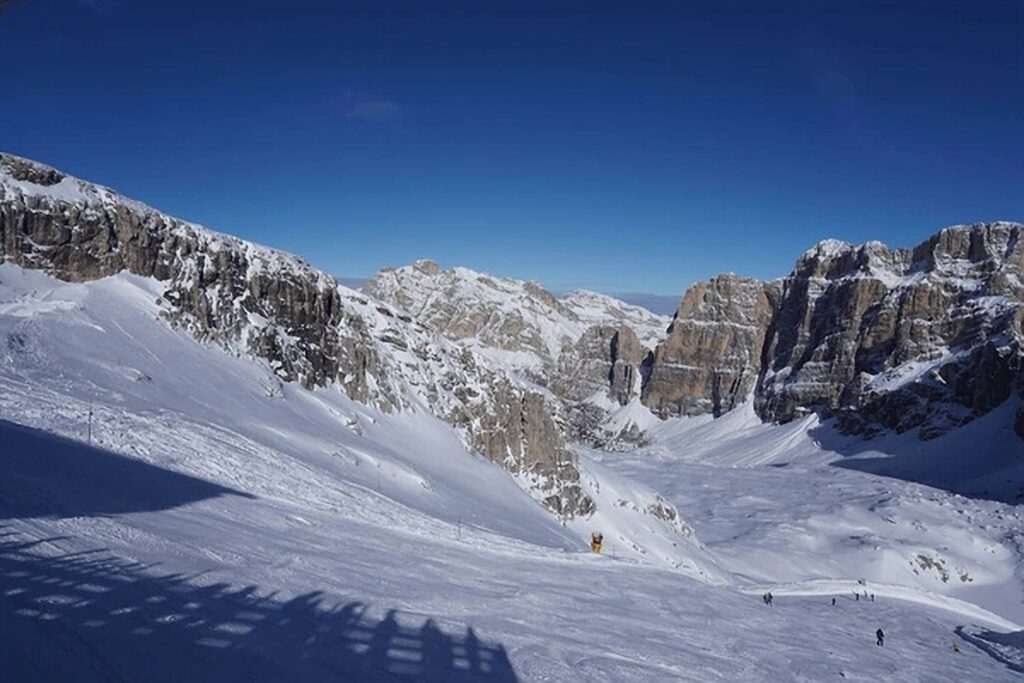
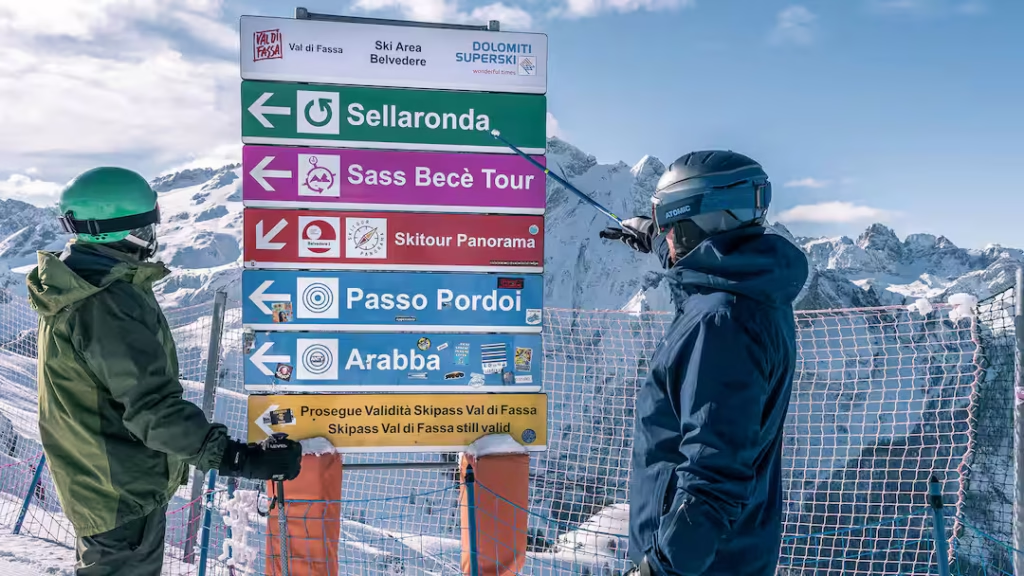
The official regional guide identifies six ski areas, ranging from the well-known Belvedere and Col Rodella slopes near Canazei and Campitello to the quieter-feeling areas around Vigo di Fassa and the neighbouring mountain passes.
Although these areas are part of the wider Val di Fassa ski destination, they don’t all connect directly on skis.
Some journeys between them involve a ski bus or other transport, so it’s worth checking the map before deciding where to spend each day.
Here are the main areas to know about when planning your holiday.
1. Belvedere – Col Rodella: Best for Intermediate Skiers and the Sella Ronda
If you’re staying in Canazei or Campitello di Fassa, this is likely to be the first ski area you’ll explore.
Belvedere is accessed from Canazei, while Col Rodella is reached from Campitello.
The two sides meet within the wider ski network, giving you plenty of options for a full day on the mountain.
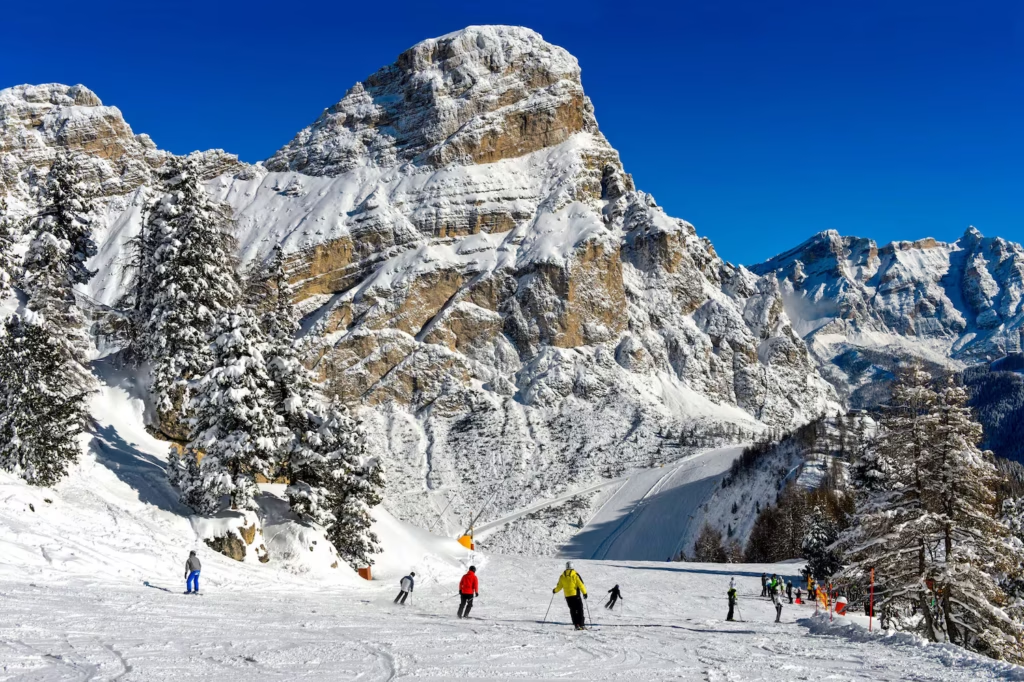
The area is particularly appealing to intermediate skiers, with wide, well-groomed red runs, long descents and magnificent views of the surrounding Dolomites.
More experienced skiers will also find challenging terrain to enjoy.
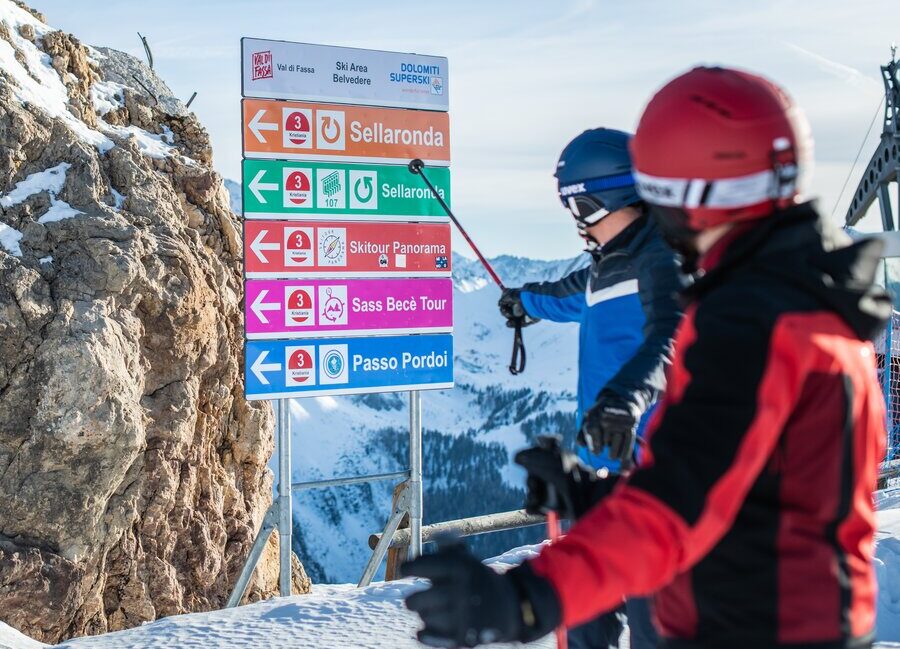
One of its biggest attractions is access to the Sella Ronda, the famous circuit around the Sella mountain group.
From here, you can set off towards Arabba and Val Gardena, provided you have the right ski pass and allow enough time to complete your chosen route.
For a first day, we’d suggest exploring the local slopes and getting familiar with the lifts before tackling a longer circuit.
The Sella Ronda is a wonderful ski day, but it’s much more enjoyable when you aren’t rushing to catch the last lifts.
Best for:
Intermediate skiers, confident beginners progressing to red runs, advanced skiers and anyone keen to ski the Sella Ronda.
2. Buffaure – Ciampac: Best for Varied Skiing and Exploring Beyond Canazei
The Buffaure–Ciampac area lies around Pozza di Fassa and Alba di Canazei.
It offers a different experience from the busier Belvedere–Col Rodella area, with a mix of slopes and opportunities to explore another part of the valley.
At Buffaure, you’ll find a variety of terrain and impressive mountain views.
Ciampac sits in a broad mountain basin and has slopes suited to different abilities, although some of its more demanding runs are best left to confident skiers.
A useful feature is the lift connection from Alba towards Col dei Rossi, which links this area with Belvedere and opens up access towards the Sella Ronda network.
This makes it possible to combine different parts of the valley in one ski day, depending on conditions and your ability.
However, don’t assume every connection is straightforward or that all routes suit beginners.
Check the piste map and current lift status before setting off.
Best for:
Intermediate skiers looking for variety, confident skiers wanting to explore more of the valley, and families choosing suitable slopes for different abilities.
3. Catinaccio: Best for Beginners, Families and Scenic Skiing
The Catinaccio ski area is accessed from Vigo di Fassa and is worth considering if you prefer a smaller area rather than immediately heading into the wider Dolomiti Superski network.
You’ll find a selection of easier slopes and runs for developing your confidence, along with mountain scenery that makes even a shorter ski day worthwhile.
Families and beginners may appreciate having a more manageable area in which to practise, while experienced skiers could enjoy it as a change of pace.
It’s also a good reminder that choosing a ski holiday isn’t always about finding the largest number of kilometres of pistes.
Sometimes a smaller area that suits your ability and makes your day easier is the better choice.
If you’re staying in Canazei, remember that Catinaccio isn’t simply another sector you can ski into from Belvedere.
Plan the transfer and check the ski-bus timetable before setting off.
Best for:
Beginners, families, less confident skiers and anyone wanting a relaxed day on the slopes.
4. Moena – Alpe Lusia: Best for a Change of Scenery
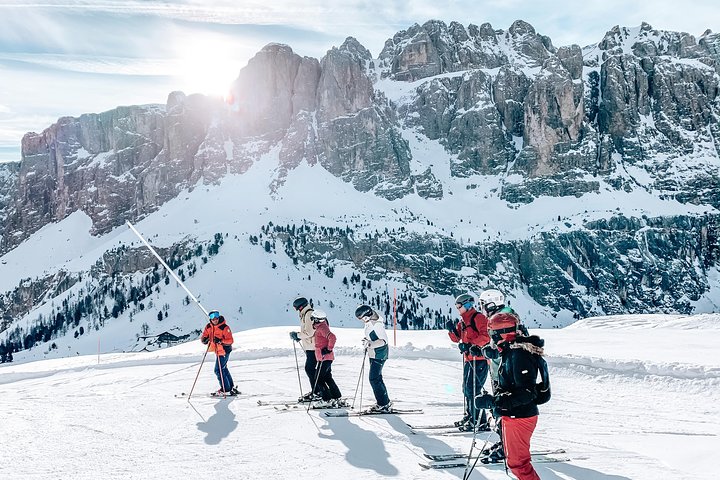
Alpe Lusia, accessed from the Moena area, is another option for skiers who want to explore beyond the slopes around Canazei.
Its terrain includes easier pistes as well as more demanding descents, so it can suit a range of abilities when you choose your runs carefully.
The area is particularly useful if you’re staying around Moena or planning to explore different parts of Val di Fassa during your holiday.
It can also be a good change of scenery for those who don’t want every ski day to revolve around the Sella Ronda.
Bear in mind that Alpe Lusia is not directly linked on skis to the Belvedere–Col Rodella area.
If you’re based in Canazei, check transport options and allow time for the journey.
Best for:
Skiers who enjoy exploring different resorts, families and mixed-ability groups looking for a variety of pistes.
5. Passo San Pellegrino – Falcade: Best for a Full Day Exploring Further Afield
Passo San Pellegrino–Falcade is a larger ski area to consider if you want to venture further afield.
It has a broad selection of pistes, with easier runs for less experienced skiers and more challenging options for those who prefer steeper terrain.
The setting is another reason to visit.
The slopes spread across an attractive mountain landscape, giving you a different perspective on this part of the Dolomites.
This area is especially convenient for people staying near Moena or Passo San Pellegrino.
From Canazei, however, it requires more planning and isn’t a direct ski connection from the Belvedere slopes.
If you decide to spend a day here, check the journey time, lift opening hours and the ski pass required before leaving your accommodation.
Best for:
Skiers wanting a change from the main Val di Fassa areas, mixed-ability groups and those staying towards Moena or Passo San Pellegrino.
6. Carezza: Best for Beginners, Families and Panoramic Runs
Carezza lies near Passo Costalunga, on the other side of the valley from some of the main Canazei ski sectors.
It combines panoramic pistes, wooded runs and areas for beginners, making it a good option for families and skiers who enjoy a varied but less Sella Ronda-focused day.
There are easier slopes for learning and progressing, as well as more technical terrain for confident skiers.
The views of the surrounding Dolomite peaks are a big part of the appeal, and the mountain huts make it easy to build a relaxed lunch stop into your day.
Carezza is also worth considering if some members of your group want winter walks or other mountain activities while others ski.
As with Alpe Lusia and San Pellegrino, plan the journey if you’re staying in Canazei.
Carezza is part of the wider regional ski offering, but it isn’t a direct ski-through connection from Belvedere.
Best for:
Beginners, families, scenic skiing and anyone wanting to explore a different corner of the Dolomites.
Which Val di Fassa Ski Area Should You Choose?
If you have only a few days, you don’t need to visit every area.
Choose a base that suits your skiing plans, then add other areas if you have time and transport makes sense.
For the Sella Ronda: Start with Belvedere–Col Rodella.
For varied skiing near Pozza and Alba: Explore Buffaure–Ciampac.
For beginners and families: Consider Catinaccio or Carezza, choosing runs that match your ability.
For exploring beyond Canazei: Look at Alpe Lusia or Passo San Pellegrino–Falcade.
Before buying your pass, check which areas it covers.
The regional Val di Fassa/Carezza pass and the wider Dolomiti Superski pass don’t provide identical access.
If skiing the Sella Ronda is part of your plan, you’ll need the Dolomiti Superski pass.
Official ski-area details and connections can change, so check the latest maps and lift information for the 2026/27 season before travelling.
Which Val di Fassa Ski Area Is Best for Your Ability?
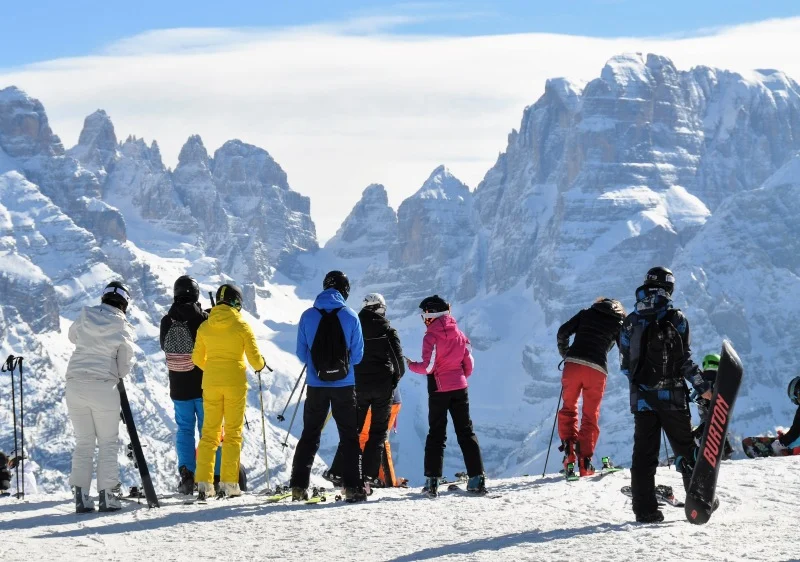
Choosing the right ski area depends on more than the number of kilometres of pistes.
You want runs that suit your ability, lifts that are easy to navigate and enough variety to keep everyone happy throughout the week.
Here is how we’d narrow down the options.
Best Ski Areas in Val di Fassa for Beginners
If you’re learning to ski or still building your confidence, look at Catinaccio, Carezza and the easier slopes around Belvedere.
These areas have beginner-friendly terrain, although the exact choice of runs will depend on your experience and current conditions.
Catinaccio and Carezza are worth considering if you’d prefer to spend time on gentler slopes rather than immediately joining a large network of pistes.
Belvedere is also an option, particularly if you’re staying in Canazei and want to begin exploring the local area.
One important tip:
Don’t choose a resort based only on its reputation for intermediate or advanced skiing.
Check the location of the nursery slopes, ski schools and easy pistes before booking your accommodation.
And remember that a blue run in the Alps may feel different from one you’ve skied at home.
Best Ski Areas in Val di Fassa for Intermediate Skiers
Belvedere–Col Rodella is an excellent starting point for intermediate skiers, particularly if you enjoy long red runs and want to experience the Sella Ronda.
Buffaure–Ciampac is another area worth exploring, offering a different mix of pistes and access to more of the surrounding ski network.
If you’re staying for a week, visiting different areas can keep your skiing varied without having to change accommodation.
For intermediates, Val di Fassa is especially appealing because you can combine enjoyable local skiing with a bigger day out on the Sella Ronda.
Just make sure you’re comfortable skiing red runs and can maintain a steady pace before committing to the full circuit.
Best Ski Areas in Val di Fassa for Advanced Skiers
Confident, experienced skiers have plenty to explore, particularly around Belvedere–Col Rodella and Buffaure–Ciampac.
These areas include more demanding pistes, while the wider Dolomiti Superski network opens up opportunities to ski in neighbouring areas such as Arabba and Val Gardena.
Passo San Pellegrino–Falcade is another option for a change of scenery and a wider selection of terrain.
If you enjoy challenging skiing, check individual piste maps rather than relying on a resort’s overall difficulty rating.
Not every ski area has the same amount of steep terrain, and some of the most rewarding days may involve travelling beyond your immediate base.
Best Ski Areas in Val di Fassa for Families
For families, convenience can matter just as much as the skiing itself.
You may have children learning to ski, teenagers keen to explore further and adults who want to spend the day on longer runs.
Catinaccio and Carezza are worth investigating for families who want a selection of easier slopes.
Belvedere can work well for families staying in Canazei, provided everyone chooses terrain suited to their ability.
Before booking, check how close your accommodation is to the lifts, whether ski schools operate in your chosen area and how easy it will be for family members to meet up during the day.
Our Advice: Choose Your Base Before Planning Every Ski Day
If you’re visiting Val di Fassa for a week, we’d choose accommodation based on the skiing you most want to do, then build the rest of the holiday around it.
For the Sella Ronda and plenty of intermediate skiing, Canazei or Campitello di Fassa are natural choices.
If you’re more interested in the slopes around Pozza di Fassa, look at staying closer to that village.
Moena may be more convenient if you want to explore Alpe Lusia and Passo San Pellegrino.
You don’t need to ski every area to have a wonderful holiday.
Pick the ones that suit your ability and interests, allow time to enjoy the mountain huts and scenery, and avoid spending too much of your day travelling between resorts.
Ski Passes for Val di Fassa: Which One Do You Need?
Val di Fassa has six ski areas, but they aren’t all covered by the same local ski pass.
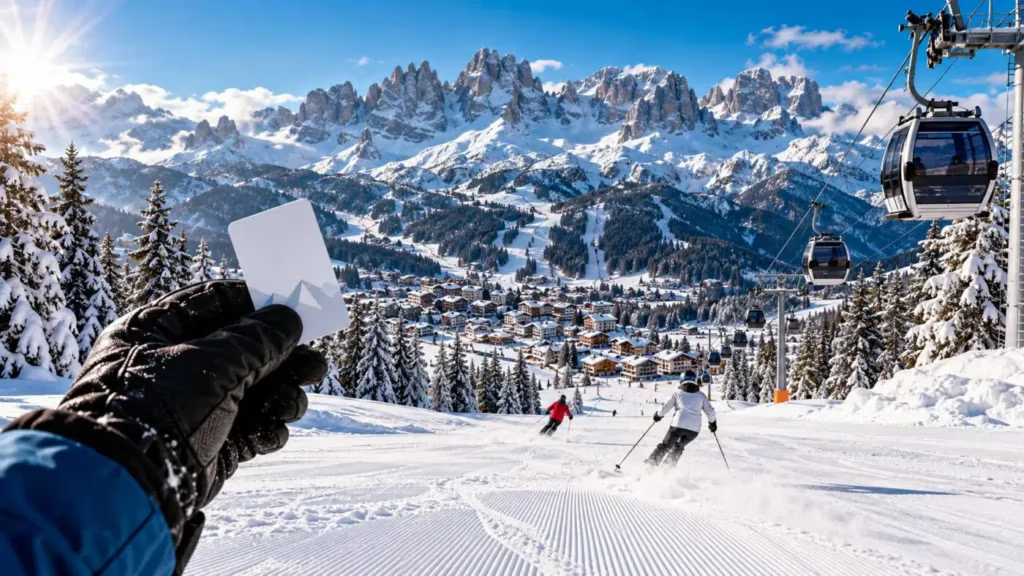
The Val di Fassa/Carezza pass covers the main ski areas around the valley, including Belvedere, Col Rodella, Buffaure, Ciampac and Catinaccio, as well as Carezza.
If you want to ski Alpe Lusia or Passo San Pellegrino, compare the separate Alpe Lusia/San Pellegrino pass or the wider Dolomiti Superski pass, depending on your plans.
Before booking your ski holiday, it’s worth deciding how much of the Dolomites you want to explore.
Your ski pass can make a noticeable difference to the cost of a week’s skiing, so there’s little point paying for wider access if you don’t plan to use it.
There are several pass options, but for most visitors the main choice is between the local Val di Fassa/Carezza pass and the full Dolomiti Superski pass.
Val di Fassa/Carezza Ski Pass
If you plan to spend most of your holiday skiing around Val di Fassa, the local pass may be all you need.
It covers the main Val di Fassa ski areas, including Belvedere, Col Rodella, Ciampac, Buffaure and Catinaccio, as well as Carezza.
This gives you plenty of variety without paying for access to every ski region in the Dolomites.
The pass is worth considering if you want to explore different parts of the valley, ski the local slopes and perhaps try the Panorama ski tour.
You can check the latest prices and coverage on the official Val di Fassa/Carezza ski-pass page.
Dolomiti Superski Pass
If your plans include the famous Sella Ronda, you’ll need the wider Dolomiti Superski pass.
This pass provides access to the connected ski regions across the Dolomites, including Val Gardena, Alta Badia and Arabba.
It gives you far more freedom to explore beyond Val di Fassa and makes sense if you want to ski different valleys during your holiday.
For intermediate and advanced skiers who enjoy covering plenty of ground, that extra flexibility can be well worth the additional cost.
Check the official Dolomiti Superski website for current prices, pass options and online offers.
What About Alpe Lusia and Passo San Pellegrino?
These neighbouring ski areas have their own pass option, the Alpe Lusia/San Pellegrino pass.
If you’re staying around Moena and expect to spend most of your time skiing there, compare this pass with the wider options before buying.
If you want to combine these areas with other Dolomiti Superski regions, check the pass coverage carefully.
How Much Should You Budget for a Ski Pass?
Ski-pass prices vary according to the season, duration, age category and pass type.
Peak holiday weeks can cost more than quieter periods, and online purchase discounts may be available.
Rather than relying on a price from a previous winter, check the official calculator for your exact dates and the number of skiing days you need.
Remember to factor the pass into your overall holiday budget alongside accommodation, equipment hire, lessons, meals and transport.
Our Advice: Which Pass Would We Choose?
For a holiday focused on the local slopes around Val di Fassa, we’d compare the Val di Fassa/Carezza pass first.
If skiing the Sella Ronda is one of the main reasons for your trip, choose the Dolomiti Superski pass instead. It gives you the access you need to explore the wider circuit and neighbouring ski regions.
Our biggest tip is to decide where you want to ski before buying your pass.
A little planning can help you avoid paying for access you won’t use — or discovering that your pass doesn’t cover the route you hoped to ski.
Where to Stay in Val di Fassa for the Best Skiing
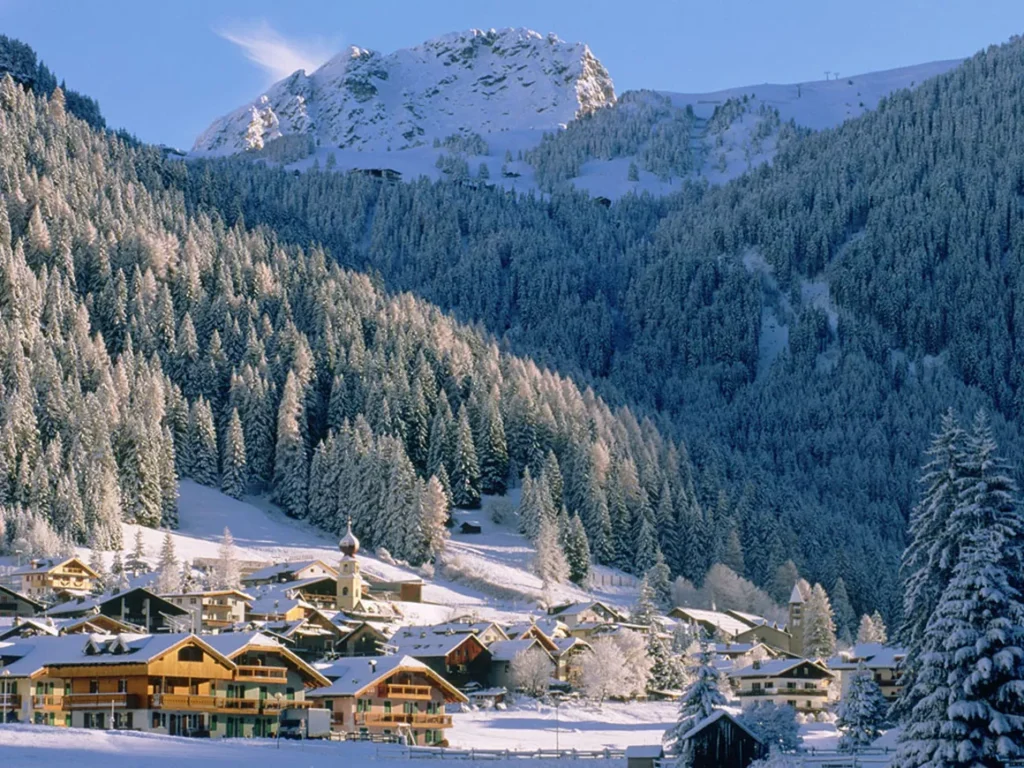
Choosing where to stay in Val di Fassa is almost as important as choosing which ski areas to visit.
The villages have different characters, and some are more convenient than others depending on whether you want to ski the Sella Ronda, explore the local slopes or enjoy a quieter mountain holiday.
The good news is that you don’t need to change hotels during your stay.
Choose one village as your base, then plan your ski days around the lifts and transport connections.
Canazei: Best for the Sella Ronda and a Lively Ski Holiday
Canazei is one of the most popular bases in Val di Fassa, and it’s easy to see why.
The village has direct lift access to the Belvedere ski area, giving you a convenient starting point for local skiing and the Sella Ronda.
You’ll find plenty of accommodation, restaurants, bars and ski-hire shops, so it’s a practical choice if you want everything close at hand after a day on the mountain.
Canazei is particularly well suited to intermediate skiers who want to explore the wider Dolomites.
However, its popularity means accommodation can be expensive during busy winter weeks, especially around Christmas, New Year and February school holidays.
Choose Canazei if:
You want convenient access to Belvedere, the Sella Ronda, restaurants and après-ski.
Best Hotels in Canazei for a Ski Holiday
Luxury stays
Locanda degli Artisti Art Hotel – A boutique-style hotel with distinctive artwork, a restaurant and a central location.
Croce Bianca Leisure & Spa Hotel – A higher-end choice with a swimming pool, spa and restaurant, ideal for relaxing after a day skiing.
Mid-range stays
Hotel Cesa Tyrol – A comfortable option with wellness facilities and a ski bus to the Belvedere slopes.
Hotel La Perla Wellness & Beauty – A central hotel with an indoor pool, wellness centre and convenient access to the ski lift.
Budget-conscious stays
Chalet Margoni – A practical choice for skiers who value a convenient location, breakfast and comfortable accommodation.
Park Hotel Faloria – Worth comparing for its spa facilities, parking and range of room options.
Winter accommodation prices vary considerably, particularly over Christmas, New Year and February half-term.
Compare prices for your dates and check whether breakfast, spa access and ski transport are included before booking.
Other accommodation in Canazei
Campitello di Fassa: Best for Col Rodella and a Slightly Quieter Base
Campitello sits just south of Canazei and has its own lift access to Col Rodella.
From there, you can reach the wider Sella Ronda network, making it another excellent base for intermediate skiers who want to explore.
The village has a more compact feel than Canazei, although it still has hotels, restaurants and the essentials for a ski holiday.
Depending on where you stay, you may find it a little quieter in the evenings.
Campitello and Canazei are close enough to compare when looking for accommodation, but don’t assume every hotel is within an easy walk of the lifts.
Check the exact location and whether a ski bus or hotel shuttle is available.
Choose Campitello if:
You want access to Col Rodella and the Sella Ronda, with a smaller village feel.
Best Hotels in Campitello di Fassa for a Ski Holiday
Its main advantage is the Col Rodella cable car, which gives skiers access to the Sella Ronda and the wider Dolomiti Superski area.
Staying close to the lift means less time getting to the slopes and more time skiing.
Luxury stays
Golden Park Resort – A wellness-focused resort with an indoor pool and sauna, ideal for relaxing after a day on the mountain.
Hotel Rubino Deluxe – An option to consider if you prefer a full-service hotel with leisure facilities.
Mid-range stays
Hotel Soreghes Gran Chalet – An alpine-style hotel close to the Col Rodella lift, worth considering for its location and traditional mountain atmosphere.
Hotel Medil – A convenient choice near the cable car, with an indoor pool and spa facilities.
Garni Aritz – A bed-and-breakfast-style option close to the ski lift, with breakfast and wellness facilities.\Budget-conscious stays
Budget-conscious stays
Hotel Ramon – A practical base near the gondola, with a restaurant and wellness centre.
If skiing the Sella Ronda is a priority, check the walking distance to the Col Rodella cable car before booking.
More accommodation in Campitello
Pozza di Fassa: Best for Buffaure and Local Skiing
Pozza di Fassa is worth considering if you want to spend time exploring the Buffaure slopes and the wider ski areas around this part of the valley.
The village has accommodation, restaurants and local facilities, and it can be a useful base for skiers who want something different from the busy centre of Canazei.
The nearby ski areas offer varied terrain, although the connections to other sectors need a little planning.
If you intend to ski the Sella Ronda regularly, compare the travel time to the lifts with staying in Canazei or Campitello.
A slightly cheaper hotel can lose some of its appeal if you spend a lot of time travelling each morning.
Choose Pozza di Fassa if:
You want to explore Buffaure–Ciampac and prefer a base away from Canazei’s main centre.
Best Hotels in Pozza di Fassa for a Ski Holiday
Luxury stays
Renè Dolomites Boutique Hotel – A boutique-style choice for couples who want spa facilities, good dining and a more indulgent stay.
Hotel Terme Antico Bagno – Worth considering if thermal wellness and relaxation are an important part of your ski holiday. Check the transport arrangements to the ski lifts.
Mid-range stays
X Alp Hotel – A contemporary hotel to compare for its alpine setting and convenient base for exploring the valley.
Sport Hotel Majarè – Particularly useful for skiers wanting to stay close to the Buffaure ski connection, with wellness facilities and a restaurant.
Budget-conscious stays
Hotel Garnì San Nicolò – A small mountain hotel exceptionally close to the Buffaure gondola, making it a practical choice for getting onto the slopes.
Hotel Nès Crépes – A straightforward option with free private parking and access to village services.
Winter prices vary considerably, so compare rates for your dates before booking in Pozza di Fassa
Vigo di Fassa: Best for Families and a More Relaxed Stay
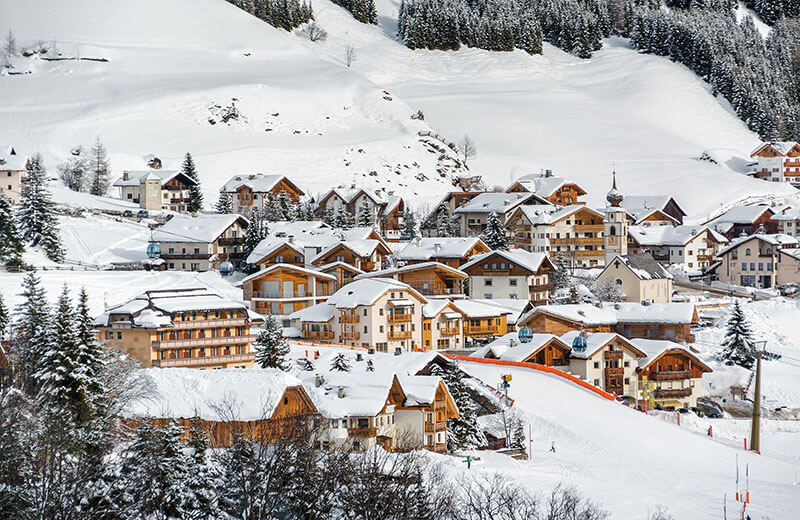
Vigo di Fassa can be a good choice for families and visitors who prefer a village atmosphere over a larger ski resort.
Its local ski area, Catinaccio, offers a different experience from the Sella Ronda-focused slopes around Canazei and Campitello.
There are hotels, restaurants and local services, but you’ll need to plan transport if you want to ski the other areas during your holiday.
For families with beginners, the convenience of having suitable slopes nearby may be more important than being right beside the largest ski network.
Just check that the local terrain and ski-school arrangements match everyone’s needs.
Choose Vigo di Fassa if: You prefer a more relaxed base and want to focus on the Catinaccio area.
Best Hotels in Vigo di Fassa for a Ski Holiday
Luxury stays
Ciampedie Luxury Alpine Spa Hotel – A high-end option with an outdoor pool, spa and fitness facilities, ideal for a relaxing mountain break.
Olympic SPA Hotel – Adults Only – A wellness-focused hotel for couples who prefer an adults-only atmosphere.
Mid-range stays
Dolasilla Park Hotel – A practical choice close to the Catinaccio lift, with a sauna and Turkish bath.
Hotel Garnì Carpe Diem – A smaller property worth considering for its breakfast, comfortable rooms and wellness facilities.
Budget-conscious stays
Garni Enrosadira – A guesthouse-style option to compare for comfortable rooms, breakfast and mountain views.
Casa di Franz – A simpler accommodation choice close to village amenities and transport.
More accommodation Vigo di Fassa
Moena: Best for Exploring Alpe Lusia and Passo San Pellegrino
Moena is a pretty mountain town at the southern end of Val di Fassa, with a good selection of accommodation, restaurants and shops.
It’s a useful option if you want to explore Alpe Lusia and Passo San Pellegrino rather than concentrating on the Sella Ronda.
The town has a different feel from Canazei and Campitello, and it can appeal to visitors who want a mix of skiing and time spent enjoying the village itself.
The main consideration is location. If your priority is skiing the Sella Ronda every day, Moena isn’t the most convenient base.
If you’re happy to explore the ski areas closer to the town, it could be a good fit.
Choose Moena if:
You want a town atmosphere and plan to ski Alpe Lusia and Passo San Pellegrino.
Best Hotels in Moena for a Ski Holiday
Luxury stays
Hotel Garden – An upscale hotel within walking distance of the village centre, with pool and wellness facilities.
Hotel Patrizia Dolomites Glamour – A comfortable four-star option with spa facilities and a mountain setting close to the centre.
Mid-range stays
Leading Relax Hotel Maria – A central hotel with an extensive wellness area, convenient for enjoying Moena in the evenings.
Monza Dolomites Hotel – A family-run hotel with a heated indoor/outdoor pool and wellness facilities in a quieter setting.
Budget-conscious stays
Dolomites Hotel La Meridiana – A straightforward option with a garden, parking and a bar, worth comparing for your dates.
Hotel El Laresh – A traditional mountain hotel with a restaurant and outdoor parking.
Other accommodation in Moena
Which Val di Fassa Village Should You Choose?
Here’s a quick comparison to help narrow down your options.
Village | Best suited to | Main consideration |
|---|---|---|
Canazei | Sella Ronda, intermediate skiing, restaurants and après-ski | Popular and potentially expensive in peak weeks |
Campitello di Fassa | Col Rodella and Sella Ronda access | Check the distance from your accommodation to the lift |
Pozza di Fassa | Buffaure and exploring local ski areas | More planning needed for Sella Ronda days |
Vigo di Fassa | Families and a quieter stay | Not directly connected to the main Sella Ronda slopes |
Moena | Alpe Lusia, Passo San Pellegrino and town life | Less convenient for skiing the Sella Ronda daily |
Our tip:
Before booking, look at the accommodation’s exact position on a map, not just the village name.
Being close to a lift can save time and effort every morning, especially when you’re carrying skis and boots.
For a first ski holiday focused on the Sella Ronda and the central Dolomites, we’d start by comparing Canazei and Campitello di Fassa.
If your plans focus on other areas, the villages farther down the valley deserve a closer look.
For more comfort and convenience, compare these car rentals: DISCOVER CARS
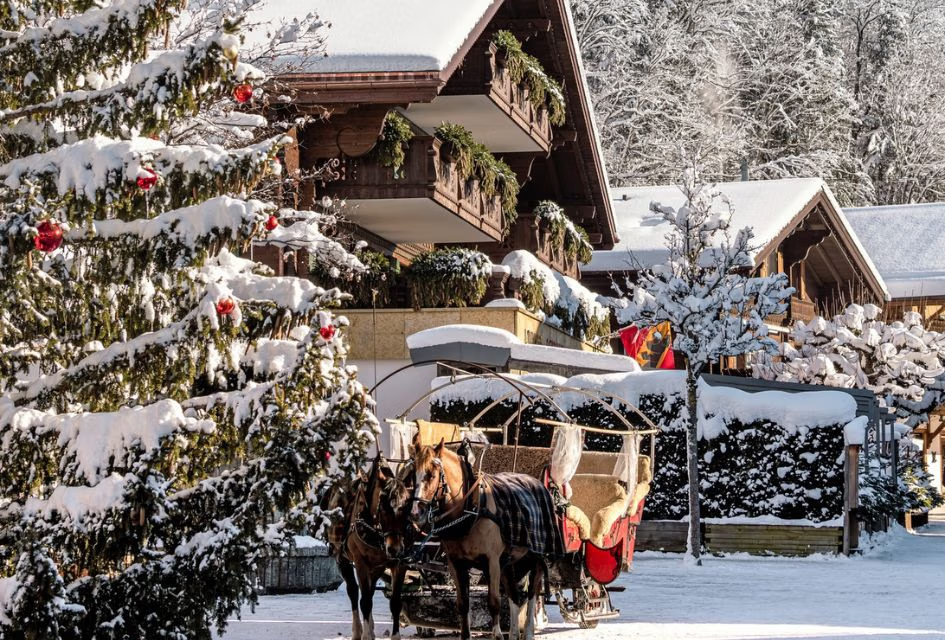
Best Time to Ski in Val di Fassa
Choosing when to visit Val di Fassa can make a real difference to your ski holiday.
The best dates depend on what matters most to you:
reliable snow, quieter pistes, festive Christmas celebrations or longer days for exploring the Dolomites.
The main ski season generally runs from early December into early April. For the 2026/27 season, Val di Fassa/Carezza is scheduled to open on 4 December 2026 and close on 4 April 2027, although operating dates can change.
Not every lift or piste will necessarily be open at the beginning or end of the season.
Here’s what to consider when choosing your dates.
Early December: A Chance to Ski Before the Christmas Rush
Early December can be an attractive time to visit if you want to get on the slopes before the busiest Christmas period.
The villages begin preparing for winter, and you may find better accommodation availability than during the main holiday weeks.
However, don’t book an early-season trip expecting every ski area and run to be open.
Snowmaking helps maintain pistes when temperatures allow, but it cannot guarantee that the entire ski network will be operating.
If you choose these dates, check the latest lift-opening information before booking non-refundable travel and accommodation.
Best for:
Skiers with flexible plans who want to avoid the main Christmas crowds.
Christmas and New Year: Festive Atmosphere and Busy Slopes
Christmas is a wonderful time to experience the Dolomites.
Val di Fassa’s villages take on a festive feel, mountain restaurants are welcoming places to stop for lunch, and the surrounding peaks provide a spectacular winter backdrop.
The trade-off is demand.
Accommodation and ski lessons can book up well in advance, and popular lifts and pistes may be busy during holiday periods.
Snow conditions also vary from year to year.
The higher slopes and snowmaking facilities help, but no resort can promise natural snowfall or full terrain coverage on particular dates.
If you’re planning a Christmas ski holiday, book early and check which ski areas are expected to be operating.
Best for:
Families, festive ski holidays and travellers who enjoy a lively winter atmosphere.
January: Cold Weather and Excellent Skiing Potential
January is often a good choice for skiers who want to concentrate on the slopes after the Christmas and New Year rush has passed.
Temperatures can be cold, particularly in the mornings and at higher elevations, so pack suitable layers and warm gloves.
The cold can help preserve piste conditions, although sunshine, snowfall and temperatures still vary.
For intermediate skiers, January can be a good time to explore Belvedere–Col Rodella, try Buffaure–Ciampac and plan a Sella Ronda day when conditions are suitable.
The period immediately after the New Year holiday may be quieter than peak holiday weeks, but crowds depend on the dates and school holidays in different countries.
Best for:
Skiers looking for a winter-focused holiday, particularly outside the busiest holiday periods.
February: A Popular Month for Families
February is one of the most popular periods for European ski holidays, largely because of school holidays.
Val di Fassa’s slopes are attractive for families and mixed-ability groups, but the busiest weeks can mean higher accommodation prices and more people on the mountain.
Snow conditions can be good, but February isn’t automatically better than January or March.
Conditions depend on the winter’s weather, altitude, snowmaking and how well the pistes are maintained.
If February is your only option, book accommodation and ski lessons early.
Staying close to your chosen lift can also make mornings easier when the resort is busy.
Best for:
Families travelling during school holidays and skiers who prefer the heart of the winter season.

March: Longer Days and Spring Sunshine
March is one of our favourite periods to consider for a European ski holiday.
The days are longer, the sun feels warmer and there’s more opportunity to enjoy a leisurely lunch on a mountain terrace.
Val di Fassa can be particularly enjoyable in March, especially if you like combining a full morning of skiing with a relaxed afternoon in the mountains.
Higher slopes may retain good skiing conditions while lower pistes can soften as temperatures rise.
For the best experience, start skiing earlier in the day and adjust your route as conditions change.
South-facing slopes can become softer sooner in the afternoon, while shaded or higher runs may hold their snow for longer.
March can also offer a useful alternative to February’s busiest holiday weeks, depending on the dates.
Best for:
Intermediate skiers, sunny mountain lunches and people who enjoy longer days on the slopes.
Early April: End-of-Season Skiing
Early April can still provide enjoyable skiing in Val di Fassa, but conditions become increasingly variable as spring progresses.
Higher pistes may remain in good condition, while lower runs can become soft or slushy later in the day.
Some lifts and ski areas may close at the end of the season, so check the operating dates for the exact areas you want to visit.
If you’re travelling at this time, plan to ski early and keep your itinerary flexible.
It can be a pleasant option if you prefer warmer afternoons and don’t mind the possibility of reduced terrain.
Best for:
Flexible travellers who enjoy spring skiing and are happy to adapt their plans to conditions.
So, When Would We Choose?
For a first ski holiday in Val di Fassa, we’d generally look at January through March, choosing the dates according to our priorities.
For a festive holiday: Christmas, booked well in advance.
For colder winter conditions: January, outside the main holiday rush where possible.
For family half-term trips: February, with early accommodation booking.
For longer days and mountain lunches: March.
For early-season value: Early December, provided you’re comfortable with the possibility of limited terrain.
Remember that weather and snow conditions are never guaranteed. Before travelling, check the official Val di Fassa ski-area information for current lift status, open pistes and seasonal updates.
The best time to visit is ultimately the period that suits your budget, skiing ability and preferred holiday atmosphere.

How to Get to Val di Fassa for Your Ski Holiday
Val di Fassa is tucked away in the Italian Dolomites, in the Trentino region of northern Italy.
Although it isn’t right beside a major airport or railway station, there are several ways to reach the valley, whether you prefer to hire a car, travel by train or arrange an airport transfer.
Your best option will depend on where you’re flying from, which village you’re staying in and whether you want a car during your holiday.
Which Airport Is Best for Val di Fassa?
Several airports provide access to Val di Fassa. Here are the main options to consider.
Airport | Approximate distance to the valley | Worth considering for |
|---|---|---|
Venice Marco Polo | 175 km | International flights and combining skiing with a Venice visit |
Verona | 180 km | Flights from various European destinations |
Treviso | 160 km | Selected European routes and low-cost airlines |
Innsbruck, Austria | 190 km | An alternative for travellers flying into Austria |
Bergamo | 280 km | Selected low-cost flights, depending on your departure airport |
Distances are approximate and vary according to your destination within Val di Fassa and the route taken. Journey times will depend on traffic, weather and winter road conditions.
Before booking flights, compare the total cost of getting to your accommodation, not just the airfare.
A cheaper flight can work out more expensive if it requires a costly transfer or a long journey.
FlySki Shuttle: An Option Without Hiring a Car
If you don’t want to drive in the mountains, the seasonal FlySki Shuttle is worth investigating.
For winter 2026/27, the published service runs from 19 December 2026 to 29 March 2027, connecting Val di Fassa with airports including Verona, Bergamo, Milan, Treviso and Venice.
It also serves selected railway stations, including Trento.
The shuttle operates on Saturdays and Sundays during its published season, with a special service on 29 March 2027.
The published adult one-way fare from an airport is €50, while the Trento railway station transfer is listed at €29 one way.
Check the booking conditions and availability for your travel dates.
The service stops in several villages, including Moena, Pozza di Fassa, Campitello and Canazei, making it particularly convenient if you’re staying in one of the main ski destinations.
You can check routes, dates and book through the official FlySki Shuttle information page.
Our Full guide On The
7 Best Snow-Sure Ski Resorts in Italy (2026/27): Your Ultimate Winter Guide
Travelling by Train
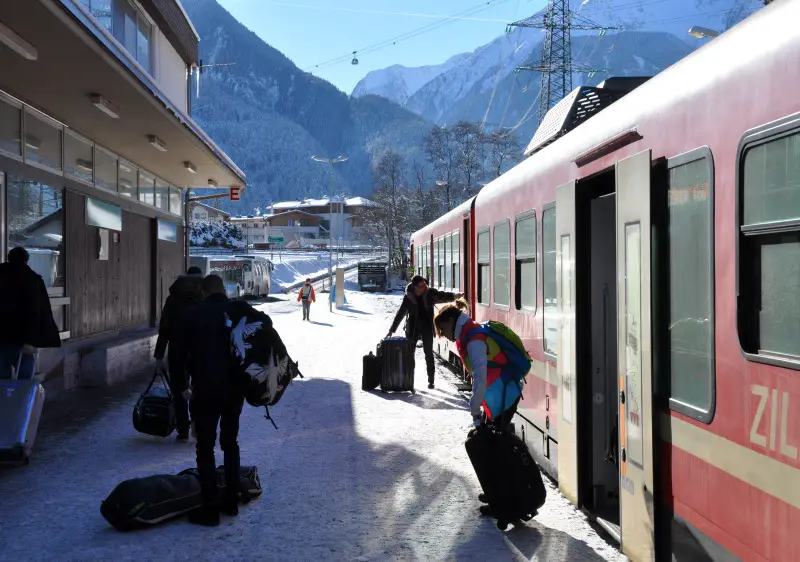
Travelling by train can be a good alternative if you’d rather avoid driving.
The nearest useful railway stations include Trento, Bolzano and Ora, from which bus connections serve Val di Fassa.
You may be able to travel by train from your arrival airport or another Italian city, then continue by bus or pre-booked transfer to your accommodation.
For the final part of the journey, check the connection carefully. Some services run less frequently than others, and arriving late in the evening can make the transfer more complicated.
For timetables and connection details, consult the official Val di Fassa train travel guide.
Should You Hire a Car?
Hiring a car gives you more flexibility if you want to explore several ski areas during your holiday.
It can be particularly useful if you’re staying outside the main villages or travelling with family and lots of ski equipment.
However, a car isn’t essential for every ski holiday in Val di Fassa.
If you’re staying in Canazei or Campitello di Fassa and plan to ski mainly from your nearest lifts, a transfer followed by local transport may be easier.
If you do hire a car, make sure you’re comfortable driving on mountain roads in winter.
Check the rental company’s winter-equipment requirements, confirm the vehicle has suitable winter tyres or approved equipment, and allow extra time if snow is forecast.
Parking can also be busy around popular lift stations during peak holiday periods, so check whether your accommodation provides parking.
For more comfort and convenience, compare these car rentals: DISCOVER CARS
Getting Around Val di Fassa Without a Car
Once you’re in the valley, you can use local buses and ski buses to reach several villages and lift stations.
This makes it possible to explore different areas without changing hotels or hiring a car for the entire week.
However, connections and journey times vary, particularly when travelling between ski areas that aren’t directly connected on skis.
Check the current winter timetable before planning a day in a different part of the valley.
If you want to ski the Sella Ronda, for example, staying near the lifts in Canazei or Campitello makes your morning much simpler than travelling across the valley first.
The official Val di Fassa ski-bus page is the best starting point for current routes and timetables.
Our Advice on Getting to Val di Fassa
For a week based in Canazei or Campitello, we’d compare flights and a pre-booked transfer before deciding to hire a car.
If you want to explore more distant ski areas, check how practical the local transport connections are before booking.
Whichever option you choose, arrange your journey to match your accommodation and flight times.
A little planning before you leave can save a lot of time and hassle when you arrive in the mountains.
For more comfort and convenience, compare these car rentals: DISCOVER CARS
Practical Tips for Skiing in Val di Fassa
A little preparation can make a big difference to your ski holiday, especially if this is your first visit to the Dolomites.
Val di Fassa has a fantastic choice of ski areas, but planning your accommodation, ski pass and daily routes will help you spend more time enjoying the slopes.
Here are our tips for making the most of your trip.
1. Book Accommodation Early for Peak Dates
If you’re planning to visit over Christmas, New Year or February school holidays, start looking at accommodation well in advance.
These are popular periods, and the best-located properties can book up early.
Think about how you’ll reach the lifts each morning.
Staying close to a lift station can be worth paying a little more for, particularly if you’re travelling with children or carrying your own equipment.
If you’re flexible with dates, compare prices across January and March as well as the peak holiday weeks.
2. Choose Your Ski Pass Before You Travel
Decide which areas you want to ski before buying your pass.
If you’re concentrating on Val di Fassa and Carezza, a local pass may be sufficient.
If you plan to ski the Sella Ronda or explore neighbouring Dolomiti Superski regions, you’ll need the wider pass.
Check the official pass coverage and current prices before purchasing.
It can save you paying for access you won’t use — or discovering that your pass doesn’t cover the area you planned to visit.
3. Check Lift Opening Times and Weather Conditions
Mountain conditions can change quickly, and wind or heavy snowfall can affect lift operations.
Before setting off each morning, check the official lift status, piste conditions and weather forecast.
This is particularly important if you’re planning the Sella Ronda or another long ski tour.
Don’t leave a major circuit until late in the day, and always allow enough time to return to your starting point before the lifts close.
If conditions aren’t suitable for your original plan, choose a more local ski area instead.
4. Be Realistic About Your Skiing Ability
Val di Fassa has terrain for a wide range of abilities, but not every piste will suit every skier.
A long day exploring several connected areas can be tiring, even for confident intermediates.
If you’re still getting comfortable on red runs, start with the local slopes and build up to longer routes.
Families should also check where the easier pistes are located rather than assuming that every area has plenty of beginner terrain.
There’s no need to cover every kilometre of skiing to have a great holiday.
5. Hire Equipment Close to Where You’ll Ski
If you’re hiring skis, boots and helmets, compare rental shops before travelling.
Some offer online booking or discounts, and hiring close to your accommodation can make collecting and returning equipment much easier.
Boot comfort is especially important.
Take time to get the fit checked properly, and don’t ignore pressure points that develop during the first day.
A small adjustment can make a noticeable difference to your comfort on the mountain.
If you already own equipment, check airline baggage allowances and ski-carriage fees before booking your flights.
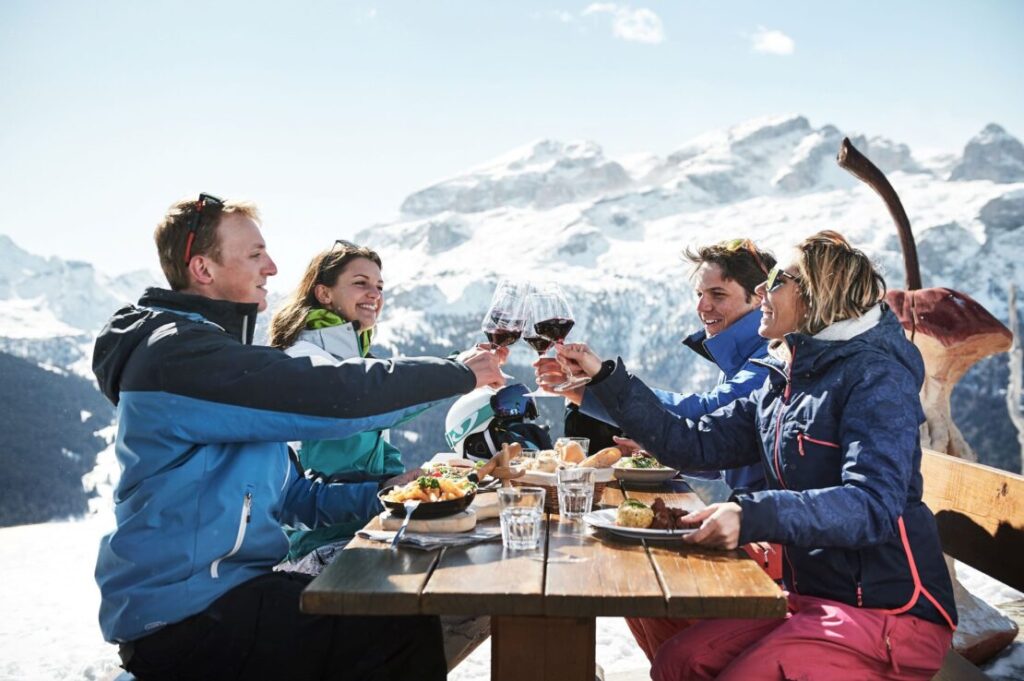
6. Make Time for Mountain-Hut Lunches
One of the pleasures of skiing in the Dolomites is stopping for lunch at a mountain refuge, known locally as a rifugio.
You’ll find opportunities to enjoy traditional regional dishes, pasta, polenta and other hearty meals, often with wonderful mountain views.
On a relaxed ski day, allow enough time to sit down and enjoy the experience rather than rushing through lunch.
On a longer route such as the Sella Ronda, however, keep an eye on the time.
Choose a convenient lunch stop and make sure you have enough time to complete your planned route.
7. Pack for Changing Mountain Conditions
Even on sunny days, temperatures can be cold at altitude, particularly in the morning or when the wind picks up.
Wear layers so you can adjust your clothing throughout the day.
We’d recommend packing:
A waterproof ski jacket and trousers.
Thermal base layers and warm mid-layers.
Waterproof gloves and spare gloves if you have them.
Goggles suitable for changing visibility.
A helmet that fits properly.
Sunscreen and lip protection.
A small backpack for essentials.
Good sunglasses are useful for sunny lunch stops, but goggles are generally more practical while skiing.
8. Don’t Try to Ski Every Area in One Week
It’s tempting to look at the piste map and plan to ski every corner of the Dolomites.
But you’ll enjoy the holiday more if you choose a few areas that suit your ability and allow time to explore them properly.
If you’re staying in Canazei, for example, you could begin with Belvedere, plan a day on the Sella Ronda when conditions are favourable, and explore other areas on the remaining days.
Remember that some neighbouring areas require a bus or other transport rather than a direct ski connection.
Check the route before setting off.
9. Consider Travel Insurance That Covers Skiing
Before you leave home, check that your travel insurance covers the skiing activities you intend to do, including any relevant off-piste skiing if that’s part of your plans.
Read the policy carefully for exclusions, medical expenses, rescue costs, equipment cover and any requirements around helmets or guided activities.
Don’t assume a standard travel policy automatically covers every winter sport.
10. Leave Some Room in Your Plans
Weather, lift closures and tired legs can all change your plans. We like having a rough idea of which area to ski each day, but it’s sensible to keep some flexibility.
You might discover a favourite set of runs and want to return, or the forecast may make a different part of the valley a better choice.
The beauty of a week in Val di Fassa is that you have plenty of options.
Plan ahead, but don’t feel you need to follow a rigid schedule from the first lift to the last.
Frequently Asked Questions About Skiing in Val di Fassa
1. Is Val di Fassa good for skiing?
Yes, Val di Fassa is an excellent destination for skiing in the Italian Dolomites.
It has several ski areas, terrain for different abilities and access to the famous Sella Ronda.
You’ll also find traditional mountain villages, restaurants and scenic mountain huts.
2. Which is the best ski area in Val di Fassa?
Belvedere–Col Rodella is a great choice for intermediate skiers and anyone wanting to ski the Sella Ronda. Buffaure–Ciampac offers more variety, while Catinaccio and Carezza are worth considering for beginners and families.
The best choice depends on your ability and where you’re staying.
3. Is Val di Fassa suitable for beginners?
Yes. Beginners can find suitable slopes in areas such as Catinaccio, Carezza and the easier sections of Belvedere.
Check the location of ski schools and nursery slopes before booking, and choose runs that match your confidence as you progress.
4. Which village is best to stay in for skiing in Val di Fassa?
Canazei and Campitello di Fassa are particularly convenient for skiers wanting access to the Sella Ronda.
Pozza di Fassa is a useful base for Buffaure, while Vigo di Fassa and Moena suit visitors interested in other parts of the valley.
Choose according to your preferred ski areas and transport needs.
5. Do you need a Dolomiti Superski pass for Val di Fassa?
Not necessarily. The Val di Fassa/Carezza pass may be sufficient if you plan to ski the local areas it covers.
However, you’ll need the wider Dolomiti Superski pass if you want to ski the Sella Ronda and explore the connected neighbouring ski regions.
Always check the current pass coverage before buying.
6. When is the best time to ski in Val di Fassa?
January to March is a popular period to consider, although conditions vary from season to season.
January can offer colder winter conditions, February is busy during school holidays, and March brings longer days and more sunshine. Check current snow and lift conditions before travelling.
7. Can you ski the Sella Ronda from Val di Fassa?
Yes. Canazei and Campitello di Fassa provide access to the Sella Ronda through the Belvedere and Col Rodella lift areas.
You’ll need the appropriate Dolomiti Superski pass, suitable skiing ability and enough time to complete the circuit before the lifts close.
8. How do you get to Val di Fassa?
You can reach Val di Fassa by car, airport transfer, seasonal shuttle or a combination of train and bus.
Venice, Verona and other northern Italian airports are possible arrival points.
The best route depends on your flight, destination village and whether you want a car during your stay.
For more comfort and convenience, compare these car rentals: DISCOVER CARS
Should You Get Ski Travel Insurance?
(Short Answer: YES)
While ski resorts in Europe don’t legally require you to have travel insurance, buying ski-specific travel insurance is one of the smartest decisions you can make.
One accident or missed connection can cost far more than a full year of coverage.
If you want peace of mind on and off the mountain, ski travel insurance is essential.
As a traveller and skier myself, I’ve consistently found SafetyWing offers some of the best winter-sports coverage for international ski trips.
Best Ski Travel Insurance Companies for 2025/26
Two companies consistently stand out for skiers, each for different reasons.
1. SafetyWing
(Best for Long-Term Ski Travel & Affordability)
We personally use SafetyWing, and have since 2019.
It’s perfect for skiers spending multiple weeks or a whole season abroad.
You can get a Quote here.
When my wife broke her ankle skiing in Wengen, they were fantastic, they paid for all our expenses without any delay.
2. World Nomads
(Best for Adventure Coverage)
If you’re planning a trip that includes off-piste skiing with a guide, winter hiking, or multiple snow sports, World Nomads often provides broader adventure coverage.
They’re a favourite among travellers who want all activities covered under one policy.
Even experienced skiers will tell you — it only takes one icy patch to ruin both a knee and a bank account.
We Can Help Plan Your Adventure
Custom Ski Itineraries in Europe Designed For You

Final Thoughts: Is Val di Fassa Worth Visiting for a Ski Holiday?
We think Val di Fassa deserves a place on your list if you’re planning a ski holiday in the Italian Dolomites.
The variety of ski areas means you can spend a week exploring different slopes, take on the famous Sella Ronda and still find time to enjoy long lunches in mountain huts and evenings in traditional Italian villages.
The key is choosing the right base for the kind of skiing you enjoy.
Canazei and Campitello di Fassa are excellent starting points for the Sella Ronda, while Pozza di Fassa, Vigo di Fassa and Moena give you convenient access to other parts of the valley.
After decades of skiing around Europe, we’ve learnt that the best ski holiday isn’t necessarily about covering the most kilometres.
It’s about finding slopes you love, choosing accommodation that suits your plans and having enough flexibility to enjoy the experience without rushing from one place to another.
If you’re planning your first trip to the Dolomites, Val di Fassa is a wonderful place to begin.
Choose your ski areas, check your lift-pass options and leave a little room in your plans for those unexpected mountain moments.
Happy skiing!
Gary and Sally
Timeless Wanderers
PLAN YOUR SKI ADVENTURE
Booking a ski trip involves a range of reliable resources to ensure a smooth and enjoyable experience. I have listed below our favorite companies we use when we plan our ski holiday.
BOOK YOUR FLIGHT – GOING is a great search engine if you are flexible about your travel destination and dates. GOING is our new go to.
Booking.com– for accommodation, we rely on Booking.com for its extensive options and user reviews. We find they have the cheapest rates and offer payment options. In addition, VRBO is another terrific website for all types of accommodations.
Train Travel– to European ski resorts is convenient and scenic, popular trips include Glacier express to Zermatt, the Eurostar from London to the French Alps. We find Omio or Rail Europe are the best sites for booking trains in Europe.
Car Hire – we usually hire a car it offers us flexibility and convenience, allowing easy access to most resorts. Companies like Discover Cars or Rentalcars.com provide reliable options with winter equipment.
Travel insurance– Don’t ski without it. If you get hurt on the mountain it could cost you a small fortune if you’re not insured. We use SAFETYWING when my wife broke her ankle a few years ago in Wengen they were terrific.
Ski Equipment. – Bring your own ski gear, its usually cheaper and much better than renting, it ensures you have a perfect fit. Owning also saves time and money in the long run. Equipment like Skis, Pants and Jackets, Gloves, Ski-helmets and Thermal underwear” can all be bought online. You can purchase everything you need from BACKCOUNTRY
ARC’TERYX – is a go to reliable brand for outdoor adventure and travel, their wide range includes light weight durable, easy to clean travel gear.
Check out our RESOURCE PAGE for more additional planning.