
Wine Windows of Florence (2026): The Complete Guide to Florence’s Hidden Wine Tradition
Timeless Wanderers: Posted August 14, 2026
Discovering Florence’s Wine Windows
Walking through Florence, it’s easy to focus on the famous landmarks — the Duomo, the Ponte Vecchio, and the Renaissance masterpieces found around every corner.
But scattered throughout the city’s historic streets are much smaller reminders of Florence’s past: tiny openings built into centuries-old palace walls that once played an important role in everyday life.
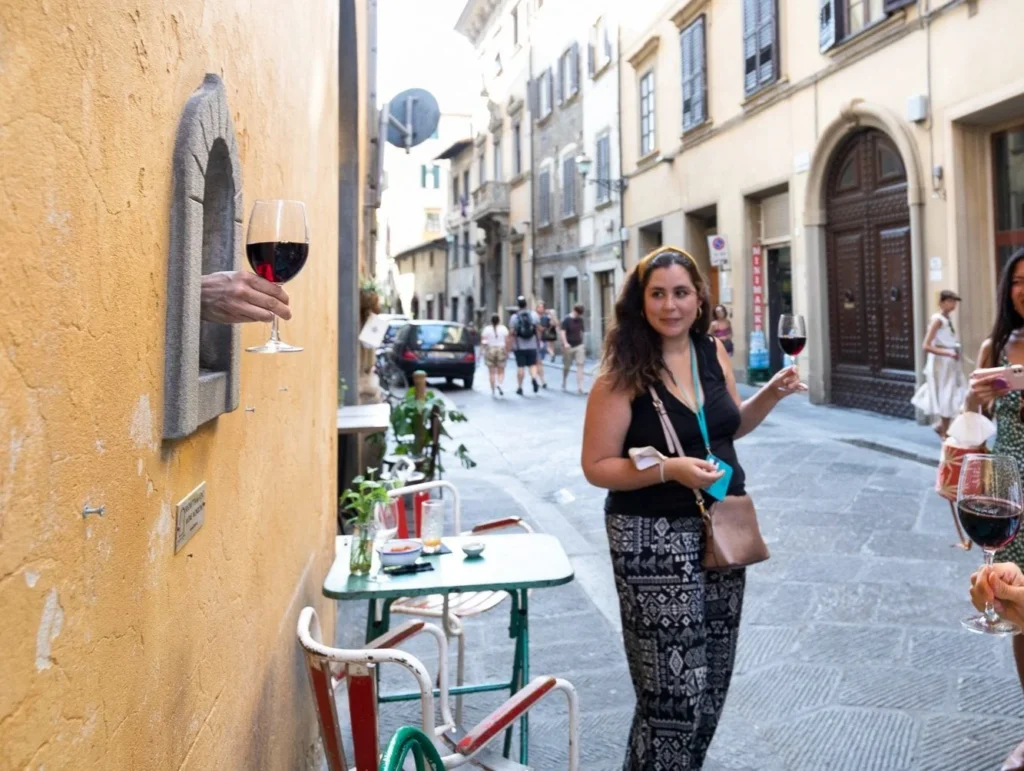
These are the wine windows of Florence, known locally as buchette del vino.
Originally created during the 16th century, these small stone openings allowed noble families to sell wine directly from their homes without opening a traditional shop.
Today, they have become one of Florence’s most fascinating traditions, connecting the city’s history with its modern food and wine culture.
On our visits to Florence, we’ve always loved discovering the details that are easy to walk past — the quiet corners, old buildings, and small pieces of history hiding in plain sight.
The wine windows are exactly that.
In this guide, we’ll share the history behind Florence’s wine windows, where to find them, how they were used, and the best places to experience this unique Florentine tradition today.
Table of Contents
What Are the Wine Windows of Florence?
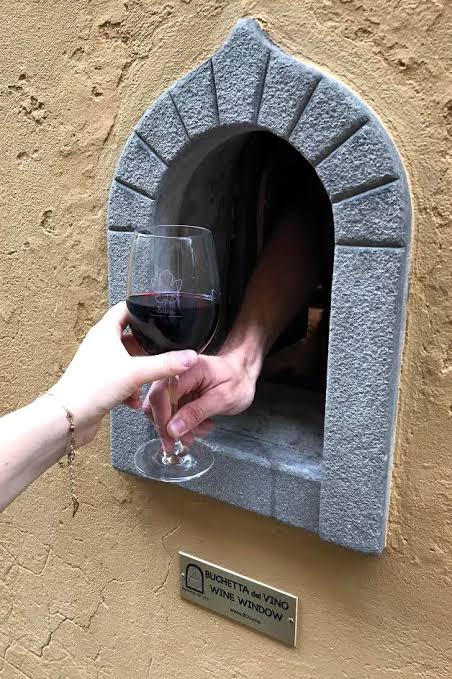
The wine windows of Florence, known locally as buchette del vino, are small openings built into the walls of historic palaces and homes throughout the city.
At first glance, they may look like simple architectural details — a small stone frame, a wooden shutter, and perhaps a tiny opening you could easily walk past without noticing.
But these little windows tell a fascinating story about Florence’s past.
During the 16th century, many wealthy Florentine families owned vineyards in the countryside surrounding the city.
They produced their own wine and would sell it directly from their palaces through these small openings built into their street-facing walls.
The idea was simple.
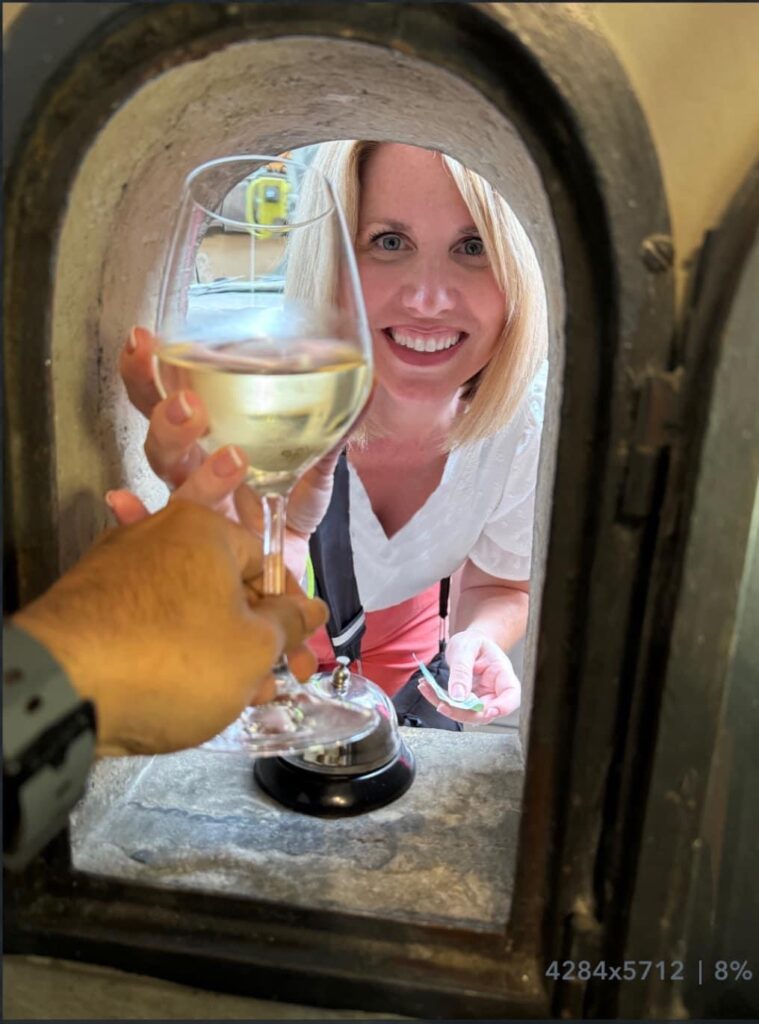
A customer would knock on the little wooden door, a servant inside would open it, and wine would be passed directly through the opening.
Payment was exchanged without the need for a shopfront, allowing families to sell their wine while maintaining privacy and avoiding some of the costs associated with running a traditional business.
Over time, these wine windows became part of everyday Florentine life.
They were used by locals buying wine for their homes, travellers passing through the city, and families looking for an easy way to purchase directly from producers.
Today, the surviving wine windows offer a glimpse into a much older Florence — one where local traditions, family vineyards, and daily life were closely connected.
What makes them so special is that they are not found inside a museum.
They are still part of the city itself, hidden among busy streets, cafés, and historic buildings — small reminders of a Florence that existed centuries ago.
We can help you plan your dream trip to Tuscany, with a personalised itinerary designed just for you.
After more than 20 years of travelling to Tuscany—and loving it so much we decided to make it our home—we now live here and explore the region at a relaxed, local pace.
Planning a trip to Tuscany is exciting, but choosing where to go, how long to stay, and how to get around can quickly become overwhelming.
That’s where we come in. We offer a personalised planning service that helps you decide exactly how to explore Tuscany, based on your travel style, budget, and pace.
Plus, we can help you plan scenic drives, time in hilltop towns, food and wine experiences, and those small local moments that make a trip truly special—making your Tuscany holiday easier, smoother, and full of memories you’ll treasure long after you return home.
“Let us plan your perfect trip with a custom itinerary designed just for you.
Fill out the form and let’s begin your dream.”
The History Behind Florence’s Wine Windows
The story of the buchette del vino begins during the Renaissance, a period when Florence was one of Europe’s most powerful and influential cities.
Many important Florentine families owned countryside estates and vineyards outside the city walls. Wine was not only an important part of daily life but also a valuable agricultural product.
The wine windows provided a practical solution.
Instead of transporting their wine to markets or relying on middlemen, families could sell directly from their own homes. The small openings allowed them to distribute wine efficiently while keeping the process discreet and convenient.
Their popularity continued for centuries, but like many traditional customs, their use gradually declined as modern shops, regulations, and changing lifestyles transformed the way people bought food and wine.
Many wine windows were eventually closed, covered over, or forgotten.
However, in recent years there has been renewed interest in preserving them. Historians, local groups, and passionate Florentines have worked to identify and protect these small pieces of the city’s heritage.
Today, Florence has hundreds of documented wine windows, although only some are still visible and accessible.
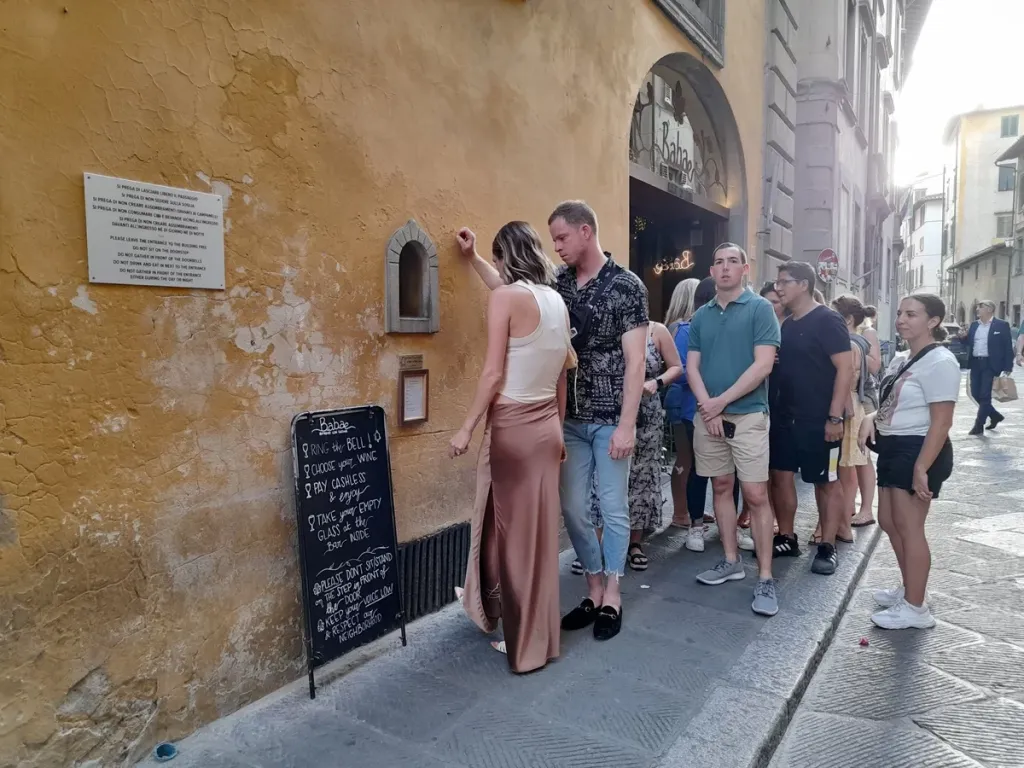
Why Are Florence’s Wine Windows So Unique?
What makes Florence’s wine windows so fascinating is that they are not just historic objects — they are small pieces of the city’s everyday life that have survived for hundreds of years.
Unlike many historical attractions in Florence, you won’t find them behind museum glass or inside a ticketed exhibition.
They are built directly into the streets you walk every day, often hidden among Renaissance palaces, busy cafés, and quiet side streets.
That is part of their appeal.
You can be walking through the heart of Florence, focused on the famous landmarks, and suddenly notice a tiny opening in an old stone wall that has been there since the Renaissance.
Each wine window has its own character.
Some are beautifully preserved with carved stone frames and decorative details, while others are much simpler and blend almost completely into the buildings around them.
Together, they tell the story of a different Florence — one built around family vineyards, local traditions, and a much closer connection between producers and the people who enjoyed their wine.

A Tradition That Connects Past and Present
The revival of Florence’s wine windows has brought new life to this old tradition.
After many years of being forgotten, some wine windows have been restored and reopened, allowing visitors to experience this piece of Florentine history in a completely new way.
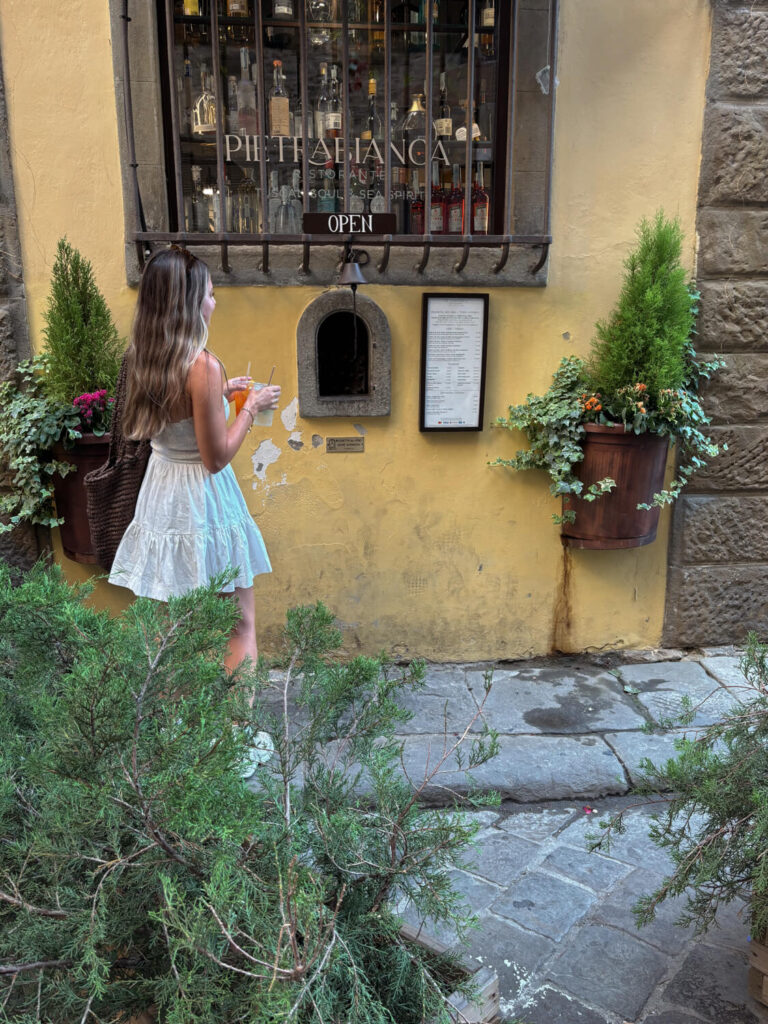
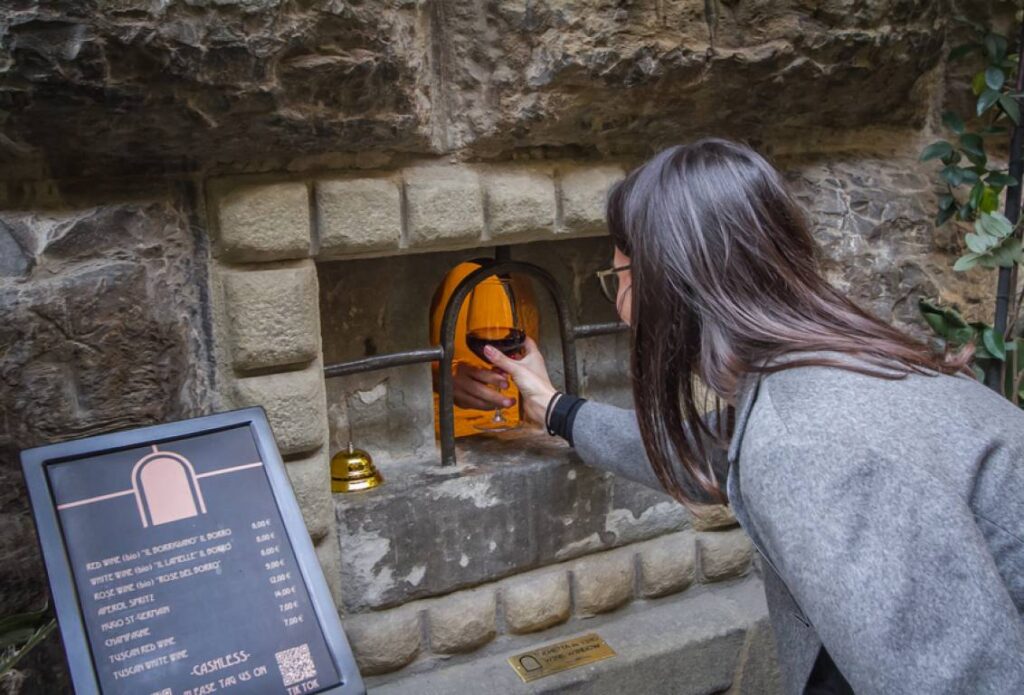
Today, a few locations once again serve wine, drinks, and small tastings through their historic openings.
For travellers, this creates a unique experience — enjoying a glass of Tuscan wine while standing at the same type of window that locals used centuries ago.
It’s not about a large attraction or a major sightseeing stop.
It’s about a small moment that connects you with the history of the city.
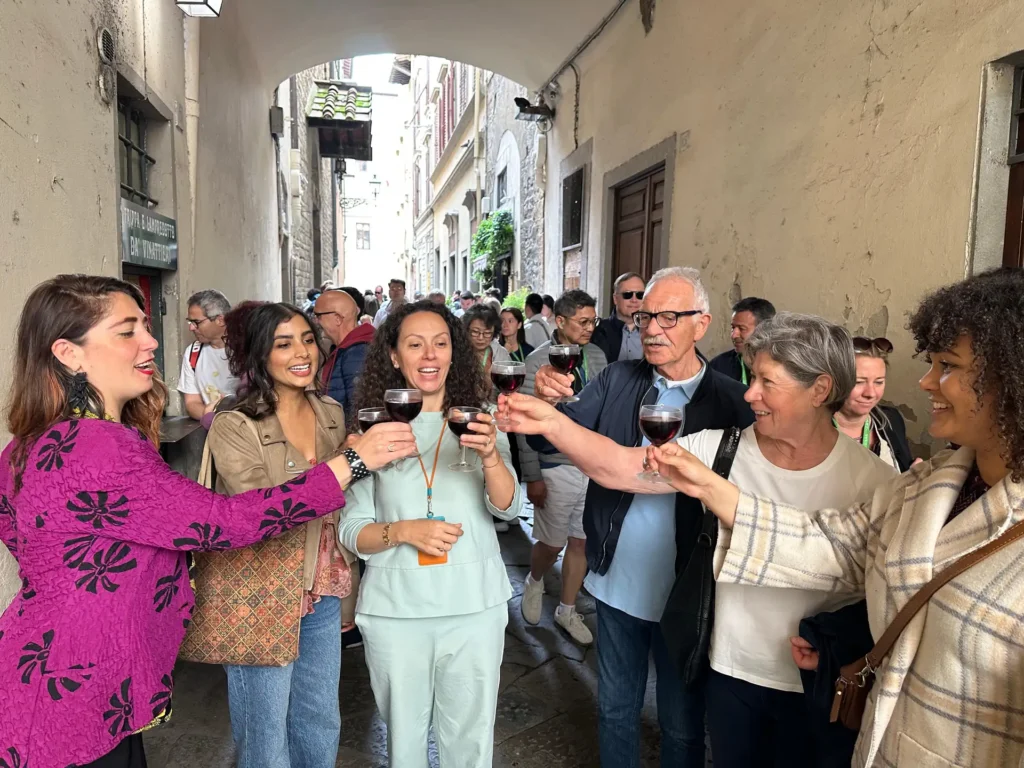
The Perfect Addition to a Florence Walking Day
The wine windows are also a wonderful way to explore Florence beyond the main tourist route.
Many are located close to popular areas such as the historic centre, Santo Spirito, Santa Croce, and the streets around the Arno River.
They are easy to include during a relaxed walking day — perhaps after visiting a market, exploring a neighbourhood, or stopping for lunch at a traditional trattoria.
One of our favourite things about Florence is that the city rewards curiosity.
The best discoveries are often not the places everyone is photographing, but the small details hidden in plain sight.
The wine windows are a perfect example of that.
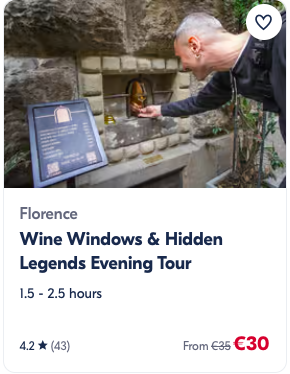
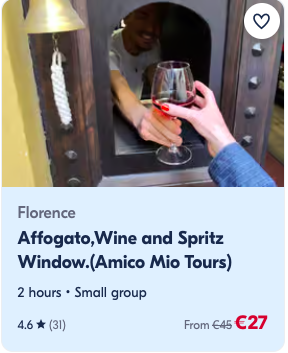
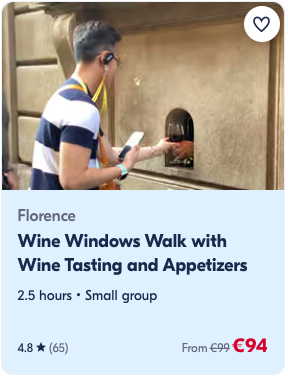
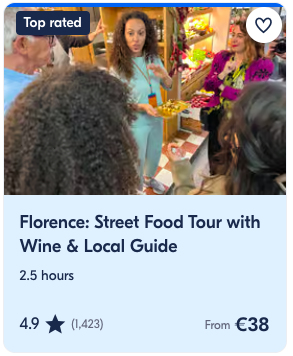
Other Tours of Florence
Joining a tour can help save you time waiting in line, allow you to learn more about Florence from a knowledgeable guide, and introduce you to sights that you may not be able to do on your own.
Here are some of the best tours in Florence.
This small group tour is the perfect way to get the most out of your visit to the Uffizi Gallery.
Climb the dome, visit the Baptistery, and tour the Opera del Duomo Museum with an experienced guide on this small group tour.
Take a guided tour of the Uffizi and Accademia.
Go shopping in the central market in Florence and then learn how to cook a Tuscan meal. This tour gets nothing but rave reviews.
Take a food tour of Florence or a 2-hour guided sightseeing bike tour.


Where to Find the Wine Windows of Florence
One of the best things about Florence’s wine windows is that you don’t need to plan an entire day around finding them.
They are scattered throughout the historic centre, often tucked into the walls of old palaces and buildings you might otherwise walk straight past.
The fun is not just reaching a destination — it’s keeping an eye out as you explore Florence on foot.
Here are some of the best-known wine windows and areas to include on your walk.
Buchetta del Vino at Via delle Belle Donne
Located near Florence’s main shopping streets, this is one of the easiest wine windows to visit while exploring the city centre.
It is a great example of how these small openings blend into the architecture around them.
Without knowing what you are looking for, it would be easy to pass by without noticing.
This area is perfect to combine with a walk through central Florence, especially if you are exploring the nearby streets around Santa Maria Novella.
Buchetta del Vino at Via del Giglio
Another historic wine window located close to the heart of Florence.
This area gives visitors a wonderful sense of old Florence, where Renaissance buildings sit alongside modern shops, cafés, and restaurants.
It is a reminder that the city’s history is not separated from everyday life — it is still part of the streets people use today.
Santo Spirito & Oltrarno District
The Oltrarno neighbourhood is one of the best areas to explore if you want to discover Florence’s quieter side.
Across the river from the main tourist sights, this area is known for artisan workshops, local restaurants, small squares, and a slower pace.
It is also home to several historic wine windows.
A walking route through Santo Spirito is a great way to combine:
- wine windows
- traditional cafés
- local food
- artisan streets
This is one of the areas where Florence feels most like a lived-in city rather than just a sightseeing destination.
Palazzo Antinori Area
The Antinori family has been connected with Tuscan wine for centuries, and their historic presence in Florence reflects the close relationship between the city and the surrounding vineyards.
The area around Palazzo Antinori is worth exploring for wine lovers interested in the connection between Florence’s noble families and wine production.
A Simple Wine Window Walking Route
If you only have a short time in Florence, you can easily include wine windows in a relaxed walking route.
A good approach is:
Santa Maria Novella → Duomo area → Piazza della Signoria → Ponte Vecchio → Santo Spirito
Along the way, keep looking at the walls of historic buildings — the smallest details are often the ones that tell the biggest stories.
Our Tip
Don’t expect every wine window to be open or serving wine.
Many are simply historic features, and part of the enjoyment comes from discovering them yourself.
Think of them less as a traditional attraction and more as a treasure hunt through Florence’s streets.
That’s what makes them so memorable.

Check Out
Where to Stay in Florence, Italy (2026)
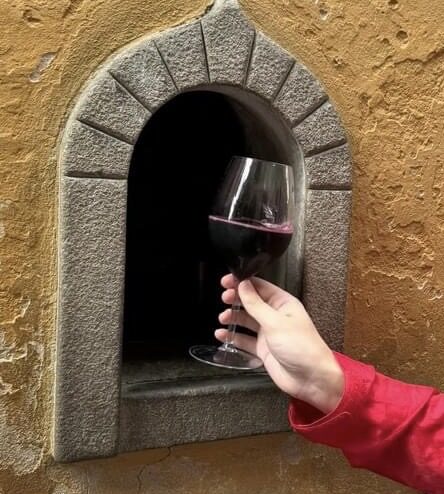
The Best Wine Windows in Florence That Are Still Open Today
While hundreds of historic wine windows remain throughout Florence, only a small number have been brought back to life and are currently used for serving drinks.
That is what makes finding one so special.
You are not simply visiting an old piece of architecture — you are experiencing a tradition that has been revived after centuries, standing in the same streets where Florentines once bought wine directly from noble family homes.
Here are some of the best places to experience Florence’s wine window tradition today.
Babae – Santo Spirito
Located in the Oltrarno district, Babae is one of the most famous places in Florence where visitors can experience a working wine window.
The idea is wonderfully simple.
Walk up to the small opening in the wall, ring the bell, and your wine is served directly through the historic window.
It’s a fun way to connect with Florence’s past while enjoying a glass of Tuscan wine in one of the city’s most atmospheric neighbourhoods.
The surrounding Santo Spirito area is also one of our favourite parts of Florence for an evening wander, with traditional restaurants, small streets, and a more local feel compared with the busiest areas across the river.
La Buchetta del Vino dello Strozzino – Piazza degli Strozzi
Located near one of Florence’s most famous Renaissance squares, this wine window offers another chance to experience the tradition in the heart of the historic centre.
It’s an easy stop to include while exploring central Florence, especially if you are already visiting areas around Piazza della Repubblica, Via Tornabuoni, or the Duomo.
The beauty of this experience is that it doesn’t require a major detour — it fits naturally into a walking day around the city.
DiVin Boccone – Santo Spirito Area
Another wine window experience can be found in the Oltrarno neighbourhood.
This is exactly the type of discovery that makes walking around Florence so enjoyable — a small opening in an old wall leading to a completely unexpected experience.
The area itself is worth exploring, with artisan workshops, traditional food shops, and quieter streets away from the busiest tourist routes.
Antica Bottega – Near Dante’s House
For travellers who enjoy finding the smaller details of Florence, this is the kind of place that feels like a hidden discovery.
Located close to Dante’s House, this wine window is easy to combine with a walk through the medieval heart of Florence.
It’s a reminder that some of the city’s most interesting experiences are often found by simply looking up, slowing down, and noticing what is around you.
Our Advice for Visiting Florence’s Wine Windows
Don’t plan your entire day around visiting wine windows.
The best way to experience them is to include them naturally while exploring Florence.
Take a walk through:
- Santo Spirito and the Oltrarno
- Santa Maria Novella
- the streets around Piazza della Signoria
- the areas near the Arno River
Keep your eyes on the walls of old buildings — many of Florence’s best stories are hiding in plain sight.
The wine windows are not just about having a drink.
They are about discovering a small piece of Florence’s history while experiencing the city the way it has always been enjoyed: slowly, on foot, and with curiosity.

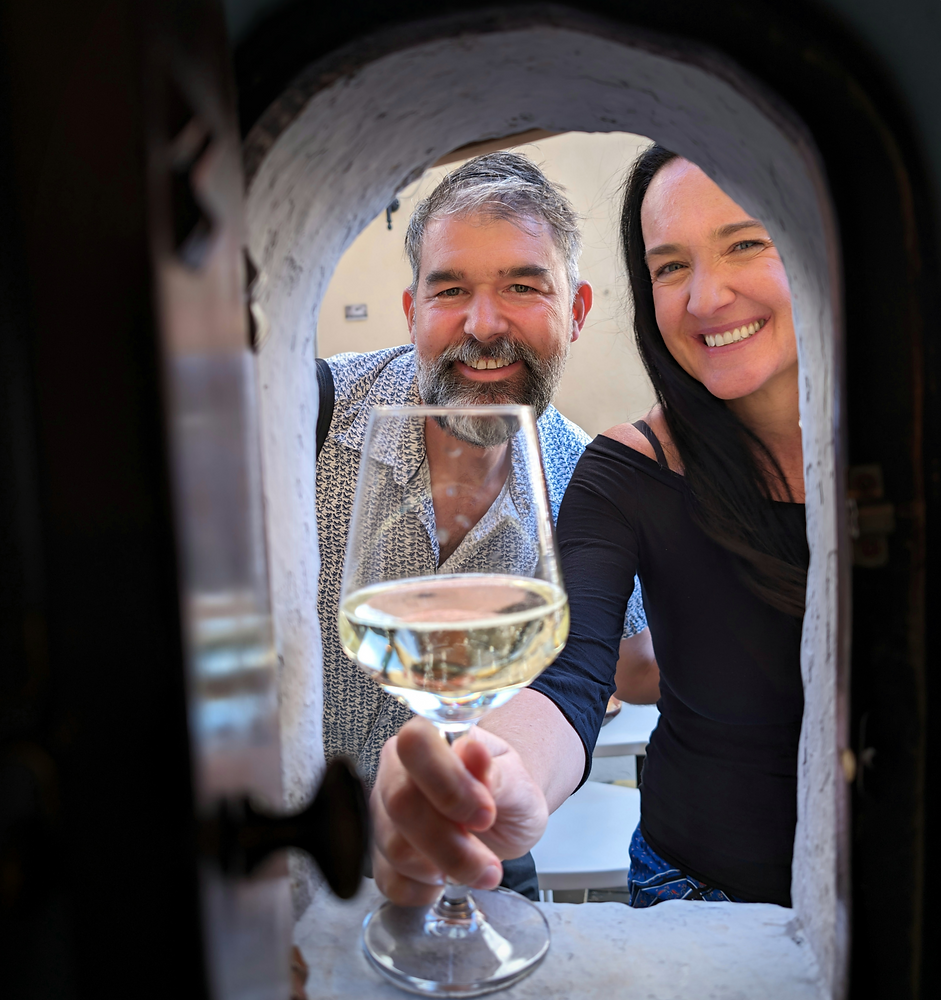
Florence Wine Window Walking Route: A Perfect Half-Day Experience
One of the best ways to discover Florence’s wine windows is simply by walking.
The historic centre is compact, and many of the most interesting locations can be combined into a relaxed half-day route that takes you through some of Florence’s most beautiful neighbourhoods.
The idea is not to rush from one window to another.
Instead, take your time, enjoy the streets, stop for coffee, explore a market or church along the way, and let the wine windows become part of a wider Florence experience.
Stop 1: Santa Maria Novella Area
Begin your walk near Santa Maria Novella, one of Florence’s most convenient areas to start exploring.
This part of the city is filled with historic buildings, traditional shops, and quiet streets where you can begin looking for the small architectural details that make Florence so fascinating.
Take your time here before heading deeper into the historic centre.
Stop 2: The Heart of Renaissance Florence
Continue towards the Duomo, Piazza della Repubblica, and Piazza della Signoria.
While most visitors are looking upwards at Florence’s famous landmarks, take a moment to look at the walls around you.
Many wine windows are easy to miss because they are small and blend into centuries-old buildings.
This is where the fun begins — discovering something unexpected in a place you may have walked past many times.
Stop 3: Cross the Arno into Oltrarno
Cross the Ponte Vecchio and make your way into the Oltrarno neighbourhood.
This is one of our favourite areas of Florence because it feels slightly removed from the busiest tourist streets.
Here you’ll find:
- artisan workshops
- traditional restaurants
- small cafés
- local markets
- historic wine windows
Spend some time around Santo Spirito, where the slower pace makes it the perfect place to finish your walk.
Stop 4: Finish With a Wine Window Experience
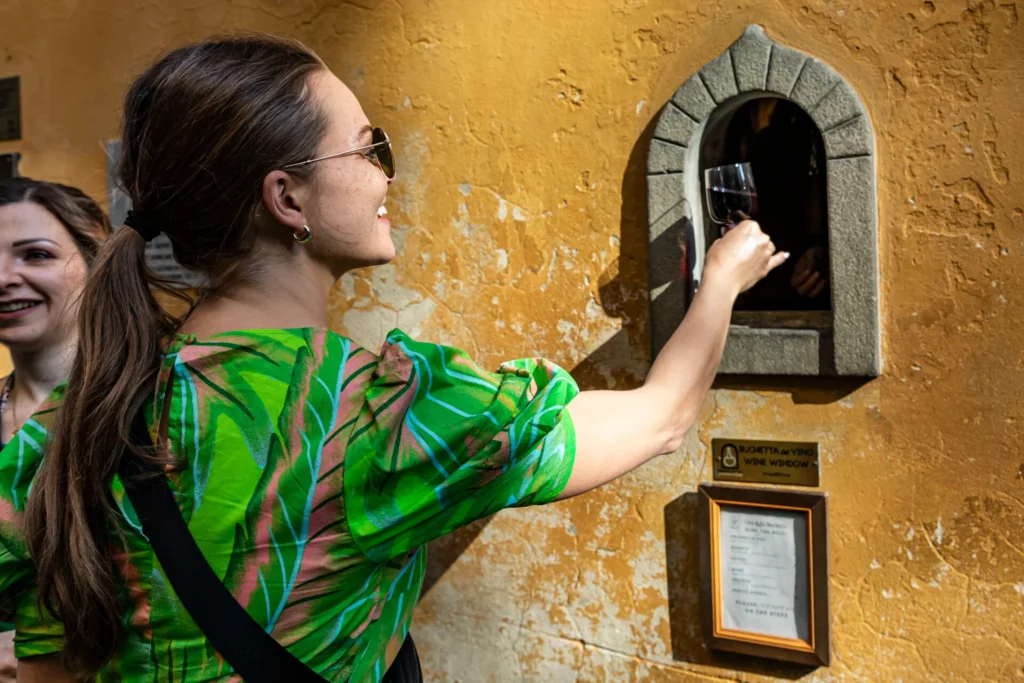
End your route with a glass of Tuscan wine served through one of Florence’s active wine windows.
It’s a simple experience, but one that connects the present with the city’s Renaissance past.
Standing outside a centuries-old building, ordering wine through a tiny opening in the wall, feels like one of those small travel moments you remember long after the trip ends.
How Long Does the Wine Window Walk Take?
A relaxed wine window walk can easily fill half a day.
Allow around:
- 2–3 hours if you simply want to discover the windows and neighbourhoods
- 4–5 hours if you want to include cafés, food stops, shopping, and a wine experience
The beauty of Florence is that you don’t need to rush.
Some of the best discoveries happen when you leave space in your day.
Our Advice
The wine windows are best experienced as part of a broader Florence walking day.
Combine them with a visit to local markets, a traditional lunch, or an evening stroll along the Arno.
They are not another attraction to tick off a list.
They are a reminder that Florence’s history is still alive in the streets around you.
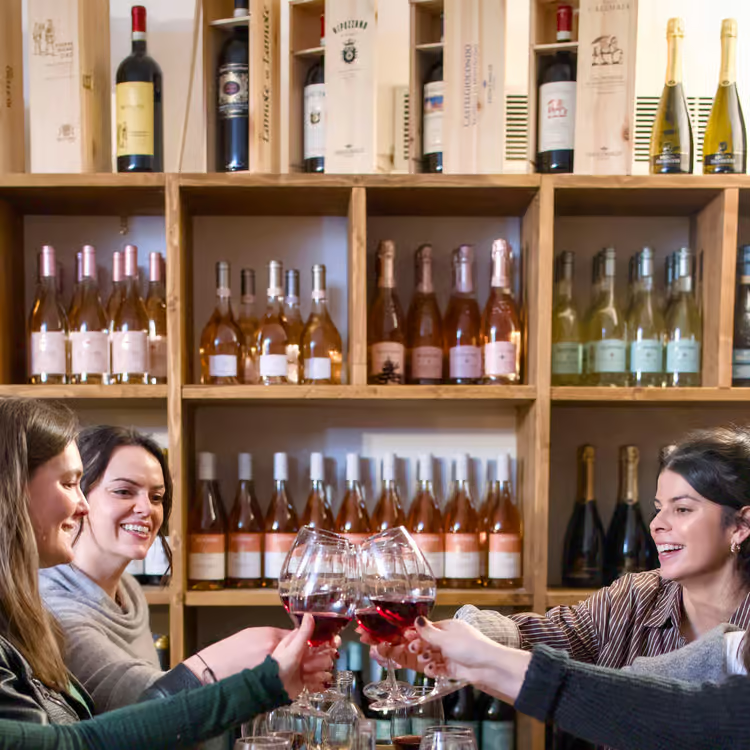
Florence Wine Windows vs Traditional Wine Bars: What’s the Difference?
At first glance, a wine window and a traditional wine bar might seem like the same thing.
Both involve enjoying a glass of Tuscan wine, and both are wonderful ways to experience Florence’s food and wine culture.
But the experience is quite different.
A traditional wine bar is designed around sitting down, enjoying a selection of wines, and often pairing them with local dishes. It is a place to relax, talk, and spend time over a drink.
A wine window is something much more connected to Florence’s history.
It is about the moment itself — walking up to a centuries-old opening in a palace wall, knocking on the small wooden door, and receiving your wine through the same type of window that Florentines used hundreds of years ago.
Wine Bars: A More Traditional Experience
Florence has many excellent wine bars where you can discover Tuscan wines, regional products, and local cuisine.
They are perfect if you want to:
- sit comfortably for an hour or two
- try different wines
- enjoy cheese, cured meats, and traditional dishes
- learn more about Tuscan wine from knowledgeable staff
For wine lovers, a good wine bar is a chance to explore the wider world of Italian wine.
Wine Windows: A Taste of Florence’s History
The wine window experience is much simpler.
It is less about the amount of wine you taste and more about the story behind it.
These tiny openings represent a time when wine was sold directly from family homes and local traditions were woven into everyday life.
Today, ordering a drink through one feels like stepping into a small piece of Renaissance Florence.
It’s quick, unique, and memorable.
Which Experience Should You Choose?
The answer is: both.
A wine window is perfect for a special moment while exploring the city on foot.
A wine bar is better when you want to slow down, sit, and enjoy a longer evening.
If you have a few days in Florence, we would suggest doing both:
- discover a wine window during the day while exploring the historic centre
- finish an evening at a traditional wine bar with local food and a bottle from Tuscany
Together, they show two sides of Florence’s wine culture — one historic and one modern.
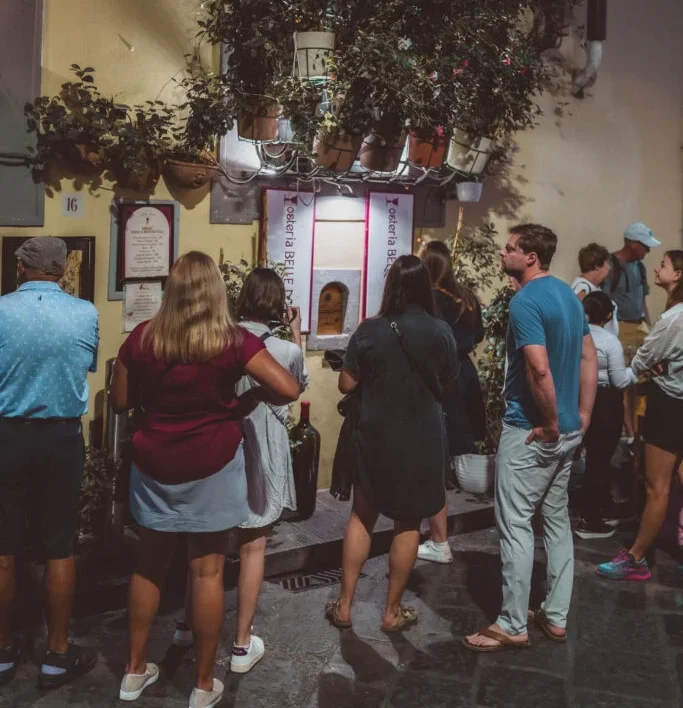
Best Time to Visit Florence’s Wine Windows
The great thing about Florence’s wine windows is that they can be enjoyed throughout the year.
Unlike seasonal attractions that depend on weather or opening dates, the wine windows are part of the city itself. You can discover the historic openings while walking through Florence in any season.
However, some times of year make the experience even more enjoyable.
Spring (April – June): The Perfect Time for Walking
Spring is one of the best seasons to explore Florence on foot.
The weather is comfortable, the streets are lively without the peak summer crowds, and it’s ideal for combining a wine window walk with outdoor cafés, markets, and sightseeing.
This is a wonderful time to wander through neighbourhoods like Santo Spirito and the Oltrarno, where you can take your time discovering the smaller details of the city.
Summer (July – August): Enjoy Wine Windows in the Evening
Summer brings long days and a lively atmosphere to Florence.
The heat can make afternoons challenging, so the best approach is to explore early in the morning or later in the evening.
A wine window stop before dinner is a perfect way to enjoy the city as the streets begin to cool and locals come out for their evening passeggiata.
Autumn (September – October): Our Favourite Season
Autumn is one of the best times to experience Florence.
The temperatures are comfortable, the crowds begin to ease, and the city has a relaxed energy.
It also pairs beautifully with Tuscany’s wine season, when harvest is taking place across the surrounding countryside.
For wine lovers, this is a particularly special time to visit.
Winter (November – March): A Quieter Florence
Winter offers a completely different experience.
The city is quieter, the streets are less crowded, and you can explore Florence at a slower pace.
A wine window discovery followed by a cosy café, traditional lunch, or glass of Tuscan wine feels especially fitting during the cooler months.
Our Advice
The best time to explore Florence’s wine windows is whenever you can slow down and enjoy the city properly.
If we had to choose, we’d recommend spring and autumn — the weather is ideal for walking, and Florence feels more relaxed than during the busiest summer months.
But honestly, that is the beauty of this experience.
The wine windows are not something you simply visit.
They are something you discover while enjoying Florence.
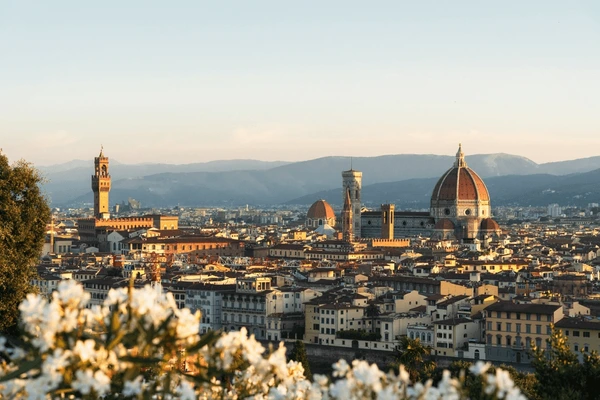
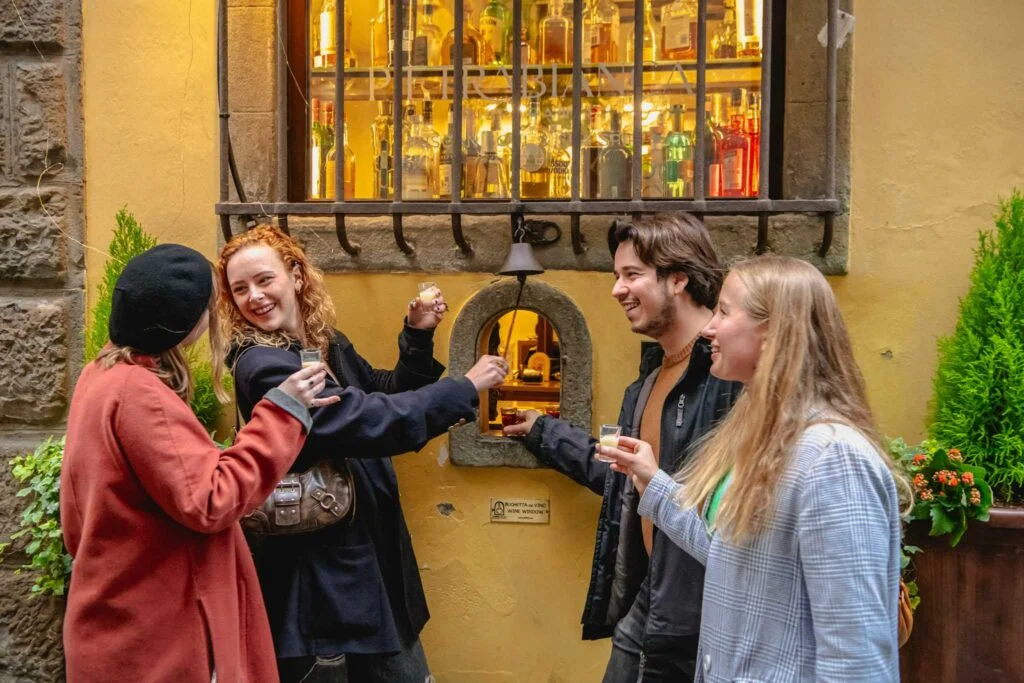
Tips for Visiting Florence’s Wine Windows
Discovering Florence’s wine windows is one of those experiences where a little local knowledge makes it even better.
They are simple, historic, and easy to include in a day of exploring, but knowing what to expect will help you enjoy the experience more.
Don’t Expect Every Wine Window to Be Open
One of the most important things to understand is that many historic wine windows are simply architectural features.
They are part of Florence’s heritage, but they are not all operating businesses.
Some have been restored and reopened, while others remain closed or are only visible from the street.
The fun is in discovering them and understanding the story behind them.
How Do You Order Through a Wine Window?
At the wine windows that are currently operating, the process is wonderfully simple.
You walk up to the small opening, ring the bell or knock on the door, and someone inside serves your drink through the window.
It feels very different from ordering at a normal bar or restaurant because the experience itself is part of the tradition.
What Should You Order?
Most visitors choose a glass of Tuscan wine, which is the perfect way to experience the tradition.
Depending on the location, you may also find:
- local beer
- cocktails
- small snacks
- traditional Tuscan bites
If you are new to Tuscan wine, don’t be afraid to ask for a recommendation.
Florence is a great place to begin discovering wines from nearby regions such as Chianti, Montalcino, and Montepulciano.
Take Your Time and Look Around
The wine window itself may only take a few minutes to experience, but don’t rush away.
Look at the building around you.
Many of these openings are hundreds of years old, and the surrounding streets reveal layers of Florence’s history.
The best part is often the combination of the wine window, the neighbourhood, and the walk that gets you there.
Combine Wine Windows With Other Florence Experiences
The wine windows work perfectly as part of a broader Florence itinerary.
You can easily combine them with:
- exploring the Oltrarno district
- visiting local markets
- walking along the Arno River
- discovering artisan workshops
- enjoying traditional Tuscan food
They are a wonderful addition to a slower style of travel, where the goal is not simply seeing more, but experiencing more.
A Final Tip
Don’t treat Florence’s wine windows like another attraction to tick off your list.
The beauty of them is that they encourage you to slow down, look closer, and notice the details that make the city unique.
Sometimes the smallest discoveries create the strongest memories.
❓ Frequently Asked Questions About Florence Wine Windows
Florence’s wine windows are one of those discoveries that leave visitors curious. They are unusual, historic, and unlike almost anything else you will find in Italy.
Here are the most common questions travellers ask when planning their visit.
Are the wine windows in Florence real?
Yes, Florence’s wine windows are absolutely real.
Known locally as buchette del vino, these small openings were built into the walls of historic palaces and homes, allowing families to sell wine directly from their properties.
Many date back to the Renaissance period and are still visible throughout the city today.
What makes them fascinating is that they are not museum pieces — they are part of Florence’s streets, hidden among everyday buildings and neighbourhoods.
Why were Florence’s wine windows created?
The wine windows were created as a practical way for wealthy Florentine families to sell wine produced from their countryside vineyards.
Instead of operating a traditional shop, wine could be passed directly through the small opening in the wall.
This allowed families to sell their own wine while keeping the process simple and convenient.
Over time, these small windows became an important part of Florence’s social and economic history.
How old are Florence’s wine windows?
Most wine windows date back to the 16th and 17th centuries, during and after the Renaissance period.
The tradition developed when many noble families owned vineyards outside Florence and produced their own wine.
Some of the surviving wine windows have existed for several hundred years, making them one of the city’s most interesting links to everyday Renaissance life.
Can you still buy wine through Florence’s wine windows today?
Yes, but only at a small number of restored and operating wine windows.
Many historic wine windows remain visible but are no longer used.
The ones that have reopened offer visitors the chance to experience this tradition in a modern way — ordering a drink through the small opening just as people did centuries ago.
Where are the best wine windows in Florence?
Wine windows can be found throughout Florence’s historic centre, with many located around areas such as:
- Oltrarno and Santo Spirito
- Santa Maria Novella
- the streets near Piazza della Signoria
- central Renaissance neighbourhoods
The best way to discover them is on foot because many are easy to miss if you are simply travelling between major landmarks.
Are Florence’s wine windows free to visit?
Yes.
Seeing the historic wine windows from the street is completely free.
If you visit one that is currently operating, you simply pay for whatever drink or food you order, just as you would at any café or wine bar
Are Florence’s wine windows worth visiting?
Absolutely.
They may not be Florence’s biggest attraction, but that is exactly what makes them special.
The wine windows offer something different — a small, authentic piece of history that you can discover while exploring the city at your own pace.
They are perfect for travellers who enjoy finding the stories behind a destination rather than only visiting the famous landmarks.
How long should I allow to explore Florence’s wine windows?
You can see a few wine windows in an hour or two, but we recommend taking your time.
A relaxed half-day walk allows you to combine them with cafés, neighbourhoods, markets, and local food experiences.
The wine windows are best enjoyed as part of a wider Florence walking day rather than a quick stop.
Ready to Turn Your Dream Into a Plan?
Inside you’ll discover:
 The first planning steps
Understanding the Schengen Rule
How we choose where to stay
Practical slow travel tips
 Download Your FREE Starter Kit
Want to Go Even Further?
If you’d like to learn the complete system we’ve developed after years of travelling Europe full-time, take a look at our new book.
 How We Actually Travel Europe Long-Term
Discover the Book
Do You Need Travel Insurance for Tuscany?
(Short Answer: Yes — It’s Still a Smart Idea)
Travel insurance isn’t legally required to visit Tuscany, but it’s one of the smartest things you can have when travelling in Italy.
Even in a relaxed destination like Tuscany, things can go wrong — from delayed flights and lost luggage to medical issues, rental car damage, or unexpected trip cancellations.
And while Italy has excellent healthcare, medical treatment for visitors can still be costly without proper coverage.
As long-term travellers living in Italy, we’ve found SafetyWing to be a practical option for trips around Europe, offering coverage for medical care, travel delays, and lost belongings without complicated fine print.
SafetyWing
(Best for Long-Term Travel & Affordability)
We personally use SafetyWing, and have since 2019.
It’s perfect for travelling, spending multiple weeks or a whole year abroad.
You can get a Quote here.
It’s the kind of insurance you hope you never need—but you’ll be very glad you have if something unexpected happens.
Final Thoughts: Discovering Florence Through Its Wine Windows
Florence is a city where history is everywhere, but some of the most interesting stories are not always found inside famous museums or grand buildings.
Sometimes they are hidden in the smallest details.
The wine windows are a perfect example.
A tiny opening in an old stone wall may not seem significant at first, but behind it is a story that connects Renaissance families, Tuscan vineyards, and the everyday lives of people who called Florence home centuries ago.
What makes these little windows so special is the way they bring the past into the present.
You can walk the same streets where Florentines once bought wine directly from family homes, then stop for a drink and experience a tradition that has been part of the city for generations.
For us, these are the moments that make travel memorable — finding the details that most people walk past, slowing down, and discovering the stories that give a place its character.
So next time you are exploring Florence, look beyond the famous landmarks.
Take your time, wander the side streets, and keep an eye on the walls around you.
You never know what piece of history you might find waiting there.
PLAN YOUR TUSCANY ADVENTURE
These are our favorite companies we use when planning a trip, they consistently have the best prices, great customer service, and overall, are better than their competitors.
BOOK YOUR FLIGHT – Going is a great search engine if you are flexible about your travel destination and dates. Sign up for their newsletter and get the latest deals on destinations around the world. GOING is our new go to.
CAR RENTAL – We recommend using Discover Cars or Rental Cars when booking a car rental, they work with hundreds of companies worldwide to help you find the best car for your needs.
TRAINS – OMIO – is our favorite, this site is very reliable and easy to use.
BUS – OMIO – this website allows you to book train or bus tickets to travel from city to city the best and cheapest way. FLIXBUS is another terrific website with routes between 20 European countries.
ACCOMMODATIONS
BOOKING.com – is our go to for hotel searches around the world, we find they always have the cheapest rates and offer different payment options. In addition, VRBO is another terrific website for all types of accommodations.
HOSTELWORLD – is great if you’re traveling on a budget, and if you need a cheap place to stay.
SIGHTSEEING TOURS
GET YOUR GUIDE – is our favorite; they have stacks of tours and excursions available in cities all over the world. VIATOR is another great website for all types of tours.
TAKE WALKS – This walking tour company provides inside access to attractions and places you can’t get elsewhere.
TRAVEL INSURANCE
SAFETY WING – is our go to travel medical insurance company, especially for longer trips. You can either purchase a monthly plan or a plan for specific trip dates (i.e. 1-2 week trips). They cover people from all over the world, while outside their home country.
ARC’TERYX – is a go to reliable brand for outdoor adventure and travel, their wide range includes light weight durable, easy to clean travel gear.
Check out our RESOURCE PAGE for more additional planning.