
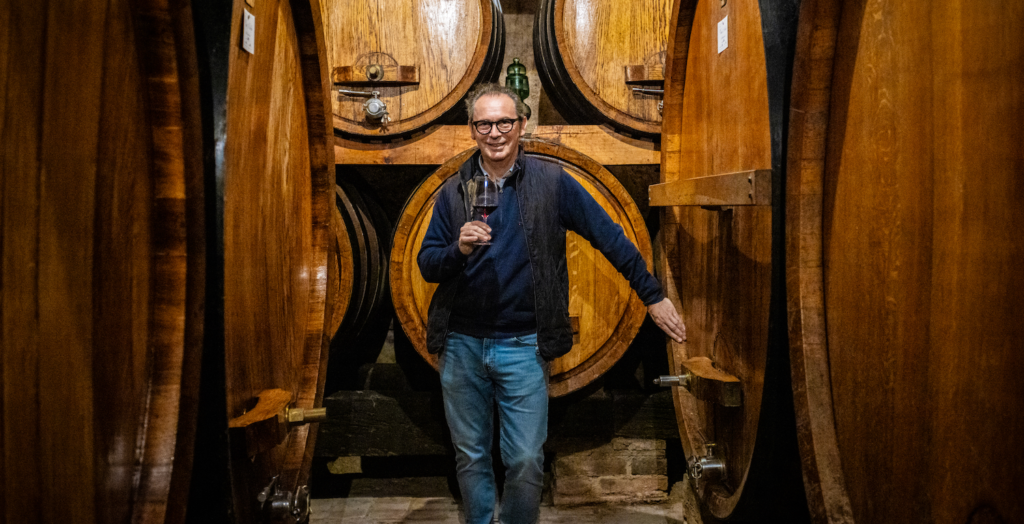
Timeless Wanderers: Posted September 17, 2026
8 Best Family-Owned Wineries in Chianti You’ll Love
Chianti is one of those parts of Tuscany where you don’t have to look very far to find a vineyard.
Drive along the winding roads between Florence and Siena and you’ll pass rows of vines, olive groves, cypress-lined roads and small villages that make you want to stop and explore.
We’ve spent a lot of time travelling through this part of Tuscany, and one thing we’ve learned is that you don’t need to visit the biggest or most famous winery to have a great wine experience.
Some of the smaller family-owned estates are the ones we’d be most interested in visiting.
You might meet the family who has worked the land for generations, taste Chianti Classico made from grapes grown just a few kilometres away, or sit down with a glass of wine and some local cheese while looking out across the vineyards.
And that’s what makes visiting wineries in Chianti so enjoyable.
It’s not simply about tasting wine. It’s about seeing where it comes from and getting a feel for the people and families who have spent generations making it.
In this guide, we’re taking a closer look at eight family-owned wineries in Chianti that are worth adding to your Tuscany itinerary.
We’ve chosen a mix of small producers, historic family estates, organic wineries and places where the wine tasting itself is part of the experience.
We’ve also included practical information to help you plan your visit, including what you can expect from the tastings, whether you need to book, how many wineries to visit in one day and which winery might suit your trip best.
So, pour yourself a glass of Chianti and let’s take a look at eight family-owned wineries we’d consider visiting in the Tuscan countryside.
Table of Contents
Why Chianti Is One of Tuscany’s Best Wine Regions
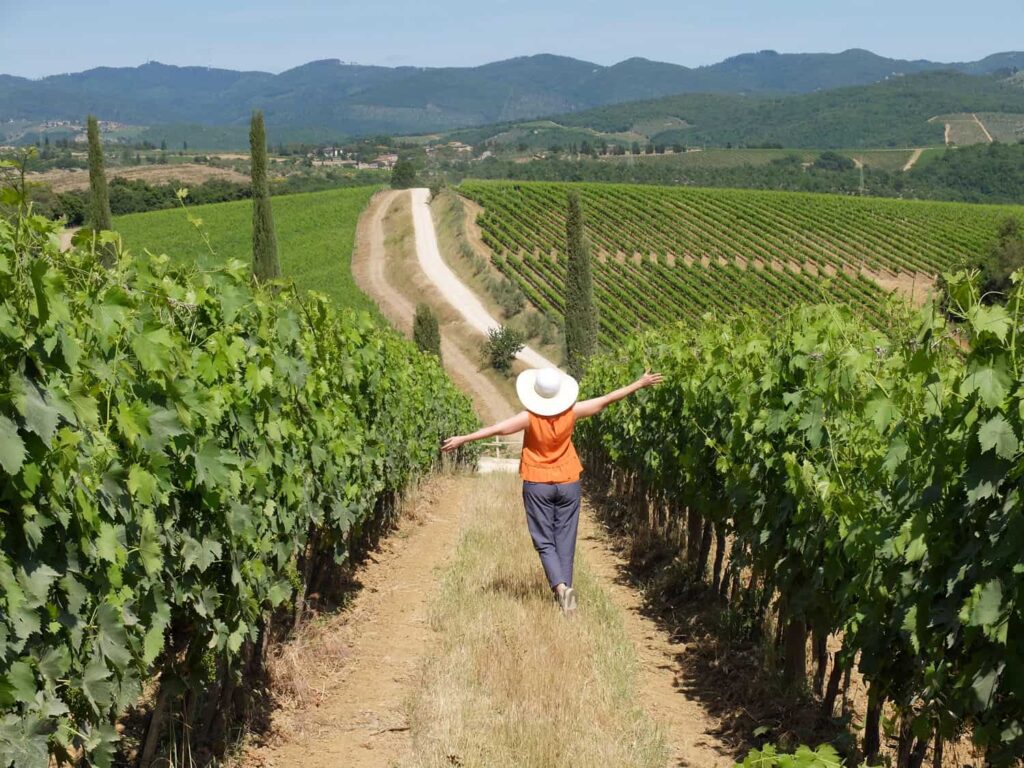
Chianti is one of Tuscany’s best-known wine regions, stretching through the countryside between Florence and Siena.
It’s particularly famous for Chianti Classico, produced in the historic area between the two cities.
The region is known for its Sangiovese grapes, rolling vineyards and small villages connected by winding country roads.
But what makes Chianti interesting for a wine trip is the variety of wineries you’ll find here.
Some are historic estates that have been in the same family for generations, while others are much smaller farms where the owners are still involved in the vineyards, cellar and tastings.
Many also produce their own extra virgin olive oil, so a winery visit can be about much more than wine.
You might taste local olive oil alongside Chianti Classico, walk through the vineyards or sit down with some pecorino, bruschetta or Tuscan cured meats.
And you don’t need to know much about wine to enjoy it.
For us, that’s one of the best things about visiting family-owned wineries. You get to see where the wine comes from, hear the story behind the estate and meet the people who are actually making it.
With that in mind, we’ve chosen eight family-owned wineries in Chianti, each with something a little different to offer.
We can help you plan your dream trip to Tuscany, with a personalised itinerary designed just for you.
After more than 20 years of travelling to Tuscany—and loving it so much we decided to make it our home—we now live here and explore the region at a relaxed, local pace.
Planning a trip to Tuscany is exciting, but choosing where to go, how long to stay, and how to get around can quickly become overwhelming.
That’s where we come in.
We offer a personalised planning service that helps you decide exactly how to explore Tuscany, based on your travel style, budget, and pace.
Plus, we can help you plan scenic drives, time in hilltop towns, food and wine experiences, and those small local moments that make a trip truly special—making your Tuscany holiday easier, smoother, and full of memories you’ll treasure long after you return home.
“Let us plan your perfect trip with a custom itinerary designed just for you.
Fill out the form and let’s begin your dream.”
Quick Picks: 8 Family-Owned Wineries in Chianti
Not sure which winery to choose? Here’s a quick look at our eight picks before we get into the details.
| Winery | Why Visit? | Location |
|---|---|---|
| Lornano | Historic family winery and excellent tasting choices | Castellina in Chianti |
| Cantalici | Organic wine and fascinating family history | Gaiole in Chianti |
| Podere Campriano | Four generations and a small estate near Greve | Greve in Chianti |
| Fattoria Santo Stefano | Family winery that’s easy to reach from Florence | Greve in Chianti |
| Poggio Regini | Small, personal wine tasting experience | Castellina in Chianti |
| Cà di Pesa | Family wine and olive oil tradition dating to 1888 | Greve in Chianti |
| Poggio al Bosco | Organic wines and vineyard experiences | Tavarnelle Val di Pesa |
| San Donatino | Fascinating history and more unusual wines | Castellina in Chianti |
Our tip: Don’t try to visit all eight. Choose one or two that fit naturally into your route and give yourself plenty of time to enjoy the experience.
That’s part of the fun of exploring Chianti — you don’t need to rush from one winery to the next.
1. Lornano: A Family Winery Making Chianti Classico Since 1904
If you’re looking for a Chianti winery with plenty of history but still a very personal feel, Lornano is a great place to start.
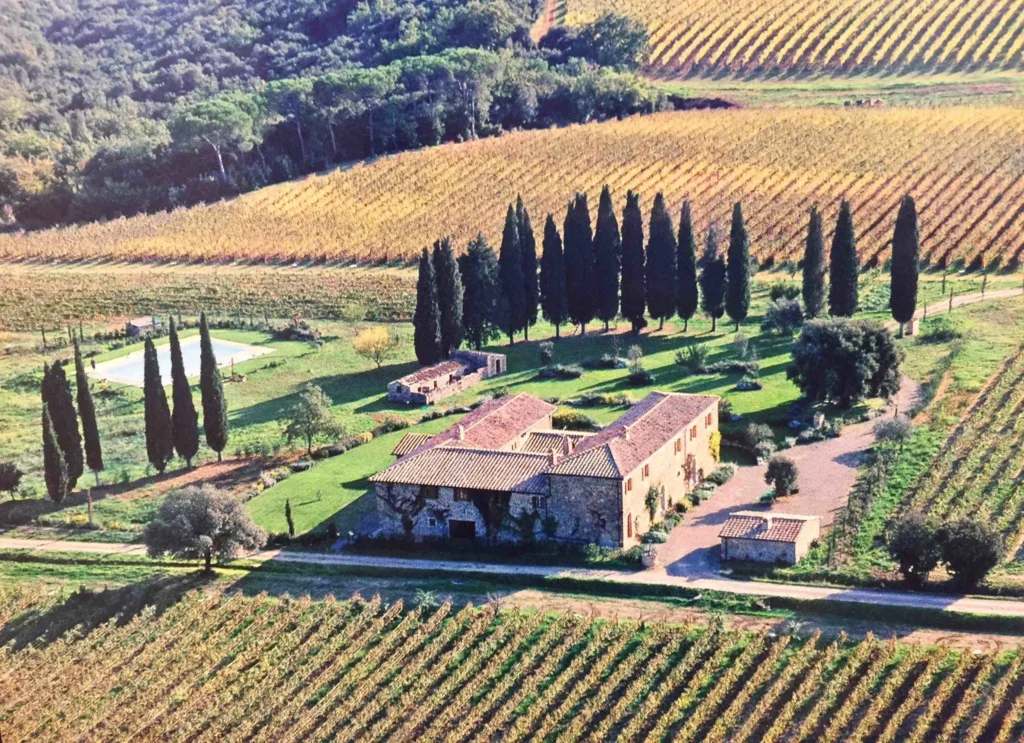
The winery has been owned by the same family since 1904 and sits on the southwestern hills of Castellina in Chianti, on the border with Monteriggioni.
The estate covers around 180 hectares, with vineyards, olive groves and woodland, while the historic winery itself dates back much further.
The family connection is still very much part of Lornano today, with the fourth generation, Nicolò and Galileo Pozzoli, involved in running the estate.
A Winery With Centuries of History
The history of Lornano goes well beyond the family’s arrival in 1904.
The original winery was built in the 15th century, while the current structure dates from the second half of the 18th century. The historic underground cellars are still used today, and they’re part of the guided tours offered to visitors.
It’s a lovely example of what makes visiting an old Tuscan winery so interesting. You’re not simply walking into a modern tasting room — you’re seeing part of the estate’s working history.
The Wines at Lornano
Lornano specialises in Chianti Classico, with Sangiovese playing the starring role.
Around 80% of the vineyards are planted with Sangiovese, using 15 different clones.
The estate’s Chianti Classico Annata, Riserva and Gran Selezione are all made with 100% Sangiovese.
The winery also produces Tuscan IGT wines, a Super Tuscan, Vin Santo and Sangiovese rosé, as well as its own extra virgin olive oil.
The winery has also been sustainability certified, with practices including avoiding chemical herbicides, protecting biodiversity and using solar energy on the estate.
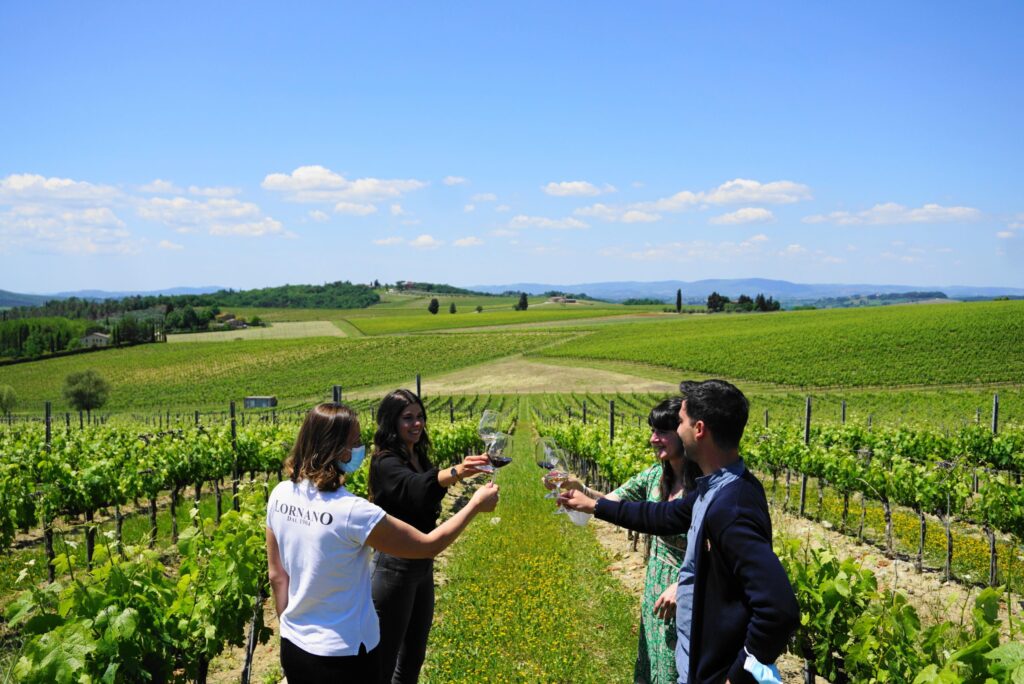
What Can You Do at Lornano?
This is where Lornano really stands out.
There are several tasting experiences, so you can choose something simple or make more of a day of it.
The Tour & Taste of Lornano costs €20 per person and takes around an hour. It includes a guided tour of the historic cellars, three Lornano wines and a tasting of their extra virgin olive oil.
For something a little more substantial, the Wine and Cheese experience costs €35 per person and includes four wines, olive oil, pecorino, ham, salami and bruschetta, alongside the cellar tour.
There’s also a Cru Experience at €40, featuring five wines including the estate’s Chianti Classico Riserva “Le Bandite”, Gran Selezione and Super Tuscan.
If you’d like to get outside among the vines, the Into the Vineyards experience costs €45 and includes a 20-minute vineyard walk, cellar visit, four wines and Tuscan products. This experience isn’t available during winter.
Why We’d Visit Lornano
For us, Lornano ticks several boxes.
You’ve got the long family history, the old cellars, the vineyards, the olive oil and a good choice of tasting experiences. It also gives you a chance to see a working Chianti Classico estate rather than simply sitting down for a few glasses of wine.
And because there are several tasting options, you can choose an experience that suits your time and budget.
Planning Your Visit
Lornano is at Strada di Lornano 12, 53035 Monteriggioni (SI).
All of the main tasting experiences require advance reservation, and the winery provides booking by email or WhatsApp.
Our Pick
We’d probably choose the Wine and Cheese experience for €35.
An hour is long enough to see the historic cellar and learn a little about the winery, while the wine, olive oil and selection of Tuscan food make it feel like more than just a tasting.
And let’s be honest — sitting down with Chianti Classico, pecorino, bruschetta and some Tuscan cured meats sounds pretty good to us.
2. Cantalici: An Organic Family Winery in the Hills of Gaiole in Chianti
If you’d like to visit a family winery where the people behind the wine are still very much involved, Cantalici is worth a look.
The winery is run by brothers Carlo and Daniele Cantalici, who began making their own wines in 1998 after working alongside their father, Loris, in the vineyards and on the land. The family has been producing organically since 2015.
Cantalici is in Castagnoli, a small hamlet in the hills of Gaiole in Chianti.
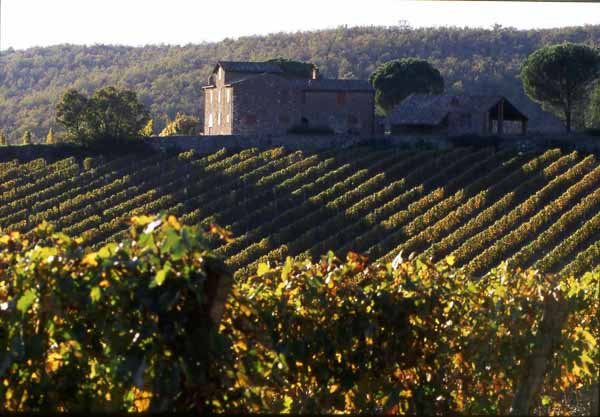
The winery sits high on the hill, surrounded by the Chianti Classico countryside, with vineyards spread across areas including Gaiole, Monti, Radda, Castelnuovo Berardenga and Vagliagli.
The Story Behind the Winery
There’s another reason Cantalici is interesting.
The winery’s official name is L’Antica Fornace di Ridolfo, named after the historic Ridolfo Furnace that forms part of the estate.
The first evidence of the old furnace appears on a 16th-century map, and it is now incorporated into the winery. During the cellar tour, visitors can actually walk through this historic part of the property.
For us, that’s what makes this more than simply a wine tasting. You’re getting a little bit of Chianti history along with the wine.
The Wines at Cantalici
The winery produces Chianti Classico DOCG, including Riserva and Gran Selezione, along with Tuscan IGT wines, rosé, white wine and Vin Santo.
Most of the Cantalici wines are made from 100% Sangiovese, and the grapes are hand harvested in small crates. The family also produces its own Tuscan extra virgin olive oil and Vin Santo grappa.

What Can You Do at Cantalici?
There are several tasting options, so you can keep things simple or make more of a visit.
The basic tasting lets you choose four, six or eight wines, with prices currently listed at €15, €20 and €25 respectively. Each includes bread with the winery’s extra virgin olive oil.
If you’d like to see more of the property, the winery and ancient furnace tour with six wines takes around an hour and currently costs €30 per person. You’ll hear about the history of the winery, walk through the cellar and visit the old furnace before tasting six wines.
There’s also a longer two-hour experience that combines the tour and six wines with a platter of typical local products. Current prices are €50 for the standard platter or €60 for the larger platter.
Why We’d Visit Cantalici
For us, the combination of family history, organic wine and the old furnace makes Cantalici stand out.
It’s also a good choice if you’re interested in seeing a working winery rather than simply sitting down for a tasting.
And because the family has been making its own wine for more than 25 years, you get a chance to hear the story directly from a business that’s grown from their own work in the vineyards.
Planning Your Visit
Cantalici is at Via Della Croce 17/19, Loc. Castagnoli, 53013 Gaiole in Chianti. The winery currently lists opening hours from 10:00 am to 5:30 pm and provides online booking for its tasting experiences.
There’s free parking at the winery, and electric vehicle charging is also available while you taste.
Our Pick
We’d go for the winery and ancient furnace tour with six wines for €30.
An hour is long enough to see the historic furnace and cellar, hear a little about the family’s story and then sit down to taste the wines.
It’s a good middle ground — you’re getting more than just a tasting without turning the visit into half a day’s activity.
Car rental – If you plan to visit countryside towns and vineyards, a rental car is invaluable.
3. Podere Campriano: Four Generations of Family Wine in Greve
If you’re looking for a small family-owned winery that’s close enough to Greve in Chianti to reach on foot, Podere Campriano is an interesting choice.
The Lapini family bought the property in 1939, and four generations have now been involved with the farm and winery. Today, Elena, Luca and Pietro look after the property and produce organic Chianti Classico wines.
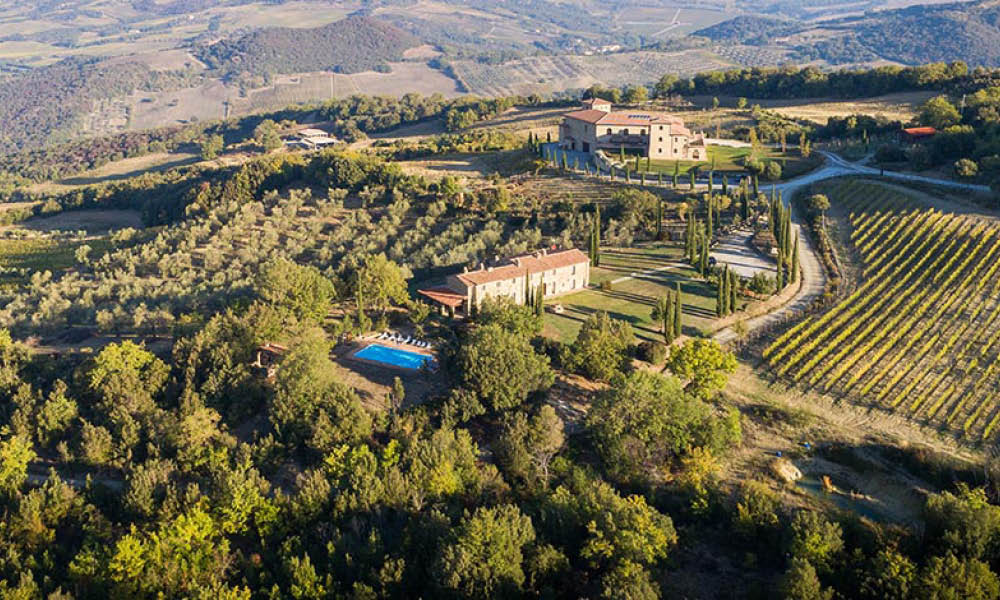
The estate covers around three hectares of vineyards and olive groves right beside Greve in Chianti.
In fact, you can walk from the winery into the village in about five minutes, which makes it particularly convenient if you’re staying in Greve or already planning to explore the town.
A Family Story Dating Back to 1939
The Lapini family’s connection with Podere Campriano began when Nello Lapini bought the property in 1939.
The farm stayed largely as it was until the 1970s, when Nello’s son Valerio began renovating the family home.
The vineyards were renewed in 1999, and by 2002 the new vineyards were producing grapes for the family’s organic Chianti Classico wines.
Some of the older vineyard plots planted by the family have been kept, so although the winery has developed over the years, there’s still a strong connection with the earlier generations.
For us, that’s one of the things that makes a small family winery like this appealing. You’re not simply visiting a business that happens to be in Chianti. You’re seeing a property that’s been part of the same family’s life for decades.
The Wines at Podere Campriano
Podere Campriano concentrates on organic Chianti Classico, with Sangiovese at the centre of the wines.
Its Chianti Classico DOCG Bio is made from 100% Sangiovese grown on the estate.
The winery also produces the Chianti Classico Riserva “Le Balze di Montefioralle,” also made with 100% Sangiovese, using grapes from its vineyard in Montefioralle.
There’s also the Riserva del Fondatore Valerio Lapini, made from grapes from the family’s oldest vineyard, planted in the 1980s. Only around 1,200 bottles are produced, making this a particularly limited wine.
Alongside the wine, the family produces organic extra virgin olive oil and Mosto Cotto, made using a family recipe that has been passed down for around 70 years.
What Can You Do at Podere Campriano?
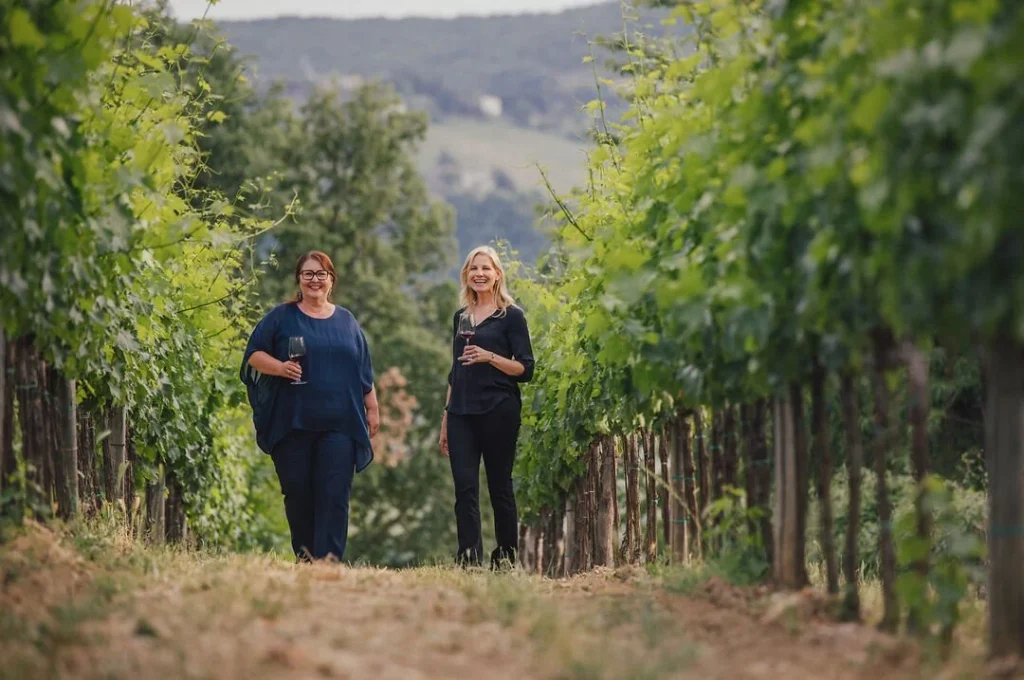
Podere Campriano offers wine tours, tastings and tasting lunches, but reservations are required, so this isn’t somewhere we’d simply turn up without arranging a visit first.
The family also runs cooking classes, which combine a wine tour and tasting with preparing traditional Tuscan dishes.
The cooking class starts at 10:30 am and runs until around 2:30 pm. You’ll prepare five courses, including homemade bread, fresh pasta, a main course, vegetables and dessert, before sitting down to eat the meal you’ve prepared with the family’s Chianti Classico wines.
Classes are for adults and can be arranged for groups of four to ten, while private classes are available for two or three people. Prices aren’t currently published on the website, so you’d need to contact the winery directly for the current cost.
Why We’d Visit Podere Campriano
For us, the location is a big part of the appeal.
Being just five minutes’ walk from Greve means you could easily combine a visit to Podere Campriano with time exploring the village rather than making a separate trip into the countryside.
Then you’ve got the four generations of family history, organic wines, olive oil and the chance to meet the people still running the farm today.
It’s also a nice option if you prefer smaller wineries where the visit feels more personal.
Planning Your Visit
Podere Campriano is at Viale Rosa Libri 36/A, 50022 Greve in Chianti, Florence.
Wine tours and tastings are by reservation.
The winery currently provides a booking enquiry for wine tasting, tasting lunches and cooking classes, with contact available by email, telephone and WhatsApp.
If you’re staying in Greve, the winery’s location makes it particularly easy to include in your day without worrying about driving between tastings.
Our Pick
We’d choose a wine tasting and tour if we were already spending time in Greve.
The combination of the family history, organic Chianti Classico, olive oil and small-scale setting sounds exactly like the sort of visit we’d look for when exploring Chianti.
And if you’re travelling with friends or family and want to make more of a day of it, the cooking class would be a completely different experience.
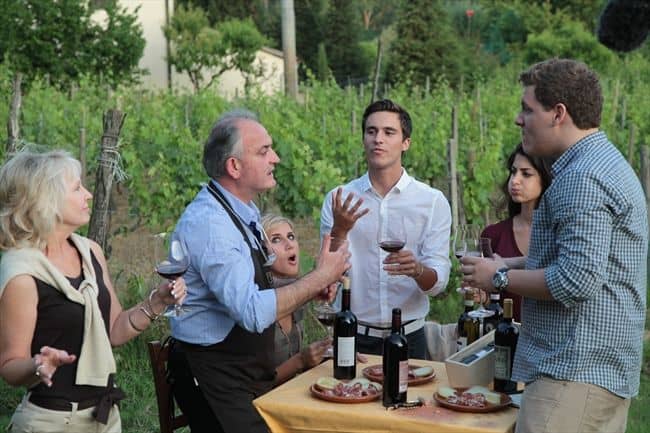
One thing we really like about Podere Campriano is that you don’t have to make a whole day around visiting the winery. You can walk there from Greve, enjoy the tasting, and then carry on exploring the village.
That feels like a very good fit for a slow day in Chianti
4. Fattoria Santo Stefano: A Family Winery Near Greve in Chianti
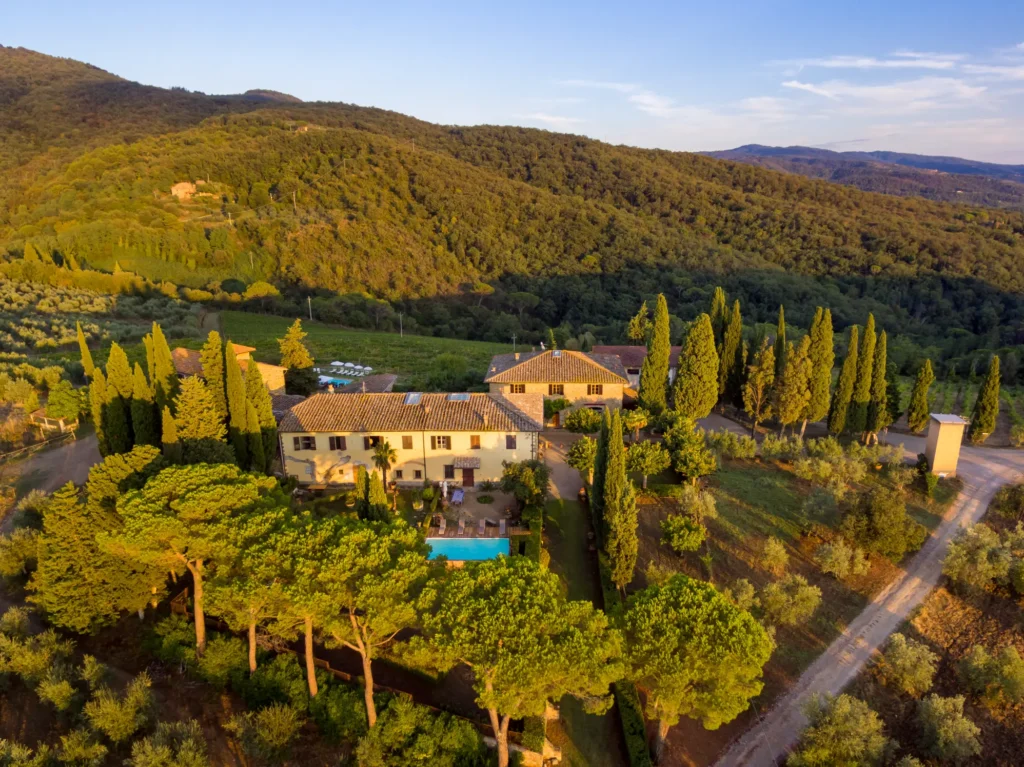
If you’re looking for a family-owned winery that’s easy to include in a day exploring Chianti, Fattoria Santo Stefano is one worth considering.
The Bendinelli family has owned the farm since 1961, and the estate sits on the slopes of Monte Collegalle, just outside Greve in Chianti.
It’s around 30 minutes from Florence, making it a convenient option if you’re staying in the city and want to spend a day in the countryside.
The farm is part of the Chianti Classico region and combines vineyards, olive groves, a historic rural complex and a working winery.
There are also apartments and a manor house on the estate if you’d like to stay among the vineyards.
A Family Farm With Plenty of History
There’s more history here than you might realise at first.
The estate sits at around 380–400 metres above sea level on the slopes of Monte Collegalle, and takes its name from the nearby church of Santo Stefano a Collegalle, which has been documented since 1137. The area was also crossed by an old route connected with the Via Francigena.
The Bendinelli family has been farming here since 1961, and the property has continued as a family-run business rather than becoming a large commercial wine operation.
Today, the estate produces wine and extra virgin olive oil, while also welcoming visitors for tastings, cellar tours and walks through the vineyards and olive groves.
The Wines at Fattoria Santo Stefano
Sangiovese is at the heart of the winery’s production, alongside varieties including Colorino, Merlot and Cabernet Sauvignon.
The current range includes Chianti Classico DOCG, Chianti Classico Riserva “Drugo” and Chianti Classico Gran Selezione, along with IGT Toscana wines, white and rosé wines and Vin Santo del Chianti Classico.
The family also produces extra virgin olive oil from Tuscan varieties including Frantoio, Leccino and Moraiolo.
So, as with several of the other family wineries on our list, you’re getting the chance to taste more than just wine.
What Can You Do at Fattoria Santo Stefano?
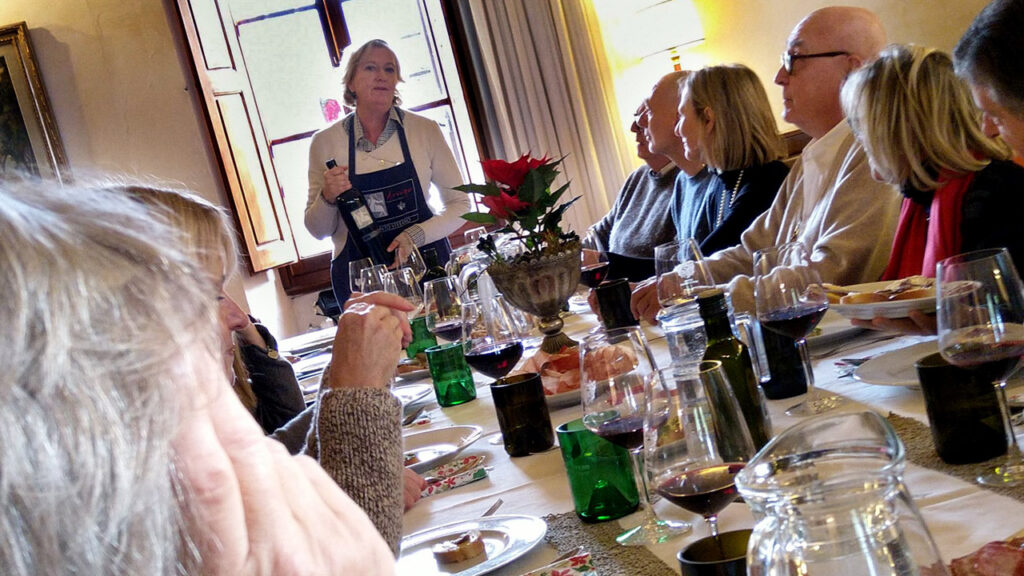
There are several experiences available, depending on how much time you’d like to spend at the estate.
The Apollo wine tasting is the shorter option, concentrating on four wines with some simple snacks such as olives and breadsticks.
It’s a good choice if you don’t want to spend several hours at the winery.
The Bacco Wine Tour takes around 1½ hours and includes a short winery tour followed by three wines — one IGT and two Chianti Classico DOCG wines — along with extra virgin olive oil and local cheeses. Cured meats can also be provided on request, while vegetarian bruschetta is available. The tour currently runs Monday to Saturday at 11 am or 3 pm.
If you’d like to make more of a day of it, the Dioniso experience combines the winery visit and tasting with a light lunch and local flavours.
There’s also the Marte experience, which takes you out among the vines for a walk followed by a picnic with house wine.
And if you’d rather get your hands dirty, the estate also has a cooking school offering Tuscan cooking experiences.
Why We’d Visit Fattoria Santo Stefano
For us, the location is one of the big advantages.
You’re close enough to Florence to make this an easy day trip, but once you’re at the farm you’re surrounded by vineyards, olive groves and the Chianti countryside.
We also like the choice of experiences. You can simply taste a few wines, take a proper cellar tour, walk through the vineyards or combine your visit with lunch.
That means you don’t have to force the winery into your day. You can choose an experience that fits naturally with the rest of your Chianti trip.
Planning Your Visit
Fattoria Santo Stefano is at Via Collegalle 3, 50022 Greve in Chianti (FI).
The winery currently provides booking for its experiences, and we’d recommend arranging your visit ahead of time rather than simply turning up.
One thing worth knowing is that the final approach can be a little tricky. Depending on which direction you’re coming from, the route includes a steep dirt road, so it’s worth following the winery’s own directions when you plan your visit.
Our Pick
We’d probably choose the Bacco Wine Tour.
An hour and a half feels about right for a winery visit. You get to see the cellar, taste three wines, try the olive oil and sit down with some local food without turning the visit into an all-day affair.
And if you’re travelling with friends or family who aren’t particularly interested in wine, the vineyard walk and picnic option could be a fun alternative.
For us, that’s what makes Fattoria Santo Stefano worth including.
It’s a family farm where you can combine wine, food, countryside and a little bit of history — all without having to travel far from Greve or Florence.
Car rental – If you plan to visit countryside towns and vineyards, a rental car is invaluable.
5. Poggio Regini: A Small Family Winery in Castellina in Chianti
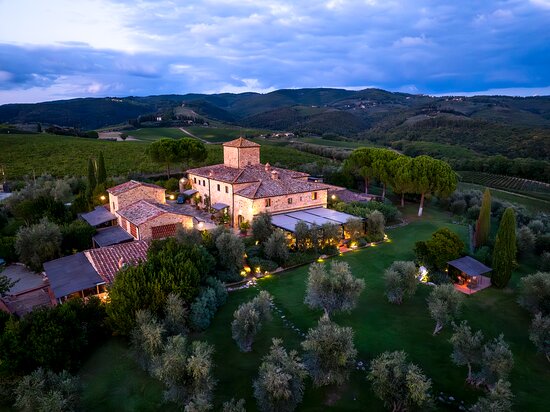
If you’re looking for a smaller family winery where the visit feels personal rather than overly formal, Poggio Regini is one we’d put on the list.
Located in the hills of Castellina in Chianti, Poggio Regini is a family-run winery where Maurizio, Manuele and Cinzia welcome visitors and share the family’s connection with the land, vineyards and wine.
This is the sort of place that suits travellers who want to slow down, see where the wine is made and sit down with some local food rather than simply arrive, taste a few wines and leave.
A Family Winery in the Chianti Classico Hills
Poggio Regini is in the heart of the Chianti Classico area, surrounded by vineyards and the countryside around Castellina in Chianti.
The family has been involved with the estate for generations, and the winery combines traditional winemaking with more modern cellar techniques.
Maurizio, Manuele and Cinzia are still directly involved in welcoming visitors, which gives the experience a distinctly family-run feel.
The estate produces Chianti Classico and Chianti Classico Riserva, along with a selection of other wines, as well as extra virgin olive oil.
The Wines at Poggio Regini
Chianti Classico is at the heart of the winery’s production.
The estate’s Chianti Classico and Chianti Classico Riserva are made from Sangiovese, while the winery also produces a range of IGT wines.
There are some more unusual labels in the range too, so there’s a little more to discover than just the traditional Chianti Classico.
The family also produces its own extra virgin olive oil, which features in the tasting experiences.
For us, this is a nice combination because wine and olive oil are such a big part of Tuscan food, and tasting them alongside local products makes the visit feel more connected to the region.
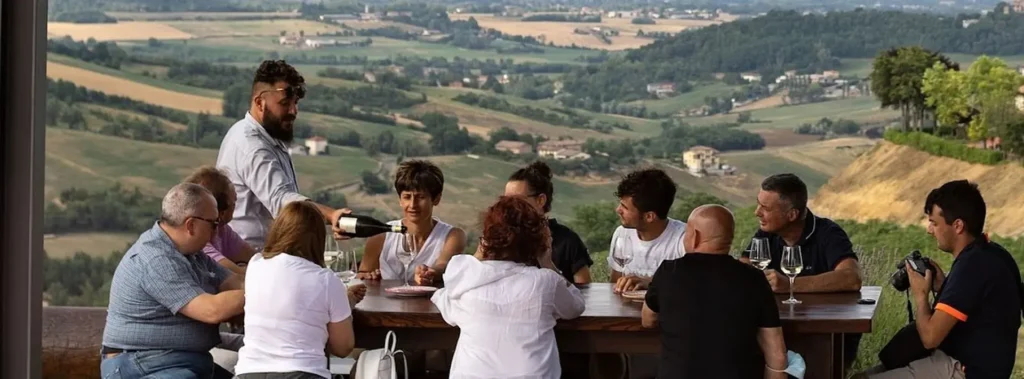
What Can You Do at Poggio Regini?
There are currently two main tasting experiences.
The Classic Wine Tasting takes around 1½ hours and costs €35 per person.
It begins with a guided visit to the vineyards and cellar before moving on to a tasting of four estate wines.
The wines are accompanied by extra virgin olive oil, bruschetta, local cheeses and traditional Tuscan cured meats. The experience is available in English or Italian.
If you’d like to make more of the visit, there’s also a Private Wine Tasting with Light Lunch.
This costs €50 per person and is reserved exclusively for your group.
Along with four wines and olive oil, you’ll have a traditional Tuscan light lunch featuring local specialities, homemade pici pasta and cantuccini. The vineyard and cellar visit are included.
Why We’d Visit Poggio Regini
For us, the appeal is the size and personal nature of the experience.
You’re visiting a family-run winery rather than a large estate designed around large numbers of visitors.
You get to walk through the vineyards, see the cellar and then sit down with the family to taste their wines alongside some typical Tuscan food.
And the location in Castellina in Chianti makes it easy to combine with a day exploring this part of the Chianti Classico countryside.
If you’re already planning to visit Castellina, Poggio Regini could fit naturally into your itinerary rather than requiring a major detour.
Planning Your Visit
Poggio Regini is at Località Poggio Regini, Castellina in Chianti.
Both current tasting experiences are bookable online, and we’d recommend reserving ahead rather than simply turning up.
The classic tasting is paid on site and currently has free cancellation, while the private lunch experience is also booked online.
That also means you can build the winery visit into your day without wondering whether there will be space when you arrive.
Our Pick
We’d probably choose the Classic Wine Tasting for €35.
An hour and a half gives you enough time to walk through the vineyards, see the cellar and then sit down with four wines, olive oil, cheese, bruschetta and Tuscan cured meats.
That’s a pretty good way to spend an afternoon in Chianti.
If you’re travelling with friends or celebrating something special, though, the private tasting with the light lunch at €50 would be tempting.
For us, Poggio Regini has exactly what we’d look for in a small family-owned winery — good wine, local food, a family story and enough time to actually enjoy being there.
6. Cà di Pesa: A Small Family Winery With Roots Going Back to 1888
If you’re looking for a small family winery where the people behind the wine are still closely involved with the land, Cà di Pesa is one we’d definitely consider.
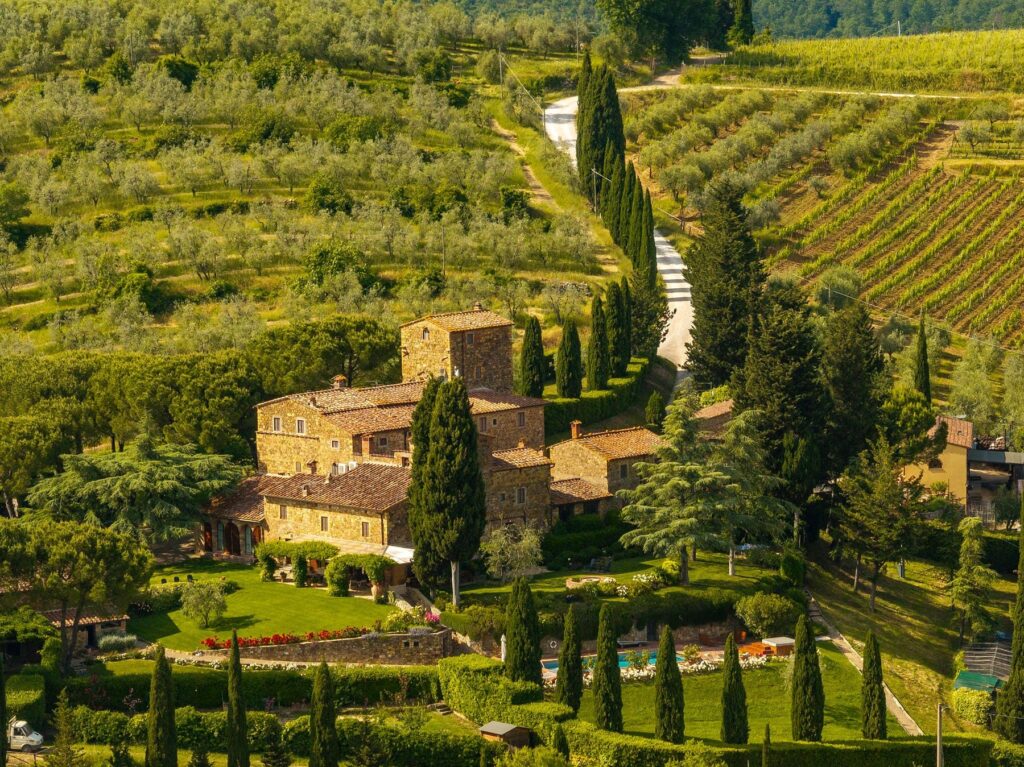
The farm sits in the hills of Panzano in Chianti, at around 400–430 metres above sea level, and the family has been producing Chianti Classico and extra virgin olive oil here since 1888.
It’s still a small, family-run operation, with the size of the farm allowing the family to follow the different stages of production closely.
A Family Story Dating Back to 1888
There’s an interesting story behind the name Cà di Pesa and the family’s wine, Burrone.
The Burroni family has lived in this area for centuries, and over time people began referring to the locality by the family’s surname. That’s how Burrone became associated with both the family and the place where the farm is located.
There’s also an old bell that has become a symbol of the family.
It came from a small deconsecrated chapel beside the farm and is engraved with the year 1888 and the names of the Burroni brothers who had it made. The bell eventually became the emblem of the family and the company.
We love little details like this because they give you a glimpse into the people and history behind the bottle.
The Wine at Cà di Pesa
Cà di Pesa’s wine Burrone is made from around 96% Sangiovese, with the remaining grapes coming from Cabernet, Merlot and Colorino.
The farm also produces its own extra virgin olive oil, so wine isn’t the only thing you can discover during a visit.
The winery’s current information also highlights its small-batch approach, with close attention paid to the grapes from vineyard through to cellar.
Its newer wine operation produces Chianti Classico and other wines, alongside olive oil.
What Can You Do at Cà di Pesa?
This is where Cà di Pesa is particularly appealing.
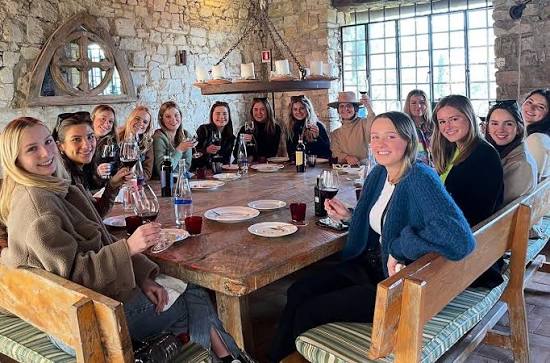
The family offers wine and olive oil tasting visits by reservation, and guests can see the cellar and the farm rather than simply arriving for a tasting in a separate room.
Visitors can also access the vineyards and olive groves, giving you the chance to see where the grapes and olives are actually grown and learn more about the work involved.
The current winery information doesn’t publish a fixed tasting price, so we wouldn’t put a figure in this article that could quickly become outdated.
Instead, we’d recommend contacting Cà di Pesa when planning your visit and asking about the current tasting options and availability.
Why We’d Visit Cà di Pesa
For us, this is exactly the sort of small winery that makes exploring Chianti interesting.
There’s a long family connection to the land, the farm is still small and hands-on, and a visit gives you the chance to see more than just a bottle being poured into a glass.
You can see the cellar, walk among the vineyards and olive trees, hear about the family’s history and taste two important parts of Tuscan farming — wine and olive oil.
It’s also in the Panzano area, so it would fit nicely into a day exploring this part of Chianti Classico.
Planning Your Visit
Cà di Pesa is at Località San Martino a Cecione 13, 50022 Greve in Chianti, Florence. The winery asks visitors to arrange tastings in advance.
If you’re driving, it’s worth allowing a little extra time for the final approach.
The road from the main route includes some steep sections and parts that are unsealed, so we’d definitely follow the winery’s directions rather than relying on a quick glance at the map.
Our Pick
We’d make this a slower wine and olive oil visit rather than simply booking the quickest tasting available.
If we’re going all the way to a small family farm with a history going back to 1888, we’d want to see the vineyards, olive groves and cellar, hear the family story and then sit down to taste the wine and olive oil.
That’s what we’d be looking for from a family-owned winery in Chianti.
And that old 1888 bell beside the farm? We’d definitely want to see that too
7. Poggio al Bosco: An Organic Family Winery in the Heart of Chianti
If you like the idea of visiting a small family winery where you can actually meet the people behind the wine, Poggio al Bosco is one to put on your list.
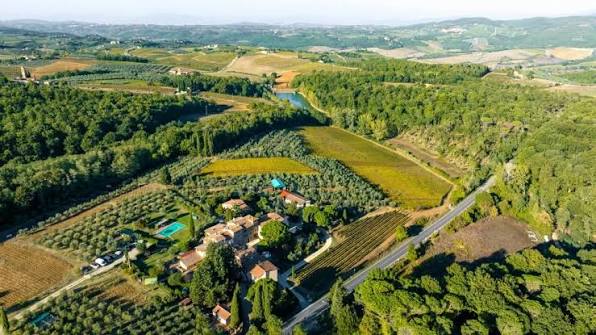
This family-run organic farm is in Tavarnelle Val di Pesa, roughly halfway between Florence and Siena.
The story of the present-day winery began in 1960, when Giovanni, together with his sons Primo and Mario, bought the land and became direct owners of the farm.
The family planted vineyards and continued developing the farm, passing the work from one generation to the next.
Today, Poggio al Bosco remains family-run, with the family involved in everything from looking after the vines to harvesting, making and bottling the wine.
The farm has also been certified organic since 2015.
A Family Winery Surrounded by Vineyards
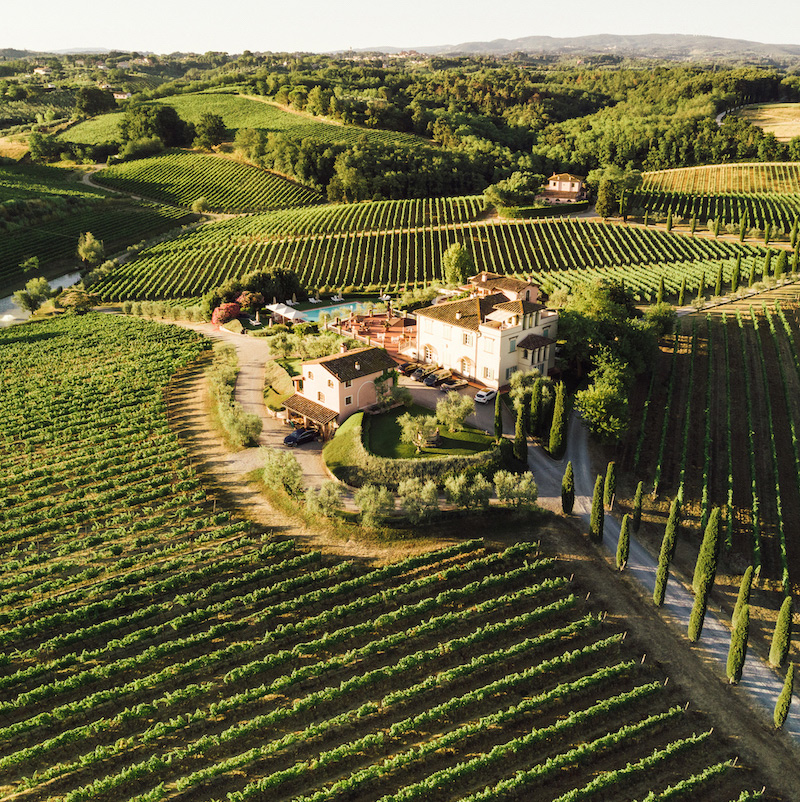
Poggio al Bosco sits on a hill surrounded by woodland and vineyards, giving it the sort of countryside setting you’d hope to find when visiting Chianti.
The family handles the entire process themselves, including hand harvesting the grapes and bottling the finished wines.
For us, that’s part of the appeal of visiting a small producer.
You get a better idea of how much work goes into that bottle of Chianti sitting on your table.
And because the farm has remained in family hands, the story of the winery is closely connected to the people who work the land today.
The Wines at Poggio al Bosco
Poggio al Bosco produces a surprisingly varied selection for a relatively small family winery.
The current range includes organic Chianti DOCG, Chianti DOCG Riserva, IGT Toscana reds, organic rosé and white wines, and Vin Santo del Chianti Riserva.
The family also produces its own extra virgin olive oil.
So, like several of the other wineries we’ve included, a visit isn’t just about wine. You’ll also get to taste another important part of traditional Tuscan farming.
What Can You Do at Poggio al Bosco?
There are currently a couple of tasting experiences to choose from.
The Welcome to Chianti experience is the one we’d be most interested in. It takes around two hours and currently costs €38 per person.
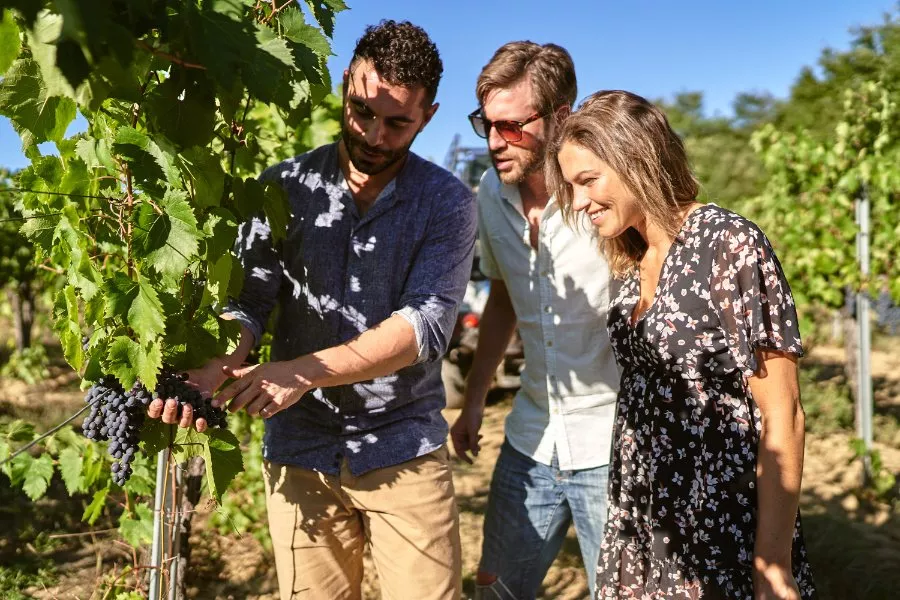
You’ll begin with a stroll through the vineyard, where you’ll learn about the vines, the family’s history and how they work the land.
Afterwards, you’ll sit down on the patio beneath the fig tree for a tasting of four wines and five extra virgin olive oils, served with bruschetta. There’s also a little sweet surprise at the end.
If you’d prefer something shorter, Wine on the Patio takes around 1½ hours and currently costs €32 per person.
This experience concentrates on the tasting, with four wines and five extra virgin olive oils served with bread while you learn more about the winery and its products.
There is also a simple shop tasting where you can try two wines, although this is more suited to people who are already stopping by rather than planning a full winery experience.
Why We’d Visit Poggio al Bosco
For us, Poggio al Bosco has a lot going for it.
It’s family-run, organic, relatively small and set right among the vineyards. You get to hear the family’s story, see where the grapes grow and taste both wine and olive oil produced on the farm.
We also like the fact that there are two proper experiences to choose from.
If we had the time, we’d go for the longer vineyard walk. If we were fitting the winery into a busy day exploring Chianti, the patio tasting would probably be enough.
And its position between Florence and Siena makes it easy to work into a wider Chianti itinerary.
Planning Your Visit
Poggio al Bosco is at Via Chiostrini 5, 50028 Barberino Tavarnelle (FI).
The full tasting experiences should be booked in advance, particularly during the busier months.
A deposit is required for bookings, with the winery currently stating that the deposit is refundable if you cancel at least 48 hours before the experience.
The winery currently lists tastings from Monday to Friday, with some Saturday morning availability.
Opening hours can vary, so we’d check the current availability when making your booking.
Our Pick
We’d choose the Welcome to Chianti experience for €38.
Two hours gives you enough time to walk through the vineyard, hear the family’s story and then sit down beneath the fig tree with four wines, five olive oils and some bruschetta.
That sounds like a pretty lovely way to spend an afternoon in Tuscany to us.
And there’s something rather nice about finishing a vineyard walk by sitting under a fig tree with a glass of Chianti in your hand. That’s the sort of winery visit we’d happily make time for.
Car rental – If you plan to visit countryside towns and vineyards, a rental car is invaluable.

8. San Donatino: A Family Winery With a Fascinating Story
San Donatino is one of those Chianti wineries where the story behind the estate is almost as interesting as the wine.
The estate was bought in 1971 by French singer and poet Léo Ferré and his wife, Maria Cristina Diaz. They moved to Tuscany with their family, restored the vineyards and began bringing the property back into production.
Maria Cristina and her children still live at the estate today, so the family connection remains very much part of San Donatino.
A Vineyard With an Unusual History
When the family first arrived, they began restoring the vineyards and the olive groves, eventually bringing around 5,000 olive trees back into production.
The first wines were sold in bulk, but in the early 1990s the family decided to start bottling and selling their own wines.
That change helped shape the San Donatino we know today, with the family developing its own range of wines rather than simply supplying other producers.
The estate sits at around 420 metres above sea level, overlooking the Val d’Elsa in the heart of Chianti Classico.
Organic Wine and Olive Oil
San Donatino began converting its vineyards to organic production in 2012, and the estate is now organic.
The vineyards are spread across different areas of the property, with variations in soil and exposure helping to create different styles of wine.
Alongside the vineyards, those thousands of olive trees provide the family with another important Tuscan product — extra virgin olive oil.
The Wines at San Donatino
San Donatino produces around 14 different labels, with its main wines including Chianti Classico, Riserva, Dissident and Eretico.
But there’s another side to the winery that makes it particularly interesting.
The estate has been producing an orange wine called Diaccio since the 1990s, making it an early example of this style in the area.
The winemaking also follows a fairly traditional approach, including spontaneous fermentation and long macerations.
Some wines are aged in stainless steel or concrete, while the more important wines spend time in wood.
So if you’ve already visited a few traditional Chianti wineries, San Donatino gives you the chance to try something a little different.
What Can You Expect From a Visit?
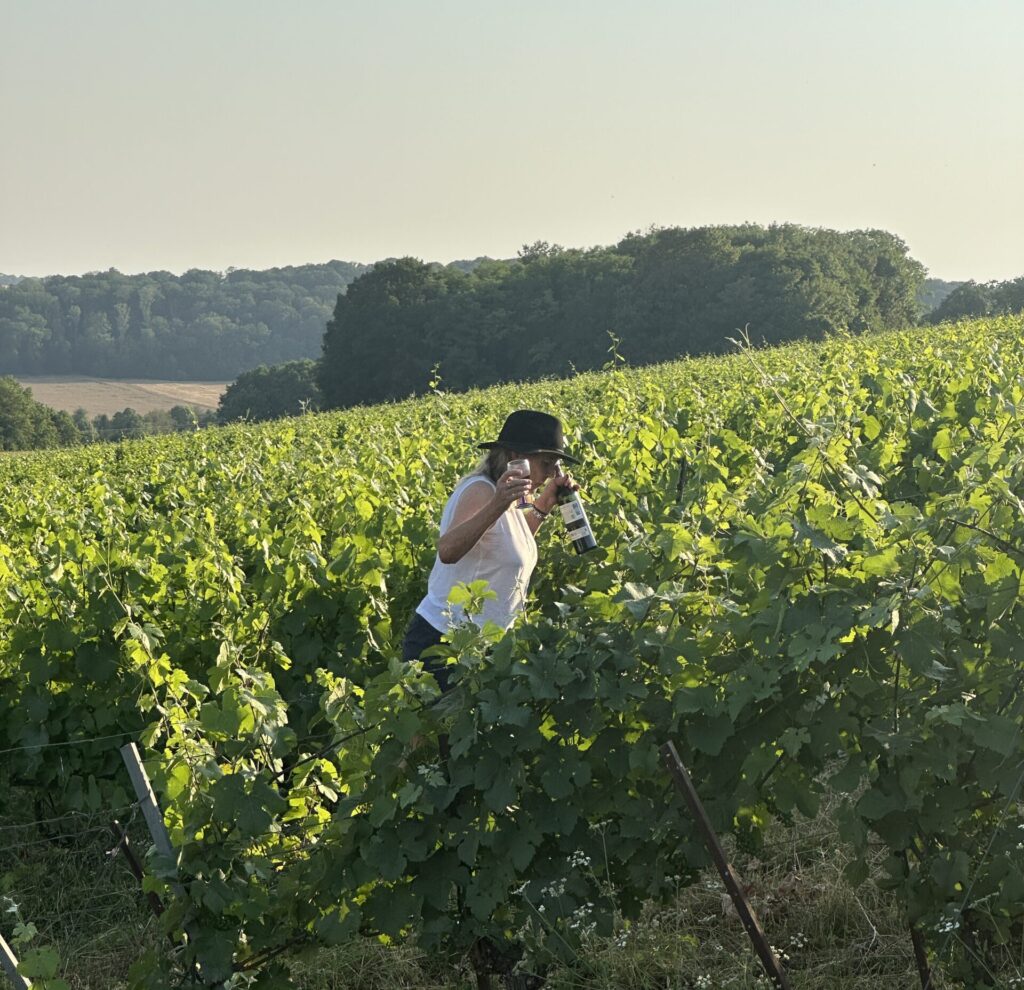
Wine tastings take place on the estate’s panoramic terrace, where you can look across the valley while tasting a selection of the family’s wines.
The winery currently provides an online tasting enquiry and booking option.
It also states that tastings can be available throughout the year without a reservation, but we’d still recommend contacting them ahead of time.
There’s nothing worse than making a special trip to a winery only to find that nobody is available to welcome you.
If you’d like to stay in the area, San Donatino also has an agriturismo at San Donato in Poggio, around 12 kilometres from the winery.
Why We’d Visit San Donatino
For us, the history alone makes San Donatino worth considering.
You’re visiting a family estate that has been shaped by more than 50 years of family life in Tuscany, but there’s also the fascinating connection with Léo Ferré and his decision to leave France and make a home here.
Then you’ve got the organic vineyards, thousands of olive trees and a wine range that includes some less traditional styles.
It’s a good choice if you’ve already visited a few classic Chianti wineries and want to taste something a little different.
Planning Your Visit
San Donatino is at Località San Donatino, 53011 Castellina in Chianti, Siena.
The winery recommends contacting them to arrange a tasting, and its current website also provides an online enquiry form.
Because tasting arrangements can change, we’d check directly with the winery before building your visit into your itinerary.
Our Pick
We’d choose the Chianti Classico tasting on the panoramic terrace.
You’ve got the wine, the views and the chance to hear the story of this unusual family estate.
And if you’re interested in natural or less traditional wines, we’d definitely ask about Diaccio while you’re there.
San Donatino is a great reminder that a Chianti wine trip isn’t just about famous labels. Sometimes the story behind the bottle is what makes a winery worth visiting.
Do You Need to Book Ahead?
Yes — we’d definitely recommend booking your winery visits in advance.
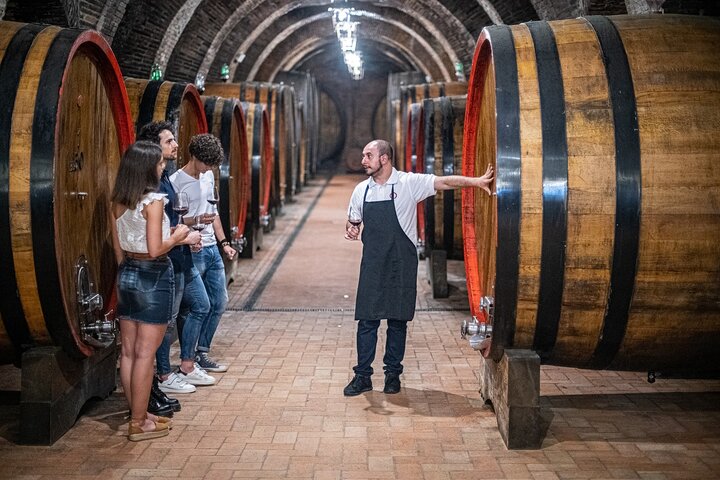
Most of the family-owned wineries we’ve included here are small operations, and the tasting experiences are usually arranged around the people running the winery rather than a large visitor centre with someone available all day.
Several of the wineries require advance reservations for their tours and tastings, while others ask visitors to contact them before arriving.
Even where a winery says walk-ins may sometimes be possible, we’d still book ahead.
This is particularly important from spring through autumn, when Chianti is at its busiest.
Booking also means you can choose the experience you actually want.
Perhaps you’d like a vineyard walk, a cellar tour, lunch with the tasting or simply a couple of hours with wine and local food.
Our advice? Don’t leave it until the morning of your visit. Pick your winery, check the current tasting options and book before you set off.
It makes planning your day much easier, and you won’t have to worry about arriving at a small family winery only to find they’re fully booked.
Car rental – If you plan to visit countryside towns and vineyards, a rental car is invaluable.
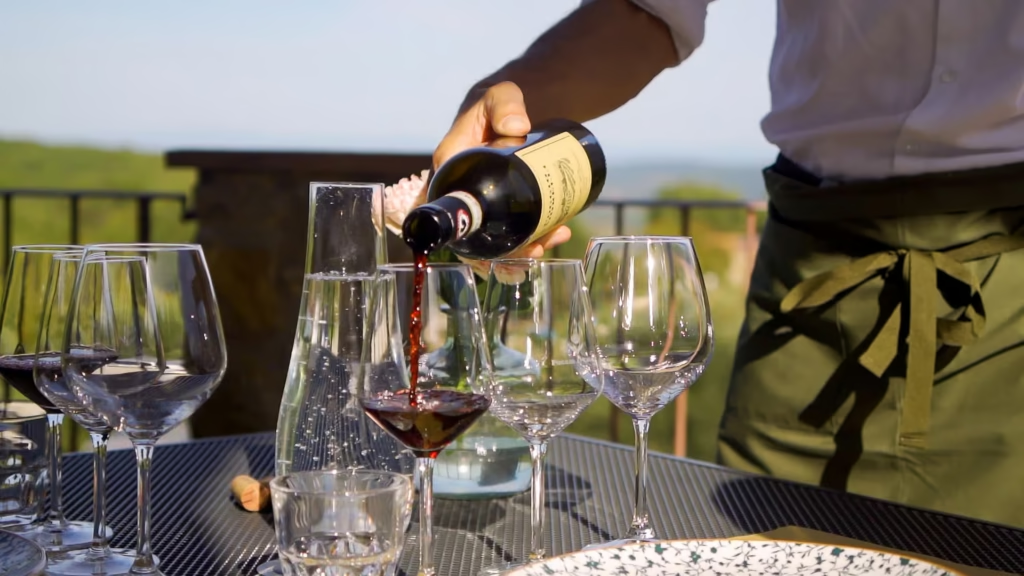
Read Our Full Guide
Chianti Wine Region Guide: Best Wineries, Towns & Places to Stay (2026)
How Many Wineries Should You Visit in One Day?
Honestly, we’d stick to one or two wineries in a day.
It might sound tempting to plan three or four tastings so you can experience as much of Chianti as possible, but that’s a lot of wine — and a lot of driving — for one day.
Most winery visits take between an hour and two hours, especially if you’re doing a vineyard walk, cellar tour or tasting with food.
Add the driving time between estates and you’ll quickly find yourself watching the clock instead of enjoying the countryside.
For us, two wineries would be the maximum.
You could visit one in the morning, stop for lunch in a nearby village, then enjoy a second tasting in the afternoon.
Or simply choose one winery and spend the rest of the day exploring somewhere like Greve, Castellina or Panzano.
Remember, you don’t need to visit all eight wineries in this guide.
Choose one or two that fit naturally into your route, slow down and enjoy the experience. That’s a much nicer way to discover Chianti.
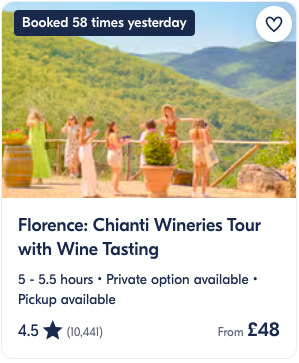
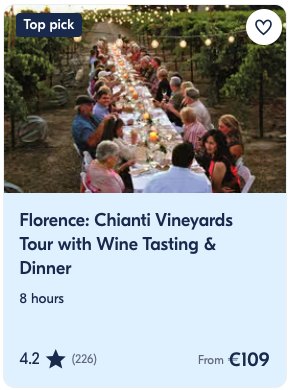
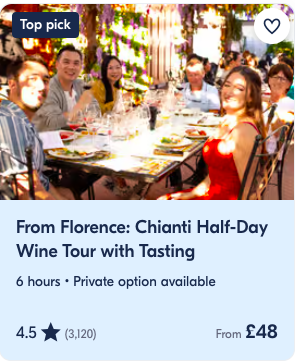
Wine Tours Of Chianti
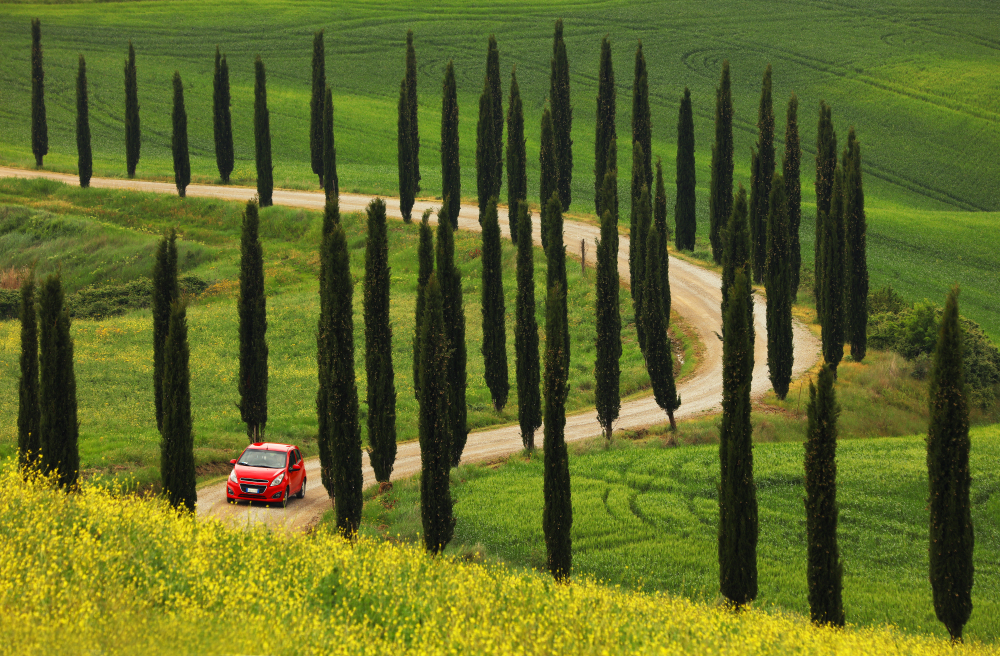
Driving Between Wineries
The wineries we’ve included are spread across the countryside around Greve, Castellina, Gaiole and Tavarnelle Val di Pesa, so public transport isn’t always practical when you’re trying to visit more than one.
But there’s one important thing to think about: who’s doing the driving?
Wine tasting and driving don’t make a great combination.
If you’re travelling as a couple or with friends, decide beforehand who will drive, or consider booking a private driver or wine tour so everyone can enjoy the tastings.
Chianti’s country roads can also be narrow and winding, with plenty of bends and occasional steep sections.
Don’t expect to cover the distances as quickly as you might on a main road.
We’d also avoid planning a route that has you constantly jumping from one side of Chianti to the other.
Instead, choose one or two wineries that are close to each other and build the rest of your day around them.
You could combine a tasting with lunch in Greve, a walk around Castellina or a stop at one of the smaller villages along the way.
And don’t rely entirely on your phone’s map once you’re out in the countryside. Some winery entrances can be down small roads, and mobile reception isn’t always reliable.
Our advice? Take your time, allow extra time for the roads and don’t try to squeeze too much into one day. In Chianti, the journey between wineries is part of the experience too.
Car rental – If you plan to visit countryside towns and vineyards, a rental car is invaluable.

Wine Tasting Etiquette
Don’t worry — you don’t need to know anything about wine to enjoy a tasting in Chianti.
Family-owned wineries are generally much more relaxed than you might expect.
The idea isn’t to test your knowledge or see whether you can identify every grape in the glass. You’re there to taste the wine, learn a little about how it’s made and enjoy the experience.
A few simple things are worth remembering.
Take your time with each wine.
Listen to the person explaining what you’re tasting, and don’t feel that you need to rush through the glasses.
Ask questions.
If you like a particular wine, ask about the grapes, how it’s made or how long it’s aged. And if you don’t like something, that’s perfectly fine too.
Don’t feel pressured to finish every glass.
Tastings can involve several wines, so it’s perfectly acceptable to use the spittoon provided, particularly if you’re visiting more than one winery.
It’s also worth remembering that wine tastings are about more than the wine.
At many of the family wineries we’ve included, you’ll also taste olive oil, cheese, cured meats, bruschetta or other local products.
And finally, don’t arrive expecting a quick 20-minute stop. Many of these experiences are designed to be enjoyed slowly.
Our advice? Relax, ask questions, taste at your own pace and enjoy meeting the people behind the wine. You really don’t need to be a wine expert — that’s what the tasting is for.
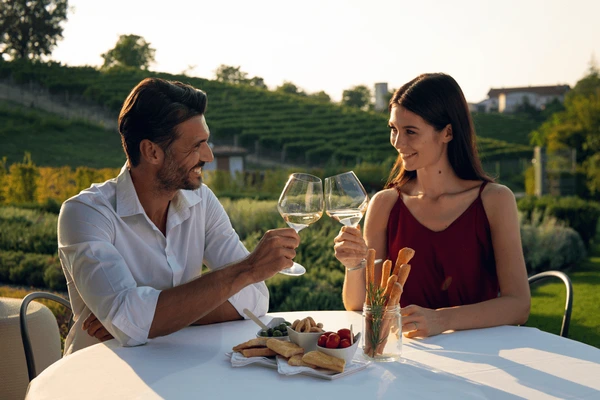
What Do Wine Tastings Usually Include?
Wine tastings in Chianti can be quite different from one winery to another, which is actually part of the fun.
At some of the family-owned wineries we’ve chosen, you’ll simply taste several wines and learn about the estate. Others include a cellar or vineyard tour, while some combine the tasting with olive oil and traditional Tuscan food.
You might find yourself tasting Chianti Classico alongside pecorino, bruschetta, local cured meats or extra virgin olive oil. Some wineries also offer lunch, a vineyard picnic or even a cooking class.
The number of wines varies too. A shorter tasting might include two or three wines, while a longer experience could involve four, six or even more.
Some wineries also offer different levels of tasting, so you can choose between a simple introduction to their wines and a longer experience that explores their vineyards, cellar and more of their range.
Our advice? Look carefully at what’s included before booking.
If you’re travelling all the way into the Chianti countryside, we’d personally rather choose an experience that includes a little more than simply standing at a tasting counter.
And don’t forget the olive oil. Some of our favourite Tuscan food memories involve a good glass of wine, local cheese, fresh bread and a bottle of excellent extra virgin olive oil sitting on the table.
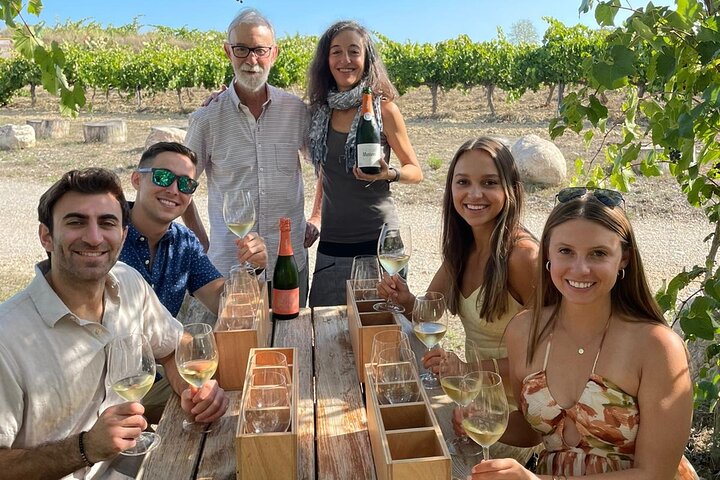
What Is the Best Time of Year to Visit?
Chianti is beautiful at different times of the year, but for a winery visit, we’d choose late spring, early summer or early autumn.
From May through June, the countryside is looking fantastic, the vineyards are green and the weather is usually comfortable for sitting outside and exploring the estates.
September and October are another great choice.
The grape harvest is underway or has recently finished, so you’ll often see more activity around the vineyards and wineries.
Autumn also brings cooler temperatures, which can make driving and walking around Chianti much more pleasant.
July and August can be hot, particularly in the middle of the day, and this is also one of the busiest periods for visitors.
If you’re travelling then, we’d book your winery experiences well ahead and try to choose morning or later-afternoon tastings.
Winter is much quieter, and some wineries continue offering tastings throughout the colder months.
You won’t get the same vineyard experience as you would in summer or autumn, but if you prefer fewer visitors and a more peaceful trip, it can be a good option.
Our pick would be September or early October.
There’s something special about being in Chianti when the vineyards are busy with the harvest, and you can combine your winery visit with some of the best food and countryside that Tuscany has to offer.
Car rental – If you plan to visit countryside towns and vineyards, a rental car is invaluable.
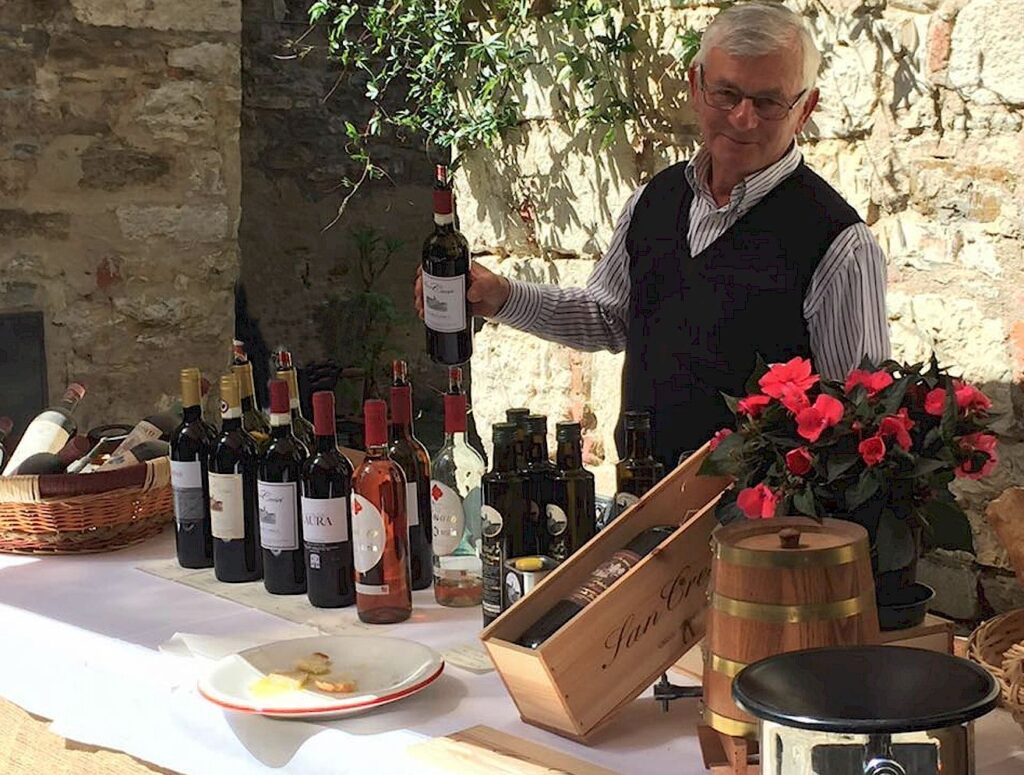
Do You Need to Be a Wine Expert?
Not at all — and honestly, we think that’s one of the best things about visiting a family-owned winery in Chianti.
You don’t need to know the difference between every grape variety, understand how wine is aged or be able to describe what you’re tasting in fancy wine language.
The people running these wineries are there to introduce you to their wines and tell you about the land, the family and how they make them.
If you like a wine, say so. If you don’t, that’s fine too. Ask which wine they would recommend with Tuscan food, which bottle is their favourite or what makes one wine different from another.
You might even discover that you enjoy a wine you wouldn’t normally choose.
And remember, there are no wrong answers when it comes to your own taste.
For us, a wine tasting should be relaxed. Sit down, enjoy the food, have a conversation and learn a little along the way.
So don’t let a lack of wine knowledge put you off visiting a Chianti winery. You don’t need to be an expert — you’re there to discover what you like.
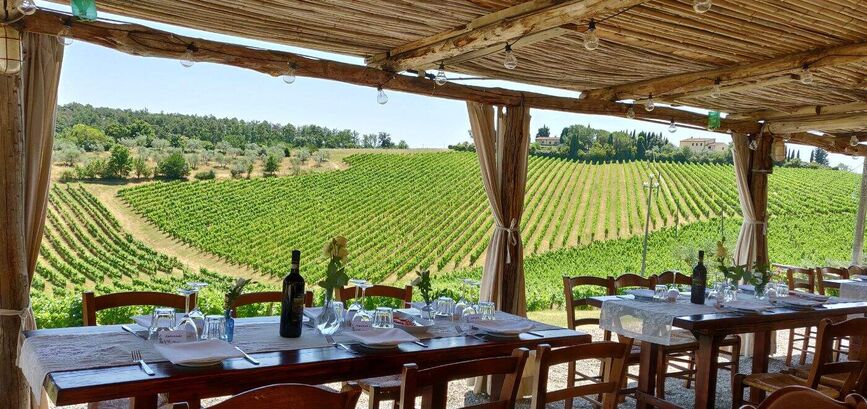
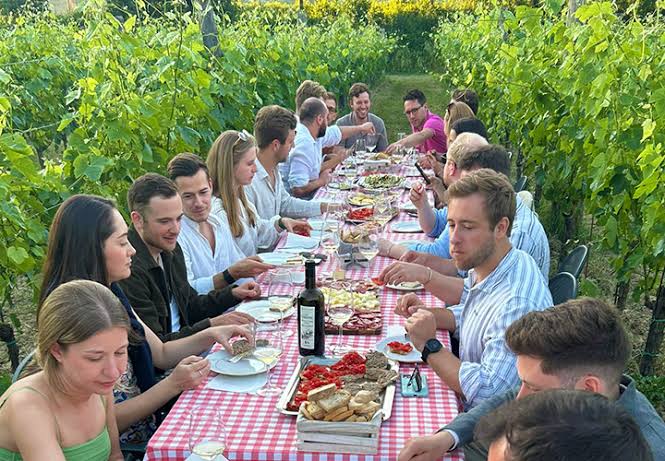
How to Choose the Right Winery for Your Trip
With eight family-owned wineries to choose from, the best one for you really depends on what you’d like to get out of the visit.
If you’re interested in history, Lornano and Cantalici have fascinating stories and historic buildings to explore.
If you’d like something small and personal, Podere Campriano, Poggio Regini or Cà di Pesa could be a good fit.
For organic wine, Cantalici and Poggio al Bosco are worth looking at, while San Donatino is a great option if you’d like to try something a little different from traditional Chianti.
And if food is just as important as wine, look at wineries offering local food pairings, lunch or cooking experiences.
Location should also play a part. If you’re staying around Greve, there’s no reason to spend your day driving all the way across Chianti when there are excellent family wineries nearby.
Our advice? Don’t choose a winery simply because it has the highest rating or the longest wine list. Choose somewhere that fits your interests, your route and the kind of experience you want.
That’s when a winery visit becomes part of your Tuscany trip rather than just another stop on the itinerary.
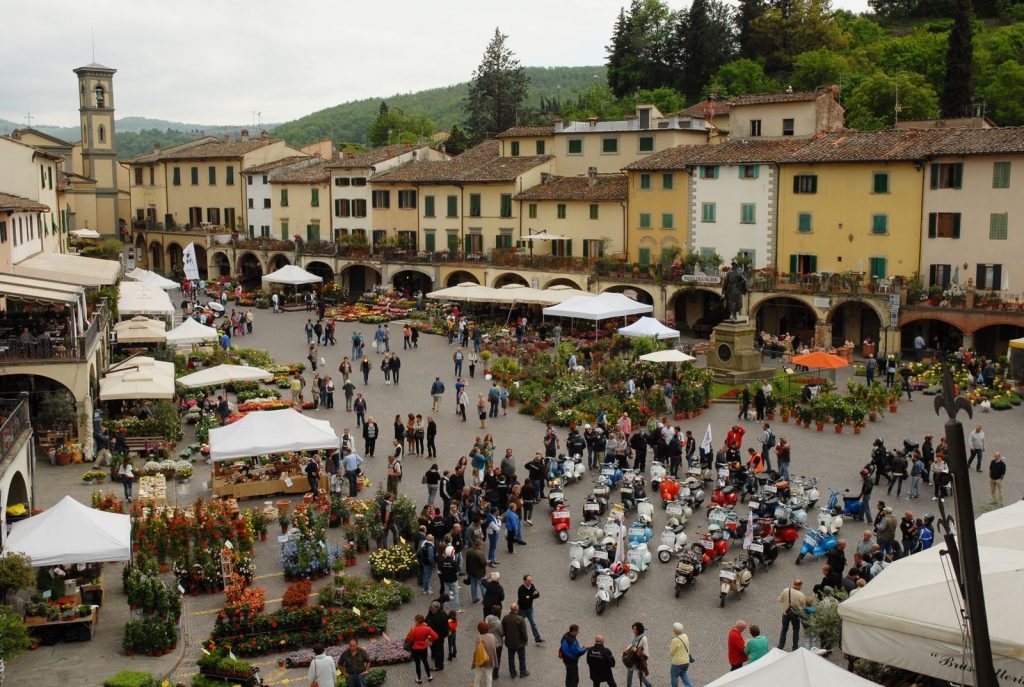
Where to Stay in Chianti
Greve in Chianti: The Easiest Base for a Wine Trip
If this is your first visit to Chianti, Greve in Chianti is one of the easiest places to base yourself.
It’s a proper little town rather than just a collection of countryside accommodation, so you’ll have restaurants, cafés and shops nearby.
It also works well for exploring wineries around Greve, Panzano and Castellina.
For a wine-focused trip, we particularly like the idea of staying somewhere where you can leave the car behind in the evening and walk into town for dinner.
There are plenty of options in and around Greve, from simple B&Bs to countryside farm stays and more upscale properties.
Here are three we’d consider:
Borgo Del Cabreo — A countryside property about a kilometre from the centre of Greve, with a pool and panoramic views.
Suite Vitique Greve in Chianti — Right in Greve itself, making it a good choice if you’d rather be close to the restaurants and cafés than stay out in the countryside.
Ancora del Chianti B&B — A small B&B in the Greve area, worth considering if you prefer something more intimate than a larger hotel.
Our pick for a wine trip? We’d probably choose Borgo Del Cabreo if the budget allows. Being close to Greve but still surrounded by the countryside gives you the best of both worlds.
If you’ve got specific dates in mind, don’t wait too long to secure your spot. You’ll often get better rates by booking early to!
More Accommodation in Greve
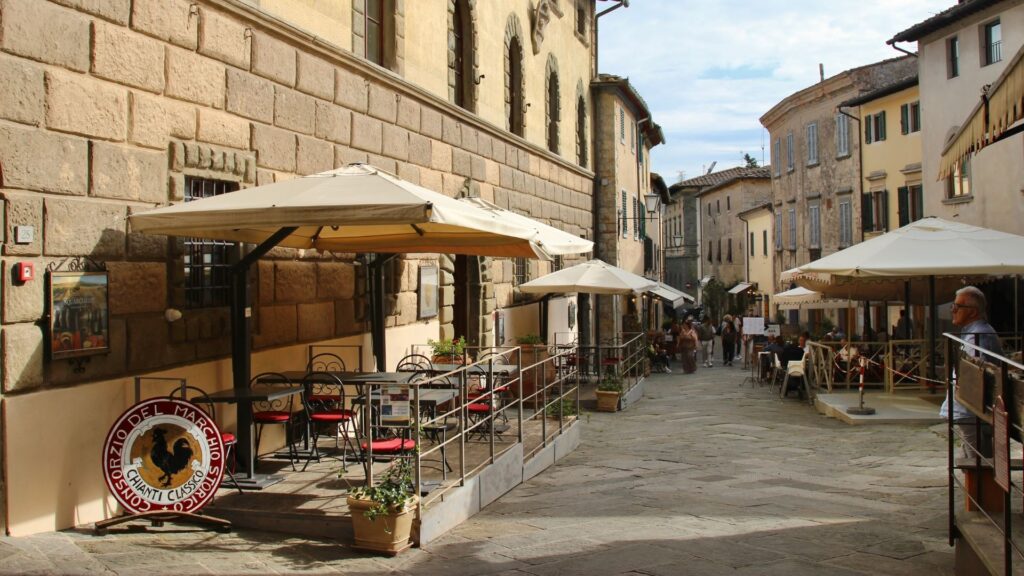
Castellina in Chianti: A Great Base for Exploring Chianti Classico
It’s a good base for exploring the surrounding Chianti Classico countryside, and it puts you close to several wineries in our guide, including Lornano, Poggio Regini and San Donatino.
The town itself is also worth spending time in, with places to eat and wander around after a day among the vineyards. Staying here means you can enjoy the countryside by day and return to town for the evening.
Where to Stay in Castellina in Chianti
Here are three Booking.com-listed options to consider, depending on whether you’d prefer to stay in town or out among the vineyards:
Hotel Palazzo Squarcialupi — A historic 15th-century building in Castellina, with a garden, outdoor pool and spa. A good choice if you want to stay right in town.
Hotel Colle Etrusco Salivolpi — A well-rated option in the town, handy for exploring Castellina on foot and heading out to nearby wineries.
Locanda Le Piazze — A former farmhouse surrounded by vineyards, about 6 km from Castellina. Consider this one if you’d prefer a countryside stay.
Our pick?
We’d choose Palazzo Squarcialupi if we wanted to stay in town, or Locanda Le Piazze for a countryside stay. Check the dates and location carefully when booking, as availability and prices change.
If you’ve got specific dates in mind, don’t wait too long to secure your spot.
More Accommodation in Castellina
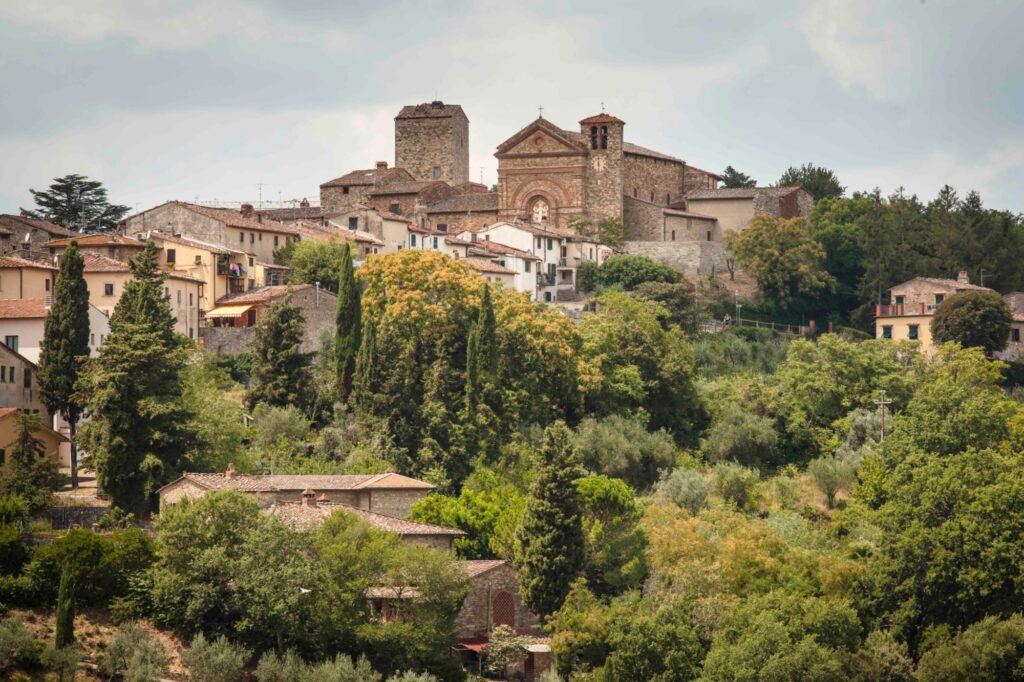
Where to Stay in Panzano in Chianti
Panzano is a good choice if you’d like a smaller village as your base, with wineries and countryside close by. It’s especially handy for exploring the area between Greve and Castellina.
Here are three options to consider:
Agriturismo Panzanello — A countryside farm stay with a pool, garden and views. It also offers wine tastings and cellar tours for guests, making it a natural fit for a wine-focused trip.
Casa Volpini — A B&B in the centre of Panzano, a good option if you’d prefer to be within walking distance of the village’s restaurants and shops.
Torrione Apartment — An apartment in Panzano’s historic centre, handy for a shorter stay or for travellers who prefer their own space.
Our pick?
We’d look at Agriturismo Panzanello for a countryside stay with wine right on the doorstep, or Casa Volpini if being in the village matters more.If you’ve got specific dates in mind, don’t wait too long to secure your spot. You’ll often get better rates by booking early to!
More Accommodation in Panzano
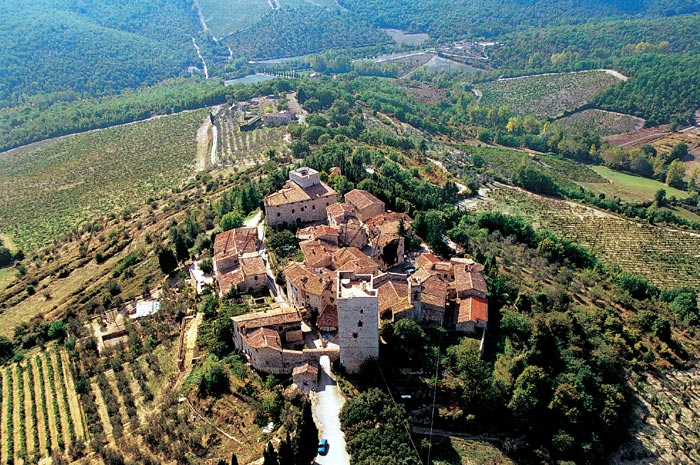
Where to Stay in Gaiole in Chianti
Gaiole is a lovely option if you’d rather stay in the countryside than in a busy town. Here are three Booking.com-listed places to consider, depending on the kind of stay you have in mind.
Castello di Spaltenna
— A historic country resort with a pool and spa, suited to travellers looking for a special stay.
— A farm stay in the small village of San Sano, with a swimming pool and garden.
— A countryside agriturismo with a seasonal outdoor pool, garden and on-site restaurant.
Our Pick:
San Sano for a relaxed farm-stay feel, or Castello di Spaltenna if you’re after a more luxurious country retreat.
You’ll often get better rates by booking early to!
More Accommodation in Gaiole

FAQs About Family-Owned Wineries in Chianti
1. Do I need to book a wine tasting in Chianti?
Yes, we recommend booking ahead, particularly for smaller family-owned wineries.
Many have limited tasting times and may not have someone available if you simply turn up. Booking also gives the winery time to prepare your tasting.
2. How many wineries should I visit in one day?
We think one or two wineries is plenty. Wine tasting is much more enjoyable when you’re not rushing from one appointment to another.
It also gives you time to enjoy lunch, explore a village or stop for photos.
3. What is the best time of year to visit Chianti wineries?
Late spring and early autumn are excellent times for a wine trip.
The weather is generally comfortable, the vineyards are beautiful, and you’ll avoid some of the busiest summer crowds.
Autumn also brings harvest activity to the region.
4. Do I need to know anything about wine before visiting?
Not at all. Family-owned wineries are usually relaxed places to learn about Chianti wine, and you certainly don’t need to know all the terminology.
Ask questions, taste at your own pace and enjoy the experience.
5. Can I visit Chianti wineries without a car?
Yes, but having a car makes exploring the countryside much easier.
If you prefer not to drive after wine tasting, consider a private driver or organised wine tour so you can enjoy your tastings without worrying about the journey home.
6. What do Chianti wine tastings usually include?
It varies from winery to winery, but tastings commonly include several wines along with an explanation of the estate and winemaking process.
Some also include olive oil, local food or a cellar and vineyard visit, so check when booking.
7. How do I choose the right family-owned winery in Chianti?
Think about what you want from your visit. Some wineries focus heavily on the wine, while others include food, olive oil, vineyard walks or a more personal family story.
Choose one that fits your interests and your route.
Car rental – If you plan to visit countryside towns and vineyards, a rental car is invaluable.

We Can Help Plan Your Tuscan Adventure
CUSTOM TUSCANY ITINERARY
Ready to Turn Your Dream Into a Plan?
Inside you’ll discover:
 The first planning steps
Understanding the Schengen Rule
How we choose where to stay
Practical slow travel tips
 Download Your FREE Starter Kit
Want to Go Even Further?
If you’d like to learn the complete system we’ve developed after years of travelling Europe full-time, take a look at our new book.
 How We Actually Travel Europe Long-Term
Discover the Book
Final Thoughts
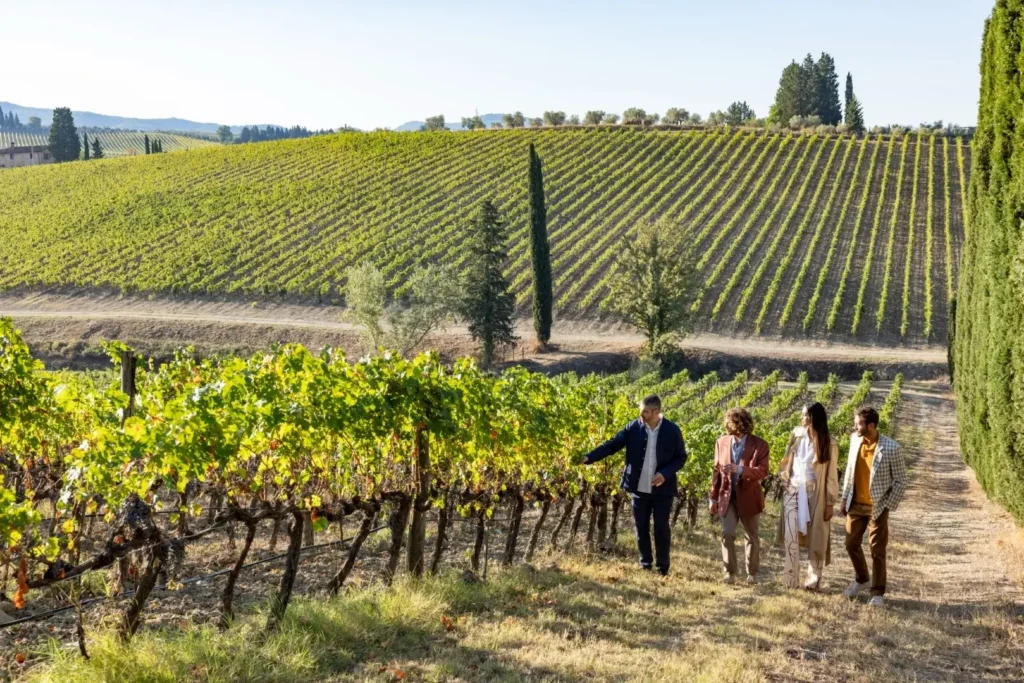
There’s something special about visiting a family-owned winery in Chianti.
You’re not simply tasting a glass of wine; you’re often hearing the story behind the estate, the family and the land they’ve cared for over many years.
That’s what we love about exploring Chianti.
Each winery has its own personality, and no two visits feel quite the same. Some are small and informal, while others have beautiful cellars, vineyards and long family histories to discover.
If you’re planning a wine trip through Tuscany, we’d recommend choosing one or two wineries that genuinely interest you rather than trying to fit too many into one day.
Slow down, enjoy the wine, have a good lunch and leave yourself time to explore the villages and countryside around you.
After all, this is Chianti. There’s no need to rush.
PLAN YOUR TUSCANY ADVENTURE
These are our favorite companies we use when planning a trip, they consistently have the best prices, great customer service, and overall, are better than their competitors.
BOOK YOUR FLIGHT – Going is a great search engine if you are flexible about your travel destination and dates. Sign up for their newsletter and get the latest deals on destinations around the world. GOING is our new go to.
CAR RENTAL – We recommend using Discover Cars or Rental Cars when booking a car rental, they work with hundreds of companies worldwide to help you find the best car for your needs.
TRAINS – OMIO – is our favorite, this site is very reliable and easy to use.
BUS – OMIO – this website allows you to book train or bus tickets to travel from city to city the best and cheapest way. FLIXBUS is another terrific website with routes between 20 European countries.
ACCOMMODATIONS
BOOKING.com – is our go to for hotel searches around the world, we find they always have the cheapest rates and offer different payment options. In addition, VRBO is another terrific website for all types of accommodations.
HOSTELWORLD – is great if you’re traveling on a budget, and if you need a cheap place to stay.
SIGHTSEEING TOURS
GET YOUR GUIDE – is our favorite; they have stacks of tours and excursions available in cities all over the world. VIATOR is another great website for all types of tours.
TAKE WALKS – This walking tour company provides inside access to attractions and places you can’t get elsewhere.
TRAVEL INSURANCE
SAFETY WING – is our go to travel medical insurance company, especially for longer trips. You can either purchase a monthly plan or a plan for specific trip dates (i.e. 1-2 week trips). They cover people from all over the world, while outside their home country.
ARC’TERYX – is a go to reliable brand for outdoor adventure and travel, their wide range includes light weight durable, easy to clean travel gear.
Check out our RESOURCE PAGE for more additional planning.