
Palio and Medieval Festivals in Tuscany: Dates, Events & What to Expect
Timeless Wanderers: Posted February 14, 2026
What Is the Palio in Tuscany?
Tuscany is renowned for its rolling hills, charming towns, and culinary delights.
But its true heartbeat comes alive in the festivals and medieval traditions that continue to unite communities and captivate visitors.
From the iconic Siena Palio to medieval re-enactments in Volterra, Monteriggioni, and Certaldo, Tuscany is a land where history is performed, celebrated, and shared.
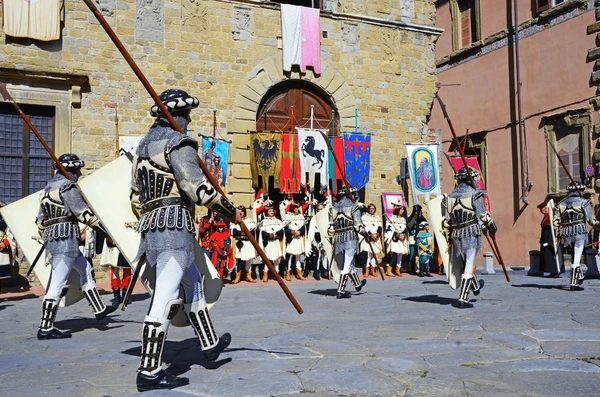
Unlike a museum, these festivals are living history, where locals don period costumes, carry banners, parade through cobbled streets, and celebrate centuries-old traditions.
Visitors gain a unique window into the region’s past, culture, and communal pride, making these events unforgettable experiences.
In this guide, we’ll explore the most significant medieval festivals, provide practical tips for travelers, and explain how these events have survived and thrived for hundreds of years.
Table of Contents
1. Siena’s Palio: Tuscany’s Crown Jewel
The Palio di Siena isn’t just a horse race — it’s the living heartbeat of Siena.
Held twice each year on July 2 (Palio di Provenzano) and August 16 (Palio dell’Assunta), it’s a centuries-old celebration of local pride, rivalry, and medieval tradition that has survived for over 600 years.
Origins and Historical Significance
The Palio dates back to the 13th century, when districts of Siena, known as contrade, competed in horse races to honor the city’s patron saints and display civic unity.
The race evolved from a simple contest into a structured ritual with ceremonies, parades, and pageantry, preserving medieval traditions in modern times.
The Contrade
Siena is divided into 17 contrade, each with:
Its own emblem (from dragon to unicorn)
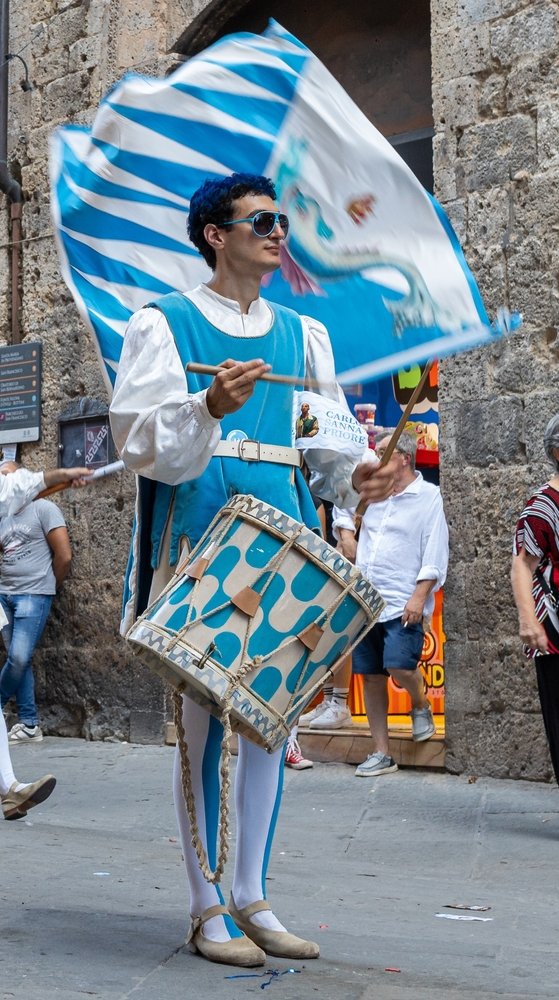
Colors and banners
A unique anthem and flag
Deep community traditions
Only 10 contrade participate in each race, determined by a rotation system.
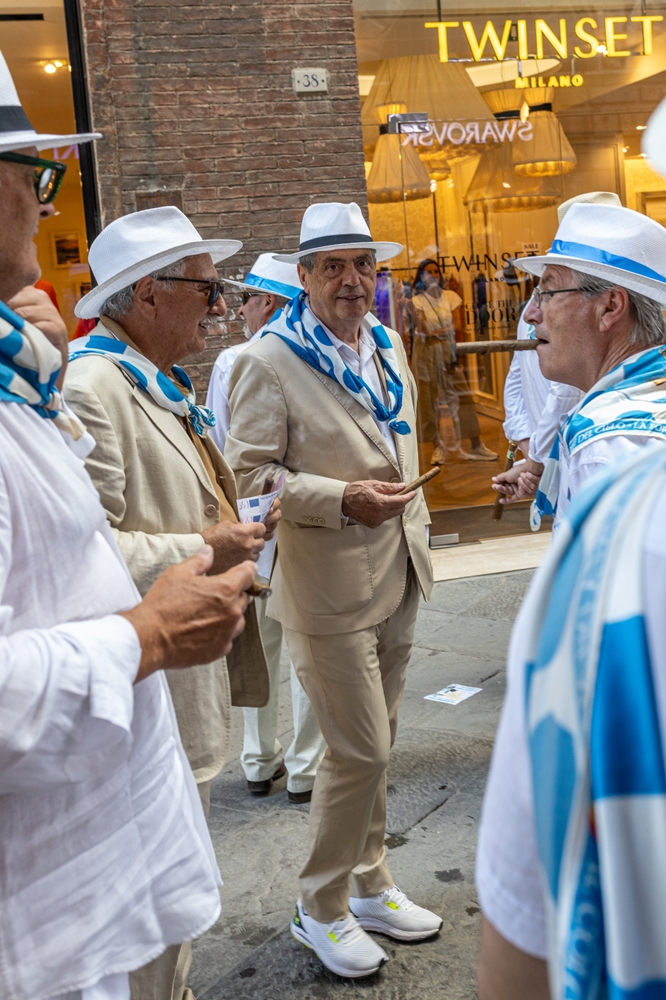
The rivalry is intense but rooted in centuries of history — locals are often loyal to their contrada for life, and celebrations before, during, and after the race are highly ritualized.
We can help you plan your dream trip to Tuscany, with a personalised itinerary designed just for you.
After more than 20 years of travelling to Tuscany—and loving it so much we decided to make it our home—we now live here and explore the region at a relaxed, local pace.
Planning a trip to Tuscany is exciting, but choosing where to go, how long to stay, and how to get around can quickly become overwhelming.
That’s where we come in.
We offer a personalised planning service that helps you decide exactly how to explore Tuscany, based on your travel style, budget, and pace.
Plus, we can help you plan scenic drives, time in hilltop towns, food and wine experiences, and those small local moments that make a trip truly special—making your Tuscany holiday easier, smoother, and full of memories you’ll treasure long after you return home.
“Let us plan your perfect trip with a custom itinerary designed just for you.
Fill out the form and let’s begin your dream.
The Palio Race
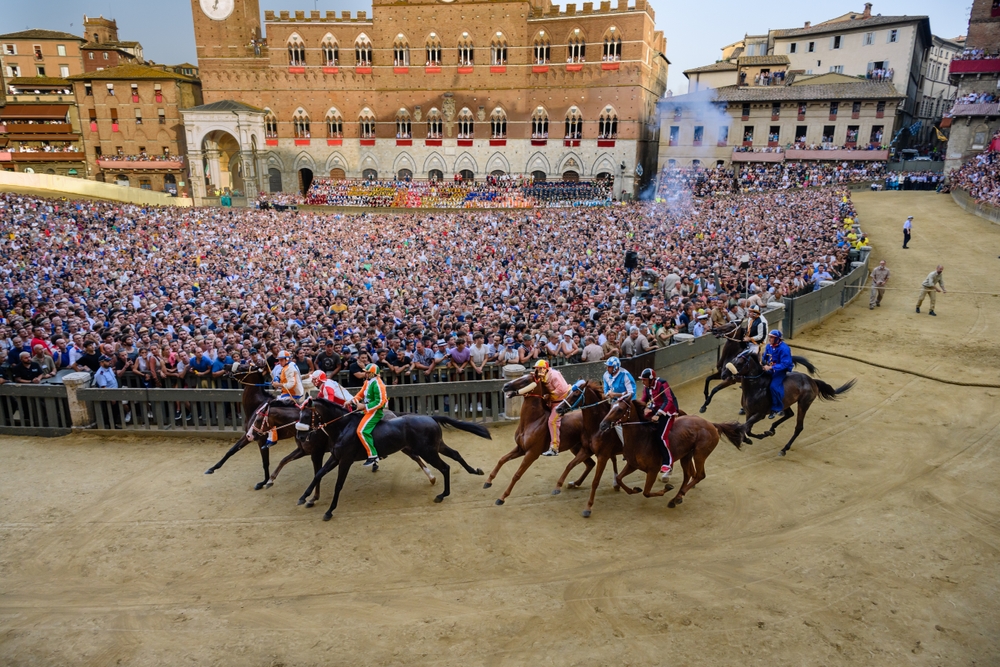
Takes place in Piazza del Campo, Siena‘s famous shell-shaped square.
Horses race bareback, circling the piazza three times at breathtaking speed.
The race lasts only about 90 seconds, but the preparation, parades, and ceremonies take days or even weeks.
Pre-Race Rituals
The Palio isn’t just about the race:
Prova Generale (Trial Race): Days before, horses practice in the piazza.
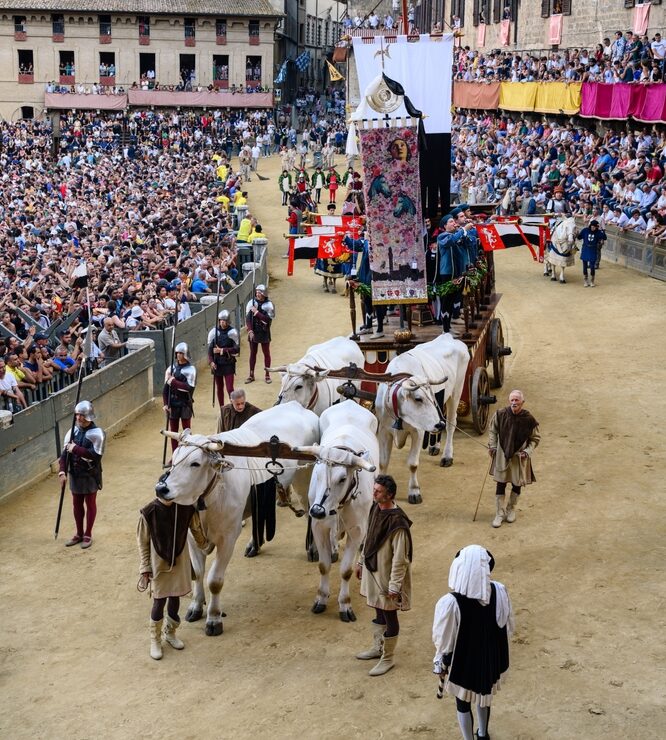
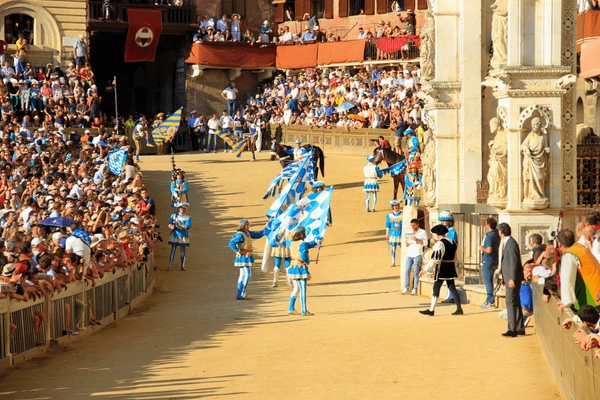
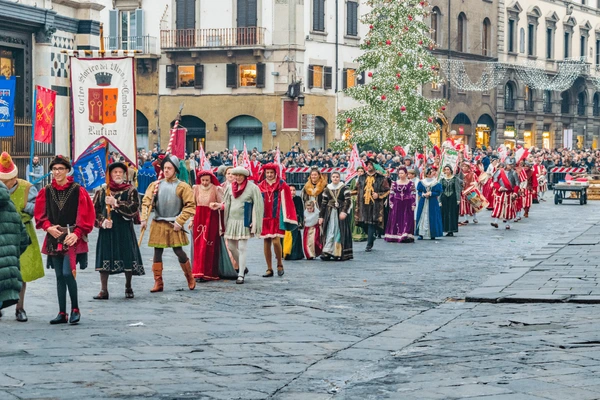
Corteo Storico (Historical Parade): The night before, all 17 contrade march in medieval costume, with banners, flags, and music.
Blessing of the Horses: Horses are blessed in their contrada churches, often accompanied by ceremonial music and local clergy.
Post-Race Celebrations
The winning contrada carries the Palio banner through the streets in victory parades.
Even the losing contrade celebrate their participation with communal meals, music, and local rituals.
The atmosphere blends adrenaline, pride, and festivity — unforgettable for both locals and visitors.
Tips for Visitors
Arrive Early: Piazza del Campo fills quickly; early arrival guarantees a better view.
Book Accommodation in Advance: Hotels and B&Bs sell out months ahead.
Respect Traditions: The Palio is a deeply local, almost sacred, event — photography is fine, but be respectful of ceremonies.
Learn About Contrade: Knowing the history and colors enriches your experience.
Explore Beyond the Race: Many museums, contrada houses, and historical sites offer Palio-focused tours.
Why the Palio Endures
The Palio di Siena survives because it is more than a race: it’s a cultural tradition, a symbol of community, identity, and continuity, and connecting modern Siena with its medieval past.
Being here is not just sightseeing — it’s participating in living history.
We recently did this day trip, and just can’t recommed it highly enough, You can book this tour here.
2. Medieval Re-enactments: Living History Across Tuscany
While Siena’s Palio is the crown jewel, Tuscany is full of other medieval-inspired festivals.
These events recreate historical pageantry, tournaments, and markets, offering visitors a hands-on experience of medieval life.
Monteriggioni Medieval Festival
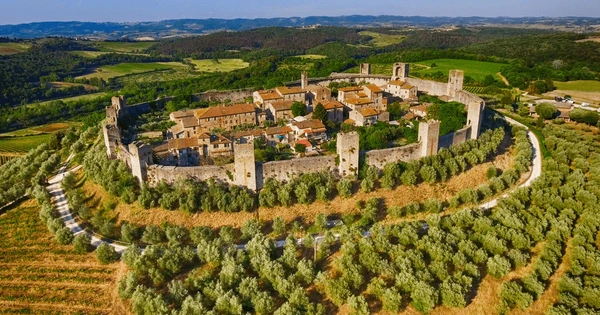
The Monteriggioni Medieval Festival, known as the Monteriggioni di Torri si Corona, takes place each year in early to mid-July and transforms this perfectly preserved walled village into a living medieval world.
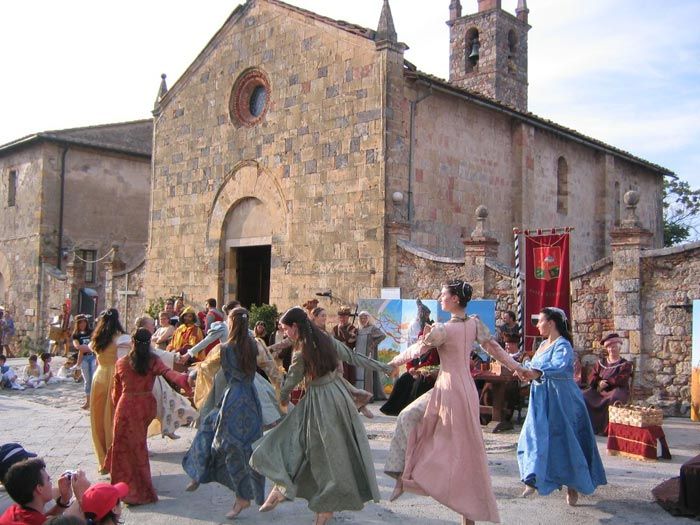
For several evenings, the streets fill with locals dressed in period costume, artisans demonstrating traditional crafts, flag-throwers, musicians, and staged knightly tournaments.
The atmosphere is intimate and immersive, with candlelit alleyways, market stalls, and taverns serving rustic Tuscan dishes inspired by historical recipes.
Getting Here
Monteriggioni is located about 20 minutes north of Siena.
The easiest way to reach the festival is by car, as public transport is limited in the evening.
You can park in designated lots outside the walls and walk up into the village, just as visitors would have centuries ago.
Certaldo Alto – Mercantia Festival
Mercantia is one of Tuscany’s most imaginative summer festivals, held each year in mid-July in the medieval hilltop village of Certaldo Alto.
For five evenings, the town becomes an open-air theatre filled with acrobats, fire performers, musicians, storytellers, and costumed artists performing beneath towers and stone archways.
Unlike traditional historical reenactments, Mercantia blends medieval atmosphere with contemporary street art, creating a slightly magical feel. Artisan stalls, light installations, and food stands add to the lively nighttime setting.
Getting Here
Certaldo is about 45 minutes from Florence and 40 minutes from Siena.
The easiest way to visit is by car, with parking below the hill.
From there, visitors take a short walk or the local funicular up to Certaldo Alto, which is much more fun, costs around 8 euros.
Arezzo – Giostra del Saracino
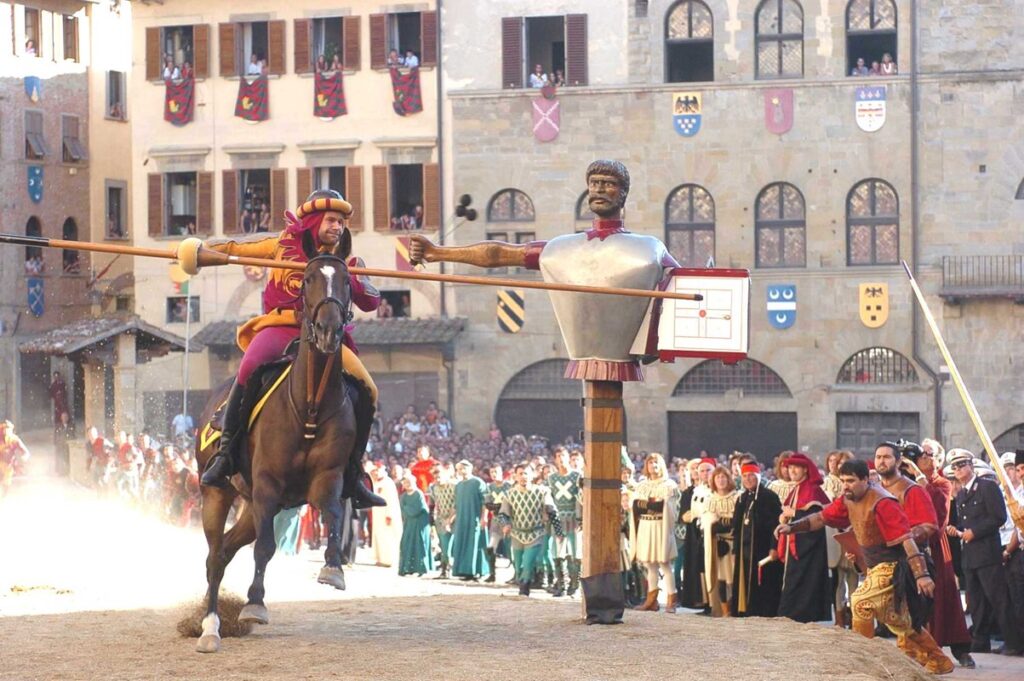
The Giostra del Saracino is one of Tuscany’s most dramatic medieval traditions not to be missed dating back to the 14th century.
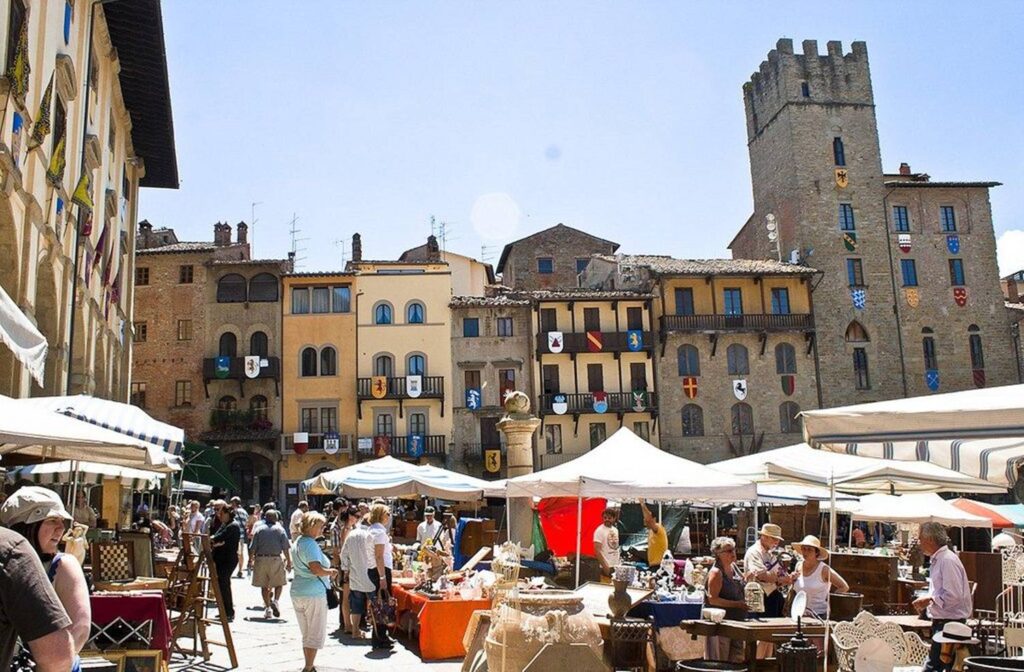
Held twice a year — typically in June (night edition) and September (day edition) — this historic jousting tournament takes place in AREZZO‘s Piazza Grande.
Knights representing the city’s four districts charge on horseback toward a mechanical Saracen figure, aiming to strike it accurately with their lances while avoiding its rotating shield.
The event is filled with tension, colour, and local pride.
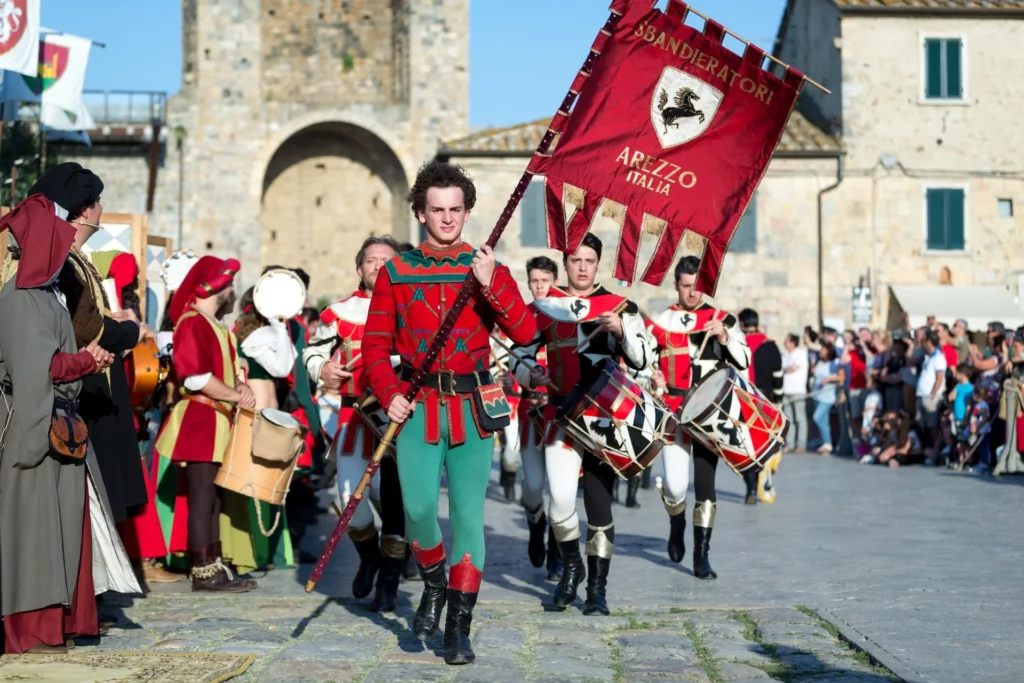
The spectacle includes elaborate parades, flag-throwers, drummers, and residents dressed in detailed period costumes.
How to Get Here
AREZZO is about 1 hour from Florence by direct train, making it one of the easiest Tuscan medieval festivals to reach without a car.
Volterra Medieval Festival
Volterra’s Medieval Festival, held annually in late August, transforms this atmospheric hilltop town into a celebration of its medieval past.
For several days, stone streets and piazzas fill with costumed locals, historic processions, artisan markets, and traditional craft demonstrations.
Musicians, dancers, and performers bring the town to life with medieval melodies, theatrical storytelling, and flag-throwing displays.
Unlike larger events, Volterra festival feels intimate and more local, allowing visitors to wander through alleyways lit by torches and experience history up close.
Getting to Volterra
Volterra is about 1 hour 30 minutes from Florence and 1 hour from Pisa.
The easiest way to visit is by car, as train connections are limited.
Parking is available outside the historic centre, followed by a short walk into town.
Driving allows flexibility, and easy access to villages,
For more comfort and convenience, compare these car rentals: DISCOVER CARS or RENTALCARS
Read this guide on
A Day Trip To Monteriggioni, Tuscany
3. Seasonal Festivals & Cultural Celebrations
Tuscany’s festivals are closely tied to seasons and agricultural cycles, reflecting both historic traditions and local produce.
Spring
Flower festivals and art events.
San Miniato Truffle Fair, celebrating the prized white truffle with tastings and culinary demonstrations.
Summer
Siena Palio in July and August.
Medieval fairs and pageants in towns like Certaldo and Monteriggioni.
Open-air concerts and theater performances in historical town squares.
Autumn
Harvest festivals, grape & wine fairs, and chestnut celebrations.
Towns like Chiusi, Greve, and Montalcino host fairs showcasing local food, wine, and crafts.
Winter
4. Town Feasts & Traditional Cuisine
Food is inseparable from Tuscan festivals. During these celebrations, visitors can enjoy local specialties that reflect centuries of culinary tradition.
Siena(Palio): Panforte, ricciarelli, and local wines are enjoyed alongside the celebrations.
AREZZO (Giostra del Saracino): Roast chestnuts, pecorino, and seasonal treats.
Florence: Medieval-style feasts offer soups, breads, and meats reminiscent of Renaissance meals.
Many festivals also host cooking demonstrations and workshops, allowing visitors to learn historic recipes while tasting local delicacies.
5. Experiencing Festivals as a Visitor
Participating in a Tuscan festival is more than watching a parade — it’s active cultural engagement.
Tips for Travelers:
Dress appropriately, especially for religious or ceremonial processions.
Respect photography rules; some events are sacred or sensitive.
Plan itineraries around festival dates for maximum experience.
Engage in interactive activities like workshops or tastings.
Check for family-friendly events; many festivals include games, crafts, and music for children.
Being curious, respectful, and present ensures an unforgettable experience.
6. Cultural Insights & Historical Context
Tuscan festivals endure because they preserve civic pride, history, and community cohesion.
Entire neighborhoods participate, from costume-making to organizing processions.
Children are often involved, ensuring traditions are passed down.
Festivals connect townspeople to their architectural heritage, local guilds, and medieval rivalries.
Visitors witness living history, where medieval customs are performed with authenticity and passion.
How to Get Around Tuscany
A rental car is essential for staying at luxury farm stays in Tuscany.
Most farm stays are located along country roads with limited public transport.
Florence and Pisa airports are the easiest arrival points, with car hire available directly at the terminals.
Driving allows flexibility, scenic detours, and access to villages, wineries, and viewpoints not reachable otherwise.
For more comfort and convenience, compare these car rentals: DISCOVER CARS or RENTALCARS
FAQs: Palio & Medieval Festivals in Tuscany
What is the Palio di Siena?
A centuries-old horse race between Siena’s contrade, symbolizing tradition, community pride, and rivalry.When is the Palio held?
Twice a year: July 2 and August 16.Are there medieval festivals outside Siena?
Yes, including Monteriggioni Medieval Festival, Mercantia in Certaldo, Giostra del Saracino in Arezzo, and Volterra Medieval Festival.Can tourists participate in festival activities?
Absolutely. Many events welcome visitors to join tastings, parades, workshops, and cultural demonstrations.What foods are traditional at Tuscan festivals?
Panforte, ricciarelli, roasted chestnuts, pecorino cheese, and seasonal wines are common.Which festivals are family-friendly?
Most festivals offer games, workshops, and interactive activities suitable for children, especially lantern and harvest festivals.How do festivals reflect Tuscan history?
They preserve medieval rivalries, civic pride, culinary heritage, and artisan traditions, allowing locals and visitors to experience living history.How should visitors plan for festivals?
Check official festival calendars, book accommodations early, research contrade or town customs, and plan for extended stays to enjoy multiple events.
Book your accommodation in Tuscany here.
Do You Need Travel Insurance for Tuscany?
(Short Answer: Yes — It’s Still a Smart Idea)
Travel insurance isn’t legally required to visit Tuscany, but it’s one of the smartest things you can have when travelling in Italy.
Even in a relaxed destination like Tuscany, things can go wrong — from delayed flights and lost luggage to medical issues, rental car damage, or unexpected trip cancellations.
And while Italy has excellent healthcare, medical treatment for visitors can still be costly without proper coverage.
As long-term travellers living in Italy, we’ve found SafetyWing to be a practical option for trips around Europe, offering coverage for medical care, travel delays, and lost belongings without complicated fine print.
SafetyWing
(Best for Long-Term Travel & Affordability)
We personally use SafetyWing, and have since 2019.
It’s perfect for travelling, spending multiple weeks or a whole year abroad.
You can get a Quote here.
It’s the kind of insurance you hope you never need—but you’ll be very glad you have if something unexpected happens.
Final Thoughts
Tuscan festivals are more than entertainment — they are a bridge to the past. Experiencing them lets travelers:
Immerse in centuries of history and civic tradition.
Taste seasonal, regional foods connected to the event.
Witness community pride and identity that have endured for generations.
Whether cheering at the Palio di Siena, watching knights joust in Arezzo, or exploring medieval towns in full costume, visitors gain a rare, authentic glimpse into Tuscany’s heart.
PLAN YOUR TUSCANY ADVENTURE
These are our favorite companies we use when planning a trip, they consistently have the best prices, great customer service, and overall, are better than their competitors.
BOOK YOUR FLIGHT – Going is a great search engine if you are flexible about your travel destination and dates. Sign up for their newsletter and get the latest deals on destinations around the world. GOING is our new go to.
CAR RENTAL – We recommend using Discover Cars or Rental Cars when booking a car rental, they work with hundreds of companies worldwide to help you find the best car for your needs.
TRAINS – OMIO – is our favorite, this site is very reliable and easy to use.
BUS – OMIO – this website allows you to book train or bus tickets to travel from city to city the best and cheapest way. FLIXBUS is another terrific website with routes between 20 European countries.
ACCOMMODATIONS
BOOKING.com – is our go to for hotel searches around the world, we find they always have the cheapest rates and offer different payment options. In addition, VRBO is another terrific website for all types of accommodations.
HOSTELWORLD – is great if you’re traveling on a budget, and if you need a cheap place to stay.
SIGHTSEEING TOURS
GET YOUR GUIDE – is our favorite; they have stacks of tours and excursions available in cities all over the world. VIATOR is another great website for all types of tours.
TAKE WALKS – This walking tour company provides inside access to attractions and places you can’t get elsewhere.
TRAVEL INSURANCE
SAFETY WING – is our go to travel medical insurance company, especially for longer trips. You can either purchase a monthly plan or a plan for specific trip dates (i.e. 1-2 week trips). They cover people from all over the world, while outside their home country.
ARC’TERYX – is a go to reliable brand for outdoor adventure and travel, their wide range includes light weight durable, easy to clean travel gear.
Check out our RESOURCE PAGE for more additional planning.
Other Favorites in Tuscany
Best Festivals in Tuscany: Seasonal Events, Food & Local Traditions
5 Best Wineries in Tuscany to Visit 2025
The Ultimate Wine Lovers Guide To Tuscany
Discover The Best 5 Hilltop Towns In Tuscany
12 Amazing Day Trips From Florence.
A Perfect day trip From Florence To Pisa And Lucca