Best Intermediate Ski Resorts in France: 7 Fantastic Destinations
Timeless Wanderers: Posted October 31, 2027
Why France Is a Great Choice for Intermediate Skiers
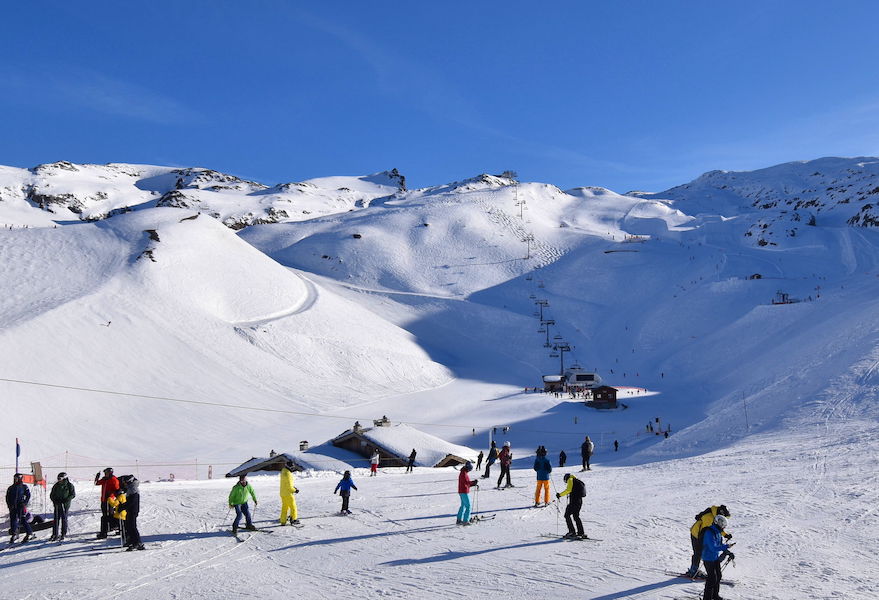
France is home to some of Europe’s largest and most varied ski areas, making it a fantastic destination for intermediate skiers.
From wide, sweeping blue pistes to longer, more challenging red runs, there’s plenty of terrain to explore as your confidence and ability develop.
One of the things we love about skiing in France is the sheer scale of many of its ski areas.
Resorts such as La Plagne, Les Arcs and Val Thorens are connected to much larger ski networks, giving you the opportunity to cover plenty of ground without skiing the same runs every day.
For intermediate skiers, this variety is a real advantage.
You can spend the morning enjoying comfortable cruising runs, tackle a few more challenging descents in the afternoon and discover different villages and mountain scenery along the way.
France also has a wonderful choice of resorts, from purpose-built mountain destinations with convenient lift access to traditional Alpine villages with a more relaxed feel.
Whether you’re still gaining confidence on blue runs or happily skiing reds, there’s a French resort to suit the kind of skiing you enjoy.
Table of Contents
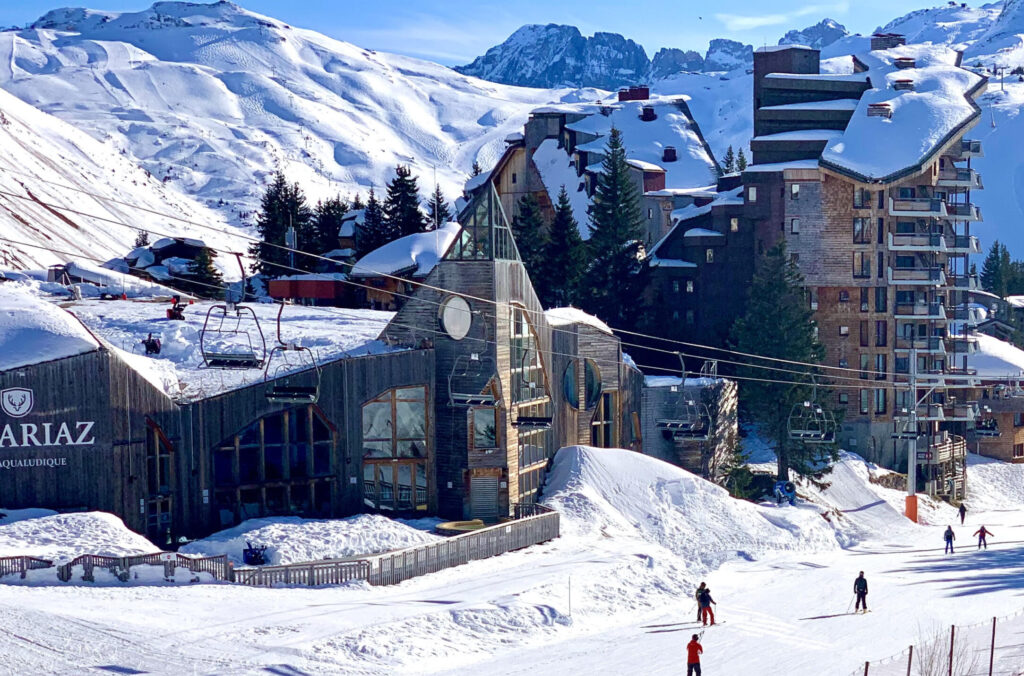
7 Fantastic French Ski Resorts for Intermediate Skiers
Choosing the right ski resort is about more than simply finding somewhere with plenty of blue and red runs.
The layout of the ski area, the variety of pistes, the lift connections and even where you choose to stay can all make a difference to your holiday.
Some French resorts are particularly good for intermediate skiers who prefer wide, well-groomed pistes and long, comfortable descents.
Others have extensive ski areas where confident intermediates can spend the day exploring different mountains, tackling more challenging reds and covering plenty of distance.
We’ve selected seven French ski resorts that we think are well worth considering.
We’ve included destinations for those still building confidence as well as resorts suited to more experienced intermediates who enjoy a little more challenge.
As you work through our list, we’ll look at what each ski area is like, the runs you can expect to find, what makes it a good choice for intermediate skiers and where to stay.
Whether you’re planning your first ski trip to France or looking for somewhere new to explore, we hope this guide helps you find the right resort.
We can plan your Dream Ski Trip to Europe: Custom Itineraries for the Perfect winter Holiday.
With over 25 years of experience skiing in over 50 different ski resorts in Europe, we can help you plan your perfect winter escape.
Planning a ski trip to Europe can be exciting, but choosing the right resort and organising the perfect itinerary can quickly become overwhelming.
That’s where we come in.
We offer a personalised planning service that helps you decide exactly where to ski, based on your style, budget, and experience.
“Plus, we can help you plan a fun week of European sightseeing around your ski trip, making your winter holiday easier, smoother, and full of unforgettable memories.”
“Let us plan your perfect trip with a custom itinerary designed just for you.
Fill out the form and let’s begin your dream.”
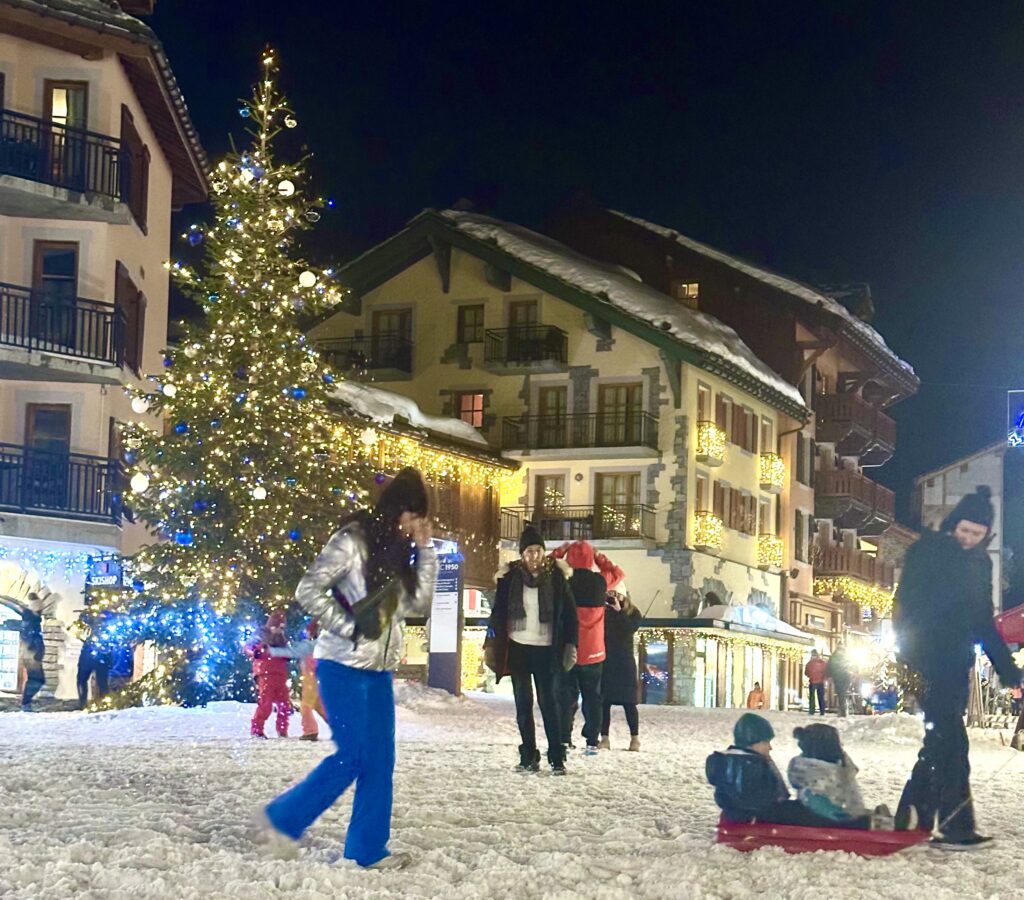
Best Time to Ski in France
The French ski season generally runs from early December until late April, although opening and closing dates vary between resorts and depend on snow conditions.
Here’s what to expect throughout the French ski season.
December – Early Season Skiing
The season usually gets underway in early December, although snow conditions can be variable, particularly at lower-altitude resorts.
The Christmas period is popular with families, and the atmosphere in the villages is lovely. For better snow reliability, choose a higher-altitude resort.
January – Quieter Slopes and Good Snow Conditions
January is one of the best months for skiing in France.
After the New Year rush, resorts are generally quieter, lift queues are shorter and colder temperatures help preserve the snow.
It’s a particularly good time for intermediate skiers who want to spend their days exploring the mountain.
February – Peak Ski Season
February is one of the busiest months of the season, largely because of the French and European school holidays.
Snow conditions are often good, but accommodation prices can be higher and popular pistes busier.
If you plan to travel in February, check the school holiday dates before booking.
March – Longer Days and Spring Sunshine
March is an excellent month for an intermediate ski holiday.
There are longer daylight hours, more sunshine and often good snow coverage, particularly at higher elevations.
You can enjoy some lovely skiing conditions while making the most of lunch stops on sunny mountain terraces.
April – Spring Skiing
April can be a great time to ski, especially in high-altitude resorts such as Val Thorens and Tignes.
Mornings often provide the best snow conditions, while lower slopes can become softer as the day warms up.
Some lower resorts may close earlier in the month, so check closing dates before booking.
Our recommendation:
For the best combination of snow conditions, quieter slopes and longer days, we’d look at January or March.
February is also a good option if you don’t mind the school holiday crowds, while April is best suited to higher-altitude resorts
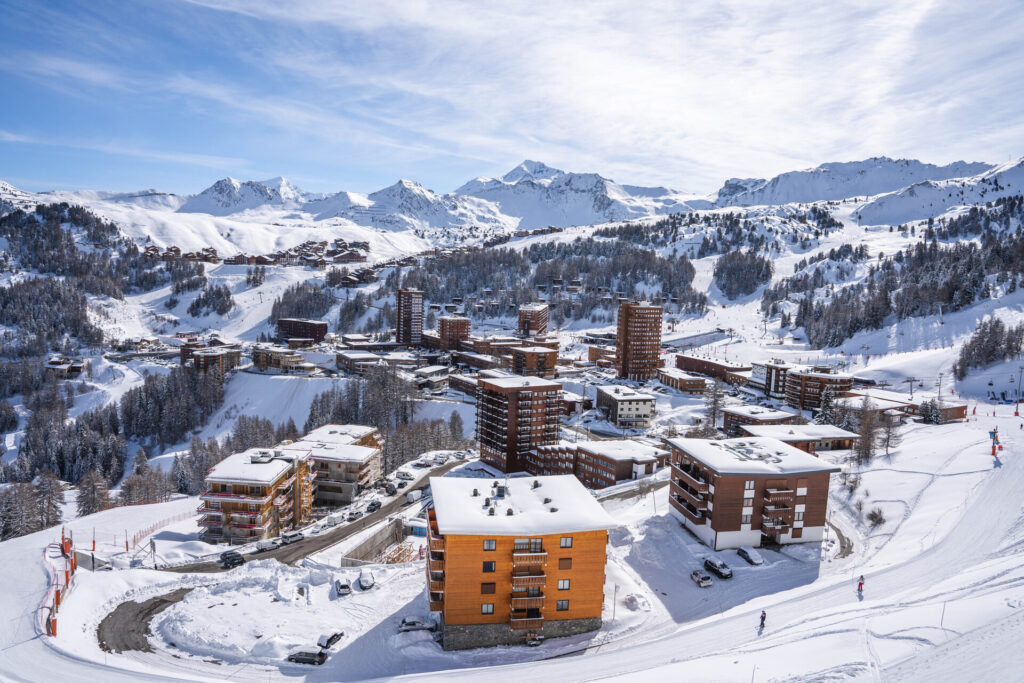
1. La Plagne, France – Best for Wide, Confidence-Building Runs
La Plagne is one of the best French ski resorts for intermediate skiers, particularly those who enjoy wide, well-groomed pistes and plenty of room to find their rhythm.
Located in the Tarentaise Valley in the French Alps, it forms part of the enormous Paradiski ski area, which is shared with neighbouring Les Arcs.
The resort has a particularly good selection of blue and red runs, making it a great choice for skiers who are comfortable on easier pistes but want to start tackling more challenging terrain.
There are plenty of long descents, open mountain slopes and quieter runs where you can enjoy the scenery without feeling rushed.
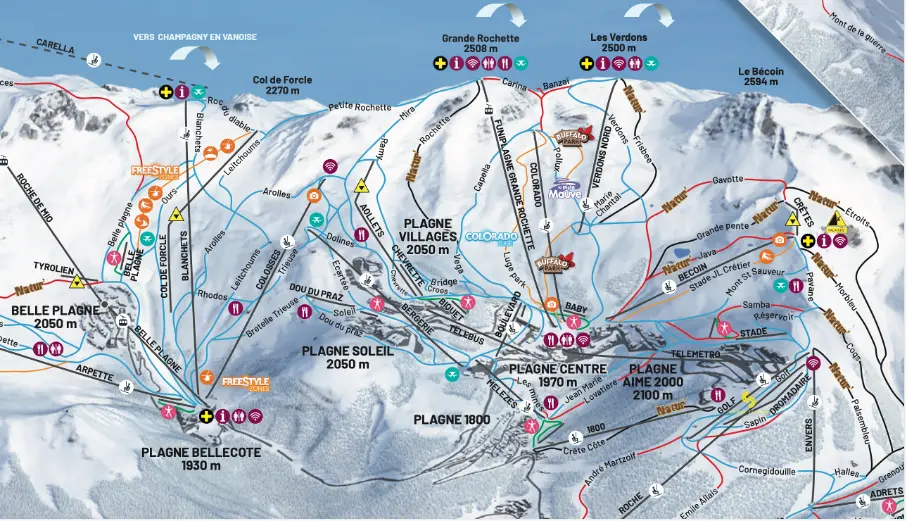
One of La Plagne’s biggest advantages is the variety of villages within the resort.
You can stay in purpose-built ski villages such as Belle Plagne or Plagne Centre, or choose a more traditional setting in Champagny-en-Vanoise.
Each has its own character and gives you access to the wider ski area.
Why intermediate skiers will love La Plagne:
A wide choice of blue and red pistes.
Long, enjoyable runs across several different sectors.
Excellent lift connections throughout the La Plagne ski area.
Access to the wider Paradiski area, including Les Arcs.
Several villages offering different accommodation and holiday styles.
Our verdict:
La Plagne is an excellent choice for early and confident intermediate skiers alike.
If you enjoy cruising long blue runs, improving your confidence on reds and exploring different parts of a large ski area, it’s well worth considering.
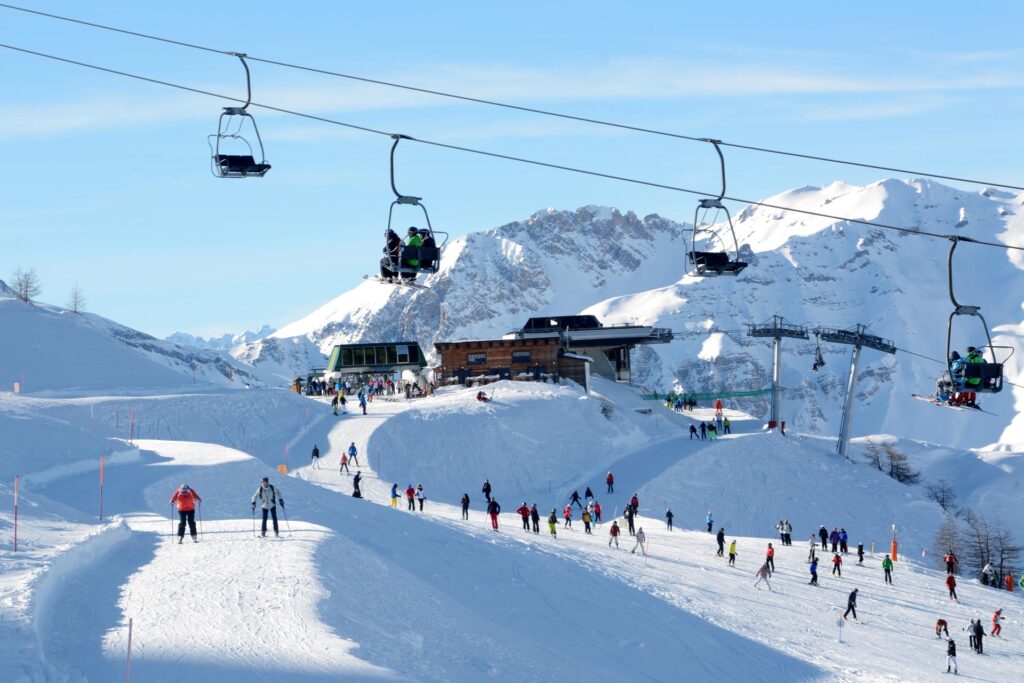
La Plagne Ski Area
La Plagne is part of the Paradiski ski area, one of the largest linked ski areas in the French Alps.
La Plagne alone has around 225km of marked pistes, while the full Paradiski area, including Les Arcs and Peisey-Vallandry, has approximately 425km.
The ski area is spread across several sectors and villages, with a good mix of wide open slopes, tree-lined runs and higher mountain terrain.
This gives intermediate skiers plenty of choice, whether you prefer gentle cruising or longer, more challenging descents.
The Main Skiing Areas in La Plagne
Plagne Centre and Aime 2000: A convenient starting point with access to a wide selection of blue and red runs. It’s a good area for finding your feet and exploring different parts of the mountain.
Belle Plagne and Plagne Bellecôte: Excellent access to the central ski area, with plenty of pistes for intermediate skiers and connections towards the higher slopes.
Champagny-en-Vanoise: A lovely sector with tree-lined runs descending towards the village. It’s particularly enjoyable in poorer visibility and offers a different feel from the more open upper mountain.
Montchavin and Les Coches: These villages provide access to attractive wooded pistes and routes towards the Vanoise Express connection to Les Arcs.
Skiing Between La Plagne and Les Arcs
One of La Plagne’s biggest attractions is its connection to Les Arcs through the Vanoise Express, a double-decker cable car linking the two ski areas across the valley.
This opens up the full Paradiski area, giving confident intermediate skiers an enormous amount of terrain to explore.
Just remember to allow enough time to return to your starting village, particularly if you’re venturing across to the other side of the valley.
Our tip:
Don’t feel you need to explore all of Paradiski in one day.
La Plagne has more than enough skiing to keep you busy, and it’s worth taking your time to discover its different sectors.
Skiing in La Plagne: Runs for Every Ability
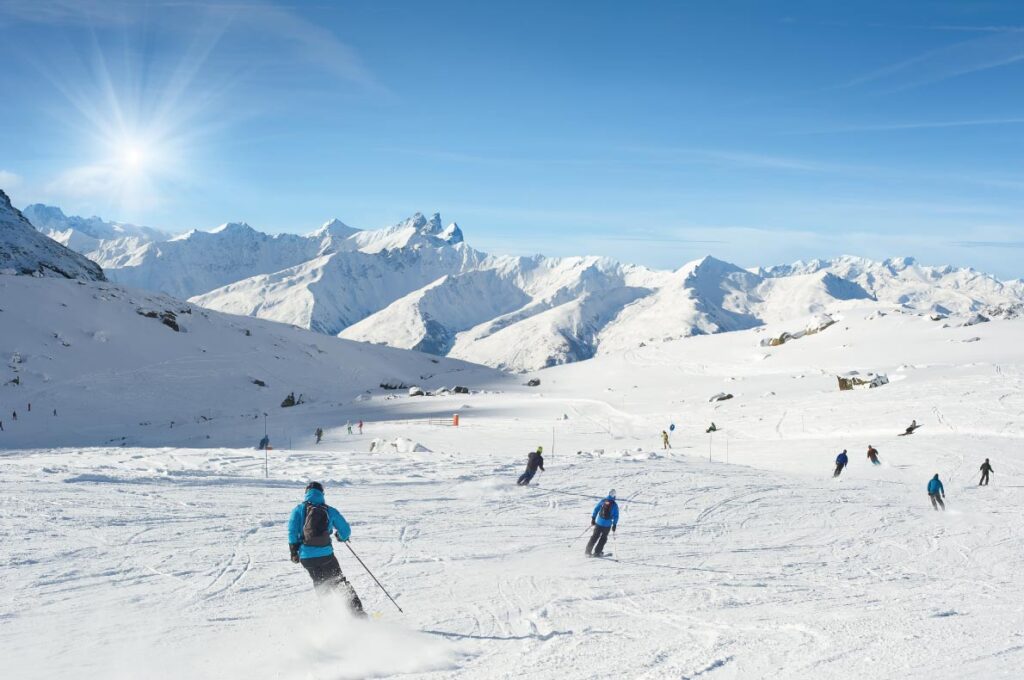
La Plagne has a good mix of pistes for all abilities, but it’s particularly appealing to intermediate skiers.
The wide, well-groomed slopes make it enjoyable for those still gaining confidence, while the red runs provide plenty of opportunities to improve your technique.
Beginners
La Plagne is a good resort for beginners, with dedicated learning areas and gentle green and blue pistes.
Several villages have easy-access nursery slopes, so you don’t have to travel far to find somewhere to practise.
Once you’re comfortable making turns and controlling your speed, there are plenty of easier blue runs to progress onto.
Intermediate Skiers
This is where La Plagne really shines.
The resort has an excellent selection of blue and red pistes, with long descents and plenty of variety across its different sectors.
Some runs we would suggest exploring include:
Mont de la Guerre: A long descent towards Champagny-en-Vanoise, offering beautiful mountain scenery.
Sources: A lovely route through the Champagny sector, with a more sheltered, tree-lined feel.
Mira: A popular blue run in the central La Plagne area, ideal for enjoyable cruising.
Combe: A red run providing a little more challenge for confident intermediates.
Advanced Skiers
Although La Plagne is particularly well suited to intermediate skiers, advanced skiers won’t be short of challenges.
There are steep red and black pistes, as well as opportunities for off-piste skiing with a qualified guide.
The Bellecôte glacier sector has some more demanding terrain, while the longer descents across the mountain provide plenty of variety for stronger skiers.
Our verdict: La Plagne is an excellent all-round choice for intermediate skiers.
You can spend your days enjoying long blue runs, gradually tackle more challenging reds and explore different parts of the mountain without running out of options.
La Plagne Ski Passes and Prices
La Plagne offers two main lift pass options: the La Plagne Pass, which covers the local ski area, and the Paradiski Pass, which also gives you access to Les Arcs and Peisey-Vallandry.
For intermediate skiers, the choice depends on how much exploring you plan to do during your holiday.
La Plagne Ski Pass – 2026/27
The La Plagne pass covers approximately 225km of pistes across the resort’s different sectors. It’s a good option if you’re happy spending your week exploring La Plagne without crossing over to Les Arcs.
Duration | Adult (13–64) | Child/Senior |
|---|---|---|
1 day | €72 | €58 |
2 days | €140 | €112 |
3 days | €206 | €165 |
4 days | €268 | €215 |
5 days | €329 | €264 |
6 days | €370 | €296 |
7 days | €426 | €341 |
Paradiski Ski Pass – 2026/27
If you want to explore further, the Paradiski pass opens up an impressive 425km of pistes, including La Plagne, Les Arcs and Peisey-Vallandry.
Duration | Adult (13–64) | Child/Senior |
|---|---|---|
1 day | €78 | €63 |
2 days | €154 | €124 |
3 days | €229 | €184 |
4 days | €298 | €239 |
5 days | €367 | €294 |
6 days | €412 | €330 |
7 days | €477 | €382 |
Child prices apply to ages 5–12 and senior prices to ages 65–74. Prices are published standard rates for winter 2026/27. Check the official lift-pass website for any special offers or updated conditions
Which Ski Pass Should You Choose?
For most intermediate skiers staying in La Plagne for a week, we’d suggest starting with the local La Plagne pass. There is plenty of skiing to enjoy without needing to venture further.
However, if you’re a confident intermediate who enjoys exploring different mountains and covering plenty of distance, the Paradiski pass is worth the extra €42 for six days.
There’s also a nice bonus: Paradiski offers a free half-day of skiing from 12.30 pm on the afternoon before the first full day when you purchase a six- to eight-day pass, subject to the offer conditions.
Our tip:
Don’t automatically buy the biggest pass available. Think about your skiing ability, how much ground you want to cover and whether you’ll realistically make the journey over to Les Arcs.
Where to Stay in La Plagne
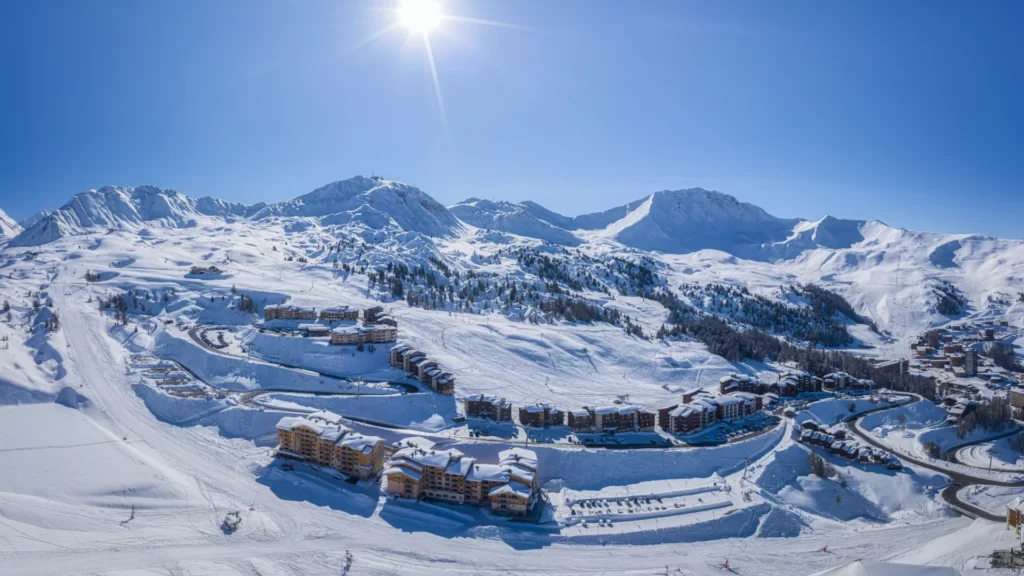
One of the things to consider when booking La Plagne is that it isn’t just one village. The resort is made up of several separate villages and mountain bases, each with its own atmosphere and advantages.
For intermediate skiers, we’d look for somewhere with convenient lift access, a good choice of restaurants and easy connections to the wider ski area.
Here are four places worth considering.
1. Plagne Centre – Best for Convenience
Plagne Centre is one of the most convenient bases in the resort. It has a good selection of accommodation, shops, restaurants and bars, with easy access to the main lifts.
It’s a practical choice if you want to be close to the heart of the skiing and have everything within easy reach.
2. Belle Plagne – Best for a Traditional Alpine Feel
Belle Plagne is a particularly attractive part of the resort, with wooden chalet-style buildings and a pedestrian-friendly centre.
The village has direct access to the slopes and a good choice of restaurants and accommodation. It’s a lovely option if you prefer a more traditional mountain setting.
3. Plagne 1800 – Best for a Quieter Stay
Plagne 1800 has a more relaxed feel, with traditional chalet-style accommodation and a quieter village atmosphere.
It’s a good choice for couples and families who want somewhere a little less busy while still having access to the main ski area.
4. Montchavin – Best for Village Character
Montchavin is one of the more traditional villages within La Plagne. It has a lovely old-village feel, with stone and timber buildings, narrow streets and a more authentic Alpine atmosphere.
It also provides access to the Montchavin–Les Coches sector, with tree-lined runs and connections towards the Vanoise Express.
Our recommendation:
Belle Plagne or Plagne Centre, both are convenient for getting out onto the slopes, while Belle Plagne has a little more of that traditional Alpine village feel.
Our Recommended Hotels in La Plagne
We’ve selected three accommodation options at different price levels, from a lovely hotel with spa facilities to more straightforward slope-side accommodation.
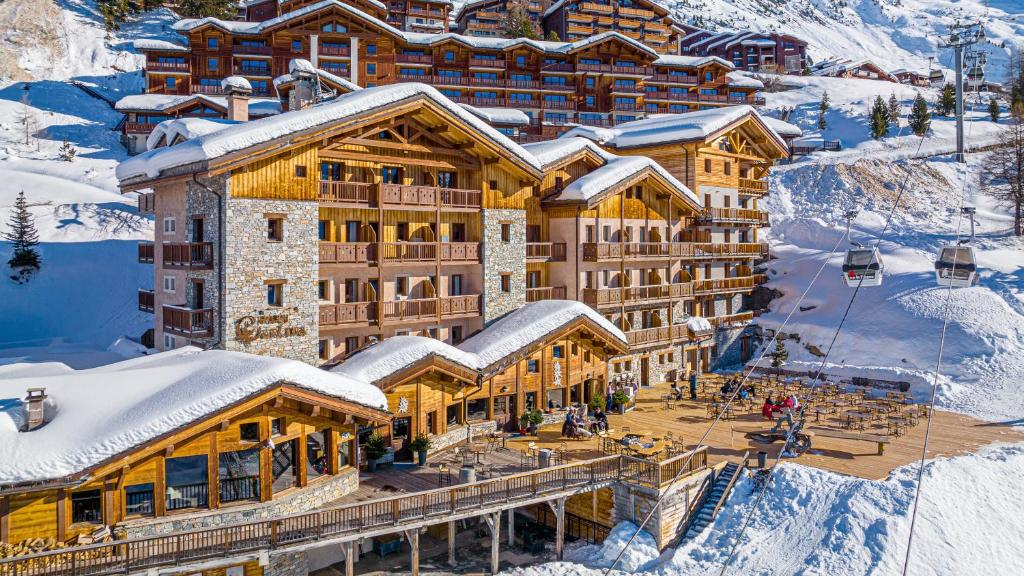
1. Luxury: Hôtel Carlina by Les Etincelles – Belle Plagne
A lovely four-star hotel in Belle Plagne, with direct access to the ski slopes. Hôtel Carlina has an indoor swimming pool, spa facilities, a hot tub and mountain-view balconies. The hotel also has a restaurant and bar, making it a good choice if you want a little extra comfort after a day skiing.
2. Mid-range: Araucaria Hotel & Spa – Plagne Centre
Araucaria is a great option if you want to stay in the heart of La Plagne. It has ski-in/ski-out access, a swimming pool, spa facilities and a ski shop. The central location also makes it easy to reach the resort’s restaurants, bars and shops.
3. Good-value option: Hôtel La Plagne Le Terra Nova – Plagne Centre
For a more straightforward ski holiday, Hôtel Le Terra Nova is worth considering. It sits close to the slopes and offers ski-to-door access, a restaurant, bar and wellness facilities. Rooms are relatively simple, but the location is a real advantage if you want to spend most of your time skiing.
If you’ve got specific dates in mind, don’t wait too long to secure your spot. You’ll often get better rates by booking early to! More Accommodation in La Plagne
Our Tip
If it’s your first time skiing in La Plagne, we’d look at Plagne Centre or Belle Plagne.
Both make convenient bases for exploring the ski area, and you’ll have plenty of restaurants and facilities nearby.
If you prefer a quieter village, Plagne 1800 or Montalbert may suit you better.
One thing to remember:
La Plagne is spread across several villages, so check the location of your accommodation carefully before booking.
Staying close to a lift or piste can save you a lot of walking in ski boots!
Les Arcs, France – Best for Variety and Progression
Les Arcs is a resort we absolutely love, and it’s easy to understand why it appeals to so many skiers.
With spectacular mountain scenery, a huge choice of pistes and excellent lift connections, it’s a destination we think intermediate skiers should seriously consider.
Located in the French Tarentaise Valley, Les Arcs forms part of the Paradiski ski area, sharing its mountain terrain with La Plagne and Peisey-Vallandry.
The Les Arcs and Peisey-Vallandry sector alone has around 200km of pistes, while the full Paradiski area extends to approximately 425km.
What makes Les Arcs particularly appealing is the variety of skiing.
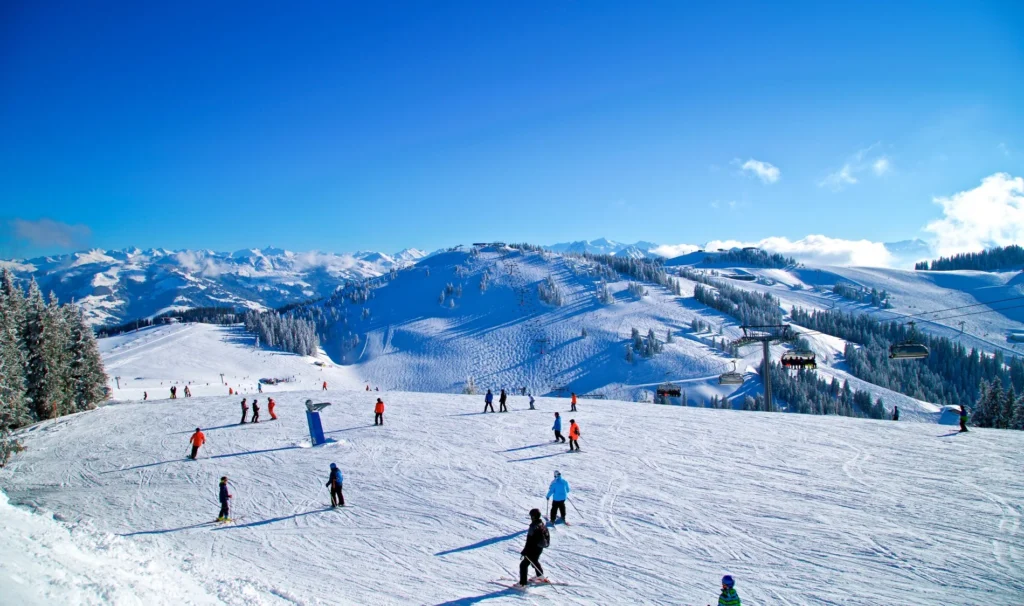
You’ll find wide, open pistes higher up the mountain, lovely tree-lined runs lower down and plenty of long descents to enjoy.
There is also a good selection of blue and red runs, making it suitable for both developing and confident intermediate skiers.
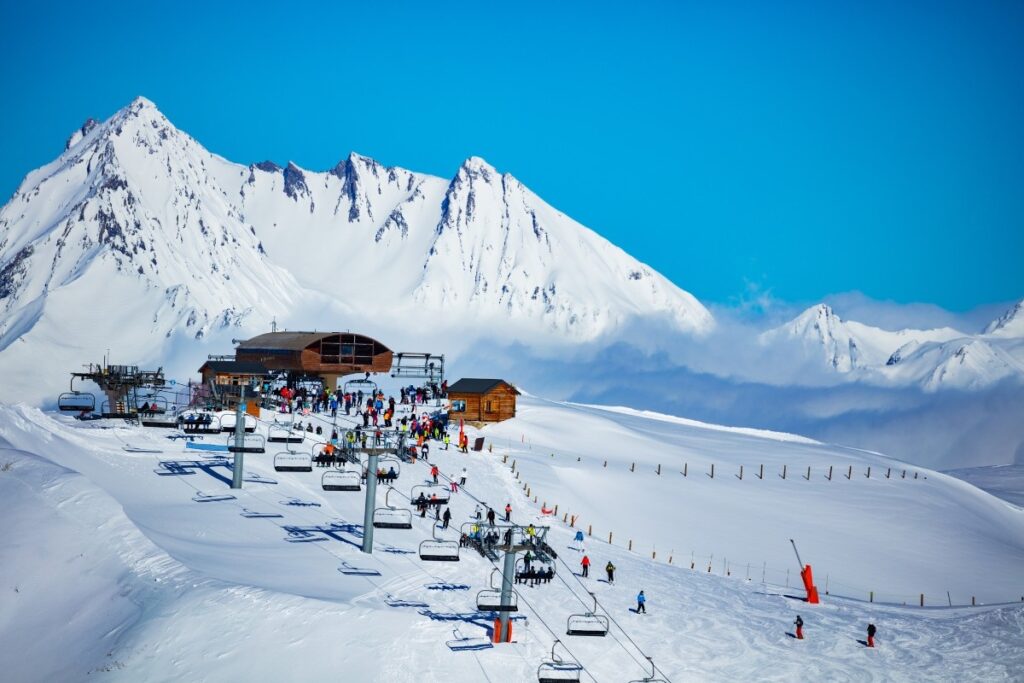
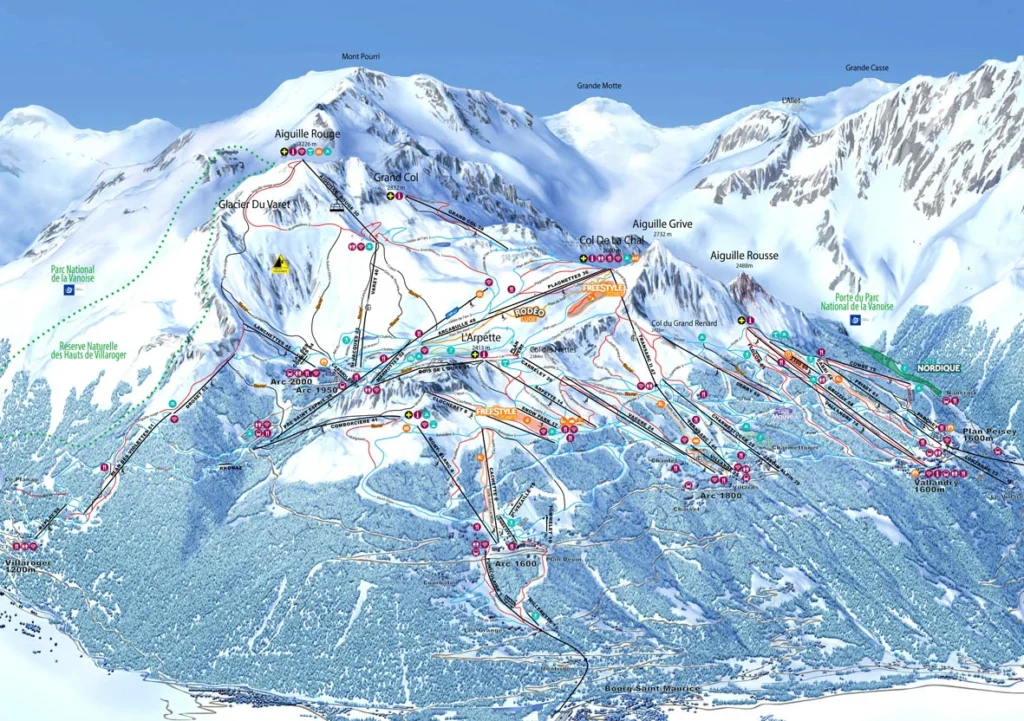
Another advantage is the choice of villages. Arc 1600, Arc 1800, Arc 1950 and Arc 2000 each have their own character, so you can choose a base that suits the type of holiday you’re looking for.
Many accommodation options also provide convenient ski-in/ski-out access.
Why intermediate skiers will love Les Arcs:
Around 200km of skiing in the Les Arcs and Peisey-Vallandry area.
A great choice of blue and red pistes.
Long descents and beautiful tree-lined runs.
High-altitude skiing, with the Aiguille Rouge reaching 3,226 metres.
Access to the enormous Paradiski area, including La Plagne.
Several villages offering different accommodation and holiday styles.
Our verdict:
Les Arcs is one of our favourite French ski destinations.
We love the variety of the skiing and the opportunity to explore so much different terrain.
For intermediate skiers who enjoy covering ground, trying new runs and spending their days exploring the mountains, it’s a wonderful choice.
Les Arcs Ski Area
Les Arcs is part of the enormous Paradiski ski area in the French Alps, alongside La Plagne and Peisey-Vallandry.
Even without venturing across to La Plagne, there is plenty to explore, with 200 km of pistes in Les Arcs and Peisey-Vallandry alone.
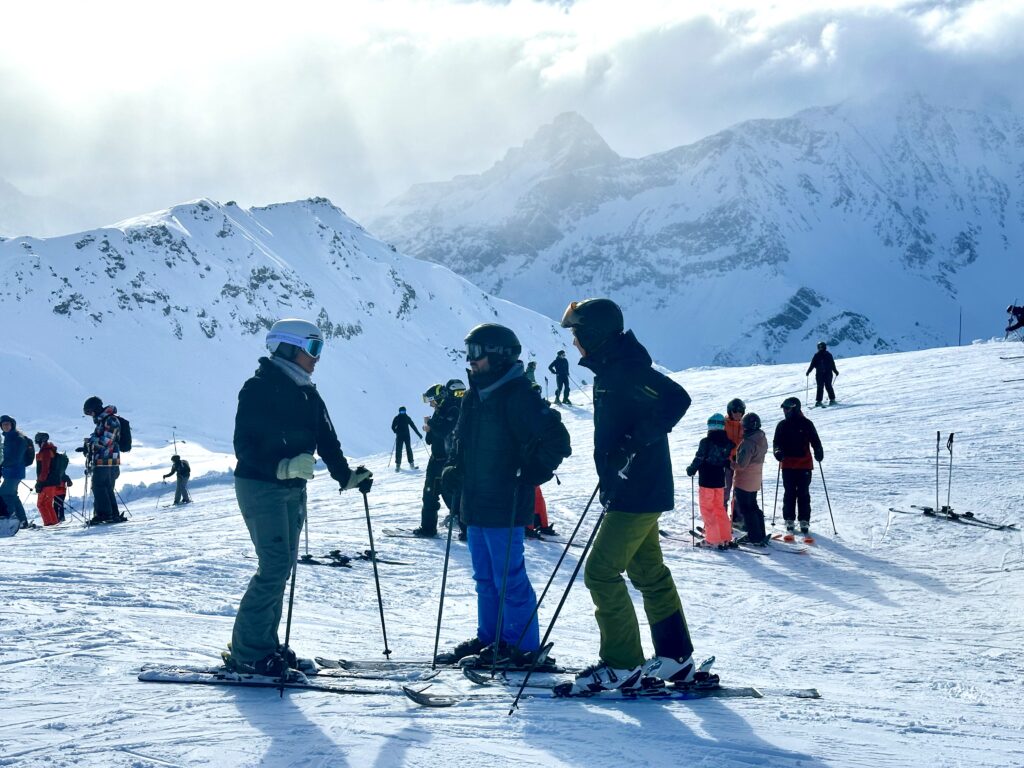
The ski area stretches from around 1,200 metres to the spectacular Aiguille Rouge at 3,226 metres.
With approximately 70% of the pistes above 2,000 metres, Les Arcs also has a good amount of high-altitude skiing.
One of the highlights is the variety of skiing across the different sectors:
Arc 1600: Tree-lined runs and a slightly quieter feel, with skiing that takes you down towards the forest.
Arc 1800: A great area for cruising, with wide pistes and plenty of blue runs suited to intermediate skiers.
Arc 1950: A beautiful alpine-style village with convenient access to the surrounding slopes.
Arc 2000: The place to head for higher-altitude skiing, more challenging red runs and access towards Aiguille Rouge.
Peisey-Vallandry: A lovely area with forest skiing and access to the wider Paradiski network.
Our tip:
Don’t miss the opportunity to explore the different sectors rather than staying around one village. The scenery and character of the skiing change as you move around the mountain.
What Is Skiing in Les Arcs Like for Intermediate Skiers?
Les Arcs is a fantastic choice for intermediate skiers, particularly if you enjoy covering plenty of ground and trying different runs throughout the day.
One of the biggest advantages is the variety.
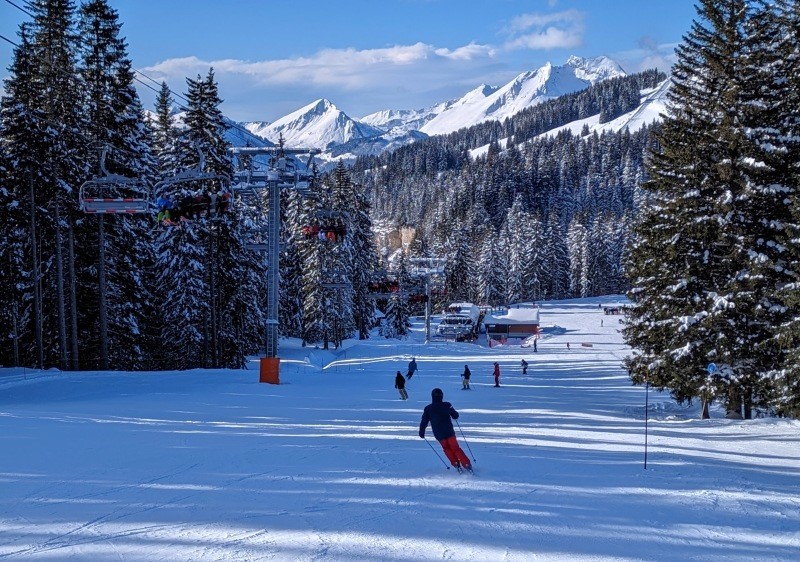
You’ll find wide, well-groomed blue pistes where you can settle into a comfortable rhythm, alongside plenty of red runs to test your confidence and improve your technique.
If you’re still getting comfortable on red runs, there are plenty of opportunities to build up gradually.
Areas around Arc 1800 and Peisey-Vallandry are particularly good places to start, with enjoyable cruising pistes and beautiful forest scenery.
More confident intermediates will enjoy heading towards Arc 2000, where the higher mountain terrain provides some longer and more demanding descents.
The run from the Aiguille Rouge is a memorable challenge, although its steep sections mean it’s better suited to stronger skiers who are comfortable on difficult pistes.
Why intermediate skiers will love Les Arcs:
A huge choice of blue and red runs.
Wide, open pistes for relaxed cruising.
Longer descents with plenty of variety.
Tree-lined skiing when the weather closes in.
The opportunity to explore the wider Paradiski area.
Our verdict:
Les Arcs is particularly good for intermediate skiers who want variety and the freedom to explore.
Whether you’re building confidence on blue runs or looking for more demanding red pistes, there’s plenty here to keep you busy for a week or longer.
Les Arcs Ski Passes and Prices
When skiing in Les Arcs, you have two main lift pass options: the Classic Pass, which covers Les Arcs and Peisey-Vallandry, or the Essential Pass, which gives you access to the entire Paradiski area, including La Plagne.
For intermediate skiers, choosing between the two really depends on how much exploring you plan to do.
Les Arcs Classic Pass
The Classic Pass covers the 200 km of pistes across Les Arcs and Peisey-Vallandry. There is plenty of skiing here to keep most intermediate skiers busy for a week.
Paradiski Essential Pass
If you want to explore further, the Essential Pass covers the full 425 km Paradiski ski area, including La Plagne. It also includes additional benefits such as express lift lanes and discounts on selected activities.
Les Arcs Ski Pass Prices 2026/27
These are the published main-season prices for adults aged 13–64.
Pass | 1 day | 6 days |
|---|---|---|
Classic – Les Arcs | €71 | €368 |
Essential – Paradiski | €78 | €412 |
Prices in euros. Children’s and senior rates are lower. Prices can vary during the season.
Which pass should you choose?
For a week skiing mainly around Les Arcs, the Classic Pass is excellent value. However, if you enjoy exploring different mountains and want the freedom to ski over to La Plagne, we’d choose the Essential Pass.
Our tip: Check the official lift-pass website before booking, as there can be early-booking offers and seasonal price changes.
You can check current prices and buy passes directly through the official Les Arcs ski pass website.

Where to Stay in Les Arcs
For intermediate skiers, we’d look particularly at Arc 1800, Arc 1600 and Arc 2000.
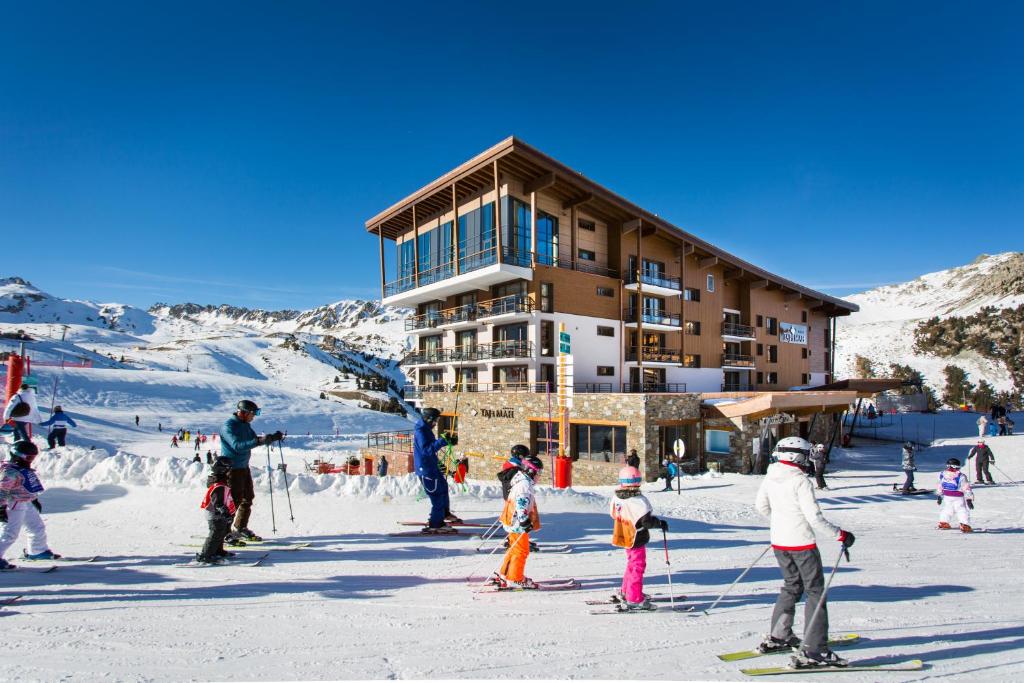
Arc 1800: A lively base with plenty of restaurants, bars, shops and easy access to a wide choice of pistes. It’s a good all-round choice.
Arc 1600: A little quieter, with a relaxed atmosphere and convenient access to the slopes. It’s also well connected to Bourg-Saint-Maurice by funicular.
Arc 1950: A beautiful pedestrian village with attractive Alpine-style buildings, restaurants and ski-in/ski-out accommodation. A lovely choice if you enjoy staying somewhere with a village feel.
Arc 2000: Best for those who want to be close to the higher mountain skiing and enjoy getting straight onto the slopes.
Our Accommodation Picks in Les Arcs
We’ve selected three hotels in different parts of the resort, with options for different budgets and holiday styles.
Best for a five-star ski holiday, with ski-to-door access, an indoor pool, spa and two restaurants. A wonderful choice if you want to stay high on the mountain.
2. Altezza Arc 1800 Hôtel & Spa – Arc 1800
Mid-range
Best for a comfortable hotel stay with excellent facilities. It has ski-to-door access, an indoor pool, sauna, hammam and mountain views.
3. Hôtel Arcadien – Arc 1600
Good-value option
Best for a more straightforward mountain hotel. It offers ski-to-door accommodation, a sauna, hot tub, restaurant and a convenient base for exploring Les Arcs.
If you’ve got specific dates in mind, don’t wait too long to secure your spot.
More Accommodation in Les Arcs
Our tip:
If this is your first visit to Les Arcs, we’d seriously consider Arc 1800. It has a good range of facilities, plenty of skiing close by and makes a convenient base for exploring the wider area.
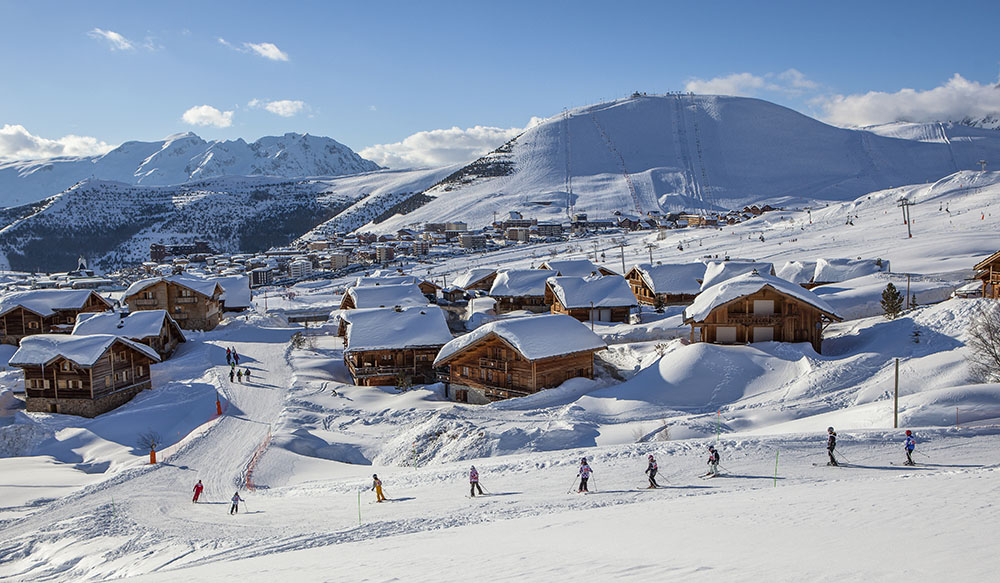
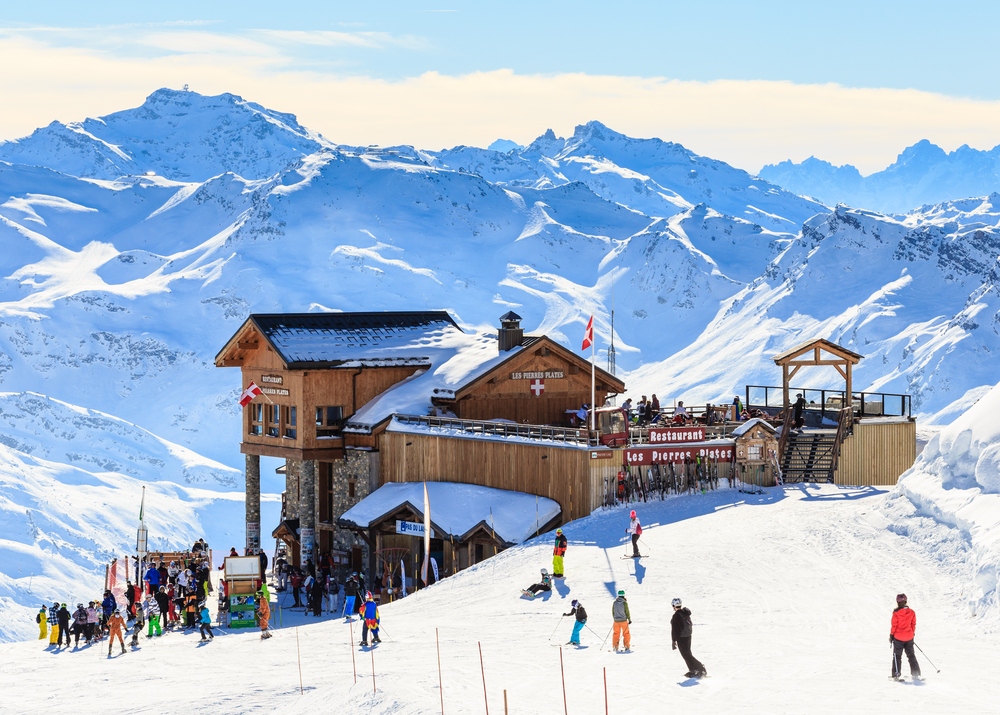
3. Alpe d’Huez Ski Resort – Sunny Skiing and Long Mountain Runs
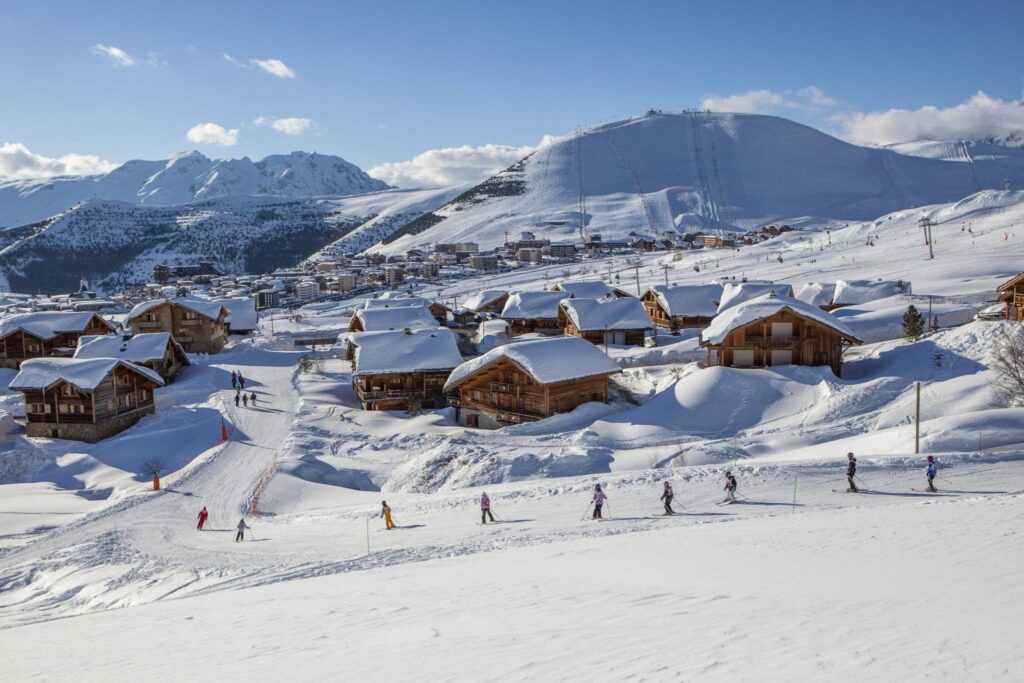
Alpe d’Huez is one of the best-known ski resorts in the French Alps, famous for its sunshine, extensive ski area and some seriously long descents.
Sitting high above the Romanche Valley, the resort has a wonderful mix of open mountain skiing, wide cruising pistes and challenging runs for those looking to push themselves.
For intermediate skiers, there’s plenty to enjoy.
You’ll find a good selection of blue and red runs, with opportunities to build confidence, cover plenty of ground and explore different parts of the mountain.
One of the biggest attractions is the chance to ski some of the area’s famous long runs, including the legendary Sarenne, which descends from the Pic Blanc.
It’s a challenging black run, so it’s not for every intermediate, but the mountain views alone make the journey up worthwhile.
Alpe d’Huez is also a great choice if you enjoy sunny skiing and a lively resort with plenty of restaurants, bars and accommodation.
Alpe d’Huez Ski Area
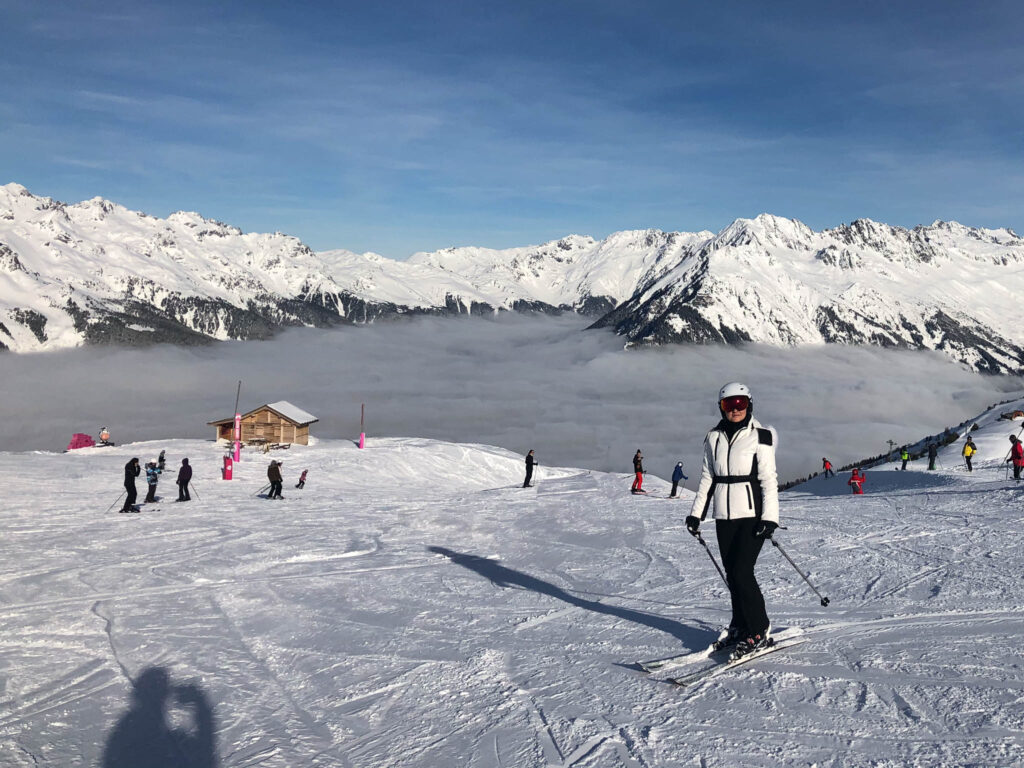
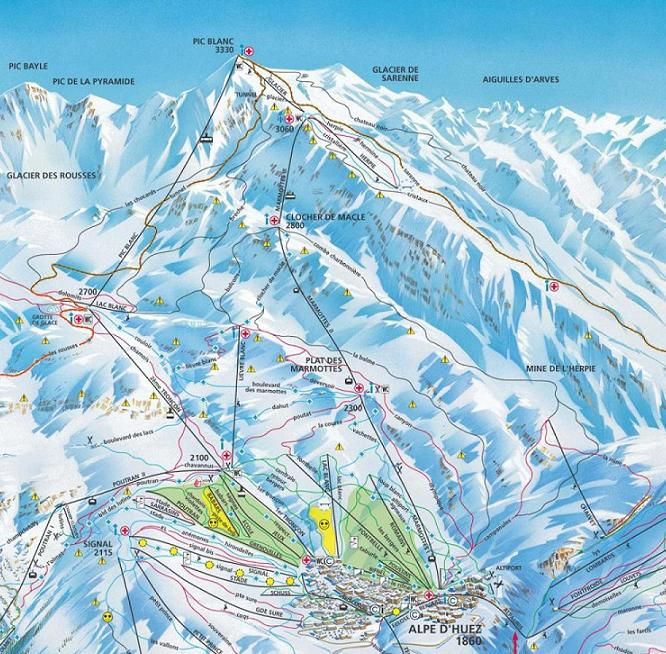
The Alpe d’Huez ski area, known as Alpe d’Huez Grand Domaine Ski, covers approximately 250 km of pistes across five connected resorts: Alpe d’Huez, Auris-en-Oisans, Oz-en-Oisans, Vaujany and Villard-Reculas.
With skiing from around 1,100 metres up to 3,330 metres at Pic Blanc, there’s a huge variety of terrain to explore.
The higher slopes provide excellent views across the surrounding French Alps, while lower down you’ll find tree-lined runs and sheltered skiing.
For intermediate skiers, the area has plenty to offer, with wide blue pistes, enjoyable red runs and long descents that allow you to explore different parts of the mountain.
Some of the highlights include:
Signal: A good area for warming up, with a selection of blue and red runs.
Marmottes: Offers access to higher-altitude skiing and some lovely long descents.
Auris-en-Oisans: A quieter sector with tree-lined pistes and enjoyable cruising.
Oz-en-Oisans and Vaujany: Worth exploring for their woodland skiing and more sheltered runs.
Pic Blanc: The highest point of the ski area, with spectacular mountain views and access to some of the resort’s most famous descents.
One run that deserves a special mention is La Sarenne.
At approximately 16 km, it’s one of the longest black runs in Europe, descending from Pic Blanc through some remarkable mountain scenery.
It’s a challenging route rather than an intermediate piste, so only confident skiers who are comfortable on black runs should attempt it.
For intermediates, though, there’s no shortage of other routes to enjoy.
You can spend several days exploring the different sectors without feeling you’ve covered the same ground.
Our tip:
Don’t spend your entire holiday skiing directly around the main village.
Make time to explore Oz-en-Oisans, Vaujany and Auris-en-Oisans too. They each bring a different feel to the skiing
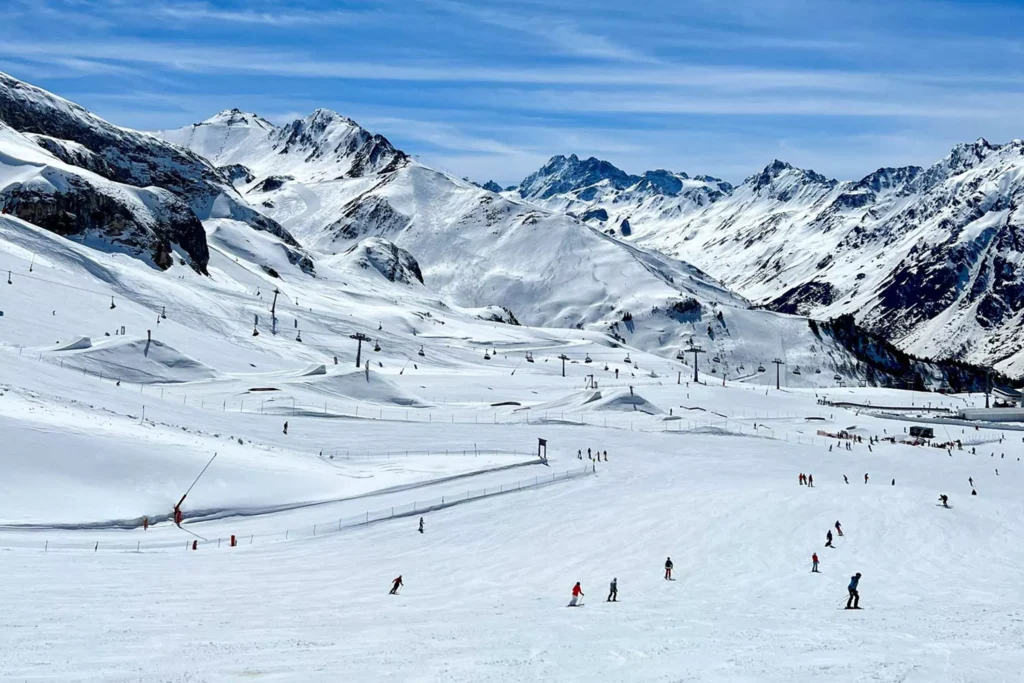
What Is Skiing in Alpe d’Huez Like for Intermediate Skiers?
Alpe d’Huez is a great destination for intermediate skiers, particularly if you enjoy long runs, wide-open pistes and the chance to explore a large ski area.
There are plenty of blue runs for relaxed cruising, along with a good selection of reds to keep more confident intermediates interested.
The mountain’s varied terrain means you can enjoy different types of skiing throughout the day, from sunny open slopes higher up to sheltered tree-lined pistes lower down.
If you’re still building confidence on red runs, the wide pistes around the main Alpe d’Huez sector provide a good opportunity to practise without feeling rushed.
More experienced intermediates can venture further across the Grand Domaine, exploring the linked resorts of Auris-en-Oisans, Oz-en-Oisans and Vaujany.
Why intermediate skiers will love Alpe d’Huez:
A large selection of blue and red pistes.
Long runs with plenty of variety.
Wide slopes that are ideal for cruising.
Tree-lined skiing in the lower sectors.
High-altitude skiing and spectacular mountain views.
Plenty of opportunities to explore different villages.
Our verdict:
Alpe d’Huez is particularly appealing for intermediates who enjoy covering plenty of ground.
It’s a resort where you can spend a week exploring new runs, improving your skiing and enjoying some wonderful mountain scenery.
Alpe d’Huez Ski Passes and Prices
Alpe d’Huez has one main lift pass covering the entire Grand Domaine ski area, including Alpe d’Huez, Auris-en-Oisans, Oz-en-Oisans, Vaujany and Villard-Reculas.
This gives you access to all 250 km of pistes, so you can explore the different mountain sectors without needing to buy separate passes.
Alpe d’Huez Ski Pass Prices 2026/27
Here are the adult and child prices for the main winter season, from 19 December 2026 to 9 April 2027.
Ski pass | Adult (13–64) | Child (5–12) |
|---|---|---|
1 day | €68 | €56.50 |
3 days | €190 | €154 |
6 days | €336.50 | €264 |
Prices in euros. Senior discounts are also available.
Is the Six-Day Pass Worth It?
For most people staying a week, the six-day pass is the best option. It works out at approximately €56.10 per day for an adult, compared with €68 for a single-day pass.
There are also cheaper prices during the early and late season:
5–18 December 2026: €286 for an adult six-day pass.
10–25 April 2027: €269 for an adult six-day pass.
Our tip:
If you’re planning to ski for most of your holiday, we’d choose the full Grand Domaine pass. Having access to all five connected resorts gives you plenty of opportunity to explore.
You can check dates, special offers and purchase passes through the official Alpe d’Huez ski pass website.
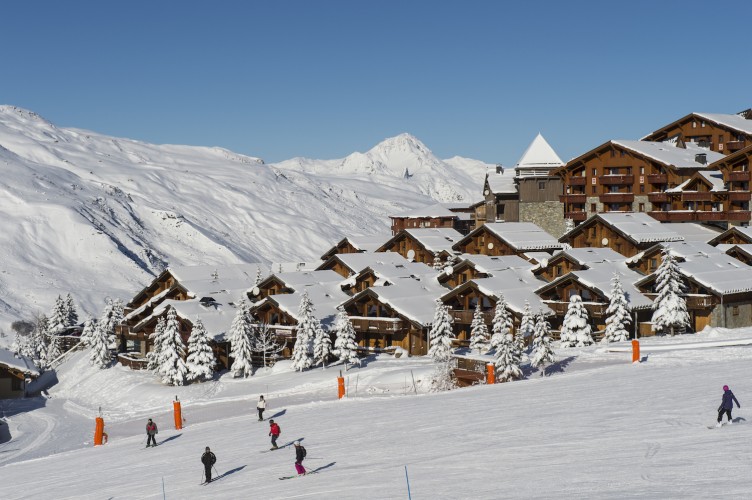
Where to Stay in Alpe d’Huez
Alpe d’Huez is a fairly spread-out resort, so it’s worth thinking about where you’d like to stay before booking your accommodation.
Some areas put you right beside the lifts, while others are closer to the restaurants, shops and evening entertainment.
For an intermediate ski holiday, I’d concentrate on three main areas:
The Bergers area: Particularly convenient for skiing, with easy access to lifts and pistes. A good choice if you want to get onto the mountain quickly.
The resort centre: Best for restaurants, bars, shops and being close to the main resort facilities.
Vieil Alpe: The older part of the resort has a more traditional Alpine feel, with accommodation and restaurants tucked around its streets
Our Accommodation Picks in Alpe d’Huez
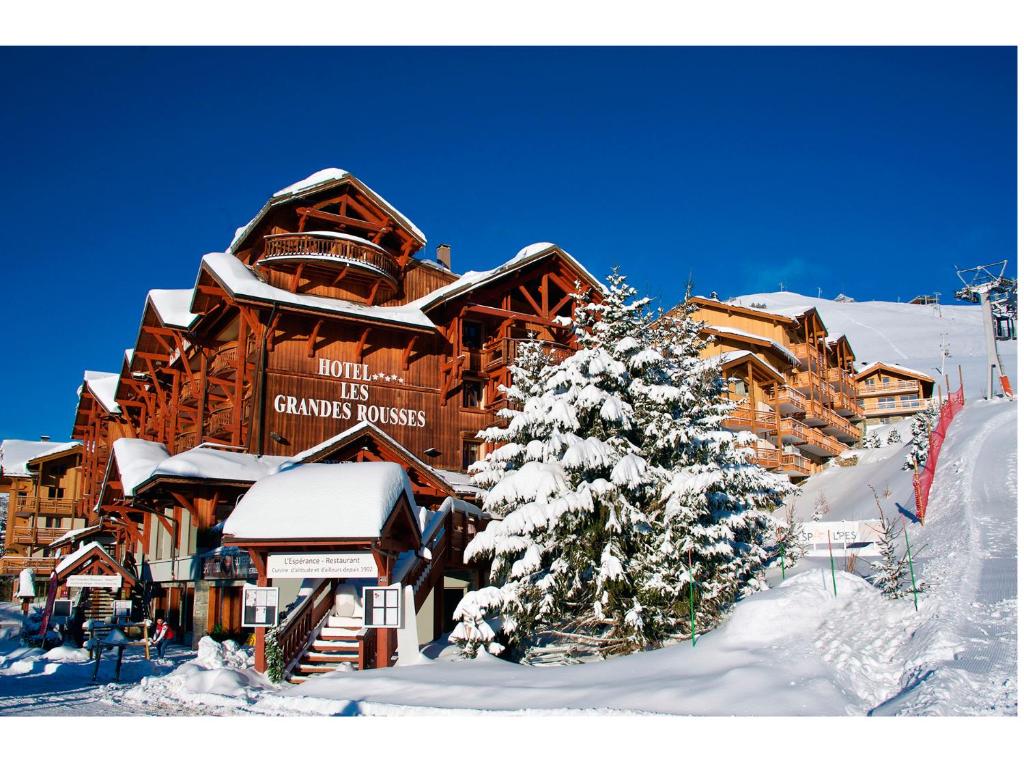
1. Grandes Rousses Hotel & Spa Alpe d’Huez – Luxury
Best for a special ski holiday, with a spa, swimming pool, several dining options and a central location close to the mountain. A lovely choice if you enjoy a little luxury after a day skiing.
2. PopAlp
Mid-range
Best for something a little different. This colourful boutique hotel has a distinctive pop-art style and a convenient position close to the lifts, shops and restaurants.
3. Alp’Azur –
More affordable
Best for a comfortable, chalet-style hotel in the heart of the resort. It has a welcoming atmosphere and is close to restaurants, shops and resort facilities.
You’ll often get better rates by booking early to! More Accommodation in Alpe d’Huez
Our tip:
If skiing is your main priority, look around the Bergers area for convenient lift access. If you prefer being able to walk out for dinner and a drink in the evening, the resort centre is a good option.
Read This Next
7 Best Snow-Sure Ski Resorts in France (2026/27 Guide)

4. Tignes Ski Resort – High-Altitude Skiing and Excellent Terrain for Confident Intermediates
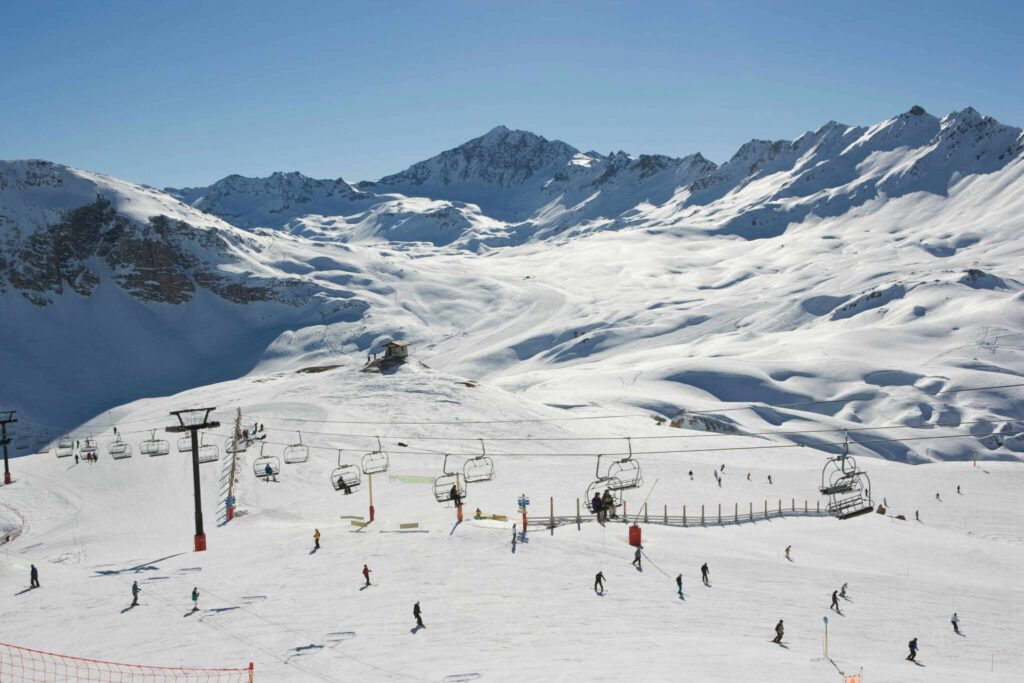
Tignes is one of the highest ski resorts in the French Alps and a fantastic destination for intermediate skiers who enjoy exploring a large mountain area.
Connected to Val d’Isère, Tignes forms part of the Tignes–Val d’Isère ski area, with approximately 300 km of pistes to discover.
Its high altitude, extensive lift network and varied terrain make it particularly appealing for skiers who want plenty of choice throughout their holiday.
You’ll find wide blue runs for relaxed cruising, plenty of red pistes for more confident skiers and some spectacular high-mountain scenery.
The different sectors also offer a good variety of skiing, from open slopes around the Grande Motte to the tree-lined runs lower down towards Les Brévières.
Tignes is a purpose-built resort rather than a traditional Alpine village, but its excellent skiing and lively atmosphere make it a popular choice for winter holidays.
Tignes Ski Area
Tignes shares the Tignes–Val d’Isère ski area, one of the largest linked ski domains in the French Alps. Together, the two resorts offer approximately 300 km of pistes, with 160 marked runs and 71 ski lifts.
The skiing ranges from around 1,550 metres at Les Brévières to more than 3,400 metres on the upper mountain, making this a particularly attractive destination for those looking for high-altitude skiing.
For intermediate skiers, there’s an excellent choice of terrain, with 67 blue runs and 41 red runs across the linked area. You’ll find wide-open pistes, long descents and plenty of opportunities to explore different parts of the mountain.
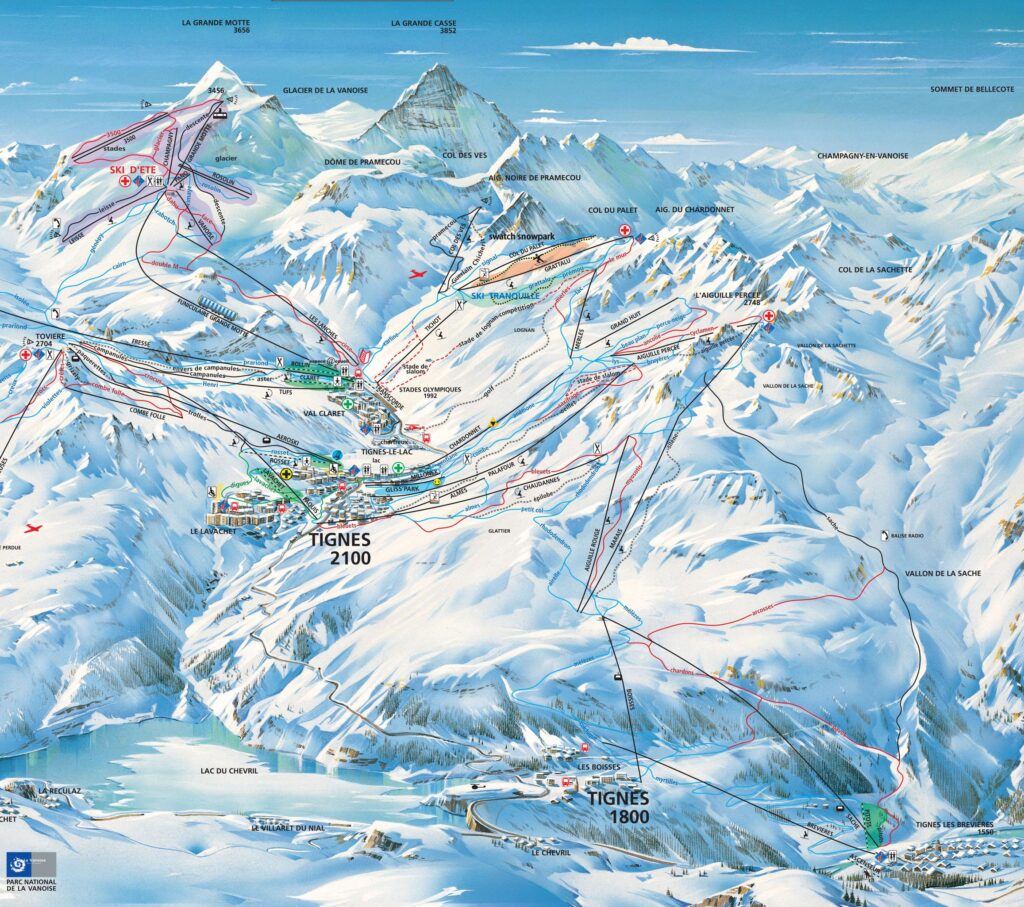
The Main Skiing Areas in Tignes
Tignes has several distinct sectors, each offering something a little different.
Grande Motte: The high-altitude glacier area, with spectacular views and access to some excellent long runs. It’s a must-visit for confident skiers.
Tovière: An important link between Tignes and Val d’Isère, with a good selection of runs and access to the neighbouring resort.
Palet and Aiguille Percée: A lovely area to explore, with a mixture of blue and red pistes and some beautiful mountain scenery.
Tignes Le Lac and Le Lavachet: Conveniently located for accessing several parts of the ski area, with a good range of pistes nearby.
Les Brévières: Lower down the mountain, this sector has tree-lined skiing and a more sheltered feel, particularly enjoyable when the weather is less settled.
Exploring Beyond Tignes
One of the biggest advantages of staying in Tignes is being able to ski across to Val d’Isère on the same lift pass.
This opens up another enormous area of skiing, with different mountain scenery, challenging red runs and some famous pistes.
We’d recommend allowing at least one day to explore Val d’Isère if conditions and your skiing ability allow.
Just remember to keep an eye on lift closing times so you can make your way back to Tignes safely.
Our tip:
Don’t miss the Grande Motte.
The high-altitude views are spectacular, and it’s one of the highlights of skiing in Tignes. Check which pistes and lifts are open before heading up, as conditions can change quickly at altitude.
What Is Skiing in Tignes Like for Intermediate Skiers?
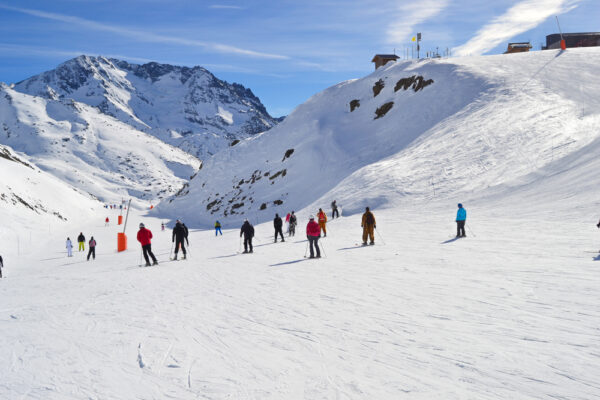
Tignes is an excellent choice for intermediate skiers, particularly those who enjoy long descents, wide-open pistes and exploring different parts of a large ski area.
There is a particularly good choice of blue and red runs, so whether you’re still building confidence or comfortably skiing reds, you’ll find plenty to keep you interested.
One of our favourite areas to explore is around Grande Motte.
The long Génépy blue run is a real highlight, with sweeping mountain views and a lovely descent from the glacier.
More confident intermediates can also enjoy the red runs coming down towards Val Claret.
The Aiguille Percée and Palet sectors are also worth exploring. You’ll find scenic blue runs and more challenging reds, with plenty of opportunities to enjoy a full day on the mountain.
And, of course, having Val d’Isère connected to Tignes gives you even more choice.
You can spend a day exploring the neighbouring resort, where there are wide cruising pistes and some excellent runs for confident intermediates.
Why intermediate skiers will love Tignes:
A huge selection of blue and red runs.
Long, wide pistes for enjoyable cruising.
High-altitude skiing around Grande Motte.
Scenic runs around Aiguille Percée and Palet.
Excellent opportunities to explore Val d’Isère.
A good choice of terrain for progressing onto more challenging runs.
Our verdict:
Tignes is particularly suited to confident intermediate skiers who love exploring.
There’s plenty of variety, excellent high-altitude skiing and enough terrain to keep you busy for a full week.
Our tip:
Make time for the Génépy blue run from Grande Motte. It’s one of the standout intermediate descents in Tignes, and the mountain scenery is wonderful.
Tignes Ski Passes and Prices
Tignes shares its ski area with Val d’Isère, so you can purchase one lift pass covering both resorts.
This gives you access to approximately 300 km of pistes, making it an excellent option for intermediate skiers who enjoy exploring.
There are two main options to consider:
Tignes–Val d’Isère Pass: Covers the entire linked ski area, including both resorts. This is the pass we’d recommend for most visitors.
Tignes-only Pass: If you prefer to stay within Tignes, a smaller local-area pass is available. It can be a good option for shorter stays or skiers who don’t plan to explore Val d’Isère.
Tignes Ski Pass Prices 2026/27
Here are the standard adult and child/senior prices for the main winter season (12 December 2026 to 23 April 2027).
Ski pass | Adult (19–64) | Child/Senior (8–18 / 65–74) |
|---|---|---|
1 day | €78 | €63 |
3 days | €234 | €189 |
6 days (7th day free) | €468 | €378 |
Prices in euros. Children under 8 and adults aged 75 and over ski free with proof of age.
Is the Six-Day Pass Worth It?
For a week-long holiday, the six-day pass is a good choice.
You actually receive seven consecutive days of skiing for the price of six, giving you more time to explore the entire mountain.
The pass also includes complimentary swimming pool visits at selected facilities, with two entries included on a six-day pass.
Our tip:
We’d choose the full Tignes–Val d’Isère pass.
Having both resorts available gives you so much more variety, particularly if you’re a confident intermediate who enjoys exploring different mountains.
You can check the latest prices and purchase passes through the official Tignes–Val d’Isère ski pass website

Where to Stay in Tignes
Tignes is made up of several villages spread across the mountain, and choosing the right one can make a real difference to your ski holiday.
For intermediate skiers, I’d concentrate on Tignes Val Claret and Tignes Le Lac. Both offer convenient access to the lifts, plenty of restaurants and shops, and a good choice of accommodation.
Here is a quick look at the main areas:
Val Claret: The highest village, with excellent access to the Grande Motte lifts. A great choice if skiing is your main priority and you enjoy lively après-ski.
Tignes Le Lac: The main resort centre, with a good range of restaurants, bars, shops and accommodation. Probably the best all-round base.
Le Lavachet: A quieter area close to Le Lac, often worth considering if you want convenient lift access without staying in the busiest part of the resort.
Tignes 1800 (Les Boisses): A quieter, more modern village with a relaxed atmosphere and access to the main ski area.
Les Brévières: The most traditional village, lower down the valley. It has a different feel from the purpose-built upper resort, although you’ll need to use the lift connection to reach the higher slopes
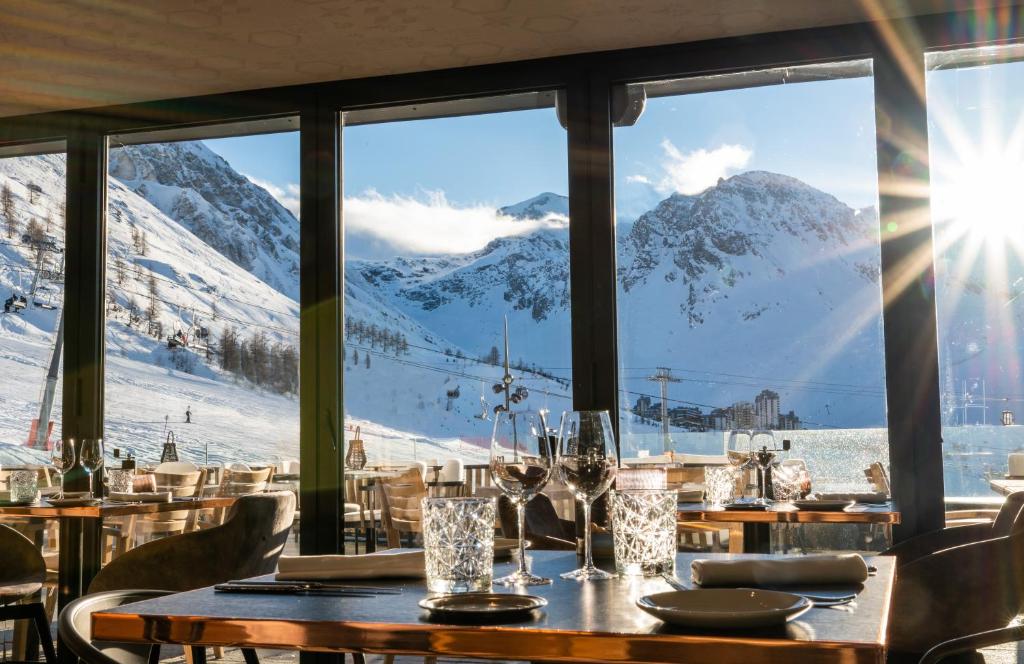
Our Accommodation Picks in Tignes
Luxury
Best for a special ski holiday. This five-star hotel has a beautiful spa, indoor pool, stylish rooms and excellent ski services. It’s around 50 metres from the pistes in Tignes Le Lac.
2. Langley Hotel Tignes 2100 –
Mid-range
Best for a practical, central base. Located in Tignes Le Lac, this hotel has a restaurant, bar, spa facilities and ski storage, with the slopes just a short walk away.
Good-value option
Best for skiers who want to spend their money on the slopes rather than luxury accommodation. This smaller hotel is close to the lifts, ski schools, shops and restaurants in Val Claret. Rooms are simpler, but the location is excellent.
More Accommodation in Tignes
Our tip:
For a first visit, we’d lean towards Tignes Le Lac.
It gives you a convenient base for skiing, restaurants and shops. If getting onto the Grande Motte slopes as quickly as possible is your priority, Val Claret is also an excellent choice.

5. Val Thorens Ski Resort – High-Altitude Skiing and Endless Mountain Exploration
Val Thorens is a fantastic destination for intermediate skiers who love high-altitude skiing, long mountain runs and the freedom to explore a huge ski area.
At 2,300 metres, Val Thorens is the highest ski resort in Europe.
It’s part of the famous Les Trois Vallées ski area, which connects Val Thorens with Les Menuires, Méribel and Courchevel, providing access to more than 600 km of pistes.
The resort itself is purpose-built, lively and wonderfully convenient for skiing, with many hotels and apartments offering easy access to the lifts and pistes.
If you enjoy spending your days exploring different mountains and want the advantage of a high-altitude resort, Val Thorens deserves a place on your list.
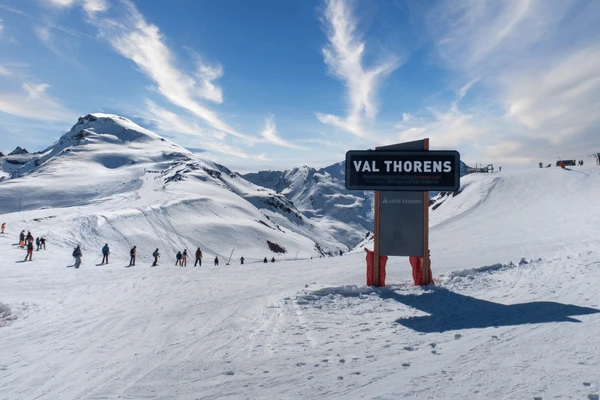
Val Thorens Ski Area
Val Thorens is part of Les Trois Vallées, the largest linked ski area in the world, with an impressive 600 km of pistes connecting seven resorts.
These include Val Thorens, Les Menuires, Méribel, Courchevel, Saint-Martin-de-Belleville, Brides-les-Bains and Orelle.
For intermediate skiers, there’s plenty of terrain to explore, from wide open blue runs to more demanding red pistes.
The mountain scenery is spectacular, and the modern lift network makes it easy to move between different sectors.
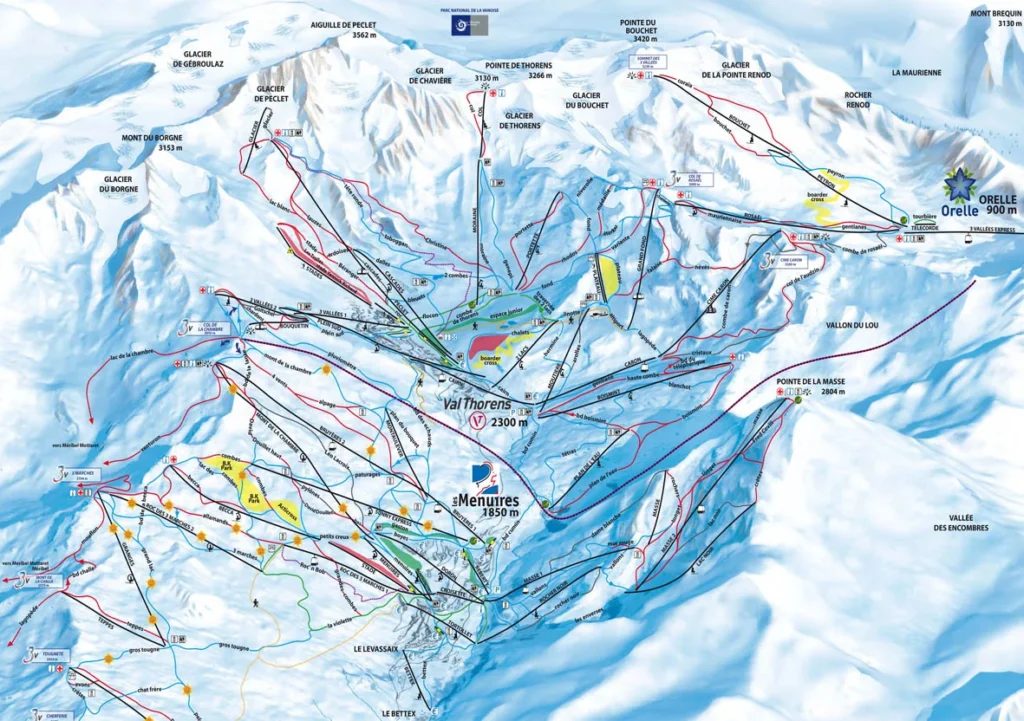
The Main Skiing Areas in Val Thorens
There are several areas worth exploring during your stay:
Péclet: One of the best-known sectors, with high-altitude skiing, wide pistes and some excellent cruising runs. A great place to spend time getting familiar with the mountain.
Deux Lacs: Offers a good selection of blue and red pistes, making it a useful area for intermediate skiers looking for variety.
Boismint: A lovely sector with a mixture of red and blue runs and some beautiful views across the surrounding mountains.
Cime Caron: Reaching 3,200 metres, this is one of the resort’s most spectacular viewpoints. There are challenging descents from the summit, so check the piste grading before choosing your route.
Orelle: Connected to Val Thorens by lifts, this quieter side of the ski area offers long descents and a different mountain setting.
Exploring the Wider Three Valleys
One of the biggest advantages of staying in Val Thorens is having access to the whole Three Valleys ski area.
You can ski across to Les Menuires and Méribel, and even continue towards Courchevel if you fancy a full day exploring.
The linked pistes give confident intermediates plenty of opportunities to cover new ground.
Just remember that the Three Valleys is enormous.
Plan your route before setting off and keep an eye on lift closing times, particularly if you’re skiing a long way from Val Thorens.
Our tip:
Allow at least one day to explore beyond Val Thorens itself. The skiing around the neighbouring valleys is a big part of what makes this destination so appealing.
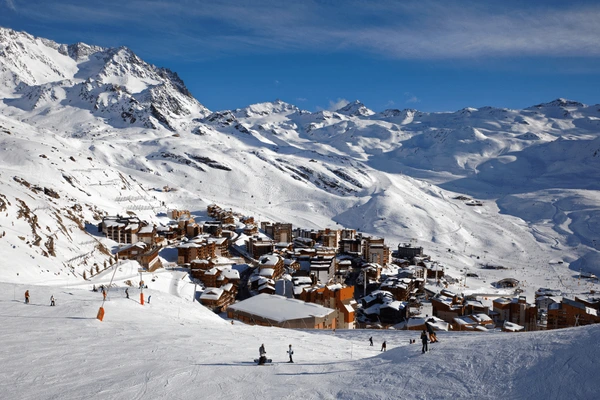
What Is Skiing in Val Thorens Like for Intermediate Skiers?
Val Thorens is an excellent choice for intermediate skiers, particularly those who enjoy long, wide pistes, high-altitude skiing and exploring different parts of a large ski area.
One of the things that makes Val Thorens so appealing is the variety of blue and red runs.
If you’re still building confidence, there are some lovely wide blue pistes around the Deux Lacs and Cascades sectors, where you can enjoy cruising without taking on anything too demanding.
For more confident intermediates, the mountain really opens up.
The Péclet sector has some excellent red runs, while the Boismint area is worth exploring for its longer descents and varied terrain.
The runs towards Col de la Chambre also provide a great opportunity to ski beyond Val Thorens and explore the neighbouring Three Valleys.
A particular highlight is the Orelle valley.
It’s generally quieter than the main resort and offers some wonderful high-altitude skiing.
It’s a lovely area to visit if you fancy getting away from the busier pistes.
Why intermediate skiers will love Val Thorens:
Plenty of wide blue pistes for relaxed cruising.
Excellent red runs for confident intermediates.
Long descents with reliable high-altitude snow conditions.
Easy access to the wider Three Valleys ski area.
Beautiful mountain scenery and spectacular viewpoints.
Plenty of different sectors to explore throughout the week.
Our verdict:
Val Thorens is particularly good for confident intermediates who enjoy exploring and covering plenty of ground.
Early intermediates will also find enjoyable skiing, but should choose their routes carefully, especially when venturing into neighbouring valleys.
Our tip:
Don’t miss the opportunity to ski over to Orelle. It’s a lovely change of scenery and can be a quieter alternative to the main Val Thorens slopes
Val Thorens Ski Passes and Prices
For intermediate skiers, the choice really depends on how much exploring you plan to do.
If you’re happy spending most of your time around Val Thorens, the local pass will be sufficient.
However, if you want to ski across to Les Menuires, Méribel and Courchevel, the full Three Valleys pass is worth considering.
2026/27 Val Thorens Ski Pass Prices
Here are the main-season prices for adults (18–74 years):
Ski Pass | 1 Day | 6 Days |
|---|---|---|
Val Thorens–Orelle | €73.50 | €367.50 |
Les 3 Vallées | €84.20 | €421 |
The six-day passes include an extra day at no additional cost, making them good value if you’re staying for a full week.
Which Val Thorens Ski Pass Should You Choose?
For a shorter holiday spent mainly skiing Val Thorens, we’d look at the local Val Thorens–Orelle pass.
If you’re staying for a week and enjoy exploring different mountains, the Les 3 Vallées pass gives you considerably more terrain. You can ski across to neighbouring resorts without buying another lift pass.
One thing to remember is that the wider Three Valleys ski area has a slightly shorter season than Val Thorens–Orelle.
For 2026/27, Val Thorens–Orelle is scheduled to open from 21 November 2026 until 2 May 2027, while Les 3 Vallées is scheduled to operate from 5 December 2026 until 18 April 2027.
Our tip:
If you’re a confident intermediate, we’d choose the Three Valleys pass for the opportunity to explore further afield.
Just keep an eye on the time and allow enough room to ski back to Val Thorens before the lifts close.
You can check current prices and purchase passes through the official Val Thorens ski pass website.
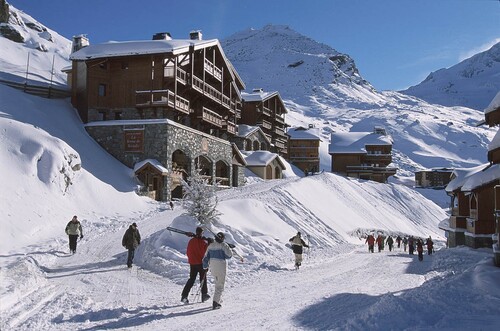
Where to Stay in Val Thorens
Val Thorens is a purpose-built ski resort, sitting at 2,300 metres, and one of its biggest advantages is how easy it is to get onto the slopes.
Much of the accommodation is ski-in/ski-out, so you can often step outside, put your skis on and head straight for the lifts.
The resort is arranged in several districts, each with a slightly different feel.
Some are close to the shops, restaurants and après-ski, while others are quieter and better suited to skiers who want to spend as much time as possible on the mountain.
Here are the areas we’d consider when choosing where to stay.
The Best Areas to Stay in Val Thorens
Grande Rue – Best for first-time visitors
Grande Rue is the heart of Val Thorens, with shops, restaurants, bars and easy access to the main lifts. It’s a good choice if you want everything close by and enjoy having plenty happening after skiing.
Plein Sud – Best for ski-in/ski-out convenience
Plein Sud sits higher up the resort and is particularly convenient for getting onto the slopes. It’s a good area for keen skiers who want to make an early start and enjoy a quieter base away from the busiest part of the centre.
Soleil – Best for a quieter stay
The Soleil district has a more relaxed feel, with accommodation close to the pistes. It’s worth considering if you’d prefer to be a little away from the main evening activity while still having excellent access to the ski area.
Les Balcons – Best for apartments and mountain views
Les Balcons is set above the main resort and has a selection of apartments and residences.
It’s a good option for families or groups who want more space, although you’ll need to consider the walk or shuttle journey down to the centre.
The resort is compact, and a free shuttle connects its different districts.
However, Val Thorens is built on a hillside, so it’s worth checking the exact location of your accommodation before booking, particularly if you don’t fancy walking uphill in ski boots.
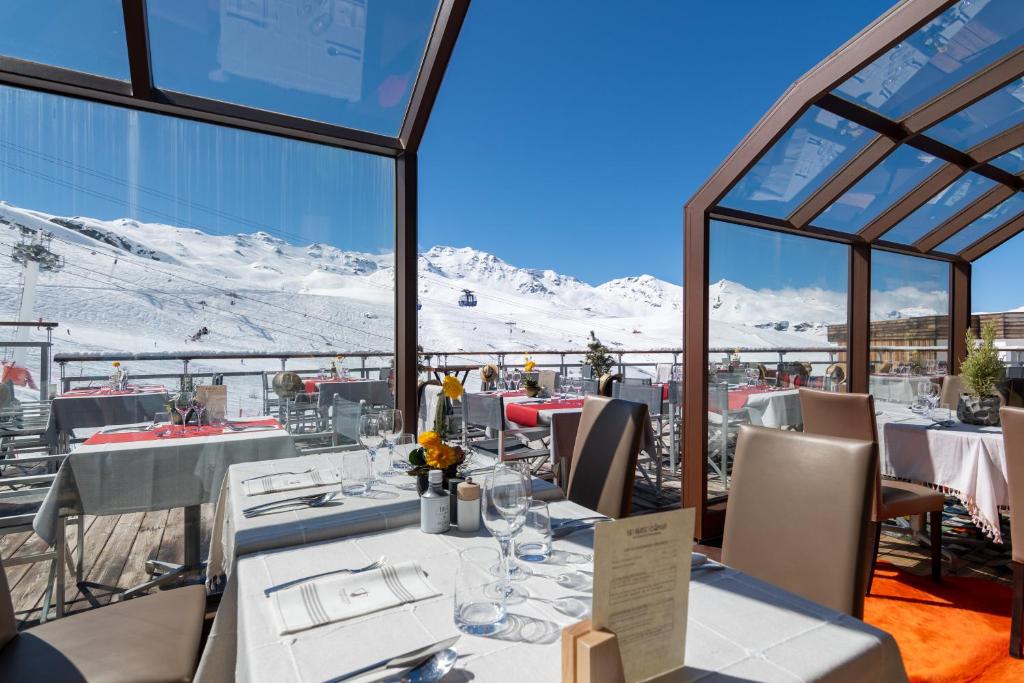
Our Recommended Hotels in Val Thorens
We’ve picked three hotels at different price levels, all with good access to the skiing area
1. Luxury – Hôtel Pashmina Le Refuge
A five-star hotel with ski-to-door access, a spa, swimming pool and mountain views. A lovely choice if you want a little extra comfort after a day on the slopes. It is in the Slalom district.
2. Mid-range – Fahrenheit Seven Val Thorens
A four-star hotel right beside the slopes, with ski-to-door access, a restaurant and an après-ski bar. Its location makes it a convenient base for exploring the Three Valleys.
3. Good-value – Hôtel Le Sherpa
A family-run, three-star chalet-style hotel in the heart of the resort. It has ski-to-door access, a restaurant and a small spa with a sauna, hammam and hot tub. A good option if you prefer a traditional alpine hotel rather than a large modern property.
If you’ve got specific dates in mind, don’t wait too long to secure your spot. You’ll often get better rates by booking early to!
Other Accommodation in Val Thorens
Our Tip
Val Thorens is a resort where location can make a real difference to your holiday.
We’d prioritise ski-in/ski-out accommodation, particularly if you’re planning to ski every day.
Also remember to arrange your parking in advance if you’re driving, as cars cannot be left in the resort streets.
Our Verdict
Val Thorens is an excellent choice if convenient skiing and high-altitude accommodation are high on your list.
It’s not the prettiest traditional Alpine village, but the ski access is hard to beat, and having the Three Valleys on your doorstep gives you an enormous amount of terrain to explore.

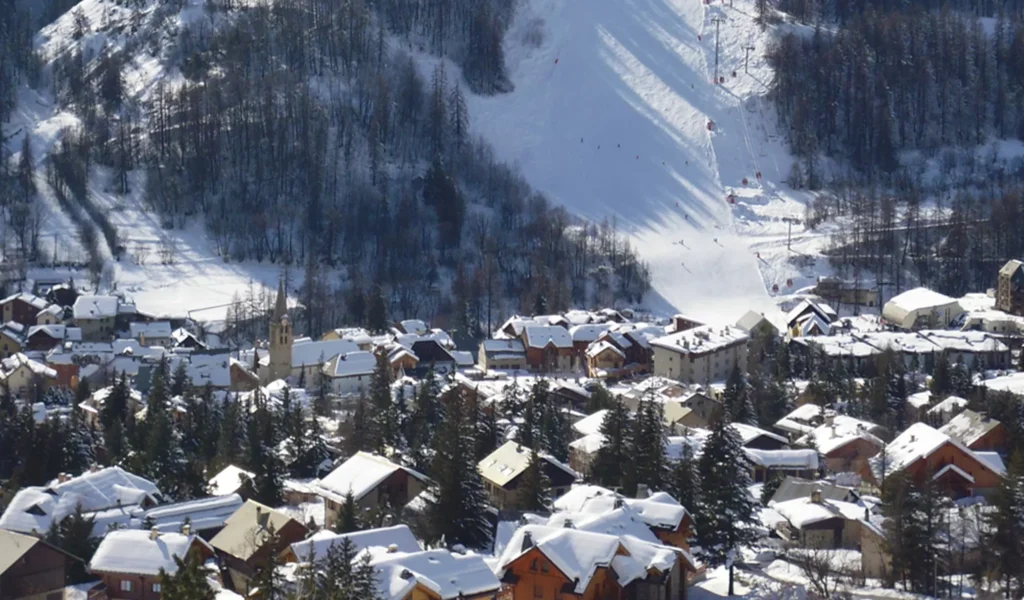
6. Serre Chevalier Ski Resort – Sunny Skiing and Long Alpine Runs
Serre Chevalier is one of those French ski destinations that deserves more attention.
Set in the southern French Alps, close to the historic town of Briançon, it combines extensive skiing with traditional mountain villages, plenty of sunshine and a more relaxed feel than some of France’s larger purpose-built resorts.
The ski area stretches along the Guisane Valley, linking several villages and offering around 250 kilometres of marked pistes.
For intermediate skiers, there’s plenty to enjoy, from long blue runs to confidence-building reds and scenic descents through the trees.
Unlike resorts where everything revolves around one central village, Serre Chevalier gives you several places to stay, each with its own character.
You can choose a lively ski base, a traditional village or somewhere with easy access to the wider valley.
It’s also a destination where the skiing feels varied.
Higher up, you’ll find open mountain terrain, while lower down, the tree-lined pistes are particularly appealing on snowy or cloudy days.
Let’s take a closer look at the ski area and what makes Serre Chevalier such an interesting choice for intermediate skiers.
The resort’s official information confirms the 250 km of pistes, spread across four main access areas, with skiing from around 1,200 metres to 2,830 metres.
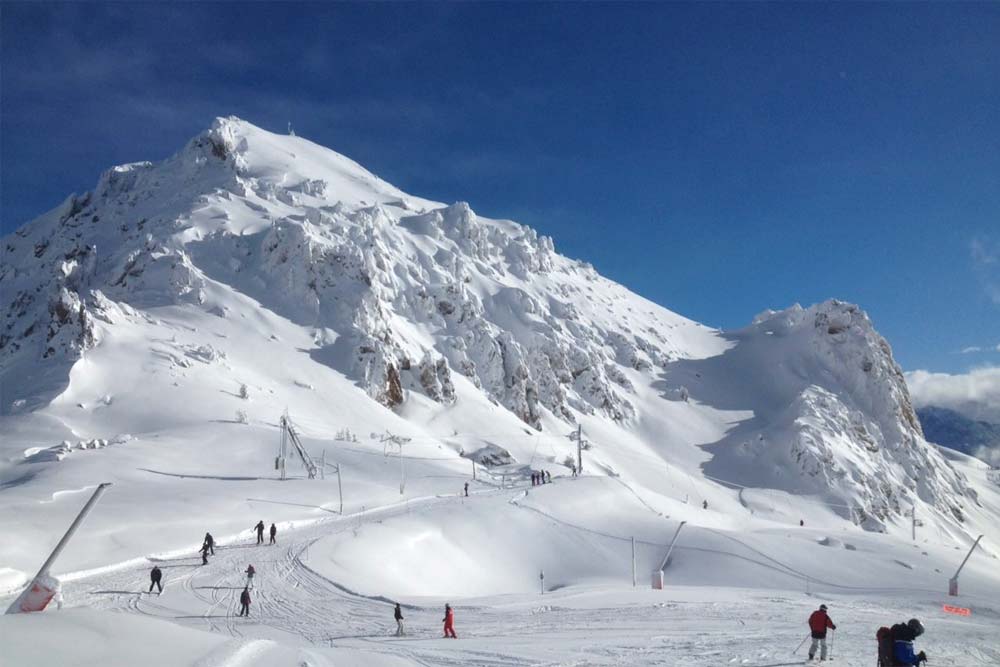
Serre Chevalier Ski Area
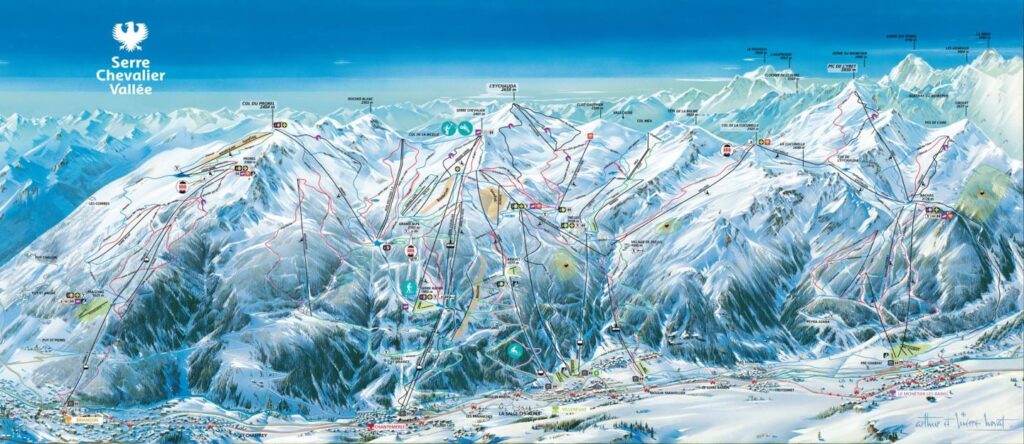
Serre Chevalier has 250 kilometres of marked pistes, making it one of the largest ski areas in the French Alps.
The ski domain stretches along the Guisane Valley, linking four main sectors: Briançon, Chantemerle, Villeneuve and Le Monêtier-les-Bains.
The ski area runs from approximately 1,200 metres to 2,830 metres, with a mixture of open mountain skiing, wide cruising pistes and beautiful tree-lined descents.
One of the things we particularly like about Serre Chevalier is the variety.
You can spend the morning skiing higher up in the mountains before heading down through the larch forests in the afternoon.

The Four Ski Areas of Serre Chevalier
1. Briançon
Briançon is the eastern gateway to the ski area, with gondola access from the historic town.
The Prorel sector provides access to higher mountain terrain, with a mixture of blue and red runs.
It’s an interesting option if you’d like to combine skiing with a stay in a proper French Alpine town.
2. Chantemerle
Chantemerle is one of the best-known ski bases in the valley.
Its lifts provide access to the mountain around Serre Ratier, with plenty of pistes running through the trees.
There are options for different abilities, making it a good starting point for intermediate skiers.
3. Villeneuve (La Salle-les-Alpes)
Villeneuve is a popular base with direct access to a large part of the ski area.
The Aravet and Pontillas lift areas connect you to a good selection of blue and red runs, including routes towards the Cucumelle sector.
It’s a particularly useful area for confident intermediates who enjoy covering plenty of ground.
4. Le Monêtier-les-Bains
At the far end of the valley, Le Monêtier offers access to some of Serre Chevalier’s highest skiing.
The terrain around the Yret and Bachas lifts has more of a high-mountain feel, with longer descents and some challenging red runs.
It’s also home to the famous Grands Bains du Monêtier thermal baths, which are worth knowing about for a relaxing afternoon after skiing.
Our Tip
If you’re staying for several days, don’t limit yourself to the sector closest to your accommodation.
The four areas are linked by the lift system, allowing you to explore the valley from Briançon to Le Monêtier.
With 250 kilometres of pistes, we’d suggest taking a day to ski further along the valley and discover some of the different terrain.
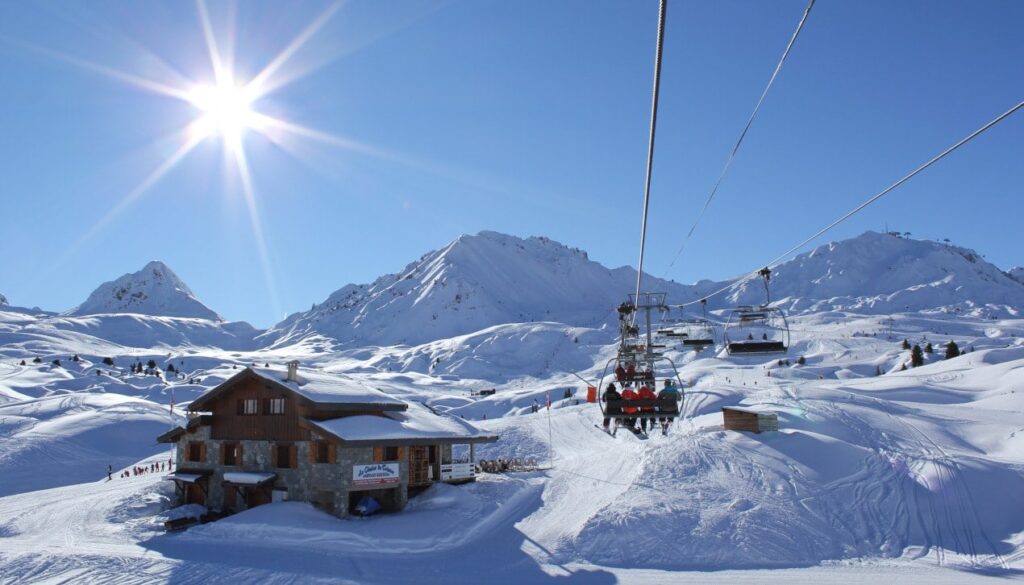
What Is Skiing in Serre Chevalier Like for Intermediate Skiers?
Serre Chevalier is an excellent choice for intermediate skiers, particularly if you enjoy long runs, varied terrain and skiing through beautiful Alpine forests.
With around 25 blue pistes and nearly 30 red pistes, there’s plenty of choice.
One of the best things about the area is that you can combine higher mountain skiing with long descents through the trees, giving you plenty of variety throughout the day.
Best Blue Runs for Intermediate Skiers
If you’re still building confidence on blue runs, Serre Chevalier has some lovely pistes to explore.
Vallons (Chantemerle): A lovely blue run through the trees, ideal for relaxed cruising.
Chauvet and Chemin (Briançon): A good combination for exploring the Prorel sector.
Eychauda (Le Monêtier): A scenic blue run in the upper part of the ski area.
Eftanis, Forêt and Marteau: A sequence of runs linking the Chantemerle and Villeneuve areas.
These routes provide plenty of opportunities to enjoy the mountain without constantly tackling steeper terrain.
Best Red Runs for Confident Intermediates
For skiers who are comfortable on red runs, Serre Chevalier has some particularly good long descents.
Cucumelle (Villeneuve): One of the highlights, with a long descent and lovely mountain scenery.
Aiguillette (Chantemerle): A good choice for skiers looking for a more challenging red.
Grand Gargouille (Briançon): A longer descent towards the historic town.
Cibouit towards Le Monêtier: A scenic red run through changing mountain terrain.
Saludes and Eduits (Chantemerle): Worth exploring if you’re comfortable on steeper pistes.
The descent from Col Cucumelle towards Villeneuve is particularly worth putting on your list.
Why We Recommend Serre Chevalier for Intermediate Skiers
Plenty of blue and red runs: A good mix for improving skiers and confident intermediates.
Long mountain descents: You can cover considerable distance without constantly repeating the same pistes.
Tree-lined skiing: The larch forests provide shelter and make lower mountain skiing enjoyable when visibility is poor.
Four connected sectors: There’s plenty of opportunity to explore different parts of the valley.
A quieter alternative: It can feel less hectic than some of France’s better-known mega-resorts.
Our Tip
If you’re a confident intermediate, make time for the Cucumelle sector above Villeneuve.
It’s one of the areas we’d put high on the list.
If you’re still getting comfortable on red runs, spend some time around Chantemerle and the blue pistes before venturing further across the mountain.
Always check the piste map and lift connections before setting off on a long descent.
Our Verdict
We think Serre Chevalier deserves its place among France’s best ski resorts for intermediate skiers.
It has the sort of terrain that makes a week’s skiing enjoyable, with long blue runs, interesting reds and plenty of variety between the different sectors.
It’s also a good choice if you prefer a traditional Alpine valley to a purpose-built ski resort. The combination of skiing, village life and sunshine makes it a destination worth considering.
Serre Chevalier Ski Passes and Prices
Serre Chevalier has one main lift pass covering all four sectors: Briançon, Chantemerle, Villeneuve and Le Monêtier-les-Bains.
For intermediate skiers, we’d recommend buying the full Serre Chevalier pass rather than a smaller sector pass.
Having access to the whole 250 km ski area means you can explore the valley and enjoy a much wider choice of pistes.
2026/27 Serre Chevalier Ski Pass Prices
The following are the standard high-season prices for winter 2026/27.
Ski Pass | Adult | Child (6–11) | Senior (65–74) |
|---|---|---|---|
1 day | €68 | €56 | €62 |
3 days | €192.50 | €158 | €175 |
6 days | €345 | €283 | €314 |
Adult prices apply to ages 12–64. High-season rates apply from 19 December 2026 to 26 March 2027. Prices can vary outside these dates.
Is There a Discount for a Six-Day Pass?
Yes. A six-day pass gives you access to the entire Serre Chevalier ski area, and there are some useful extras.
From 19 December 2026, six-day passes also include one complimentary ski day at selected partner resorts, including:
Alpe d’Huez
Les Deux Alpes
Montgenèvre
Puy-Saint-Vincent
Sestrières
These offers are subject to conditions and the partner resorts’ operating dates.
Which Serre Chevalier Ski Pass Should You Choose?
For most visitors staying for a week, we’d choose the six-day Serre Chevalier pass.
It gives you plenty of time to explore all four sectors without feeling restricted to one part of the valley.
If you’re staying for a shorter break, the three-day pass is a good option.
There are also smaller-area passes if you only want to ski in one particular sector, although we’d be reluctant to miss out on the wider ski area.
Our tip:
If you’re planning to ski for six days, check the family pass too. It is available for qualifying groups of at least four skiers, including one or two adults and children or young people.
Serre Chevalier
You can check dates, age categories and purchase passes through the official Serre Chevalier ski pass website.
Where to Stay in Serre Chevalier
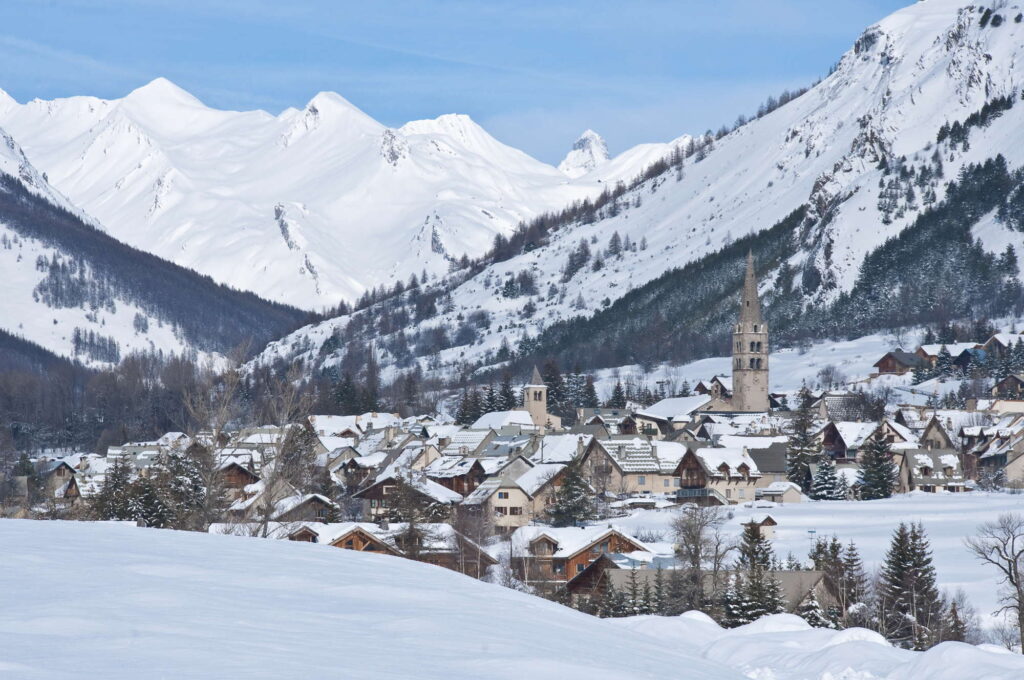
Serre Chevalier stretches along the Guisane Valley, with four main areas to choose from: Briançon, Chantemerle, Villeneuve and Le Monêtier-les-Bains.
Each has its own character, and your choice will depend on whether you want to be close to the lifts, enjoy a traditional French village, or have restaurants and shops within easy walking distance.
Here are the areas we’d consider.
The Best Areas to Stay in Serre Chevalier
1. Chantemerle – Best for convenient access to the ski area
Chantemerle is a particularly good base for skiers.
It sits centrally in the valley, with the Ratier gondola providing access to a large part of the ski area.
You’ll find hotels, apartments, restaurants, ski shops and a few bars around the village.
It’s a good choice if skiing is your main priority and you want to spend less time travelling between sectors.
2. Villeneuve – Best for restaurants, bars and ski access.
Villeneuve, also known as Serre Chevalier 1400, is one of the liveliest bases in the valley.
The Aravet and Pontillas lifts give you access to the slopes, while the village has plenty of restaurants, bars and accommodation.
It’s a good option for couples, families and groups who want a little more going on after skiing.
3. Le Monêtier-les-Bains – Best for a traditional Alpine village.
If you’d prefer somewhere quieter, Le Monêtier-les-Bains is well worth considering.
It’s a traditional mountain village with stone buildings, narrow streets and a more relaxed atmosphere.
It’s also home to the famous Grands Bains du Monêtier thermal baths, which are lovely after a day on the mountain.
The village has its own lift access, although you’ll be further from the Briançon end of the ski area.
4. Briançon – Best for history and a proper French town
Briançon is quite different from the other bases.
Rather than a traditional ski village, it’s a historic French Alpine town, famous for its fortified old town and Vauban fortifications.
The Prorel gondola connects the town to the ski area, so you can still enjoy a full day on the slopes.
There are also plenty of restaurants, shops and places to explore in the evenings.
It’s worth considering if you’d like a little more than just a ski resort during your holiday.
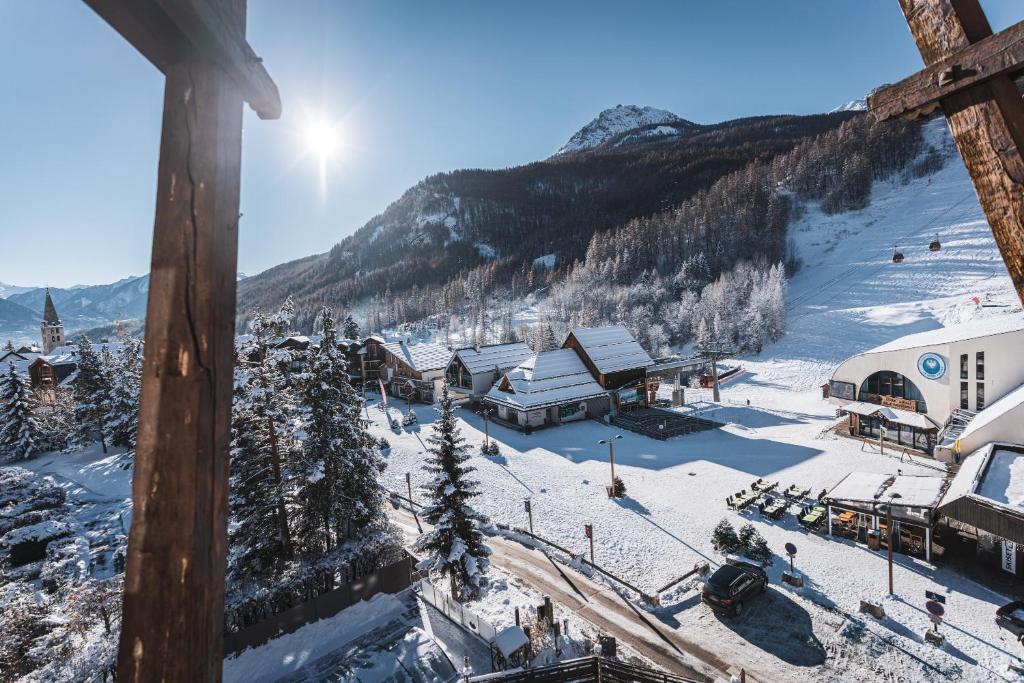
Our Recommended Hotels in Serre Chevalier
We’ve chosen three hotels in different price categories, all with good access to the ski fields.
1. Luxury – Grand Hôtel & Spa NUXE Serre Chevalier
Located in Chantemerle, this four-star hotel has direct access to the ski slopes, a spa, swimming pool, restaurant and comfortable chalet-style rooms. A lovely choice if you want to combine excellent skiing access with a little luxury.
2. Mid-range – Rock Noir & Spa
This stylish boutique hotel is in Villeneuve, just 20 metres from the Aravet gondola. It has a restaurant, bar, indoor pool and sauna. Its location is particularly convenient for skiers who want to get straight onto the mountain.
3. Good-value – Logis Hôtel et Spa Le Christiania
A welcoming, family-run three-star hotel in La Salle-les-Alpes, close to the Aravet ski lift. It has a restaurant, bar, garden and small wellness area. A good option if you prefer a more traditional hotel without paying luxury-resort prices.
If you’ve got specific dates in mind, don’t wait too long to secure your spot.
Other Accommodation in Serre Chevalier
Our Tip
If skiing across the whole area is important, we’d lean towards Chantemerle or Villeneuve. Both make good bases for exploring the different sectors.
The villages are connected by winter buses, so you don’t necessarily need a car.
However, check the location of your accommodation in relation to the nearest lift and bus stop before booking.
Our Verdict
Serre Chevalier is a great choice if you enjoy a more traditional French Alpine holiday.
We particularly like the idea of staying in Chantemerle or Le Monêtier-les-Bains, depending on whether convenient skiing or village atmosphere matters most.
With 250 kilometres of pistes, four connected sectors and plenty of places to explore after skiing, it’s a destination that deserves a place on your French ski holiday list.
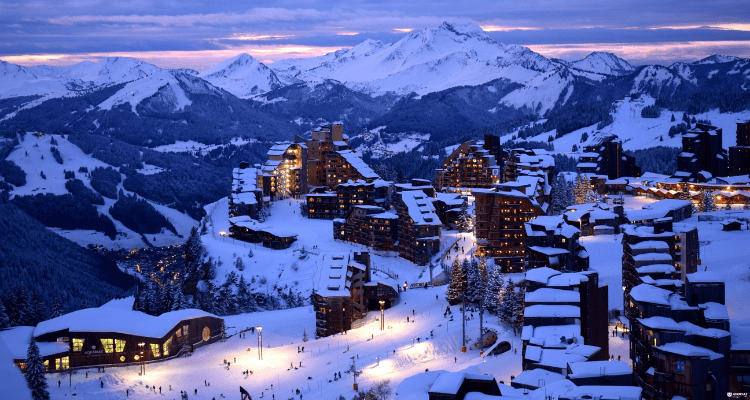
7. Avoriaz Ski Resort – Fantastic Intermediate Skiing in the French Alps
Avoriaz is one of the most distinctive ski resorts in the French Alps. Sitting at 1,800 metres in the Haute-Savoie region, it’s a completely pedestrianised resort where the streets are covered in snow during winter and accommodation is designed around ski-in/ski-out access.
But it’s the skiing that really makes Avoriaz stand out.
The resort sits at the heart of the Portes du Soleil, an enormous Franco-Swiss ski area connecting 12 resorts and offering around 600 kilometres of pistes.
You can ski from Avoriaz into neighbouring French resorts and across the border into Switzerland, giving you an incredible amount of terrain to explore.
Avoriaz itself has approximately 75 kilometres of pistes, with a good selection of blue and red runs.
The local ski area is particularly appealing for intermediate skiers, with wide cruising pistes, tree-lined descents and access to more challenging mountain terrain.
One of the resort’s biggest advantages is its central position. You can spend a day exploring the local slopes or head further afield towards Châtel, Les Crosets and the Swiss resorts.
And when you’re finished skiing, there’s no need to worry about traffic or cars moving around the village.
You can walk through the snowy streets, enjoy the restaurants and make the most of the resort’s unusual atmosphere.
For intermediate skiers who love exploring a large ski area, Avoriaz is definitely worth considering.
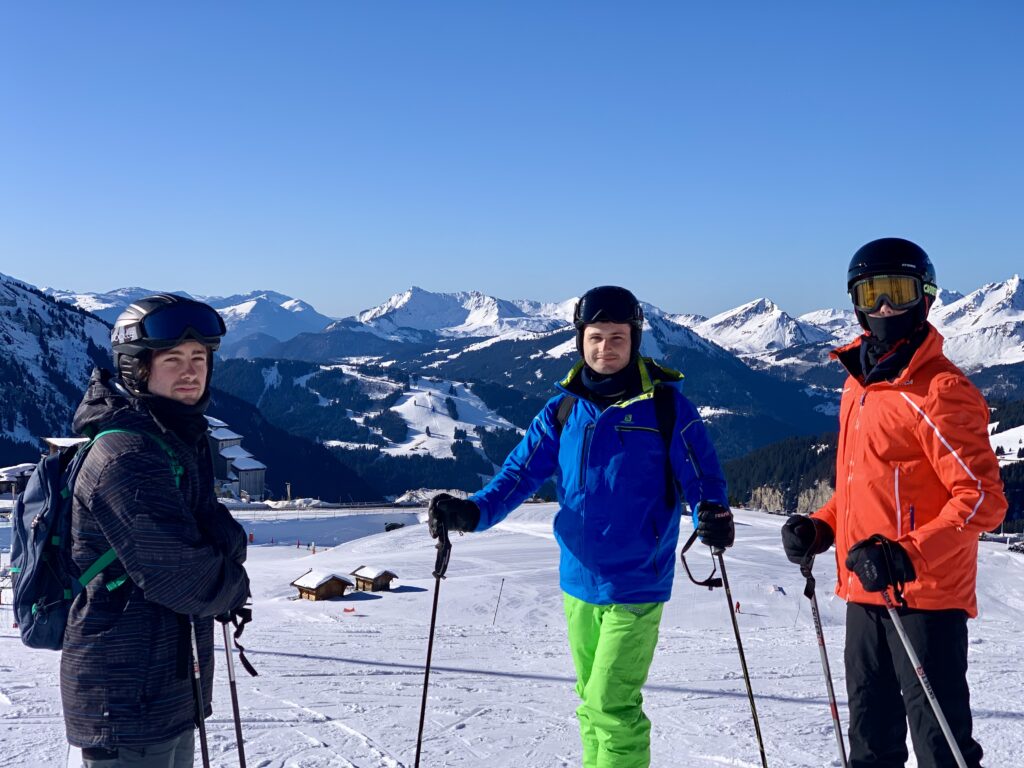
What Is Skiing in Avoriaz Like for Intermediate Skiers?
Avoriaz is an excellent destination for intermediate skiers, particularly if you enjoy wide pistes, long descents and the freedom to explore a much larger ski area.
The local slopes offer a good mixture of blue and red runs, while the wider Portes du Soleil opens up hundreds of kilometres of additional skiing across France and Switzerland.
In fact, Avoriaz is one of those resorts where you could spend an entire week exploring different mountains without feeling you’ve skied the same runs over and over.
Best Blue Runs for Intermediate Skiers
If you’re comfortable on blue runs, Avoriaz has some lovely pistes to explore.
Combe à Floret: A particularly enjoyable blue run above Les Lindarets, with a gentle gradient and beautiful scenery. A great choice for relaxed cruising.
Proclou: The blue pistes below the Proclou chairlift are wide and forgiving, making them ideal for warming up in the morning.
Covagnes: A useful blue run connecting Avoriaz towards Les Lindarets and the wider Portes du Soleil.
Bleue de Chavanette: A lovely alternative to the famous Swiss Wall, allowing intermediates to explore this part of the mountain without tackling the steep moguls.
Blue Velvet: A scenic blue run in the Lindarets area, useful for exploring the connections towards Switzerland.
These runs are particularly good for skiers who enjoy longer descents and want to build confidence before moving onto more challenging terrain.
Best Red Runs for Confident Intermediates
For skiers who are comfortable on red runs, there are some excellent options around Avoriaz and the wider Portes du Soleil.
Jean Vuarnet: A lovely red descent from the Grandes Combes sector, with some more challenging sections.
Vautna: A red run from the Cases area, worth exploring if you’re confident on steeper pistes.
Les Tonnes: A red run towards Les Lindarets, providing a more challenging alternative to the blue routes.
Ripaille (Champéry): A spectacular long descent on the Swiss side of the Portes du Soleil. It’s a wonderful run for confident intermediates who enjoy covering plenty of ground.
The Swiss side is particularly worth exploring. The runs around Les Crosets and Champéry offer some fantastic cruising, with beautiful mountain scenery along the way
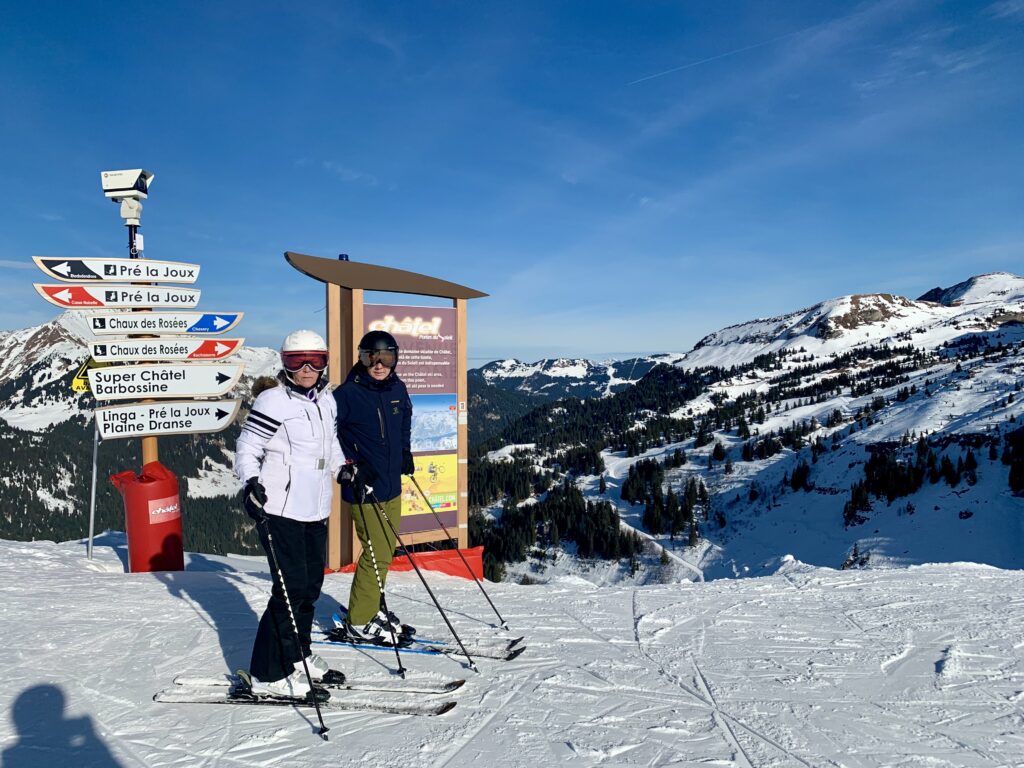
Why We Recommend Avoriaz for Intermediate Skiers
Excellent blue runs: Plenty of wide pistes for relaxed skiing and improving your technique.
Good red-run selection: Confident intermediates have plenty of opportunities to challenge themselves.
Long mountain descents: You can enjoy some fantastic runs across the French and Swiss sectors.
Tree-lined skiing: The Lindarets area provides lovely skiing through the forests.
Cross-border exploration: The Portes du Soleil gives you an enormous area to discover.
Our Tip
We’d recommend spending your first day exploring the local Avoriaz slopes before venturing further into the Portes du Soleil.
Once you’re familiar with the lift connections, head towards Les Lindarets and explore the Swiss side via Les Mossettes.
One important point: don’t confuse the blue route around Chavanette with the famous Swiss Wall.
The Wall is a very steep, mogul-filled black run and definitely not suitable for most intermediate skiers.
Always check lift opening times before setting off on a full-day cross-border adventure.
Our Verdict
Avoriaz is one of our strongest recommendations for intermediate skiers in France.
The local skiing is excellent, but it’s the access to the wider Portes du Soleil that really makes this destination stand out.
You have the opportunity to ski in two countries, explore different mountain villages and enjoy an enormous variety of pistes.
If you love spending your ski holiday exploring rather than repeating the same runs, Avoriaz deserves serious consideration.

Avoriaz Ski Passes and Prices
Avoriaz offers two main lift pass options: a local pass covering the Avoriaz ski area, or a Portes du Soleil pass, which gives you access to all 12 connected resorts across France and Switzerland.
For intermediate skiers, the wider pass is particularly appealing.
You can explore the local slopes around Avoriaz and venture further afield towards Morzine, Les Gets, Châtel and the Swiss resorts.
2026/27 Avoriaz Ski Pass Prices
Here are the standard ticket-office prices for adults aged 26–64.
Ski Pass | 1 Day | 6 Days |
|---|---|---|
Avoriaz only | €59 | Check official rates |
Portes du Soleil | €73 | €373 |
Portes du Soleil prices shown are for 19 December 2026–19 March 2027. From 20 March 2027, the adult six-day pass reduces to €317. A €3 hands-free card is required. Online prices may be lower and vary by date.
Which Avoriaz Ski Pass Should You Choose?
Avoriaz-only pass
If you’re planning a shorter break or would prefer to concentrate on the local slopes, the Avoriaz pass is a good option.
There is plenty of skiing to enjoy without travelling across the wider area.
Portes du Soleil pass
For a week-long holiday, we’d choose the Portes du Soleil pass. It opens up an enormous ski area, with opportunities to ski in both France and Switzerland.
The difference between the two one-day adult passes is only €14 at the ticket office, so the wider access is worth considering.
Our Tip
If you’re staying for six days, we’d definitely look at the Portes du Soleil pass.
One day exploring the Swiss side, another around Châtel and the remaining days discovering Avoriaz and Morzine would give you a wonderful variety of skiing.
Just remember to check the lift connections and return times when crossing into Switzerland.
You can check the full rates and purchase your passes through the official Avoriaz ski pass website

Where to Stay in Avoriaz
Avoriaz sits at 1,800 metres and has a very different feel from many traditional Alpine resorts.
There are no ordinary cars driving around the village in winter, the streets are covered in snow, and most accommodation has direct access to the pistes.
The resort is divided into several districts, each with its own character.
Some are right in the centre, while others are a little higher up or further out, offering quieter surroundings and lovely mountain views.
The Best Areas to Stay in Avoriaz
1. Avoriaz Centre (Festival and Falaise) – Best for first-time visitors
The Festival and Falaise districts are convenient bases, with easy access to shops, restaurants, bars and the main ski areas.
Falaise is close to the resort entrance and has some excellent apartment accommodation, often with wonderful views over the valley. Festival is particularly handy for the centre and the main après-ski spots.
2. Les Dromonts – Best for a distinctive Alpine stay
Les Dromonts is one of the resort’s most recognisable districts, known for its unusual architecture and wooden buildings.
It’s a lovely area to consider if you enjoy characterful accommodation and want to stay close to the slopes. It’s also home to the famous Hôtel des Dromonts.
3. Les Crozats – Best for quieter accommodation and views
Les Crozats sits slightly higher up the resort and has a good selection of apartment residences.
It’s a useful choice for families and groups who want more space, often with ski-in/ski-out access.
Public lifts connect this area with the centre, which is helpful when you don’t fancy walking uphill.
4. L’Amara – Best for luxury accommodation
L’Amara is one of Avoriaz’s more upmarket accommodation areas, with modern residences, spacious apartments and excellent facilities.
It’s a good option if you want a little more comfort and prefer apartment-style accommodation.
The Pierre & Vacances Premium Residence L’Amara is particularly well known.
Our Recommended Accommodation in Avoriaz
Avoriaz has more apartment residences than traditional hotels, so we’ve included a mix of hotel and self-catering options.
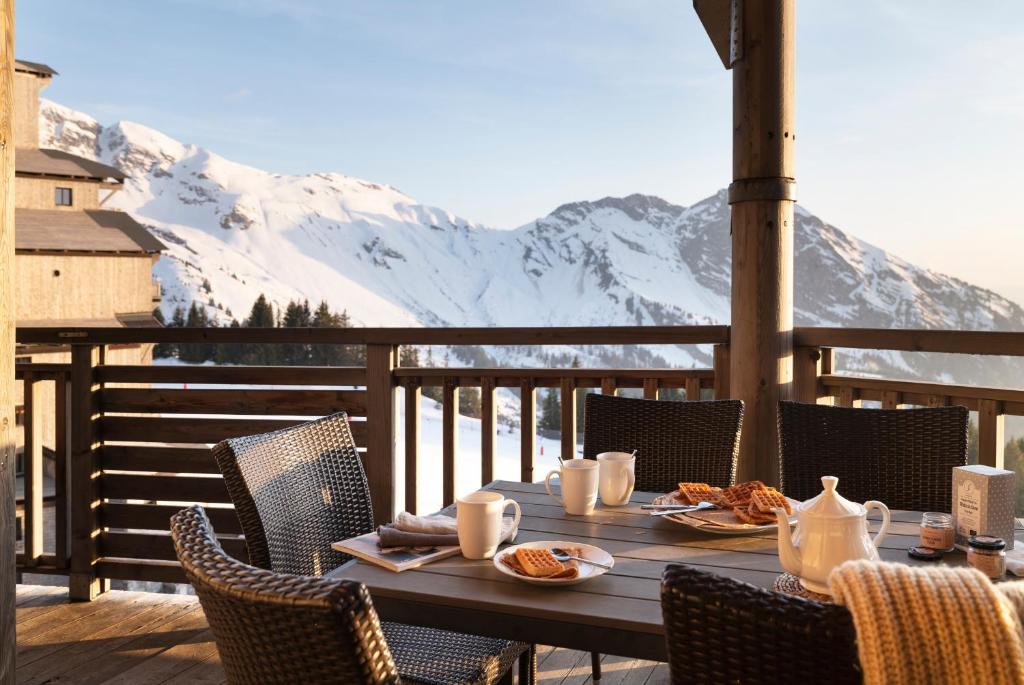
1. Luxury – Pierre & Vacances Premium Résidence L’Amara
A five-star residence with spacious apartments, direct ski access, an indoor swimming pool, sauna and hammam. A great choice for families or couples wanting more space and excellent facilities.
2. Mid-range – Hôtel MiL8
A stylish four-star hotel in the heart of Avoriaz, with ski-in/ski-out access, an outdoor swimming pool, wellness area, restaurant and bar. Its central location makes it a particularly convenient choice.
3. Apartment option – Pierre & Vacances Résidence Atria-Crozats
A four-star apartment residence with ski-in/ski-out access, mountain views and a wellness area. It’s worth considering if you’d prefer your own kitchen and more living space rather than a traditional hotel room.
More Accommodation in Avoriaz
Our Tip
Remember that Avoriaz is completely pedestrianised during winter.
You won’t be driving up to your accommodation door, so check the luggage arrangements and parking options before booking.
We’d choose the Festival or Falaise areas for convenience, or L’Amara if you prefer a more spacious apartment and don’t mind being slightly further from the main centre.
Our Verdict
Avoriaz is a fantastic base for an intermediate ski holiday.
The ski-in/ski-out accommodation, car-free village and access to the Portes du Soleil make it particularly convenient.
We’d happily choose Avoriaz if we wanted a week of exploring different mountains, enjoying long ski days and having plenty of options for eating out afterwards.
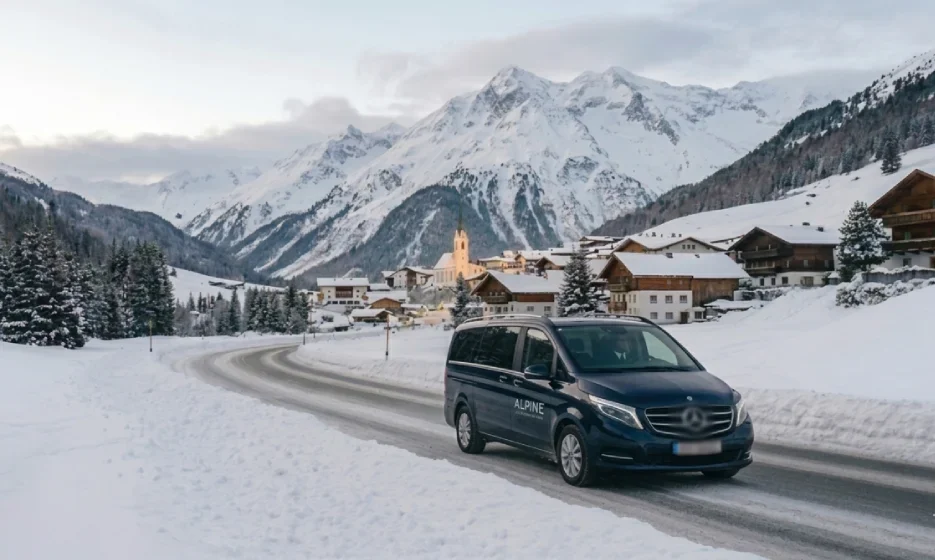
1. How to Get to the French Alps
Most people travelling from the UK will fly into one of four airports serving the French Alps: Geneva, Lyon, Grenoble or Chambéry. The best airport depends on which resort you’re visiting, the available flights and how you plan to travel from the airport to the resort.
Flying to the French Alps
The four main airports to consider are:
Airport | Best suited to |
|---|---|
Geneva (GVA) | A convenient gateway for many French Alps resorts, with a wide choice of flights |
Lyon (LYS) | A useful year-round airport with rail connections and onward transfers |
Chambéry (CMF) | Convenient for many Tarentaise resorts when seasonal flights are available |
Grenoble (GNB) | Particularly useful for resorts around the Oisans and southern French Alps |
Don’t automatically book the cheapest flight.
It’s worth comparing the airport, transfer cost and total journey time together, as a cheaper flight can mean a much longer transfer to your resort.
Getting from the Airport to Your Ski Resort
Shared ski transfers: Often a good option for couples or solo travellers. You share a minibus with other passengers travelling to nearby resorts, which can help keep costs down. We have used ALPS2ALPS many times, they are well priced and reliable.
Private transfers: Ideal for families, groups or anyone wanting a direct journey without waiting for other passengers.
Airport buses: Some airports have seasonal coach services to ski resorts or nearby valley towns, where you can connect with local buses.
Hire car: Useful if you want flexibility, although winter driving in the Alps can be challenging, particularly during heavy snow or busy weekend changeovers.
For more comfort and convenience, compare these car rentals: DISCOVER CARS
Train and bus:
A great alternative for those who prefer not to fly or drive. Several Alpine valley railway stations connect with local buses that travel up to the ski resorts.
We’d recommend arranging your transfer in advance during the ski season, particularly on Saturdays, when roads leading to popular resorts can become very busy.
Which Airport for Our Seven French Ski Resorts?
Rather than make readers work through all four airports, we can give them a quick guide for each resort.
Ski Resort | Airports to Consider |
|---|---|
La Plagne | Chambéry, Geneva or Lyon |
Les Arcs | Chambéry, Geneva or Lyon |
Alpe d’Huez | Grenoble or Lyon |
Tignes | Chambéry, Geneva or Lyon |
Val Thorens | Chambéry, Geneva or Lyon |
Serre Chevalier | Grenoble, Lyon or Turin |
Avoriaz | Geneva |
These are starting points rather than fixed recommendations. Flight availability, transfer prices and journey times can vary, so it’s worth comparing your options before booking
Geneva and Lyon generally offer the widest year-round options, while Grenoble and Chambéry are particularly useful during the ski season.
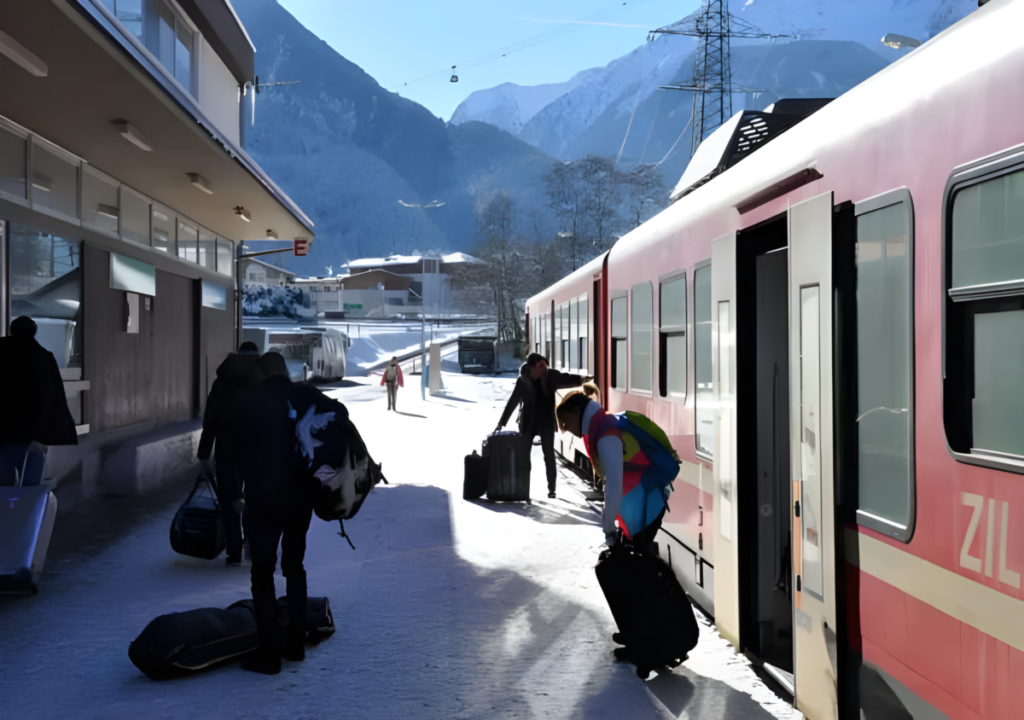
2. Travelling to the French Alps by Train
Flying isn’t the only way to reach the French Alps.
If you’d prefer to travel overland, trains from the UK via London and Paris can connect with French rail services heading towards the Alps.
Depending on your resort, useful railway stations include Bourg-Saint-Maurice, Aime-la-Plagne and Moûtiers, with onward buses or transfers taking you up to the ski resorts.
Train travel can take longer, but it’s a lovely alternative if you prefer not to fly, particularly if you enjoy watching the scenery change as you travel through France.
Book your train here

3. Driving to the French Alps
Driving is another option, particularly for families or groups carrying ski equipment.
It gives you more flexibility with departure times, luggage and stops along the way.
However, Alpine winter driving requires preparation.
Snow, ice, steep roads and heavy traffic during ski changeover days can make the final part of your journey slower than expected.
French mountain winter equipment requirements also apply on designated roads during the winter period.
For more comfort and convenience, compare these car rentals: DISCOVER CARS
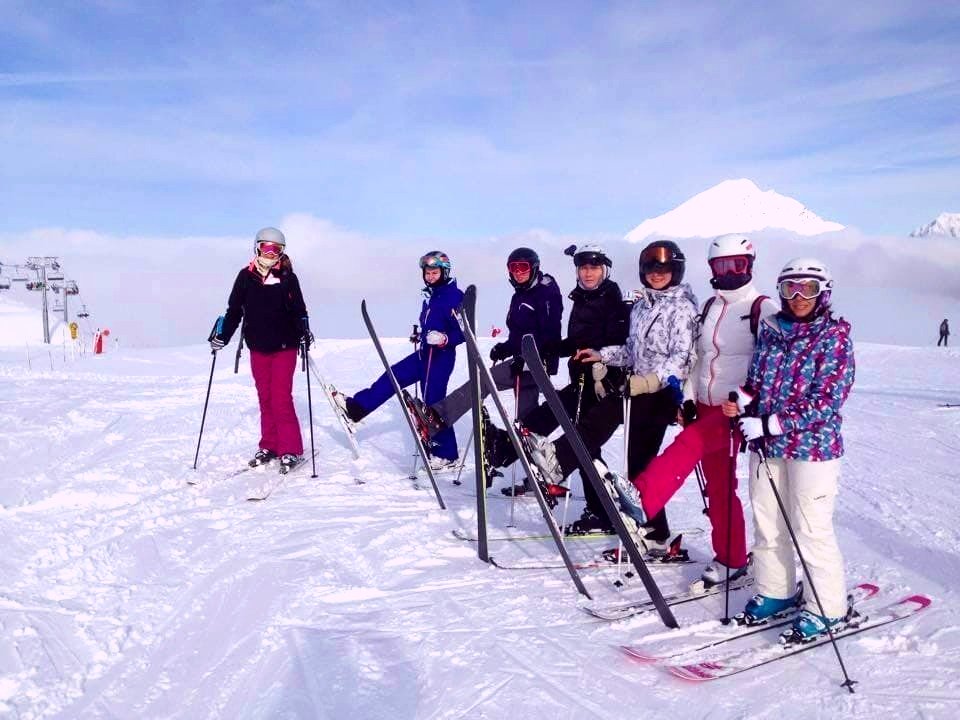
Our Full Guide On
Best Beginner Ski Resorts in France (2026/27 Guide)
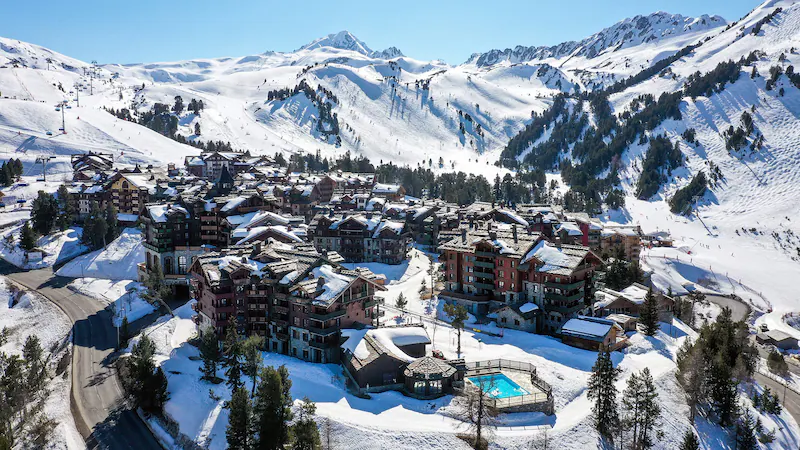
Which French Ski Resort Is Best for Intermediate Skiers?
Choosing the right French ski resort really comes down to the kind of skiing you enjoy and how confident you feel on blue and red runs. All seven resorts we’ve included have plenty to offer intermediate skiers, but each has its own character and strengths.
Here’s how we’d compare them to help you decide.
Resort | Best for |
|---|---|
Les Arcs | Confident intermediates who enjoy long red runs and exploring a huge ski area |
Alpe d’Huez | Long descents, sunny skiing and a good variety of blue and red pistes |
Tignes | Higher-altitude skiing, reliable snow conditions and challenging red runs |
Val Thorens | Exploring a vast ski area with plenty of varied intermediate terrain |
Serre Chevalier | Tree-lined runs, quieter slopes and a more traditional Alpine setting |
La Plagne | Wide, open pistes and long cruising runs across La Plagne |
Avoriaz | Exploring the Portes du Soleil and skiing between France and Switzerland |
Our Recommendations
Best overall for confident intermediates: Les Arcs, with its extensive terrain and excellent selection of red runs.
Best for long cruising runs: La Plagne, particularly if you enjoy wide, open pistes.
Best for higher-altitude skiing: Tignes, with access to some excellent high-mountain terrain.
Best for a relaxed Alpine atmosphere: Serre Chevalier, with its traditional villages and tree-lined skiing.
Best for exploring a huge ski region: Avoriaz, with the Portes du Soleil connecting 12 resorts across France and Switzerland.
Best for sunny skiing: Alpe d’Huez, famous for its sunny slopes and long descents.
Best for a high-altitude ski holiday: Val Thorens, with extensive skiing and access to the Three Valleys.
Our Tip
If you’re still building confidence on red runs, look for resorts with plenty of wide, well-groomed blue pistes and straightforward connections between different parts of the ski area.
If you’re already comfortable on reds, Les Arcs, Tignes and Val Thorens give you plenty of opportunities to explore more challenging terrain.
We’ve skied many parts of the French Alps over the years, and one thing we’ve learned is that the biggest ski area isn’t necessarily the best choice.
It’s about finding a resort where you enjoy the skiing, feel comfortable exploring and look forward to getting out on the mountain each morning.
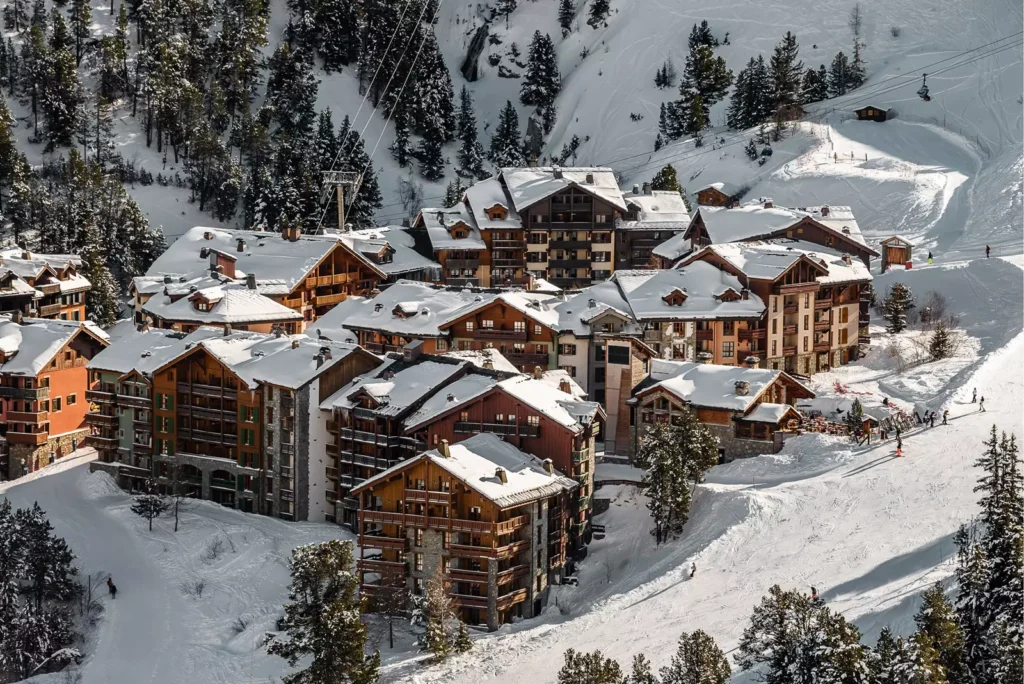
Frequently Asked Questions About Intermediate Ski Resorts in France
1. What is the best ski resort in France for intermediate skiers?
Les Arcs is an excellent choice for intermediate skiers, with a large variety of blue and red runs and access to the wider Paradiski area. However, Tignes, Alpe d’Huez and Val Thorens are also fantastic options.
2. Which French ski resort has the best blue and red runs?
Les Arcs, Tignes and La Plagne all have excellent selections of blue and red pistes. La Plagne is particularly good for wide, open cruising runs, while Les Arcs and Tignes offer plenty of variety for more confident intermediates.
3. Are French ski resorts good for intermediate skiers?
Absolutely!
France has some of Europe’s largest ski areas, with extensive networks of blue and red runs. Many resorts also have excellent lift connections, making it easy to explore different parts of the mountain.
4. Is Les Arcs or Alpe d’Huez better for intermediate skiers?
Both are excellent choices. Les Arcs has a bigger linked ski area through Paradiski, while Alpe d’Huez is known for its long descents, sunny slopes and varied terrain.
5. Is Tignes suitable for intermediate skiers?
Yes. Tignes has plenty of blue and red runs, including high-altitude skiing and access to the wider Tignes–Val d’Isère ski area. Some runs are quite challenging, so less confident intermediates should choose their routes carefully.
6. Which French ski resort is best for confident intermediate skiers?
Les Arcs, Tignes and Val Thorens are particularly good choices. All three have extensive ski areas, plenty of red runs and opportunities for confident intermediates to challenge themselves.
7. When is the best month for intermediate skiing in France?
January and February generally offer good snow conditions, while March often brings longer days and milder temperatures. The best month depends on the resort’s altitude and current snow conditions.
8. How many days do you need for a French ski holiday?
We’d generally recommend five to seven days. This gives you enough time to explore the ski area, enjoy different runs and get to know the resort without feeling rushed.
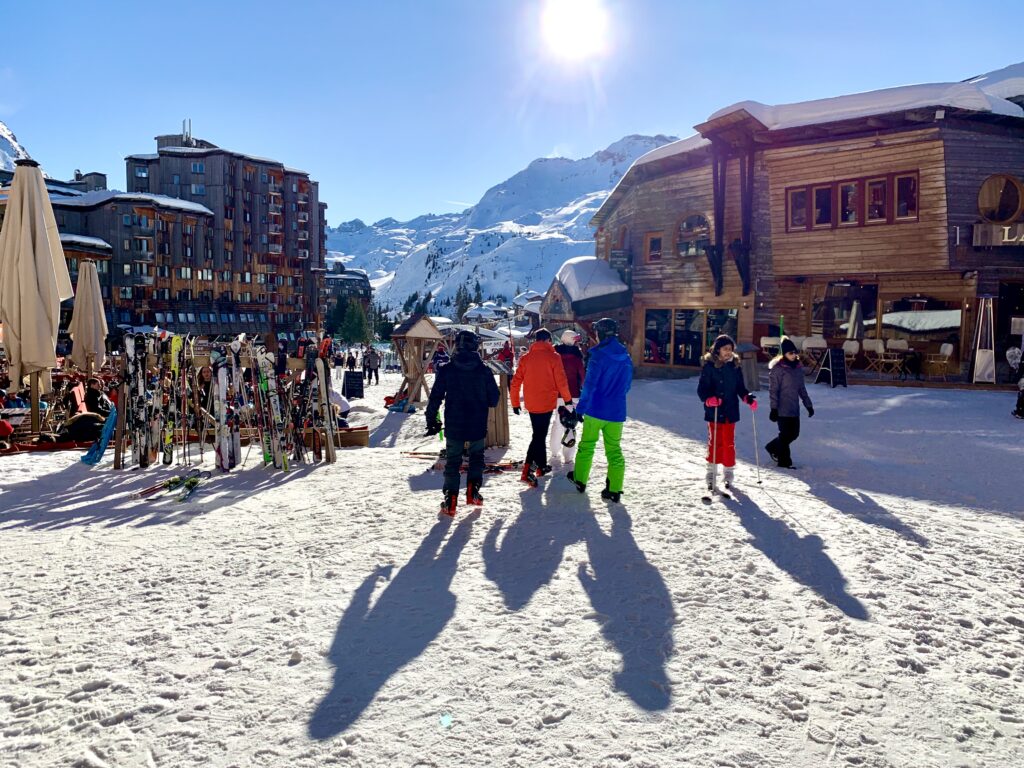
Should You Get Ski Travel Insurance?
(Short Answer: YES)
While ski resorts in Europe don’t legally require you to have travel insurance, buying ski-specific travel insurance is one of the smartest decisions you can make.
Mountain travel comes with real risks — from injuries on icy slopes to delayed flights, lost luggage, or damaged ski gear.
One accident or missed connection can cost far more than a full year of coverage.
As a traveller and skier myself, I’ve consistently found SafetyWing offers some of the best winter-sports coverage for international ski trips.
Best Ski Travel Insurance Companies for 2025/26
Two companies consistently stand out for skiers, each for different reasons.
1. SafetyWing
(Best for Long-Term Ski Travel & Affordability)
We personally use SafetyWing, and have since 2019.
It’s perfect for skiers spending multiple weeks or a whole season abroad.
You can get a Quote here.
When my wife broke her ankle skiing in Wengen, they were fantastic, they paid for all our expenses without any delay.
2. World Nomads
(Best for Adventure Coverage)
If you’re planning a trip that includes off-piste skiing with a guide, winter hiking, or multiple snow sports, World Nomads often provides broader adventure coverage.
They’re a favourite among travellers who want all activities covered under one policy.
Even experienced skiers will tell you — it only takes one icy patch to ruin both a knee and a bank account.
We Can Help Plan Your Adventure
Custom Ski Itineraries in Europe Designed For You

Final Thoughts
France has some fantastic ski resorts for intermediate skiers, and choosing between them really depends on the kind of skiing holiday you’re looking for.
From the enormous ski areas of Les Arcs and Val Thorens to the high-altitude slopes of Tignes, the sunny pistes of Alpe d’Huez and the tree-lined runs of Serre Chevalier, there’s plenty of variety across these seven destinations.
We’ve spent many years skiing in Europe, and we know how much difference the right resort can make to a ski holiday.
Whether you’re gaining confidence on red runs or looking for longer, more challenging descents, we hope this guide helps you find somewhere you’ll love.
Our advice? Choose a resort that suits your ability, gives you plenty of skiing to explore and makes you excited to get out on the slopes every morning.
Happy skiing!
Gary & Sally
Timeless Wanderers
PLAN YOUR SKI ADVENTURE
Booking a ski trip involves a range of reliable resources to ensure a smooth and enjoyable experience. I have listed below our favorite companies we use when we plan our ski holiday.
BOOK YOUR FLIGHT – GOING is a great search engine if you are flexible about your travel destination and dates. GOING is our new go to.
Booking.com– for accommodation, we rely on Booking.com for its extensive options and user reviews. We find they have the cheapest rates and offer payment options. In addition, VRBO is another terrific website for all types of accommodations.
Train Travel– to European ski resorts is convenient and scenic, popular trips include Glacier express to Zermatt, the Eurostar from London to the French Alps. We find Omio or Rail Europe are the best sites for booking trains in Europe.
Car Hire – we usually hire a car it offers us flexibility and convenience, allowing easy access to most resorts. Companies like Discover Cars or Rentalcars.com provide reliable options with winter equipment.
Travel insurance– Don’t ski without it. If you get hurt on the mountain it could cost you a small fortune if you’re not insured. We use SAFETYWING when my wife broke her ankle a few years ago in Wengen they were terrific.
Ski Equipment. – Bring your own ski gear, its usually cheaper and much better than renting, it ensures you have a perfect fit. Owning also saves time and money in the long run. Equipment like Skis, Pants and Jackets, Gloves, Ski-helmets and Thermal underwear” can all be bought online. You can purchase everything you need from BACKCOUNTRY
ARC’TERYX – is a go to reliable brand for outdoor adventure and travel, their wide range includes light weight durable, easy to clean travel gear.
Check out our RESOURCE PAGE for more additional planning.