7 Best Snow-Sure Ski Resorts in Switzerland (2026/27)
Timeless Wanderers: Posted September 28, 2026
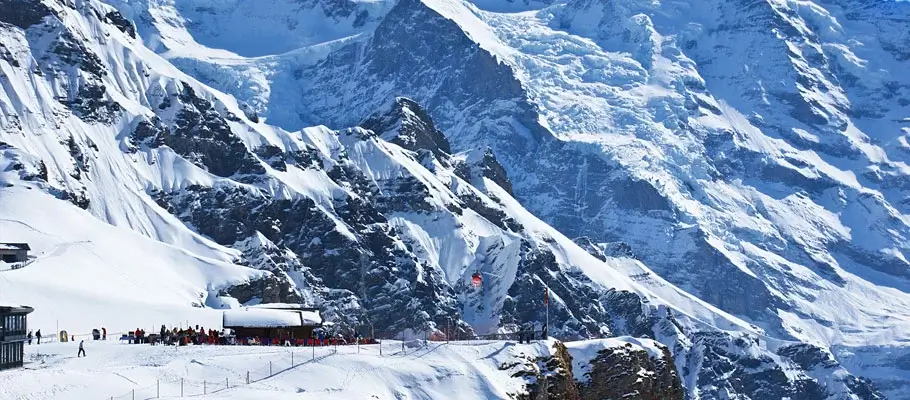
Why Choose Switzerland for Snow-Sure Skiing?
If reliable snow is at the top of your list when choosing a ski holiday, Switzerland is one of the best places in Europe to start looking.
With spectacular mountain scenery, high-altitude ski areas, glaciers and resorts that can stay open well into spring,
Switzerland has plenty of options for skiers who don’t want to spend their holiday worrying about whether there will be enough snow.
But not every Swiss ski resort is equally snow-sure.
For an early-season trip in December, a Christmas ski holiday or a late-season getaway in March or April, choosing the right resort can make a big difference.
Higher-altitude ski areas, glaciers and slopes that hold their snow well can give you a much better chance of finding good skiing when conditions at lower resorts become unreliable.
After decades of skiing in Europe and visiting more than 50 resorts, we’ve learnt that altitude matters.
It doesn’t guarantee perfect snow, but when we’re planning a ski trip where snow reliability is important, it’s one of the first things we look at.
In this guide, we’re taking a closer look at 7 of the best snow-sure ski resorts in Switzerland, including some of the country’s highest and most reliable ski areas.
We’ll look at what makes each resort snow-sure, the altitude and ski terrain, the best time to visit, who each resort suits, where to stay, where to eat, après-ski and how to get there.
So, whether you’re planning your first Swiss ski holiday, looking for somewhere reliable for Christmas or searching for a resort where you can still find good skiing in April, let’s take a look at the Swiss resorts worth putting on your list.
Table of Contents

What Makes a Swiss Ski Resort Snow-Sure?
Before we get into the resorts, it’s worth explaining what we mean by snow-sure.
There is no ski resort where natural snowfall can be guaranteed throughout the entire season. Weather patterns are changing, and even the highest resorts can experience periods of warm weather or limited snowfall.
However, some resorts are much better positioned than others.
When we’re looking for a snow-sure ski destination, there are several things we consider.
High Altitude
Altitude is one of the biggest factors.
Generally, the higher you can ski, the better your chances of finding colder temperatures and snow that lasts later into the season.
This is particularly important if you’re planning to ski in December or late March and April.
Some of the resorts in this guide have ski lifts taking you above 3,000 metres, while others have glaciers or extensive high-altitude terrain.
Glacier Skiing
Glaciers can provide another advantage, particularly at the beginning and end of the ski season.
Switzerland is home to several famous glacier ski areas, including those around Zermatt, Saas-Fee and Engelberg.
These high-altitude areas can provide skiing when conditions lower down the mountain are less reliable.
Snowmaking
Modern snowmaking has also become an important part of snow reliability.
It can’t replace a good natural snowfall, but extensive snowmaking can help resorts maintain pistes during warmer or drier periods, particularly on important access runs and lower sections of the ski area.
The Layout of the Mountain
Altitude isn’t the only consideration.
The direction a slope faces, its elevation and how well it retains snow can all make a difference.
A resort with a large amount of skiing at altitude may therefore be a more dependable choice than a resort where much of the terrain sits lower in the valley.
The Time of Year Matters
This is perhaps the most important point.
A resort that is highly reliable in January and February isn’t necessarily the best choice for skiing in early December or late April.
That’s why we’ve included a best time to ski section for every resort in this guide.
If snow reliability is your priority, it’s worth matching the resort to the time of year you’re travelling rather than simply choosing a destination because it has a reputation for good snow.
We can plan your Dream Ski Trip to Europe: Custom Itineraries for the Perfect winter Holiday.
With over 25 years of experience skiing in over 50 different ski resorts in Europe, we can help you plan your perfect winter escape.
Planning a ski trip to Europe can be exciting, but choosing the right resort and organising the perfect itinerary can quickly become overwhelming.
That’s where we come in.
We offer a personalised planning service that helps you decide exactly where to ski, based on your style, budget, and experience.
“Plus, we can help you plan a fun week of European sightseeing around your ski trip, making your winter holiday easier, smoother, and full of unforgettable memories.”
“Let us plan your perfect trip with a custom itinerary designed just for you.
Fill out the form and let’s begin your dream.”
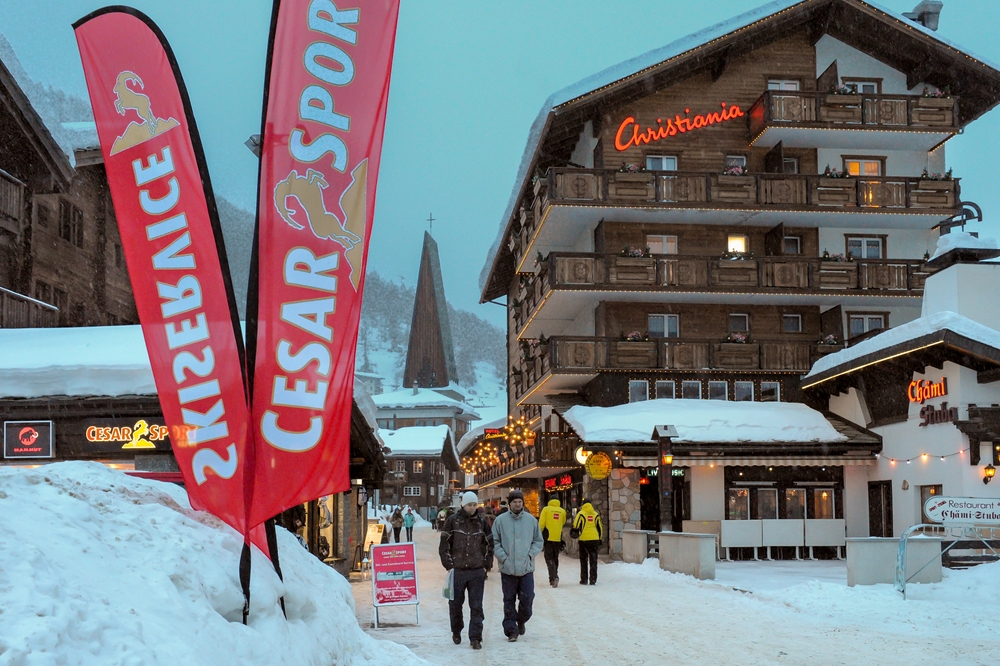
Our 7 Snow-Sure Ski Resorts in Switzerland
For this guide, we’ve selected seven Swiss ski destinations where altitude, glacier skiing, snowmaking and the overall elevation of the ski area make them particularly interesting for snow-conscious skiers.
We’ll be looking at:
Zermatt – for exceptional altitude and glacier skiing
Saas-Fee – for high-altitude skiing and a long season
Verbier – for high skiing and the huge 4 Vallées area
Engelberg-Titlis – for high-altitude skiing close to Zurich
St. Moritz – for high-altitude skiing across the Engadin
Davos-Klosters – for varied terrain and reliable high skiing
Laax – for high-altitude skiing and an excellent snowboarding scene
Let’s start with one of Switzerland’s most famous ski destinations, and one of the highest ski areas in the Alps.
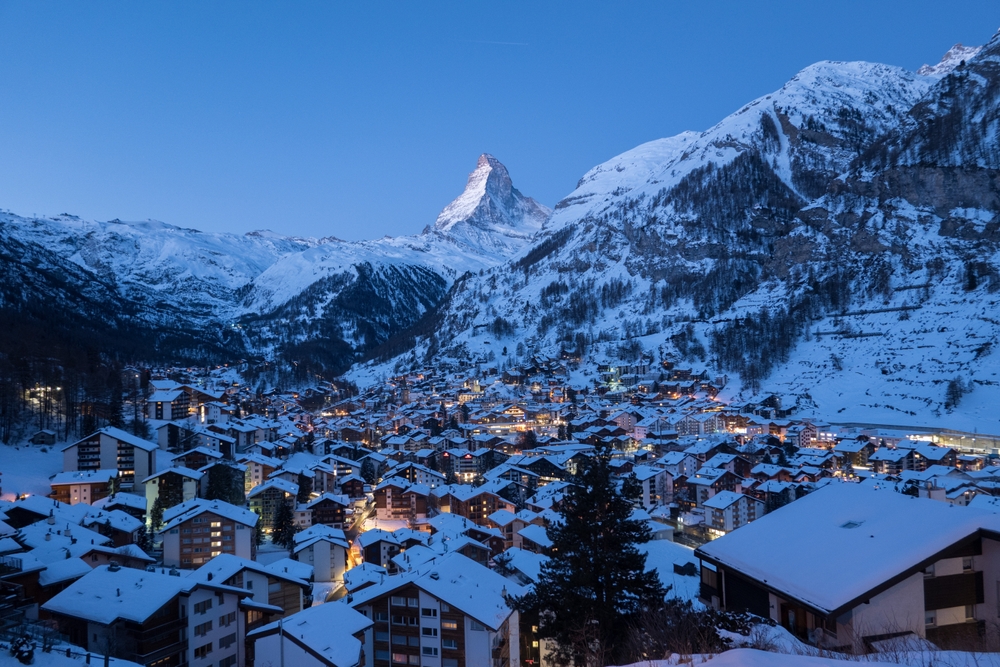
Zermatt – The Ultimate High-Altitude Snow-Sure Resort
If snow reliability is your priority, Zermatt is one of the first Swiss ski resorts we would look at.
Sitting beneath the iconic Matterhorn, Zermatt is part of the enormous Matterhorn Ski Paradise, which links Switzerland with Cervinia in Italy. The ski area reaches almost 4,000 metres, making it one of the highest ski areas in the Alps and giving it a significant advantage when it comes to snow reliability.
But Zermatt isn’t simply about altitude.
Its high glacier terrain, long ski season and extensive network of pistes make it a destination that works for much more than a mid-winter ski holiday. You can find skiing at high altitude even when conditions lower down the mountain are less dependable, which is one of the main reasons Zermatt regularly features among Europe’s most snow-sure resorts.
Why Is Zermatt So Snow-Sure?
There are several reasons Zermatt performs so well when snow reliability matters.
The first is altitude. The Matterhorn Ski Paradise reaches approximately 3,883 metres at the Klein Matterhorn, giving skiers access to some exceptionally high terrain.
The second is the Theodul Glacier, where skiing is possible at very high altitude and where the resort has traditionally been able to maintain a long season.
Zermatt also benefits from a large amount of high-altitude terrain, meaning you’re not completely dependent on the snow conditions around the village itself.
This is particularly useful during the early and late parts of the season.
If you’re considering a Christmas ski holiday, January and February generally provide the most dependable winter conditions, while the high-altitude terrain makes Zermatt an interesting option for skiing well into spring.
Matterhorn Ski Paradise
Zermatt is part of the Matterhorn Ski Paradise, one of the largest ski areas in the Alps.
The area stretches across the mountains above Zermatt and connects with Cervinia and Valtournenche on the Italian side of the Matterhorn.
This means you can spend a day skiing in Switzerland and cross the international border on skis for lunch in Italy before making your way back to Zermatt.
It’s one of the things that makes skiing here particularly special.
And with such a large ski area to explore, you won’t quickly run out of different pistes and mountain restaurants to discover.
Skiing for Beginners, Intermediates and Advanced Skiers
Zermatt has a reputation for being an advanced skier’s destination, but there is much more to the resort than challenging terrain.
Beginners:
Beginners have dedicated areas around Sunnegga and Wolli’s Park where they can build confidence before venturing higher into the ski area. The wide pistes and excellent mountain infrastructure make Zermatt a good option for progressing skiers.
Intermediates:
This is where Zermatt really comes into its own. There is a huge choice of long red and blue runs, with plenty of opportunities to explore both the Swiss and Italian sides of the ski area.
Advanced skiers:
Experienced skiers have an enormous amount to explore, from steep pistes to challenging high-mountain terrain and off-piste opportunities. The area around the Matterhorn and the connection towards Cervinia provides plenty of variety.
As always with high-altitude and glacier terrain, off-piste skiing should only be undertaken with appropriate knowledge, equipment and professional guidance when necessary.
Skiing Across the Border into Italy
One of the great attractions of skiing from Zermatt is the opportunity to cross into Italy.
The international ski area connects Zermatt with Breuil-Cervinia and Valtournenche, creating a huge area that can be explored on the same ski holiday.
We particularly like this for longer stays because it gives you the feeling that you’re visiting two completely different ski destinations without having to pack your bags and move hotels.
And yes, stopping for an Italian lunch while skiing in Switzerland is exactly the sort of thing that makes a European ski trip special.
Best Time to Ski Zermatt
Zermatt has one of the longest ski seasons in the Alps, largely thanks to its exceptional altitude and glacier terrain.
December:
A good option for an early-season or Christmas ski holiday, particularly if you concentrate on the higher slopes.
January and February:
These are generally the safest months for a classic winter ski holiday, with colder temperatures and a good combination of natural snow and snowmaking.
March:
A fantastic month for skiing, with longer days and generally good conditions at altitude.
April:
The high-altitude terrain becomes particularly important as temperatures rise, but Zermatt can remain a strong late-season choice.
If snow reliability is your main reason for choosing Zermatt, we’d pay particular attention to the altitude of the skiing available during the dates you’re travelling rather than simply looking at the snow around the village.
Who Is Zermatt Best For?
Zermatt is particularly well suited to:
Intermediate and advanced skiers
Skiers looking for a large ski area
Families with different skiing abilities
Long ski holidays
High-altitude and glacier skiing
Early- and late-season skiing
Skiers who want to combine Switzerland and Italy
Visitors who enjoy excellent restaurants and après-ski
It is also a great choice if you’re looking for a ski holiday that offers plenty to do away from the slopes.
The village itself has a huge selection of restaurants, bars, shops and winter activities, so non-skiers aren’t left with nothing to do.
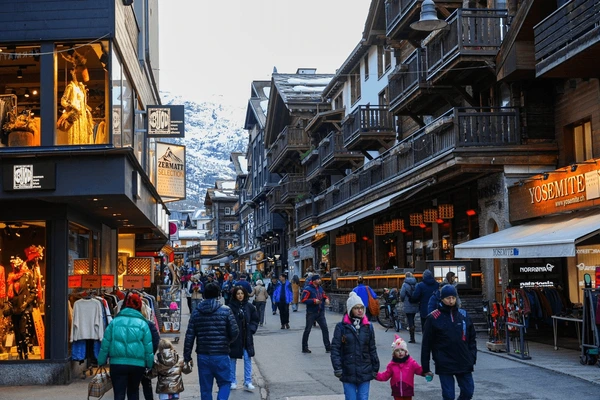
Where to Stay in Zermatt
Zermatt has an excellent range of accommodation, from spectacular luxury hotels to comfortable mid-range properties and more affordable places to stay.
Because the village is car-free, location matters, particularly if you want easy access to one of the main lifts or the train station.
Luxury
THE OMNIA
Set above the village on a rocky outcrop, THE OMNIA is one of Zermatt’s most distinctive luxury hotels. Its stylish rooms, impressive spa and views towards the Matterhorn make it a particularly special choice for a high-end ski holiday.
Mid-Range
Matterhorn FOCUS Design Hotel
Close to the Matterhorn Glacier Paradise base, Matterhorn FOCUS combines contemporary design with an excellent location for skiers. It also has a spa and indoor pool, making it a particularly appealing choice after a long day on the mountain.
Budget
Le Petit CHARME-INN
Right in the centre of Zermatt, Le Petit CHARME-INN is a more affordable option for travellers who want to stay within the village without paying luxury-hotel prices. Its central location makes restaurants, shops and the lifts easy to reach.
If you’ve got specific dates in mind, don’t wait too long to secure your spot. You’ll often have more choice by booking early, especially for Christmas and school holidays.
Other Accommodation in Zermatt
Where to Eat in Zermatt
Food is a big part of the Zermatt experience.
You’ll find everything from traditional Swiss restaurants serving fondue and raclette to Italian restaurants, international dining and excellent mountain restaurants.
For a ski holiday, we particularly like having a mixture of mountain lunches and relaxed dinners in the village.
And don’t forget to try some of the local Swiss specialities.
After a full day skiing, a traditional fondue can be exactly what you need.
Après-Ski in Zermatt
Zermatt has a lively après-ski scene, although it isn’t quite as famous for all-out party skiing as some Austrian resorts.
You’ll find plenty of places for a drink after skiing, from relaxed mountain bars to lively venues in the village.
The beauty of Zermatt is that you can choose your style.
You can finish skiing, have a drink overlooking the Matterhorn and then head back to your hotel for a quiet evening, or continue into the village for dinner and drinks.
How to Get to Zermatt
Getting to Zermatt is relatively straightforward, but remember that you cannot drive directly into the resort.
Most visitors travelling by car leave their vehicle in Täsch, about 5 kilometres from Zermatt, and continue by train.
The train journey from Täsch to Zermatt takes only a few minutes.
If you’re flying, Geneva, Zurich and Milan are among the main airports to consider, followed by a train journey towards Zermatt.
The Swiss railway network makes travelling by train particularly convenient, and arriving in Zermatt without needing a car is actually part of the appeal.
Our Take on Zermatt
For a ski holiday where snow reliability is high on the priority list, Zermatt is difficult to ignore.
Its exceptional altitude, glacier skiing, huge international ski area and long season make it one of Switzerland’s standout choices for skiers who want to maximise their chances of finding good snow.
It isn’t the cheapest Swiss ski resort, and the sheer size of the area can feel overwhelming on a first visit.
But if you’re looking for high-altitude skiing, reliable snow and the chance to ski beneath the Matterhorn and across into Italy, Zermatt deserves a place on your shortlist.
For more comfort and convenience, compare these car rentals: DISCOVER CARS
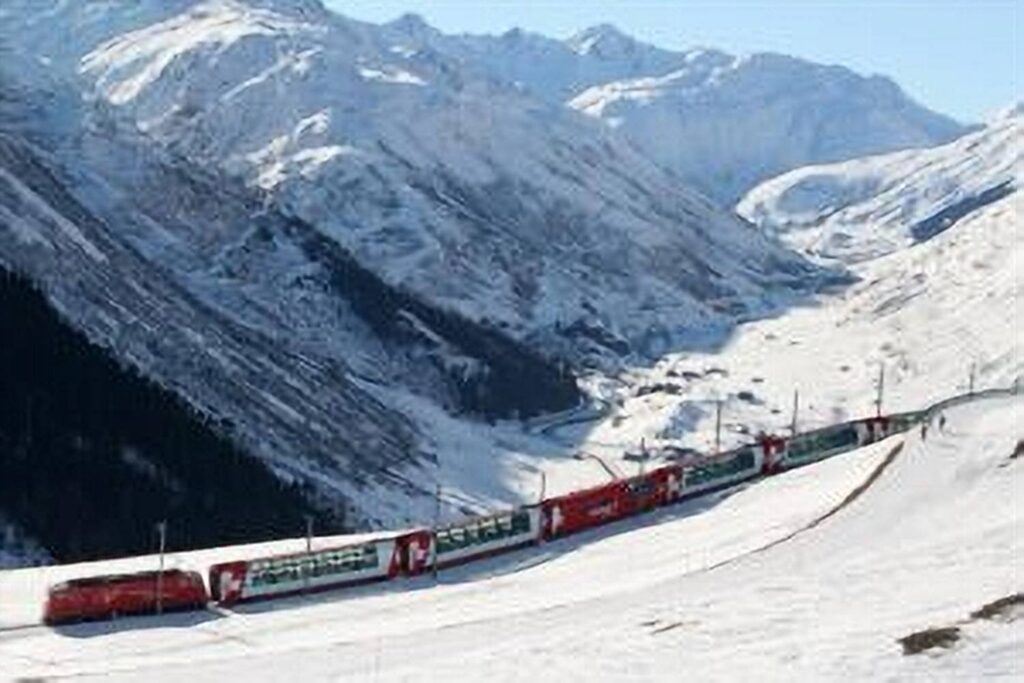
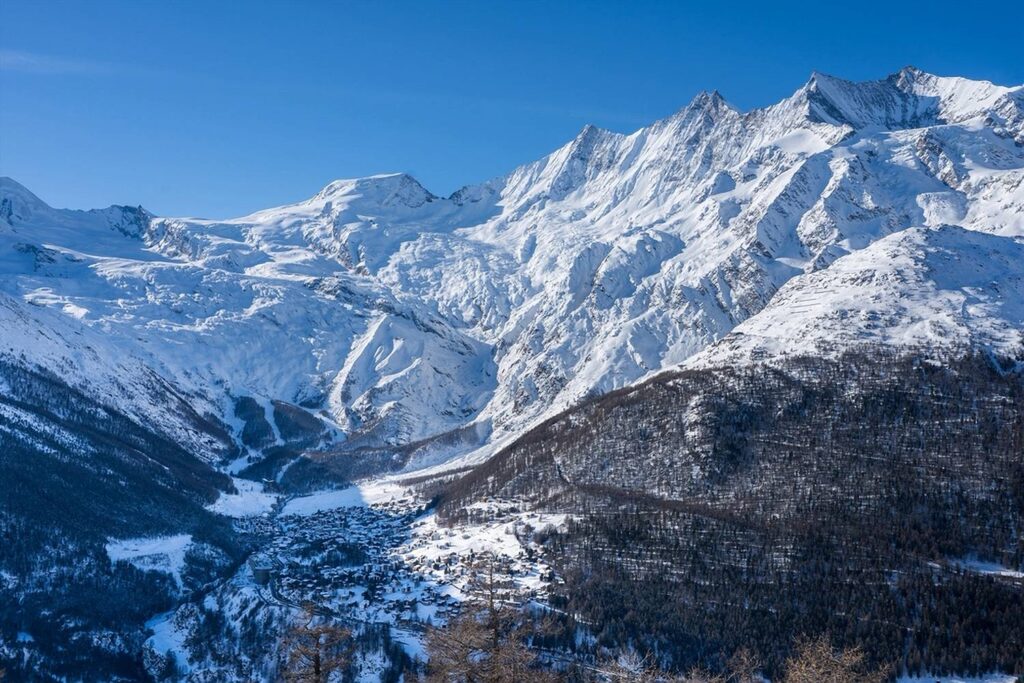
Saas-Fee – Switzerland’s Snow-Sure Glacier Resort
Saas-Fee is often described as the Pearl of the Alps, and when snow reliability is your priority, it’s easy to understand why this high-altitude Swiss resort has earned such a strong reputation.
Surrounded by some of the highest peaks in Switzerland, Saas-Fee sits at around 1,800 metres, while the ski area climbs to approximately 3,600 metres.
Much of the skiing is at high altitude, and the resort’s glacier provides another advantage for early- and late-season skiing.
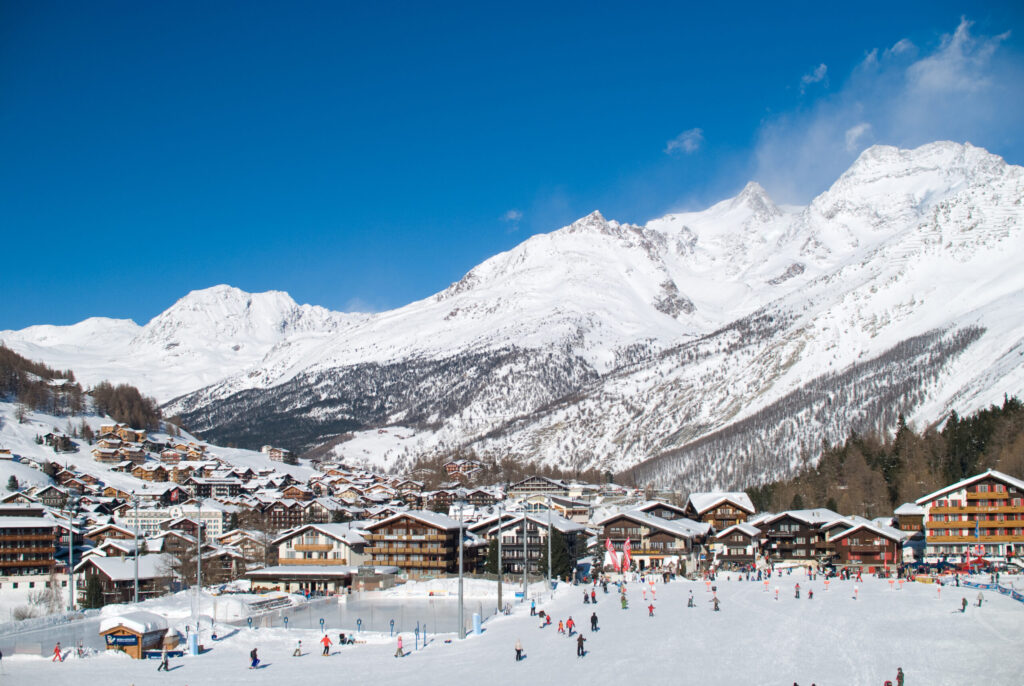
Unlike Zermatt, Saas-Fee has a more compact and relaxed feel. You won’t find the enormous international ski area or the same level of luxury shopping, but that’s part of its appeal.
It’s a beautiful choice for skiers who want high-altitude skiing, reliable snow and a traditional Swiss mountain-resort atmosphere.
Why Is Saas-Fee So Snow-Sure?
The biggest advantage is altitude.
The ski area climbs from the village to around 3,600 metres, with extensive skiing above 2,500 metres. This gives Saas-Fee a strong advantage when temperatures rise lower down the mountain.
The resort is also home to the Fee Glacier, providing high-altitude skiing and helping extend the season.
For anyone considering an early-season ski trip or looking for somewhere to ski later in spring, this is exactly the sort of terrain we look for.
The Saas-Fee Ski Area
Saas-Fee has around 100 kilometres of pistes, spread across several areas of the mountain.
The main skiing is accessed from the village, with lifts taking you towards Morenia, Felskinn and the higher glacier terrain.
One of the highlights is the journey towards the Mittelallalin, which reaches approximately 3,500 metres.
At the top, you’re surrounded by an incredible panorama of 4,000-metre peaks.
And this is where Saas-Fee really impresses us.
You’re skiing in an enormous mountain landscape without the resort feeling overwhelmingly large.
Skiing for Beginners, Intermediates and Advanced Skiers
Beginners:
Saas-Fee is a good choice for beginners, with gentle nursery slopes and beginner areas close to the village. The resort’s relatively compact layout also makes it easier to find your way around.
Intermediates:
Intermediate skiers will find plenty to enjoy, with a good selection of blue and red pistes and the opportunity to explore higher sections of the mountain.
Advanced skiers:
Advanced skiers can head higher towards the glacier and explore more challenging terrain. There are also freeride opportunities for experienced skiers with appropriate local knowledge and conditions.
Saas-Fee isn’t necessarily the resort we’d choose purely for endless challenging terrain, but its combination of altitude, snow reliability and varied skiing makes it a very attractive all-round option.
The Mittelallalin and Glacier
One of the experiences you shouldn’t miss is travelling up towards Mittelallalin.
At approximately 3,500 metres, this is one of the highest accessible points in the ski area.
There’s also a revolving restaurant at the summit, making it possible to enjoy the spectacular mountain views without even putting your skis on.
For non-skiers travelling with you, this is a real bonus.
Best Time to Ski Saas-Fee
Saas-Fee’s altitude makes it particularly attractive outside the traditional mid-winter period.
December:
A strong option for early-season skiing and Christmas, particularly because of the high-altitude terrain.
January and February:
Excellent months for a traditional winter ski holiday, with colder temperatures and good snow conditions.
March:
One of our favourite times to consider Saas-Fee, with longer days and plenty of high-altitude skiing.
April:
The higher terrain and glacier make Saas-Fee an interesting late-season option, although conditions can vary from year to year.
If you’re specifically looking for somewhere for early or late-season skiing, Saas-Fee deserves serious consideration.
Who Is Saas-Fee Best For?
Saas-Fee is particularly suited to:
- Families
- Beginners and intermediates
- Skiers looking for reliable snow
- Early-season skiing
- Late-season skiing
- Glacier skiing
- Non-skiers
- Couples looking for a quieter resort
- Visitors who prefer a traditional Alpine village
It’s also worth considering if you’re travelling with a mixed group.
While stronger skiers can head higher into the ski area, beginners and non-skiers can enjoy the village and mountain scenery without feeling that they need to tackle a huge ski domain.
Where to Stay in Saas-Fee
Saas-Fee has a good range of hotels and apartments, from luxury properties to more affordable family accommodation.
Luxury:
The Capra
A beautiful luxury choice in the centre of Saas-Fee, with an indoor pool, spa and wellness facilities. It is also only a few minutes’ walk from several ski lifts.
Mid-range:
Hotel Allalin Saas-Fee
A lovely Alpine-style hotel in a quiet part of the car-free village, around 200 metres from the Hannig gondola. It has mountain views, a restaurant, sauna and heated ski storage.
Budget:
Hotel Les Amis
Hotel Les Amis is a comfortable option in the centre of Saas-Fee, with rooms featuring balconies and free Wi-Fi. The hotel also includes breakfast and provides a convenient base for enjoying the village and surrounding ski area.
You’ll often have more choice by booking early, especially for Christmas and school holidays.
More Accommodation in Saas Fee
Where to Eat in Saas-Fee
Saas-Fee has a good selection of traditional Swiss restaurants, mountain restaurants and international dining.
This is a resort where we’d definitely make time for a traditional fondue or raclette, particularly after a cold day on the mountain.
For lunch, there are several mountain restaurants where you can stop without losing too much valuable ski time.
Après-Ski in Saas-Fee
Saas-Fee’s après-ski scene is more relaxed than you’ll find in resorts such as St. Anton or Verbier.
There are bars and restaurants where you can enjoy a drink after skiing, but the atmosphere tends to be more about socialising and relaxing than partying until the early hours.
For us, that makes Saas-Fee particularly appealing for couples and families who want a quieter evening after a day on the slopes.
How to Get to Saas-Fee
Saas-Fee is a car-free resort, which gives the village a peaceful atmosphere.
If you’re driving, you’ll leave your car in the large parking area at the entrance to the village.
The nearest major railway station is Visp, which has excellent connections from across Switzerland. From Visp, you can continue by bus or taxi to Saas-Fee.
Geneva and Zurich airports are the main international gateways, although Milan can also be considered depending on your route.
Our Take on Saas-Fee
Saas-Fee doesn’t have the sheer scale of Zermatt, but that’s not necessarily a disadvantage.
For us, its appeal is the combination of high-altitude skiing, glacier terrain, reliable snow and a traditional Swiss village atmosphere.
If you’re looking for a resort where snow reliability is more important than nightlife, designer shopping or having hundreds of kilometres of pistes on your doorstep, Saas-Fee is a very strong contender.
And with its high skiing and glacier, it’s particularly worth considering for Christmas, early-season and late-season ski trips.
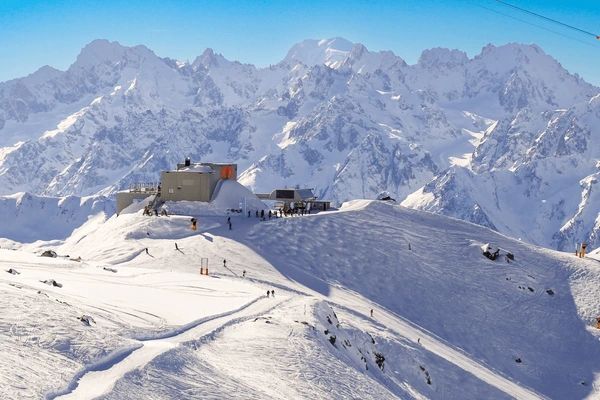
Verbier – High-Altitude Skiing in the 4 Vallées
Verbier is one of Switzerland’s best-known ski resorts and a major part of the enormous 4 Vallées ski area.
While it is particularly famous among advanced skiers and freeriders, its high-altitude terrain also makes it an important destination to consider when snow reliability is a priority.
The resort sits at around 1,500 metres, but the skiing reaches much higher, with the highest lift-served point at approximately 3,330 metres at Mont Fort.
That difference between the village and the upper mountain is important.
While conditions in the village can change considerably during a warm spell, the higher slopes can continue to hold good snow.
And with more than 400 kilometres of pistes across the wider 4 Vallées area, there’s plenty of terrain to explore.
Why Is Verbier So Snow-Sure?
Verbier’s main advantage is its high-altitude skiing.
The upper reaches of the 4 Vallées rise above 3,000 metres, giving the area a much better chance of maintaining snow when temperatures rise lower down.
The resort also has extensive snowmaking, helping maintain important pistes and connections during periods of limited natural snowfall.
It’s worth remembering, though, that Verbier’s village sits considerably lower than Zermatt or Saas-Fee.
If you’re visiting during a marginal early- or late-season period, you’ll want to pay particular attention to conditions at the time of your trip.
The 4 Vallées Ski Area
Verbier is part of the 4 Vallées, Switzerland’s largest ski area.
The interconnected domain includes:
- Verbier
- Nendaz
- Veysonnaz
- La Tzoumaz
Together, they provide an enormous amount of terrain for skiers who want variety during a week-long holiday.
One of the highlights is Mont Fort, which reaches approximately 3,330 metres and provides some of the most challenging skiing in the area.
But you don’t need to be an expert skier to enjoy Verbier.
The wider 4 Vallées has plenty of easier terrain, meaning groups with different abilities can still ski in the same destination.
Skiing for Beginners, Intermediates and Advanced Skiers
Beginners:
Verbier isn’t necessarily the first resort we’d recommend to complete beginners, but there are dedicated beginner areas and gentler pistes around the resort. Nendaz and Veysonnaz can also provide quieter alternatives for learning.
Intermediates:
This is where Verbier becomes particularly enjoyable. There is a huge choice of blue and red pistes, and confident intermediates can explore large sections of the 4 Vallées.
Advanced skiers:
This is where Verbier really shines.
Mont Fort, steep pistes and extensive freeride terrain have made the resort famous among experienced skiers.
The off-piste opportunities are extensive, but this is serious mountain terrain.
Anyone heading away from marked pistes should have the appropriate equipment, knowledge and professional guidance where necessary.
Mont Fort
For experienced skiers, Mont Fort is one of the defining experiences of Verbier.
At around 3,330 metres, it provides spectacular views across the surrounding Alps and some seriously challenging terrain.
Even if you’re not planning to ski down, the journey to the top is worthwhile for the views.
On a clear day, the panorama is spectacular.
Best Time to Ski Verbier
December:
The high-altitude terrain can provide good early-season skiing, although conditions lower down can be more variable.
January and February:
These are generally the safest months for a traditional winter ski holiday, with colder temperatures and better snow coverage throughout the resort.
March:
A particularly appealing month for confident skiers, with longer days and generally good high-altitude conditions.
April:
The higher terrain can continue to provide skiing into spring, although lower pistes can become increasingly dependent on weather and snowmaking.
If snow reliability is the main reason you’re choosing Verbier, we’d favour the January to March period.
Who Is Verbier Best For?
Verbier is particularly suited to:
- Intermediate skiers
- Advanced skiers
- Freeriders
- Ski groups with different abilities
- Skiers looking for a large interconnected area
- People who enjoy lively après-ski
- Visitors wanting a sophisticated Alpine resort
- Longer ski holidays
It can also work well for families, although we’d look carefully at the terrain and accommodation location when booking.
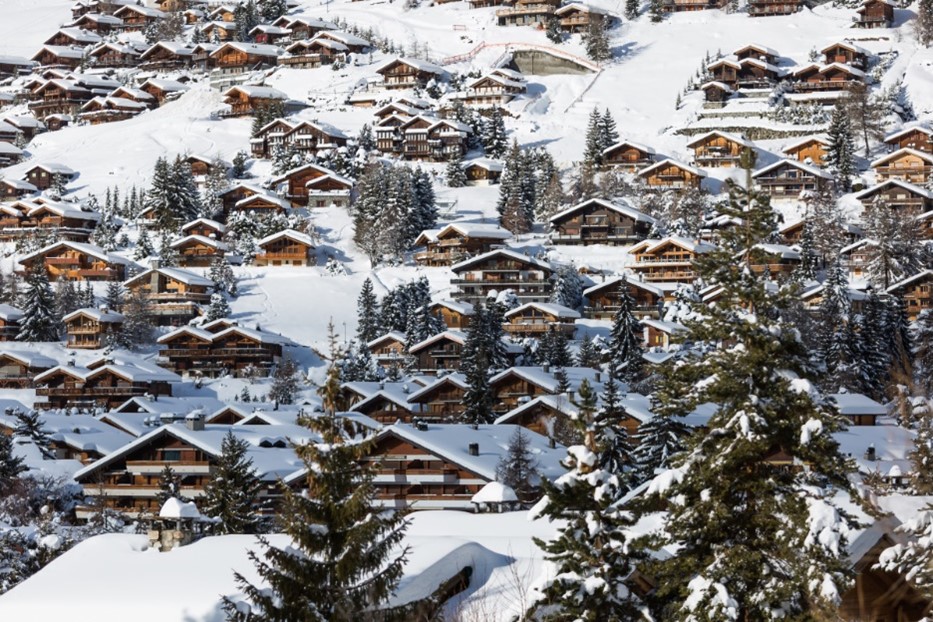
Where to Stay in Verbier
Verbier has a fantastic range of accommodation, from luxury hotels with spas and ski-in, ski-out access to comfortable family-run hotels in the heart of the village.
Here are three options to consider for different budgets.
Luxury
W Verbier
W Verbier is one of Verbier’s most luxurious ski hotels, right beside the Médran cable car. It offers contemporary Alpine-style accommodation, a spa, indoor and outdoor pools, restaurants and ski-to-door access, making it a great choice for a special ski holiday.
Mid-range
Hôtel de Verbier
Hôtel de Verbier is a stylish hotel in the centre of Verbier, with a restaurant, terrace, free Wi-Fi and a spa. Its central location makes it convenient for exploring the village, while the comfortable rooms provide a good base after a day on the mountain.
Budget
Hôtel Les Chamois
Hôtel les Chamois is a family-run hotel in a central but quiet location, just 150 metres from the ski lifts. Rooms are comfortable, some have balconies and mountain views, and there is also a traditional restaurant serving local Valais dishes.
If you’ve got specific dates in mind, don’t wait too long to secure your spot.
Other Accommodation in Verbier
Where to Eat in Verbier
Verbier has an impressive choice of restaurants, ranging from traditional Swiss mountain food to international cuisine and fine dining.
On the mountain, you’ll find plenty of places for a relaxed lunch between runs.
In the evening, the village has a much wider choice, including Swiss favourites such as raclette and fondue as well as Italian, French and international restaurants.
Après-Ski in Verbier
If you’re looking for lively après-ski, Verbier is one of the strongest choices on our list.
The resort has a well-established après scene, with bars both on the mountain and in the village.
Après-ski at the Farinet is particularly well known, while there are plenty of other bars around the village if you’d prefer something quieter.
The nightlife continues after dinner, making Verbier a particularly popular choice for younger skiers and groups of friends.
How to Get to Verbier
Verbier is relatively straightforward to reach from Geneva Airport, making it one of the more accessible major Swiss ski resorts.
The journey from Geneva takes roughly two hours by road, depending on traffic and weather.
If travelling by train, you can take the train to Le Châble, from where a gondola connects directly with Verbier.
This is a particularly convenient option if you prefer not to hire a car.
Our Take on Verbier
Verbier is a very different proposition from Saas-Fee.
Where Saas-Fee appeals because of its compact village and glacier skiing, Verbier is about scale, high-altitude terrain, challenging skiing and après-ski.
For experienced skiers, there is an enormous amount to explore across the 4 Vallées.
And while the resort village itself isn’t as high as Zermatt or Saas-Fee, the upper mountain reaches more than 3,300 metres, giving Verbier a strong advantage when snow reliability matters.
If you’re looking for a Swiss resort that combines high-altitude skiing with a huge ski area and lively après-ski, Verbier deserves a place on our list.
For more comfort and convenience, compare these car rentals: DISCOVER CARS
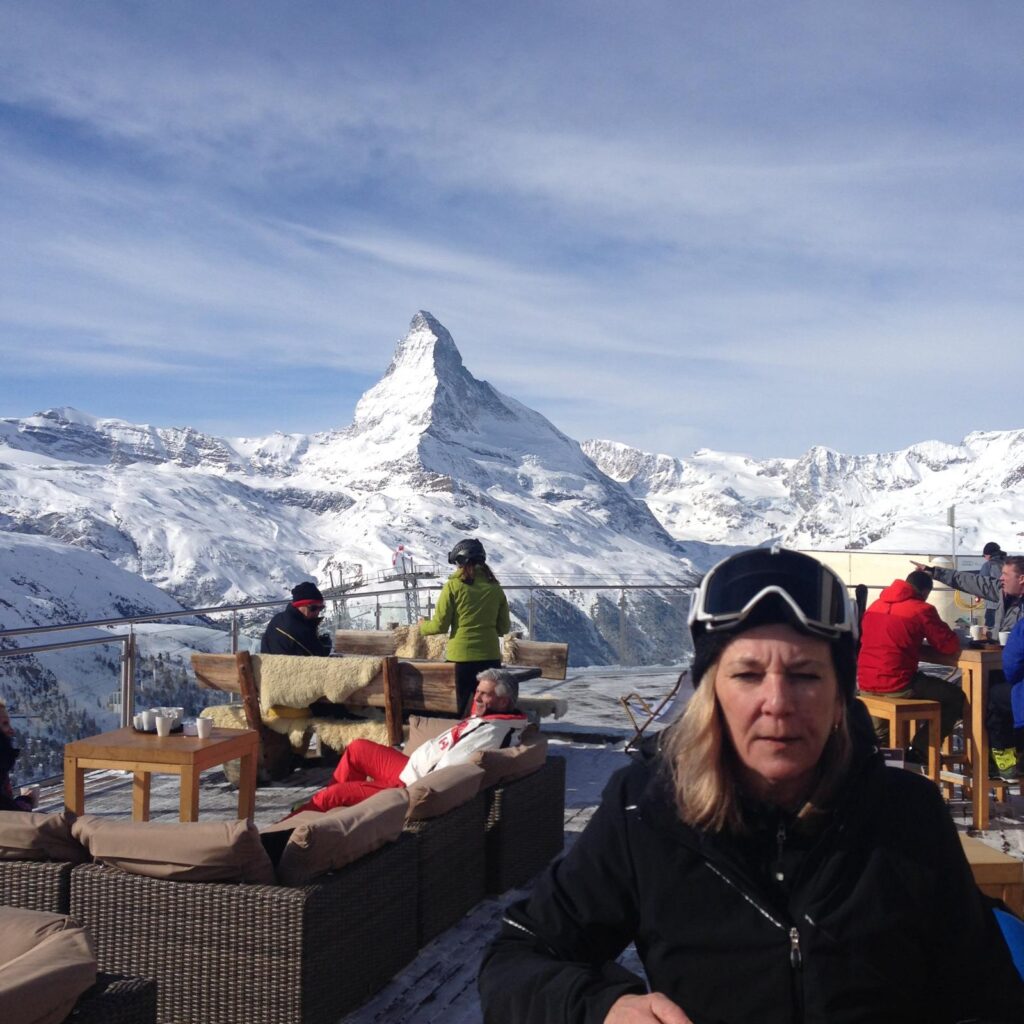

Engelberg-Titlis – Snow-Sure Skiing Near Zurich
If you’re looking for a snow-sure Swiss ski resort that’s relatively easy to reach, Engelberg-Titlis is one we would definitely put on the list.
Located in Central Switzerland, around 40 minutes from Lucerne and roughly an hour’s drive from Zurich Airport, Engelberg combines a traditional mountain village with skiing that climbs all the way to the 3,020-metre summit of Titlis.
The resort is particularly interesting for snow-conscious skiers because of its high-altitude glacier terrain and a reputation for heavy snowfall.
Engelberg’s official tourism organisation describes the region as having a long winter season, while Switzerland Tourism highlights its deep winter conditions and high-altitude skiing.
And there’s another reason we like Engelberg.
You can go from the village to around 3,000 metres surprisingly quickly, making it possible to reach high-altitude skiing without spending hours travelling up the mountain.
Why Is Engelberg So Snow-Sure?
The biggest factor is Titlis.
At 3,020 metres, the summit provides high-altitude skiing and glacier terrain, while the surrounding mountains benefit from Engelberg’s particular weather patterns and location in Central Switzerland.
The resort also has snowmaking on key pistes, helping maintain important sections of the ski area when natural snowfall is limited.
Engelberg’s official tourism information states that the combination of its location, microclimate and altitude can provide snow-sure winter sports conditions from October through May.
That’s a strong claim, but we’d still recommend checking current conditions before travelling, particularly at the beginning and end of the season.
The Engelberg-Titlis Ski Area
The Engelberg-Titlis ski area has around 82 kilometres of pistes, with skiing on both sides of the valley.
The main Titlis side provides the high-altitude skiing, while the Brunni side of the valley offers a different character and is particularly popular with families.
One of the great attractions is the long descent from Titlis all the way back towards Engelberg.
The longest run has around 2,000 metres of vertical descent, making for a seriously satisfying day on the mountain.
Skiing for Beginners, Intermediates and Advanced Skiers
Beginners:
Engelberg has beginner areas and gentler pistes, particularly around the lower mountain and Brunni. Families can also find ski schools and facilities designed for children learning to ski.
Intermediates:
Intermediate skiers have plenty of terrain to explore, including longer runs from the higher mountain back towards the valley. The variety between Titlis and Brunni also means you can change areas when you fancy something different.
Advanced skiers:
This is where Engelberg has built a particularly strong reputation. The resort is famous for freeride terrain, steep runs and challenging descents, with the Titlis area attracting experienced skiers from around the world.
If you’re heading away from the marked pistes, this is serious Alpine terrain. Appropriate avalanche equipment, experience and professional guidance are essential when conditions require it.
The Titlis Glacier
One of the biggest attractions for snow-sure skiing is, of course, the Titlis Glacier.
The cable car takes you to around 3,020 metres, where you’ll find high-altitude snow, the glacier and some spectacular views across the surrounding Alps.
The Titlis Rotair revolving cable car is an attraction in its own right, giving passengers panoramic views as they climb towards the summit.
There’s also the Glacier Cave and Titlis Cliff Walk, making this a particularly good mountain destination for non-skiers as well as skiers.
Best Time to Ski Engelberg
December:
The high mountain and glacier make Engelberg an interesting choice for early-season skiing and Christmas.
January and February:
These are excellent months for a traditional winter ski holiday, with colder temperatures and the possibility of fresh snowfall.
March:
Longer days combined with high-altitude skiing make March an appealing time to visit.
April:
Engelberg can continue to offer skiing high on Titlis well into spring, although lower slopes can become more dependent on weather and snow conditions.
If snow reliability is your main reason for choosing Engelberg, we’d pay particular attention to the Titlis side of the mountain, especially later in the season.
Who Is Engelberg Best For?
Engelberg is particularly suited to:
- Intermediate and advanced skiers
- Freeriders
- Families
- Skiers looking for high-altitude snow
- Early- and late-season skiing
- Skiers who don’t want a huge resort village
- Non-skiers travelling with skiers
- Visitors wanting easy access from Zurich or Lucerne
It’s also a good option for a shorter ski break.
Because of its relatively easy access from Zurich and Lucerne, you don’t necessarily need to commit to a full week here.

Where to Stay in Engelberg
Engelberg has a good selection of places to stay, from luxury hotels with excellent spa facilities to comfortable hotels in the centre of the village.
We’ve picked three options at different price levels to make choosing your accommodation a little easier.
Luxury
Kempinski Palace Engelberg
Kempinski Palace Engelberg is a luxurious choice in the heart of the village, with elegant rooms, mountain views, a spa, indoor and rooftop pools, sauna and several dining options. The Titlis cable car is around a 12-minute walk away.
Mid-range
Hotel Schweizerhof
Hotel Schweizerhof is a traditional hotel in the centre of Engelberg, housed in a building dating back more than 100 years. It has comfortable modern rooms, a sauna and fitness room, while the ski bus and cable cars are close by.
Budget
Hotel Terrace
Hotel Terrace sits above Engelberg with wonderful mountain and valley views. The hotel has comfortable rooms, a sun terrace, sauna, two restaurants and a bar, making it a good base for enjoying the village and skiing at Titlis.
If you’ve got specific dates in mind, don’t wait too long to secure your spot. You’ll often have more choice by booking early, especially for Christmas and school holidays.
Other Accommodation in Engelberg
Where to Eat in Engelberg
Engelberg has a good choice of traditional Swiss restaurants, mountain restaurants and casual places to eat.
After skiing, this is exactly the sort of resort where we’d be happy to settle into a warm restaurant with a fondue or raclette.
For lunch, the mountain restaurants make it easy to stop for something to eat without losing too much time on the slopes.
And if you’re staying for several days, don’t forget to explore some of the village restaurants rather than eating on the mountain every day.
Après-Ski in Engelberg
Engelberg’s après-ski scene is considerably more relaxed than Verbier.
There are bars and places to enjoy a drink after skiing, but this isn’t primarily a party resort.
For us, that’s part of its appeal.
You can finish skiing, have a drink, enjoy dinner in the village and still have a relatively peaceful evening. It’s particularly well suited to couples and families who want skiing to be the main event.
How to Get to Engelberg
This is one of Engelberg’s biggest advantages.
From Zurich Airport, the journey by road takes roughly an hour, depending on traffic and conditions.
You can also travel by train via Lucerne, with regular connections making Engelberg relatively easy to reach without a car.
Once you’re in the village, you don’t need to rely on a car to get around.
Our Take on Engelberg
Engelberg is a fascinating addition to our snow-sure Switzerland list because it combines high-altitude glacier skiing with surprisingly easy access.
It doesn’t have the vast interconnected ski area of Verbier or the international glamour of Zermatt, but that’s not really what Engelberg is about.
Instead, you get a traditional Swiss mountain village, serious skiing, a 3,020-metre glacier and some excellent freeride terrain.
For skiers looking for snow reliability without travelling deep into the Alps, Engelberg-Titlis is a very interesting option.
And if you’re planning an early- or late-season trip, the high-altitude Titlis terrain is the main reason we’d put Engelberg on the shortlist.
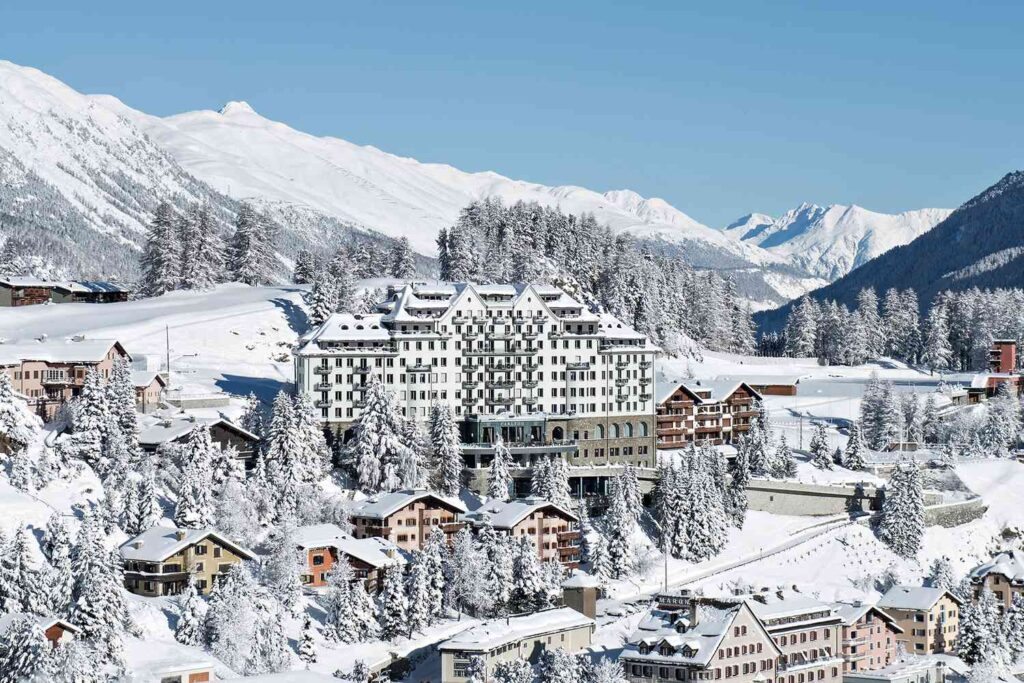
St. Moritz – High-Altitude Skiing in the Engadin
St. Moritz is one of Switzerland’s most famous ski resorts, but there is much more to it than its glamorous reputation.
Set in the high-altitude Engadin Valley at around 1,800 metres, St. Moritz benefits from a combination of elevation, a cold Alpine climate and several high ski areas.
The main Corviglia ski area rises to more than 3,000 metres, while nearby Corvatsch climbs even higher.
For a snow-sure ski holiday, that high-altitude terrain is the real attraction.
St. Moritz also gives you something that some of the other resorts on our list don’t: several different ski areas within easy reach.
You can ski Corviglia one day, head to Corvatsch the next and make a trip to Diavolezza when you fancy something different.
So although St. Moritz is famous for luxury hotels, designer shops and a glamorous après-ski scene, there’s some seriously good skiing underneath all that.
Why Is St. Moritz So Snow-Sure?
One of St. Moritz’s biggest advantages is its high elevation.
The main Corviglia ski area reaches approximately 3,057 metres at Piz Nair, while Corvatsch rises to around 3,303 metres.
This gives the Engadin region a strong advantage when snow reliability matters, particularly compared with lower-altitude resorts.
The area is also known for its dry Alpine climate and frequent sunny conditions.
While sunshine isn’t necessarily what you immediately associate with snow reliability, the cold temperatures at altitude help preserve snow on the higher slopes.
And with several ski areas to choose from, you’re not relying on one mountain.
The St. Moritz Ski Areas
The main ski areas to know about are Corviglia, Corvatsch and Diavolezza.
Corviglia is the main ski area directly above St. Moritz and is the obvious choice for most visitors staying in the resort.
Corvatsch is slightly further away and reaches 3,303 metres. Its high-altitude terrain makes it particularly interesting when snow reliability is important.
Diavolezza is further along the Engadin Valley and is famous for its spectacular glacier scenery and high-altitude skiing.
Having these different areas available gives you plenty of variety during a longer stay.
Skiing for Beginners, Intermediates and Advanced Skiers
Beginners:
Corviglia has dedicated beginner areas and gentle pistes where new skiers can build confidence. The Engadin region also has several ski schools and children’s facilities.
Intermediates:
This is where St. Moritz has plenty to offer. Corviglia provides a good selection of blue and red runs, while Corvatsch gives confident intermediates the opportunity to explore longer and higher pistes.
Advanced skiers:
Experienced skiers have challenging pistes, steep terrain and freeride opportunities across the Engadin. Diavolezza is particularly interesting for stronger skiers looking for something different.
As with all high-Alpine off-piste terrain, appropriate avalanche knowledge and equipment are essential.
Corviglia
For most visitors staying in St. Moritz, Corviglia is the main event.
The ski area is easily accessible from the resort and offers a mixture of terrain for different abilities.
One of the highlights is skiing from the upper mountain back towards St. Moritz, with beautiful views across the Engadin Valley and its frozen lakes.
Because the ski area is so close to the town, you can easily spend the morning skiing and then be back in St. Moritz for lunch.
Corvatsch
If snow reliability is high on your list, we’d make time for Corvatsch.
The mountain rises to approximately 3,303 metres and provides some of the highest skiing in the Engadin.
It’s also known for its long runs and spectacular views.
Corvatsch tends to feel less urban than Corviglia, giving you more of that traditional high-mountain skiing experience.
Diavolezza
Diavolezza is another reason St. Moritz works so well for a snow-focused ski holiday.
The mountain reaches around 2,973 metres and provides high-altitude skiing beneath the Bernina massif.
The views towards Piz Bernina are spectacular, and the area has a more remote feel than Corviglia.
It’s worth visiting even if you’re staying in St. Moritz for the scenery alone.
Best Time to Ski St. Moritz
December:
The high-altitude terrain makes St. Moritz an interesting option for an early-season and Christmas ski holiday.
January and February:
These are excellent months for a classic winter ski holiday, with cold temperatures and generally dependable conditions.
March:
A particularly enjoyable time to ski the Engadin, with longer days and plenty of high-altitude terrain.
April:
Corvatsch and the higher slopes can continue to provide good spring skiing, although conditions lower down the mountain can become more variable.
If snow reliability is your priority, we’d concentrate on the higher areas, particularly Corvatsch and the upper slopes of Corviglia, later in the season.
Who Is St. Moritz Best For?
St. Moritz is particularly suited to:
- Intermediate and advanced skiers
- Families
- Couples
- Luxury ski holidays
- Skiers wanting several ski areas
- High-altitude skiing
- Early- and late-season skiing
- Visitors who enjoy excellent restaurants and après-ski
- Non-skiers looking for plenty to do
It’s also one of the better choices on our list for a group where skiing isn’t the only priority.
There’s plenty to do away from the slopes, from shopping and spas to winter walking and exploring the Engadin Valley.
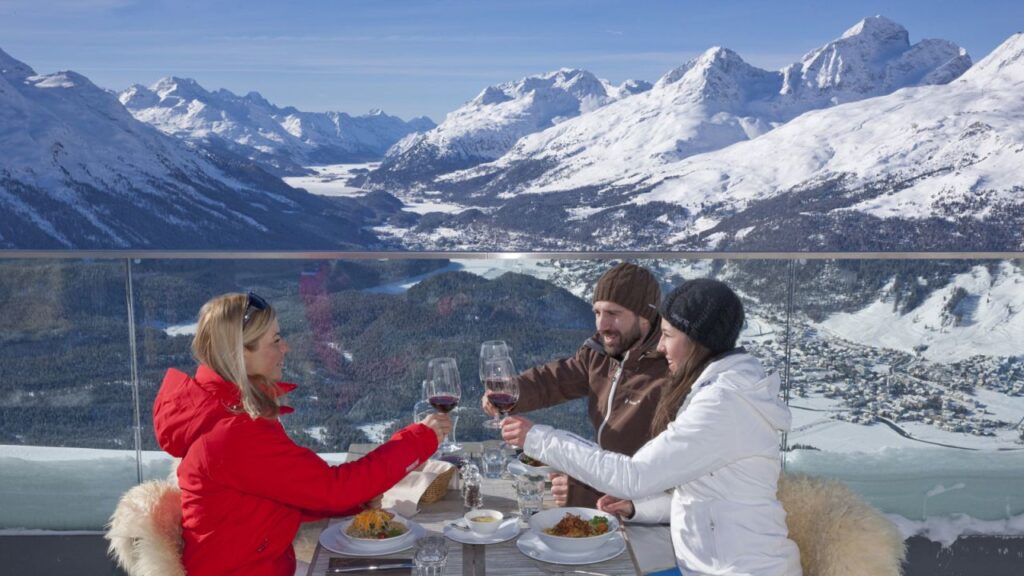
Where to Stay in St. Moritz
St. Moritz has everything from grand five-star hotels to comfortable, more affordable properties. To keep things simple, we’ve picked one option at each price level, giving you a starting point when looking for somewhere to stay.
Luxury
Badrutt’s Palace Hotel
Badrutt’s Palace is one of St. Moritz’s best-known luxury hotels, dating back to 1896. Located in the centre of the village, it has impressive views over Lake St. Moritz and the Engadin Alps, along with several restaurants, bars and a spa.
Mid-range
Sport & Wellness Hotel San Gian
The Sport & Wellness Hotel San Gian is a comfortable four-star hotel in St. Moritz, around 150 metres from the Signal cable car. It has a spa and wellness area, two restaurants and comfortable rooms, making it a convenient base for a ski holiday.
Budget
Chesa Languard
Chesa Languard is a more affordable option close to the centre of St. Moritz. The hotel has comfortable rooms, a restaurant and bar, and provides a convenient base for exploring the village and getting to the surrounding ski areas.
More Accommodation in St. Moritz
Where to Eat in St. Moritz
St. Moritz has an excellent restaurant scene, ranging from traditional Swiss mountain restaurants to sophisticated fine dining.
You’ll find plenty of places serving fondue and raclette, but there’s also a strong international influence.
For lunch, we’d make the most of the mountain restaurants before heading back into town for dinner.
And if you’re staying for a week, having several ski areas means you can also explore restaurants in different parts of the Engadin rather than eating in St. Moritz every evening.
Après-Ski in St. Moritz
Après-ski in St. Moritz is generally more sophisticated than the wild party atmosphere you’ll find in some Austrian resorts.
You’ll find stylish bars, hotel lounges and mountain venues where you can enjoy a drink after skiing.
The town is particularly good for anyone who likes the idea of dinner, drinks and a little luxury rather than spending the entire evening in a crowded après-ski bar.
How to Get to St. Moritz
Getting to St. Moritz takes a little longer than reaching resorts such as Engelberg, but the journey is part of the experience.
The resort is connected to the Swiss railway network, and the famous Rhaetian Railway provides spectacular journeys through the mountains.
The nearest major airport is Zurich, from where you can continue by train or road.
You can also travel via Milan, which can be a useful alternative depending on your flight options.
Once you’re in St. Moritz, public transport makes getting around the different areas relatively straightforward.
Our Take on St. Moritz
St. Moritz is a very different ski destination from Zermatt, Saas-Fee and Engelberg.
It’s more glamorous, more spread out and gives you access to several different ski areas across the Engadin.
For us, its strongest snow-sure advantage is the combination of high-altitude skiing, a high valley location and several mountains to choose from.
If you’re looking for a Swiss ski holiday where you can combine reliable high-altitude skiing with excellent hotels, restaurants, shopping and plenty to do away from the slopes, St. Moritz is a fascinating option.
And if conditions aren’t ideal lower down the mountain, you have the advantage of being able to head higher into the Engadin.
For a snow-conscious skier who also wants a little luxury, St. Moritz brings something quite different to our seven-resort list.
For more comfort and convenience, compare these car rentals: DISCOVER CARS
Read Our Full Guide On
7 Prettiest Ski Resorts in Switzerland: Alpine Charm and World-Class Slopes

Davos-Klosters – Reliable Snow and Plenty of Terrain
Davos-Klosters is one of those Swiss ski destinations that gives you plenty of choice when it comes to skiing.
Rather than relying on one mountain, the region has six different ski areas, including the extensive Parsenn/Gotschna, the lively Jakobshorn, family-friendly Madrisa and Rinerhorn, plus Schatzalp and Pischa.
For a snow-sure ski holiday, that variety is a real advantage. Davos sits at around 1,560 metres, while the skiing reaches much higher into the mountains.
Parsenn extends up to the Weissfluhgipfel, and the resort has invested in snowmaking infrastructure as well as maintaining extensive high-altitude terrain.
It also has something that some of the other resorts on our list don’t: a huge amount of skiing spread across different mountains, so you can choose where to ski depending on the weather, snow conditions and the type of day you want.
Why Is Davos-Klosters Snow-Sure?
Davos has a strong reputation for reliable winter conditions, helped by its altitude and extensive high-mountain terrain.
The main Parsenn area reaches the Weissfluhgipfel at around 2,844 metres, while Jakobshorn provides skiing to around 2,600 metres.
The combination of altitude, north-facing terrain in parts of the ski area and modern snowmaking helps maintain good piste conditions through much of the season.
Davos-Klosters also has a long winter season.
For the 2026/27 season, Parsenn Davos is scheduled to operate from November 13 to April 4, while Jakobshorn is scheduled from November 27 to April 11, although individual lift and slope openings remain dependent on snow and weather conditions.
And importantly, Davos-Klosters isn’t relying on just one mountain. If conditions aren’t ideal on one side of the valley, there are several other ski areas to explore.
The Ski Area
The main ski areas are:
Parsenn/Gotschna – the largest and most traditional ski area, with around 97 km of slopes
Jakobshorn – popular with intermediate skiers, snowboarders and freeriders, with around 55 km of pistes
Madrisa – particularly good for families and beginners
Rinerhorn – another family-friendly option with a quieter feel
Schatzalp/Strela – smaller and more relaxed
Pischa – particularly known for freeriding and alternative winter sports
The official Davos-Klosters information currently lists around 300 km of snow-sure slopes and 57 transport systems across the destination.
Beginners
Beginners have several good options rather than being restricted to one small nursery area.
Jakobshorn has beginner terrain around Bolgen, while Madrisa is particularly well suited to families and first-time skiers.
Madrisa has dedicated children’s areas, practice lifts and gentle terrain designed to help beginners gain confidence.
If you’re travelling with children or a mixed-ability group, this variety makes Davos-Klosters particularly practical.
Intermediate Skiers
This is where Davos really starts to shine.
Parsenn is the mountain we’d head for if we wanted long, wide cruising runs.
It has around 97 km of pistes, with plenty of terrain for spending an entire day skiing without constantly repeating the same short runs.
The famous Parsenn descent can take you from the high mountain down towards Küblis, with the full historic route stretching around 12 kilometres when conditions allow.
Jakobshorn is another excellent choice for intermediates, particularly if you enjoy a livelier mountain and a bit more atmosphere.
Advanced Skiers
Advanced skiers have plenty to keep them busy, particularly on Parsenn and Jakobshorn.
Parsenn provides steeper pistes and longer descents, while Jakobshorn has a more adventurous feel, with steeper terrain, freeride opportunities and its well-known black run down towards Davos.
For experienced skiers who enjoy skiing away from groomed pistes, Pischa is worth knowing about.
It has a much more natural, freeride-focused character than the traditional piste areas.
The High-Altitude Highlight – Parsenn
If you’re visiting Davos specifically for snow reliability, Parsenn should be high on your list.
The mountain is the largest ski area in Davos-Klosters and reaches the Weissfluhgipfel at approximately 2,844 metres.
From the upper mountain, you can enjoy long descents on wide pistes, including the famous run towards Küblis.
We particularly like the fact that Parsenn doesn’t feel like a collection of short runs. You can spend a morning working your way across the mountain and then finish with a long descent.
It’s classic Swiss skiing rather than a resort built around one particular gimmick.
Best Time to Ski Davos-Klosters for Snow
December:
Davos can be a good choice for an early-season trip because of its altitude, although early-season conditions can still vary.
The 2026/27 season is scheduled to begin with Parsenn in November, with the other areas opening progressively through December.
January:
A very good month for snow conditions, particularly on the higher slopes. The colder temperatures also help the resort’s snowmaking systems maintain piste coverage.
February:
One of the safest choices for a traditional mid-winter ski holiday. Snow conditions are generally well established, and the majority of the ski areas should be operating.
March:
Another excellent month, particularly if you want longer days and sunshine while still having access to high-altitude skiing.
April:
This is where Davos’ higher terrain becomes particularly useful.
Parsenn and Jakobshorn are scheduled to continue into early April for the 2026/27 season, although spring skiing will naturally depend more heavily on weather and snow conditions.
Who Is Davos-Klosters Best For?
Davos-Klosters is particularly good for:
Intermediate skiers looking for plenty of varied terrain
Families who want several different areas to choose from
Advanced skiers looking for freeride and challenging terrain
Snowboarders, particularly around Jakobshorn
Longer ski holidays where you want plenty of mountains to explore
Early and late-season skiers who want access to higher-altitude terrain
Non-skiers, thanks to the extensive winter walking and other mountain activities
And because Davos and Klosters have such different personalities, you can choose where to stay depending on the kind of holiday you want.
Where to Stay in Davos-Klosters
There is a good range of accommodation across Davos and Klosters, from traditional luxury hotels to more affordable mountain hotels.
Luxury
Hotel Flüela Davos – The Unbound Collection by Hyatt
This historic five-star hotel sits directly opposite Davos Dorf railway station, making it particularly convenient if you’re arriving by train. It combines traditional Alpine character with a high-end feel and has a wellness area and fitness facilities.
Mid-Range
Grischa – Das Hotel Davos
Located just 100 metres from the Jakobshorn cable car and close to the centre of Davos, Grischa is a particularly convenient choice for skiers who want quick access to the mountain. The hotel also has several restaurants on site.
Budget
Hotel Ochsen 2 by Mountain Hotels
A straightforward and well-located option in Davos, particularly useful for skiers who would rather spend their money on lift passes and restaurants than a luxury room. Booking.com currently lists it among the budget hotels in Davos.
You’ll often have more choice by booking early, especially for Christmas and school holidays.
Other accommodation in Davos-Klostera
Where to Eat
Davos has a much broader restaurant scene than you might expect from a mountain resort.
For traditional Swiss food, look for places serving raclette, fondue, rösti and Bündner specialities. Up on the mountain, the huts around Parsenn and Jakobshorn are ideal for a long lunch rather than rushing back onto the slopes.
One of the pleasures of skiing Parsenn is stopping at a traditional mountain restaurant, enjoying lunch in the sunshine and then heading back out for another long run.
Après-Ski in Davos
For lively après-ski, Jakobshorn is the place to know.
The mountain is famous for its après-ski scene, particularly around the Jatzhütte at around 2,560 metres.
The official Davos tourism site describes it as one of the resort’s best-known après-ski spots, with the party atmosphere beginning while you’re still on the mountain.
Back in Davos, you’ll find plenty of bars and restaurants around the centre, while Klosters tends to have a more relaxed and traditional feel.
How to Get to Davos-Klosters
Getting to Davos is relatively straightforward compared with some of Switzerland’s more remote ski resorts.
From the Airport
The journey takes roughly two hours by train, with a change at Landquart. Driving is also possible and usually takes around two hours depending on winter road conditions.
By train:
This is one of the easiest ways to arrive. Davos has several railway stations, while Klosters is connected to the same Rhaetian Railway network.
By car:
Davos is reached via Landquart and the Prättigau valley. In winter, make sure your car is properly equipped for Alpine conditions and check road conditions before setting off.
Our Take on Davos-Klosters
Davos-Klosters is a really interesting choice for a snow-sure Swiss ski holiday because it gives you far more than one ski mountain.
For us, Parsenn would be the big draw. The long, wide pistes and high-altitude skiing make it a great mountain for putting in some serious kilometres, while Jakobshorn brings a completely different atmosphere.
Add in Madrisa for families, Pischa for freeriding and the other smaller ski areas, and you have a destination where you can ski differently every day.
It may not have the dramatic glacier setting of Zermatt or Saas-Fee, but when you combine altitude, extensive terrain and several different ski areas, Davos-Klosters deserves its place among Switzerland’s strongest choices for snow-reliable skiing.

Laax – High-Altitude Skiing and Snowboarding
Laax is one of Switzerland’s most distinctive ski resorts.
It has a completely different personality from somewhere like Zermatt or St. Moritz, with a younger, more energetic feel and a huge focus on skiing and snowboarding.
But there is more to Laax than its famous freestyle scene.
The ski area rises from around 1,100 metres to 3,018 metres on the Vorab Glacier, with around 216 kilometres of pistes and 30 lifts. That combination of altitude, glacier terrain and extensive skiing makes Laax an interesting choice when snow reliability is high on your list.
For snowboarders and freestyle skiers in particular, Laax is one of the most recognisable names in the Alps, with five snowparks, more than 90 obstacles and the world’s largest halfpipe.
Why Is Laax Snow-Sure?
The biggest advantage for snow reliability is altitude.
The ski area climbs all the way to 3,018 metres at the Vorab Glacier, giving Laax a substantial amount of high-altitude terrain.
Higher slopes generally hold their snow better as the season progresses, particularly compared with lower parts of a resort.
The glacier is particularly useful early and late in the season, although, as with every resort in this guide, glacier skiing does not mean every run will be open regardless of the weather.
Another advantage is the sheer size of the ski area. With 216 kilometres of pistes spread across the mountains above Laax, Flims and Falera, there is a lot of terrain to choose from.
The Ski Area
Laax is part of the Flims Laax Falera ski area, with skiing spread across three villages.
The main mountain areas include:
Vorab Glacier – the highest skiing at 3,018 metres
Crap Sogn Gion – the heart of the freestyle scene
Crap Masegn – extensive intermediate terrain
La Siala – high-altitude skiing and long runs
Flims and Falera – access to a wide range of pistes
The resort has around 216 kilometres of marked pistes, making it large enough for a week-long ski holiday without feeling as though you’ve exhausted the mountain after a couple of days.
Beginners
Laax is not the first resort that springs to mind for beginners, mainly because of its reputation for freestyle and snowboarding.
But there is plenty of suitable terrain.
The areas around Flims, Falera and Plaun provide easier pistes, and the resort has dedicated beginner areas and ski schools.
Once you’ve gained confidence, you can gradually work your way higher up the mountain.
For complete beginners, we’d recommend checking where the beginner areas are located when choosing accommodation. Staying close to the main lifts can make those first few days much easier.
Intermediate Skiers
This is where Laax becomes particularly enjoyable.
There are plenty of wide, well-groomed blue and red runs across the mountain, and the altitude means you can spend much of the day skiing at higher elevations.
One of the things we like about a large ski area such as Laax is that you can choose your route according to the conditions.
If the weather closes in higher up, there are lower runs to explore, while on a clear day you can head towards the upper mountain and enjoy the views.
The long runs from the higher areas down towards Plaun and the villages can make for some excellent skiing days.
Advanced Skiers
Advanced skiers have plenty of options, particularly if you enjoy steep terrain, freeriding and challenging pistes.
The upper mountain provides more demanding terrain, while Laax’s freeride areas are a major attraction after fresh snowfall.
And then there is the freestyle side of the resort.
Even if you aren’t a park skier yourself, it is fun to watch some of the world’s best riders using the facilities around Crap Sogn Gion.
The High-Altitude Highlight – Vorab Glacier
Vorab Glacier is the reason Laax belongs in a snow-sure Swiss ski guide.
At 3,018 metres, it is the highest point of the ski area and provides some of the highest skiing in the region.
The glacier is particularly valuable for early-season skiing, although conditions and lift operations can vary throughout the season.
When the weather is clear, the upper mountain also provides some fantastic Alpine views.
For us, the attraction isn’t simply saying “glacier” and assuming that means guaranteed snow.
It is the combination of 3,000-metre-plus terrain, glacier skiing and a large amount of additional high-altitude terrain that makes Laax worth considering.
Best Time to Ski Laax for Snow
December:
Laax can be an attractive choice for an early-season trip because of the Vorab Glacier and high-altitude terrain. However, early-season conditions always depend on snowfall and temperatures.
January:
A good month for colder temperatures and established winter conditions, particularly higher up the mountain.
February:
Usually one of the most popular periods to visit, with plenty of terrain operating and excellent conditions for both piste skiing and snowboarding when the weather cooperates.
March:
One of our favourite times for a resort like Laax.
The days are longer, temperatures can be more pleasant and there is still plenty of high-altitude skiing available.
April:
The higher terrain and glacier can make Laax worth considering for a late-season trip, although lower slopes will naturally become more dependent on spring temperatures.
If snow reliability is your priority, we’d concentrate on the higher parts of the mountain and consider January through March the safest part of the season rather than assuming the entire 216 km of pistes will have identical conditions.
Who Is Laax Best For?
Laax is particularly well suited to:
Snowboarders
Freestyle skiers
Intermediate and advanced skiers
Young adults and groups of friends
Skiers who enjoy a lively resort
Late-season skiers looking for high-altitude terrain
Families, particularly those happy with a modern resort rather than a traditional Alpine village
It is also a good choice if some people in your group ski while others snowboard.
Where to Stay in Laax
Laax has some excellent accommodation, particularly around the main lift station in Murschetg, where you can be close to the slopes, restaurants and après-ski.
Here are three options covering different budgets.
Luxury
rocksresort
rocksresort is right beside the cable car in Laax and is a great choice if you like modern, apartment-style accommodation. The stylish apartments are surrounded by restaurants, shops and bars, making it particularly convenient for a ski holiday.
Mid-range
signinahotel
Signina hotel has one of the most convenient locations in Laax, sitting directly beside the lower cable-car station. The hotel has a wellness area, restaurant and bar, with ski storage close to the lifts.
Budget
Laax wellnessHostel3000
Laax wellness Hostel3000 is a good option for travellers looking to keep accommodation costs down without giving up useful facilities. It has a restaurant, bar, indoor pool, garden and shared areas, and is currently one of the popular budget options.
If you’ve got specific dates in mind, don’t wait too long to secure your spot.
More accommodation in Laax
Where to Eat
Laax has a good mixture of mountain restaurants, modern cafés and international dining.
On the mountain, you’ll find plenty of places to stop for lunch, particularly around Crap Sogn Gion, Plaun and the higher ski areas.
Back in Laax-Murschetg, there are plenty of restaurants around the lift station and Rocksresort, making this one of those resorts where you don’t necessarily have to travel far from your accommodation for dinner.
If you want something more traditional, look for Swiss and Graubünden specialities such as rösti, fondue and raclette.
Après-Ski in Laax
Après in Laax is definitely part of the experience.
The resort has a younger, more energetic atmosphere than some of the traditional Swiss destinations we’ve covered, and Crap Sogn Gion is at the centre of much of the action.
Around Laax-Murschetg, you’ll find bars and venues close to the lifts, so you can finish skiing and head straight into the après scene.
This is particularly noticeable around the weekend when the resort’s snowboard and freestyle crowd really comes alive.
How to Get to Laax
Laax is relatively easy to reach from Zurich compared with some of the more remote Swiss resorts.
From Zurich Airport:
The journey by car is around 1½ to 2 hours depending on traffic and winter conditions.
By public transport:
Take the train from Zurich towards Chur, then continue by bus towards Flims and Laax. There isn’t a railway station directly in Laax, so the final part of the journey is by road.
By car:
Driving gives you more flexibility, particularly if you’re staying in an apartment or travelling with ski equipment. Winter tyres are essential, and snow chains may be required during heavy snowfall.
For more comfort and convenience, compare these car rentals: DISCOVER CARS
Our Take on Laax
Laax is the wildcard on our list of snow-sure Swiss ski resorts.
If your idea of skiing is traditional Alpine villages, long lunches and old-fashioned mountain huts, there are other resorts on this list that may suit you better.
But if you love high-altitude skiing, snowboarding, freestyle, modern facilities and a lively atmosphere, Laax is hard to ignore.
The Vorab Glacier reaching 3,018 metres is the big attraction from a snow-reliability point of view, while the 216 kilometres of pistes give you plenty of terrain beyond the glacier.
And for snowboarders and freestyle skiers, the resort is in a category of its own, with its enormous halfpipe and five snowparks.
For us, that combination makes Laax a very different but worthwhile addition to our seven snow-sure Swiss ski resorts.
Our Full Guide On
8 Best Snow-Sure Ski Resorts in Europe: Ultimate Guide 26/27

How to Choose the Right Snow-Sure Ski Resort in Switzerland
Choosing a snow-sure ski resort isn’t only about finding the highest mountain.
You also need to think about who you’re travelling with, your skiing ability, the time of year, the atmosphere you enjoy and what you want to do when you’re not skiing.
Our seven resorts are all strong choices for snow reliability, but they are very different destinations. Zermatt feels completely different from Laax, while Saas-Fee has a very different character from St. Moritz.
So, rather than trying to find one resort that suits everybody, here’s how we’d narrow down the choice.
Best Snow-Sure Resort for Families
For a family ski holiday, we’d look closely at Saas-Fee, Zermatt and Davos-Klosters.
Saas-Fee has a high-altitude ski area reaching around 3,600 metres, while the resort itself is car-free, which can make getting around with children much easier. The destination also has dedicated family activities and children’s ski areas.
Zermatt gives families the advantage of an enormous ski area and plenty of non-skiing activities, although it can be expensive.
Davos-Klosters is another practical option because you have several different ski areas, meaning families can choose easier terrain without everyone having to ski the same mountain.

Best for Beginner Skiers
If you’re still learning, the highest mountain isn’t necessarily the most important consideration.
Look for a resort with dedicated beginner areas, gentle blue runs and easy access from the village.
Davos-Klosters is particularly useful because beginners have several areas to choose from, while Verbier has dedicated beginner sectors around Les Esserts, Les Moulins and La Tzoumaz.
Zermatt is another good choice for beginners who want to combine learning with a huge amount of terrain to progress into.
We’d be less inclined to choose Engelberg-Titlis purely for a first-ever ski trip. It has plenty for beginners, but its reputation and terrain make it particularly attractive once you’ve gained a little confidence.
Best for Intermediate Skiers
This is where almost all seven resorts open up.
If you’re an intermediate skier, we’d look particularly closely at:
Zermatt – huge variety and long runs.
Verbier – extensive terrain across the 4 Vallées.
Davos-Klosters – several ski areas and plenty of long cruising.
St. Moritz – excellent high-altitude skiing with several different mountains.
Laax – wide pistes and plenty of terrain, particularly if you also enjoy snowboarding.
For us, intermediate skiers are in the fortunate position of being able to enjoy almost everything these resorts have to offer.
Best for Advanced Skiers
If you’re an advanced skier, the choice becomes more about terrain and mountain character than simply snow reliability.
Verbier is an obvious contender, particularly for its challenging terrain and freeride opportunities.
Engelberg-Titlis is another strong choice for experienced skiers who enjoy steep terrain and powder.
Zermatt provides an enormous amount of terrain, including skiing between Switzerland and Italy.
Davos-Klosters also has plenty of challenging and freeride terrain, particularly around Jakobshorn and Pischa.
If you’re looking for a resort where you can spend a week exploring different types of skiing, we’d be looking closely at Verbier, Zermatt and Davos-Klosters.
Best for Glacier Skiing
If glacier skiing is high on your list, four resorts from our guide stand out:
- Zermatt
- Saas-Fee
- Engelberg-Titlis
- Laax
Saas-Fee’s skiing reaches around 3,600 metres, while Zermatt reaches even higher. Engelberg-Titlis reaches around 3,200 metres, and Laax’s Vorab Glacier reaches approximately 3,018 metres. Switzerland Tourism also lists all four among its high-altitude winter destinations.
Glacier skiing can be particularly useful at the beginning and end of the season, but remember that a glacier does not mean every glacier lift or piste will automatically be open. Weather, wind and operating conditions still matter.
Best for Christmas Skiing
Christmas is one of the times when we’d be particularly careful about choosing the resort.
You’re paying premium holiday prices, so the last thing you want is to discover that the lower part of the mountain has limited skiing.
For Christmas, we’d concentrate on Zermatt, Saas-Fee, Engelberg-Titlis and Laax, where the higher mountain terrain gives you more options.
Saas-Fee is particularly interesting because its 2026/27 winter season is scheduled to begin on November 1 and continue through April 18, 2027.
That doesn’t guarantee perfect Christmas conditions, of course, but the high-altitude terrain gives you a stronger starting point.
Best for Easter Skiing
Easter is when we’d put altitude at the top of the list.
The dates move every year, so Easter can fall anywhere from late March into April. By then, lower slopes can be experiencing spring conditions.
Our first choices would be:
Saas-Fee
Zermatt
Laax
Engelberg-Titlis
All four have substantial high-altitude or glacier terrain.
Davos-Klosters, St. Moritz and Verbier can also be excellent Easter choices, but we’d check the latest snow and lift reports before booking.
Switzerland Tourism’s live snow-report service is particularly useful when making a late-season decision because conditions and open terrain can change throughout the season.
Best for Après-Ski
If what happens after 4pm is nearly as important as what happens before 4pm, we’d look at Verbier, Zermatt and Laax.
Verbier has one of Switzerland’s best-known après scenes, with plenty of bars and restaurants around the village.
Zermatt combines après-ski with a large selection of restaurants, cocktail bars and evening entertainment.
Laax has a younger, more modern atmosphere, particularly appealing to snowboarders and freestyle skiers.
Davos is another good choice if you want nightlife alongside extensive skiing.
If you’re looking for somewhere quieter and more traditional after skiing, Saas-Fee or Klosters may feel more relaxed.
Best for Luxury
For a luxury ski holiday, St. Moritz and Zermatt immediately stand out.
St. Moritz is particularly well known for luxury hotels, fine dining and its sophisticated resort atmosphere.
Zermatt combines luxury accommodation with exceptional skiing and the Matterhorn as a backdrop.
Verbier is another excellent option if you prefer luxury chalets and a more lively ski-resort atmosphere.
Best for a Longer Ski Holiday
If you’re planning seven days or more, we’d favour resorts where there is enough variety to keep things interesting.
Davos-Klosters is particularly good because it has six separate ski areas.
Verbier gives you access to the huge 4 Vallées area.
Zermatt allows you to ski across the Swiss-Italian border into Cervinia and Valtournenche.
St. Moritz gives you several different ski areas in the Engadin.
These are the resorts we’d look at first if you’re the type of skier who doesn’t want to ski the same few runs repeatedly.
Best for Snowboarders and Freestyle Skiers
This one is easy.
Laax is the standout choice.
The resort has five snowparks, more than 90 obstacles and one of the world’s largest halfpipes. The ski area reaches around 3,018 metres on the Vorab Glacier.
Davos-Jakobshorn is another strong option, particularly for its freestyle scene and snowpark.
Verbier also has a snowpark at La Chaux and plenty of freeride terrain.
Best for a Short Ski Break
If you’re only going for three or four days, we wouldn’t necessarily choose the largest ski area.
Instead, look for somewhere that is relatively easy to reach and gives you good skiing without spending half your holiday travelling between mountains.
Engelberg-Titlis is particularly interesting because of its accessibility from Zurich and Lucerne, combined with skiing that reaches around 3,200 metres.
Verbier is another good option if you want a large amount of terrain and a lively resort.
Best for a Traditional Swiss Ski Experience
If the atmosphere of the resort matters as much as the skiing, we’d look at Zermatt, Saas-Fee, St. Moritz and Klosters.
These destinations have very different personalities, but all provide that classic Swiss Alpine setting many visitors imagine when planning a ski holiday.
Zermatt has the Matterhorn.
Saas-Fee sits beneath a spectacular collection of high peaks.
St. Moritz combines traditional Swiss skiing with luxury.
Klosters has a quieter, more traditional Alpine feel than neighbouring Davos.
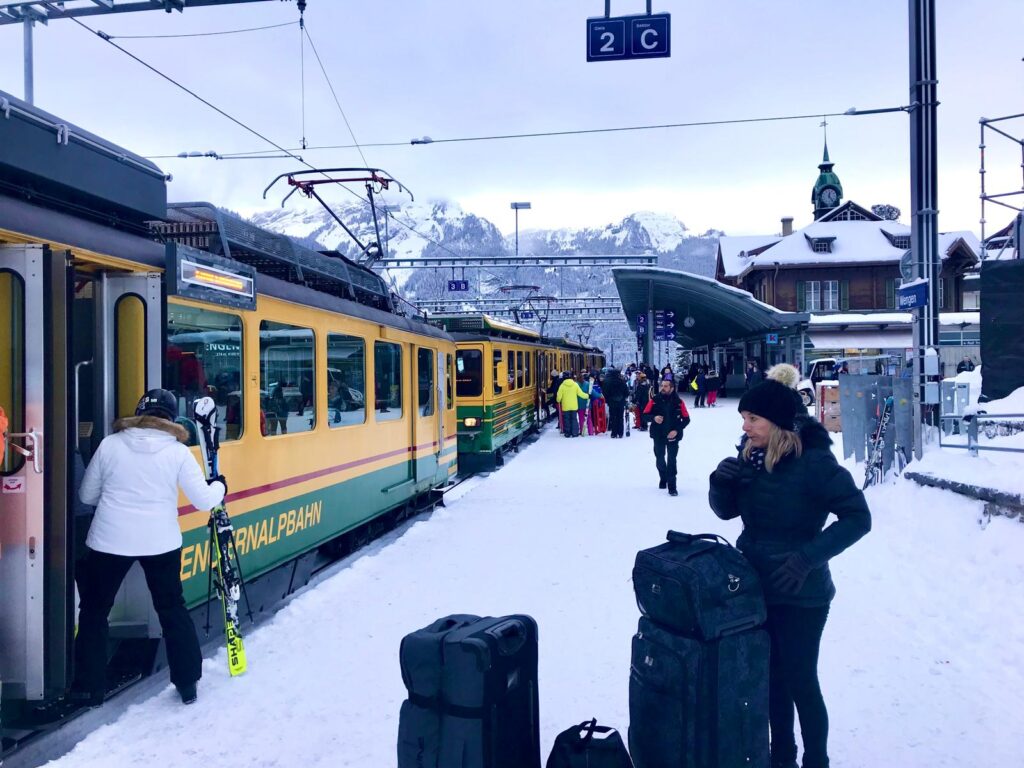
How to Get to Switzerland’s Snow-Sure Ski Resorts
One of the great things about skiing in Switzerland is that you don’t necessarily need a car.
The country’s trains, buses and mountain railways make it surprisingly easy to travel from the airport to many of the major ski resorts.
Zurich and Geneva airports both have railway stations within the airport, while Basel Airport connects to Basel railway station by bus.
For a ski holiday, that can be a real advantage. You don’t have to worry about winter driving, snow chains or finding somewhere to park the car once you arrive.
Here’s how we’d approach getting to each of our seven snow-sure resorts.
Getting to Zermatt
Best airport: Geneva or Zurich
Zermatt is one of the easiest resorts on our list to reach without a car because the railway takes you right into the village.
From the Swiss airports, you’ll travel by train towards Visp or Brig, where you connect with the Matterhorn Gotthard Railway for the final journey into Zermatt.
Approximate journey times are:
- Geneva Airport: around 4 hours by train
- Zurich Airport: around 3½ hours by train
- Basel Airport: around 3¾ hours by train
Zermatt is car-free, so if you’re driving, you’ll leave your car at Täsch and continue by shuttle train into the resort.
For us, arriving by train is part of the experience. Once you’ve settled into your seat, you can simply watch the scenery change as you travel deeper into the Alps.
Getting to Saas-Fee
Best airport: Geneva or Zurich
Saas-Fee is another excellent choice if you don’t want to hire a car.
Take the train to Visp, then change to PostBus 511, which runs directly to Saas-Fee. The journey from Zurich, Geneva or Basel airports is around three hours by public transport.
Saas-Fee itself is car-free, with parking available at the entrance to the village.
One particularly interesting option for British skiers is the train connection from London to Visp, followed by the PostBus to Saas-Fee. The resort specifically highlights this as a convenient option for visitors travelling from England.
If you’re trying to avoid flying, that’s certainly worth considering.
Getting to Verbier
Best airport: Geneva
Verbier is particularly convenient from Geneva, making it one of the more accessible resorts in the French-speaking part of Switzerland.
The usual route is:
Geneva Airport → Martigny → Le Châble → Verbier
From Le Châble, you can take the cable car directly to Médran in Verbier, or use the bus to the centre. The journey from Le Châble to Verbier takes around 20 minutes.
Verbier’s official tourism information currently gives an approximate public-transport journey of 2½ hours from Geneva, around 4 hours from Zurich and around 3 hours from Basel.
During winter, the Verbier Express also provides direct Geneva–Le Châble services on selected weekends and public holidays, avoiding the usual change at Martigny.
For a ski holiday from the UK, Geneva is the airport we’d look at first.
Getting to Engelberg-Titlis
Best airport: Zurich
Engelberg is probably one of the easiest resorts on our list to reach from Zurich.
From Zurich Airport, trains run regularly to Lucerne, where you change to the Zentralbahn railway for the final journey to Engelberg. The journey from Zurich Airport to Lucerne takes around an hour, followed by approximately 45 minutes to Engelberg.
The total public-transport journey is therefore around 1¾ hours, depending on your connections.
Once you’re in Engelberg, a free local bus connects the railway station with the various valley stations, including the Titlis cable-car area.
This is one of the reasons we like Engelberg for a shorter ski break. You can land at Zurich, be on the train relatively quickly and reach the mountains without spending half the day travelling.
Getting to St. Moritz
Best airport: Zurich
St. Moritz takes longer to reach than Engelberg, but the journey is spectacular.
From Zurich, the train journey to St. Moritz takes around three hours, usually travelling via Chur and the Albula railway.
The route is part of the UNESCO-listed Rhaetian Railway network, with spectacular mountain scenery, spiral tunnels and viaducts along the way. You can also reach St. Moritz from Tirano in Italy via the Bernina route.
If you aren’t in a hurry, we’d actually consider the train journey part of the holiday.
It is one of those occasions where getting there isn’t simply something to endure before the skiing starts.
Getting to Davos-Klosters
Best airport: Zurich
Zurich is the obvious airport for Davos-Klosters.
From Zurich Airport, take the train to Landquart, then change to the Rhaetian Railway for Davos or Klosters.
The complete journey from Zurich Airport to Davos or Klosters is around 2¾ hours by public transport, depending on the connections.
Driving is also relatively straightforward, with Davos around two hours from Zurich by road in normal conditions. However, winter weather can affect the roads, and snow chains may be necessary during heavy snowfall.
For most visitors, we’d probably take the train unless we specifically wanted the flexibility of a car.
Getting to Laax
Best airport: Zurich
Laax is another resort where Zurich is the easiest airport to use.
The public-transport route is:
Zurich Airport → Zurich → Chur → Laax
You’ll take the train to Chur and then continue by bus to Laax. The resort doesn’t have its own railway station, but the bus connection from Chur is straightforward.
Laax’s official information describes the resort as around 1½ hours from Zurich Airport by car, while the wider Davos/Laax tourism information gives approximately 2 hours 45 minutes by public transport.
If you’re travelling with a lot of ski equipment, driving can therefore be attractive, particularly if you’re staying in an apartment.
For more comfort and convenience, compare these car rentals: DISCOVER CARS
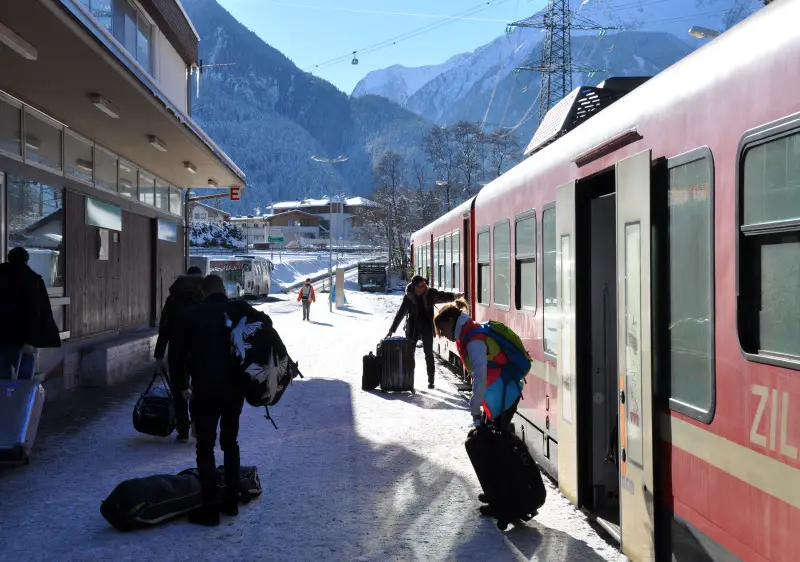
Switzerland’s Snow-Sure Resorts: Airport Guide
Here’s the quick version:
| Resort | Best Airport | Approx. Public Transport Time | Car Needed? |
|---|---|---|---|
| Zermatt | Geneva / Zurich | 3½–4 hrs | No |
| Saas-Fee | Geneva / Zurich | Around 3 hrs | No |
| Verbier | Geneva | Around 2½ hrs | No |
| Engelberg-Titlis | Zurich | Around 1¾ hrs | No |
| St. Moritz | Zurich | Around 3 hrs | No |
| Davos-Klosters | Zurich | Around 2¾ hrs | No |
| Laax | Zurich | Around 2–2¾ hrs | No |
Times are approximate and depend on the particular train and bus connections on the day of travel.
Geneva or Zurich – Which Airport Should You Choose?
For our seven resorts, the decision is actually quite simple.
Choose Geneva if you’re skiing Verbier, Saas-Fee or travelling to the western Valais resorts.
Choose Zurich if you’re heading to Engelberg, Davos-Klosters, St. Moritz or Laax.
For Zermatt, both Geneva and Zurich work well, although the journey is fairly long from either airport.
Basel can also work for several destinations, particularly if flight prices are significantly better, but we’d check the complete door-to-door journey before booking.
Do You Need to Hire a Car?
For these seven resorts, we wouldn’t automatically hire one.
Switzerland’s public-transport network makes travelling without a car surprisingly easy, and several of our resorts are either completely car-free or very well connected by rail and bus.
A car can still make sense if:
- You’re travelling as a family or large group
- You have a lot of luggage and ski equipment
- You’re staying outside the main resort
- You’re planning to visit several destinations
- You’re travelling with young children and prefer door-to-door convenience
For more comfort and convenience, compare these car rentals: DISCOVER CARS
But if you’re simply flying in for a week of skiing and staying in the resort centre, the train is often the easier option.
And there is another advantage: you don’t have to drive mountain roads in a snowstorm after a long flight.
Our Tip for Travelling to Switzerland
If you’re flying into Switzerland for a ski holiday, we’d check the complete journey before booking the flight.
A flight that looks cheaper isn’t necessarily cheaper once you add airport transfers, car hire, fuel, parking and winter driving.
With Switzerland, it’s often worth paying a little more for a convenient flight time and then using the excellent public-transport network to get almost all the way to the ski lift.
For us, that’s one of the great things about skiing in Switzerland. You can land at an international airport in the morning, step onto a train and, a few hours later, be sitting in an Alpine village looking up at the mountains.
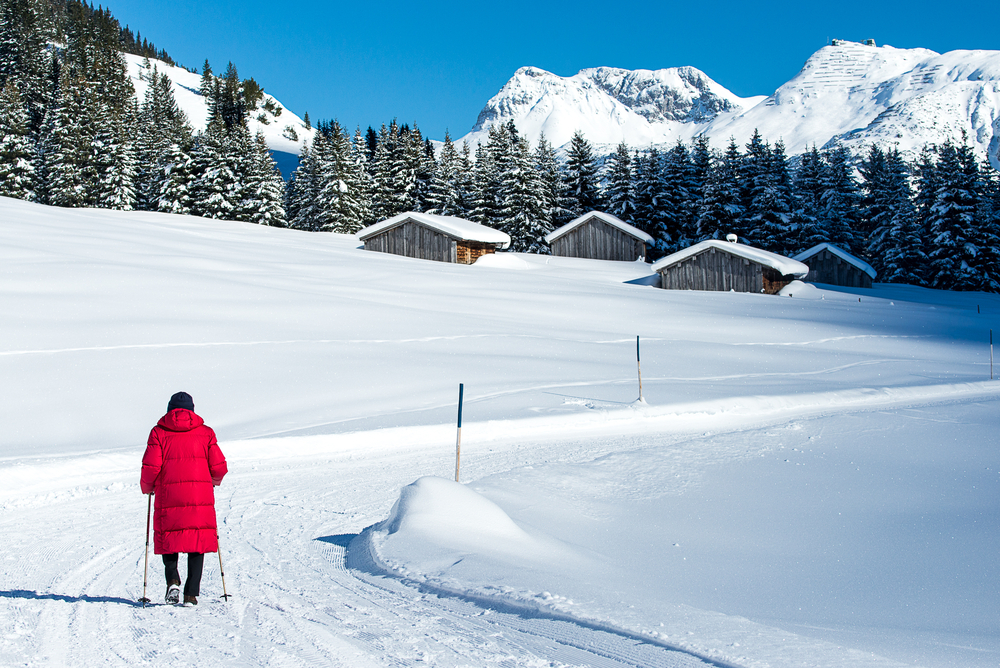
Our Tips for Booking Swiss Ski Accommodation
There are a few things we’d check before booking any of these resorts.
Check the distance to the lifts.
A hotel that looks inexpensive can become less attractive if you’re walking 15 or 20 minutes each way carrying skis and boots.
Look at the village location.
Some resorts are spread out, so being near the right lift matters more than simply being “in the resort.”
Check whether a ski bus is included or nearby.
This can make a property further from the lifts much more practical.
Book early for Christmas and February.
The most popular Swiss resorts can fill up well in advance during school holidays.
Consider apartments for longer stays.
If you’re staying for a week or more, an apartment with a kitchen can sometimes make more sense than eating every meal in restaurants.
Don’t automatically choose the cheapest room.
A slightly better location can make a noticeable difference to the whole holiday.
Which Resort Has the Best Choice of Accommodation?
All seven resorts have plenty of options, but they have very different accommodation styles.
Zermatt
is excellent for choice, from hostels to some of Switzerland’s most luxurious hotels.
Saas-Fee
has a more traditional Alpine feel with plenty of family-friendly and wellness accommodation.
Verbier
is particularly strong for luxury hotels and chalets.
Engelberg
has a good mixture of luxury, traditional and affordable properties.
St. Moritz
is the obvious destination if luxury hotels and fine dining are part of the holiday.
Davos-Klosters
provides a particularly broad range of accommodation and is useful for longer stays.
Laax
is especially good for modern apartments, snowboard-friendly accommodation and ski-in/ski-out convenience.
For current availability and prices, it’s worth checking accommodation shortly before booking because winter rates can change considerably depending on the dates, school holidays and snow conditions.
Booking.com currently lists hundreds of properties across several of these resorts, so there is plenty of choice beyond the hotels we’ve highlighted here.
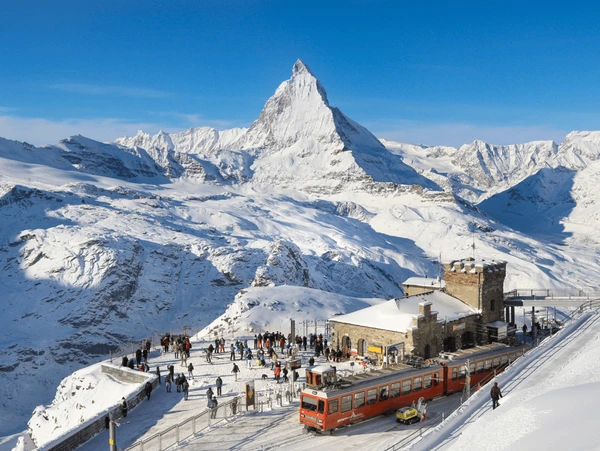
Frequently Asked Questions About Snow-Sure Ski Resorts in Switzerland
What is the most snow-sure ski resort in Switzerland?
Zermatt and Saas-Fee are among Switzerland’s strongest choices for snow reliability. Both have very high ski areas and glacier terrain, with skiing reaching around 3,600 metres or higher.
Which Swiss ski resort is best for snow at Christmas?
For Christmas skiing, high-altitude resorts such as Zermatt, Saas-Fee and Engelberg-Titlis are worth considering. Their upper slopes provide better protection against early-season warm spells, although snow conditions can still vary from year to year.
Which Swiss ski resorts have glacier skiing?
Several resorts in this guide have glacier terrain, including Zermatt, Saas-Fee, Engelberg-Titlis and Laax. Saas-Fee and Zermatt are particularly well known for high-altitude glacier skiing, with both areas also offering skiing outside the traditional winter season.
Is Zermatt snow-sure in April?
Zermatt is one of the better Swiss choices for late-season skiing because of its high altitude and glacier terrain. However, conditions can change during April, so check the current snow report and operating lifts before travelling.
What is the best month to ski in Switzerland for reliable snow?
January through March generally provides a strong combination of established snow cover and good winter conditions. For late-season skiing, choosing a high-altitude resort with glacier terrain becomes increasingly important, particularly during April.
Which Swiss ski resort is best for beginners?
Davos-Klosters, Zermatt and Saas-Fee all have terrain suitable for beginners, with dedicated learning areas and gentler pistes. The best choice also depends on village atmosphere, accommodation, budget and how much skiing you want to explore.
Can you ski in Switzerland without a car?
Absolutely. Switzerland has an excellent public transport network, and all seven resorts in this guide can be reached without hiring a car. Trains, buses and mountain railways make car-free ski holidays particularly straightforward.
Are Swiss ski resorts snow-sure all winter?
No ski resort can guarantee snow every day. High-altitude resorts improve your chances because more of their terrain sits above the warmer elevations. Glacier skiing, snowmaking and the timing of your trip can also make a significant difference.
We Can Help Plan Your Adventure
Custom Ski Itineraries in Europe Designed For You
Should You Get Ski Travel Insurance?
(Short Answer: YES)
While ski resorts in Europe don’t legally require you to have travel insurance, buying ski-specific travel insurance is one of the smartest decisions you can make.
One accident or missed connection can cost far more than a full year of coverage.
If you want peace of mind on and off the mountain, ski travel insurance is essential.
As a traveller and skier myself, I’ve consistently found SafetyWing offers some of the best winter-sports coverage for international ski trips.
Best Ski Travel Insurance Companies for 2025/26
Two companies consistently stand out for skiers, each for different reasons.
1. SafetyWing
(Best for Long-Term Ski Travel & Affordability)
We personally use SafetyWing, and have since 2019.
It’s perfect for skiers spending multiple weeks or a whole season abroad.
You can get a Quote here.
When my wife broke her ankle skiing in Wengen, they were fantastic, they paid for all our expenses without any delay.
2. World Nomads
(Best for Adventure Coverage)
If you’re planning a trip that includes off-piste skiing with a guide, winter hiking, or multiple snow sports, World Nomads often provides broader adventure coverage.
They’re a favourite among travellers who want all activities covered under one policy.
Even experienced skiers will tell you — it only takes one icy patch to ruin both a knee and a bank account.
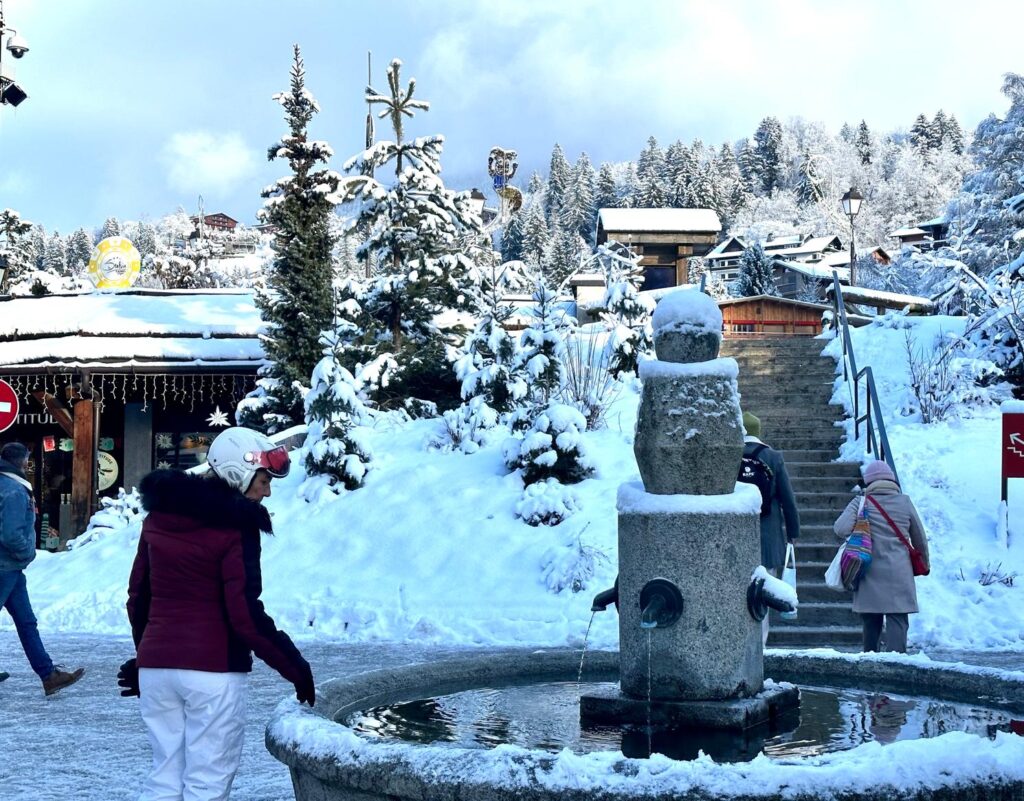
Final Thoughts: Choosing a Snow-Sure Ski Resort in Switzerland
After skiing across Europe for more than 25 years, we’ve learnt that choosing a resort for snow reliability is about much more than simply looking at the snow report.
Altitude, glacier skiing, the layout of the ski area and the time of year you visit can all make a big difference.
Switzerland has some fantastic options, from the high-altitude skiing of Zermatt and Saas-Fee to the huge terrain of Verbier and Davos-Klosters.
Engelberg is a great option for a shorter ski trip, while St. Moritz brings a very different style of Swiss skiing. And if snowboarding and freestyle are your priorities, Laax is hard to overlook.
Of course, nowhere can guarantee perfect snow every day.
But choose your resort carefully, travel at the right time of year and stay high when conditions matter most, and you’ll give yourself a much better chance of enjoying the winter skiing you came to Switzerland for.
For us, that’s what snow-sure skiing is really about.
Happy skiing!
Gary & Sally
Timeless Wanderers
PLAN YOUR SKI ADVENTURE
Booking a ski trip involves a range of reliable resources to ensure a smooth and enjoyable experience. I have listed below our favorite companies we use when we plan our ski holiday.
BOOK YOUR FLIGHT – GOING is a great search engine if you are flexible about your travel destination and dates. GOING is our new go to.
Booking.com– for accommodation, we rely on Booking.com for its extensive options and user reviews. We find they have the cheapest rates and offer payment options. In addition, VRBO is another terrific website for all types of accommodations.
Train Travel– to European ski resorts is convenient and scenic, popular trips include Glacier express to Zermatt, the Eurostar from London to the French Alps. We find Omio or Rail Europe are the best sites for booking trains in Europe.
Car Hire – we usually hire a car it offers us flexibility and convenience, allowing easy access to most resorts. Companies like Discover Cars or Rentalcars.com provide reliable options with winter equipment.
Travel insurance– Don’t ski without it. If you get hurt on the mountain it could cost you a small fortune if you’re not insured. We use SAFETYWING when my wife broke her ankle a few years ago in Wengen they were terrific.
Ski Equipment. – Bring your own ski gear, its usually cheaper and much better than renting, it ensures you have a perfect fit. Owning also saves time and money in the long run. Equipment like Skis, Pants and Jackets, Gloves, Ski-helmets and Thermal underwear” can all be bought online. You can purchase everything you need from BACKCOUNTRY
ARC’TERYX – is a go to reliable brand for outdoor adventure and travel, their wide range includes light weight durable, easy to clean travel gear.
Check out our RESOURCE PAGE for more additional planning.