Where to Stay in the Dolomites for Skiing: Best Resorts and Bases
Timeless Wanderers: Posted November 2, 2026
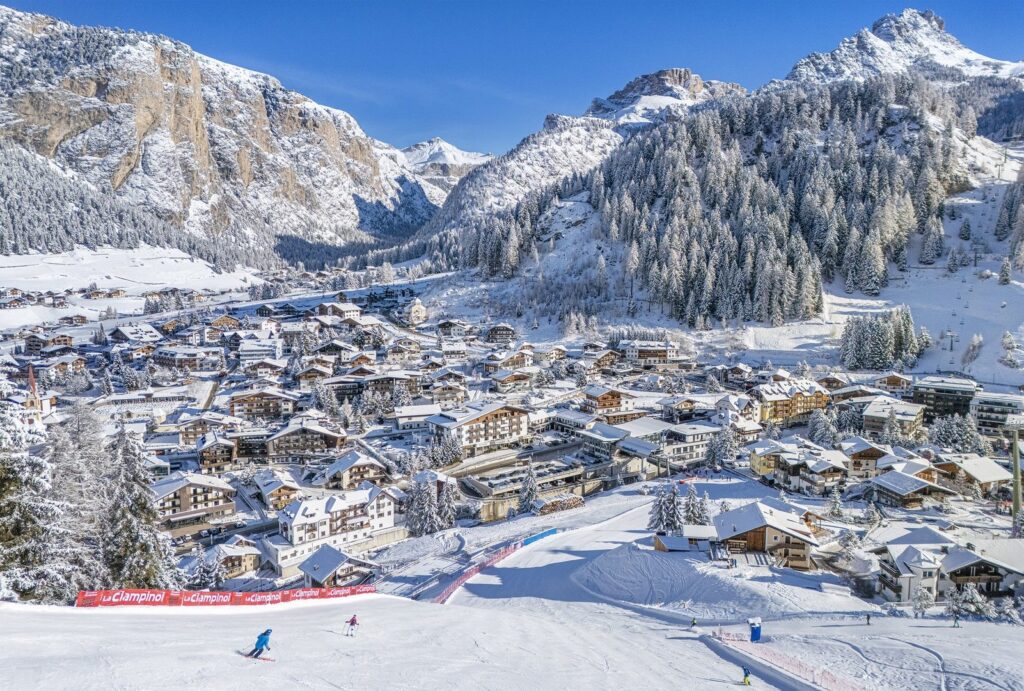
Choosing the Right Base for Your Dolomites Ski Holiday
The Italian Dolomites are home to some of Europe’s most beautiful ski resorts, but deciding where to stay can be just as important as choosing where to ski.
With several different ski areas, traditional mountain villages and access to the enormous Dolomiti Superski network, there are plenty of places to consider.
Some resorts are ideal if you want to ski the Sella Ronda, while others are better suited to exploring quieter slopes, enjoying village life or having a wider choice of restaurants and accommodation.
We’ve spent many winters skiing in the Dolomites, and each area has its own character.
We’ve particularly enjoyed staying in Corvara, which makes a relaxed base with plenty of skiing close by.
In this guide, we’ll look at four of the best places to stay for a Dolomites ski holiday: Canazei in Val di Fassa, Val Gardena, Corvara in Alta Badia and Cortina d’Ampezzo.
We’ll explain what each resort is like, the skiing you can access, who it’s best suited to and what to consider when booking your accommodation.
That way, you can choose a base that suits the kind of ski holiday you’re looking for.
Best Areas to Stay in the Dolomites for Skiing
The best place to stay in the Dolomites depends on the type of skiing you enjoy and how you want to spend your holiday.
If skiing the Sella Ronda is high on your list, you’ll want a base with easy access to the circuit.
If you prefer exploring different ski areas, enjoying a traditional Italian village or having plenty of restaurants and accommodation to choose from, another resort may suit you better.
We’ve narrowed it down to four excellent bases, each with something different to offer:
Canazei – Val di Fassa: A great choice for accessing the Sella Ronda and exploring several connected ski areas.
Val Gardena – Ortisei or Selva: Ideal for extensive skiing, with different village atmospheres and excellent lift connections.
Corvara – Alta Badia: A relaxed base with lovely skiing, good access to the Sella Ronda and plenty of mountain restaurants.
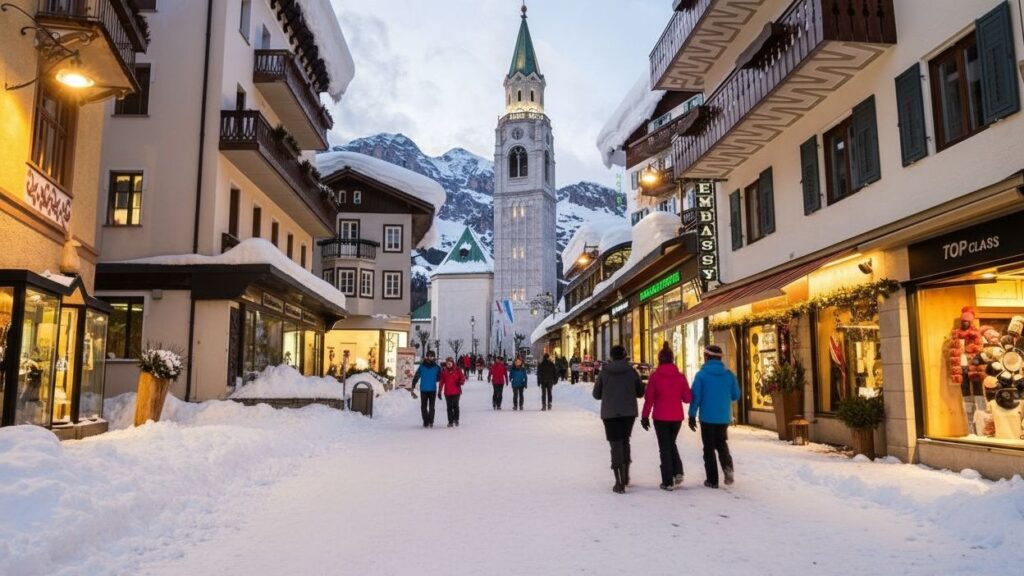
Cortina d’Ampezzo: A beautiful resort with several distinct ski areas, a lively town and a slightly different feel from the Sella Ronda resorts.
Let’s look at each area in more detail so you can decide which one is right for your ski holiday.
We can plan your Dream Ski Trip to Europe: Custom Itineraries for the Perfect winter Holiday.
With over 25 years of experience skiing in over 50 different ski resorts in Europe, we can help you plan your perfect winter escape.
Planning a ski trip to Europe can be exciting, but choosing the right resort and organising the perfect itinerary can quickly become overwhelming.
That’s where we come in.
We offer a personalised planning service that helps you decide exactly where to ski, based on your style, budget, and experience.
“Plus, we can help you plan a fun week of European sightseeing around your ski trip, making your winter holiday easier, smoother, and full of unforgettable memories.”
“Let us plan your perfect trip with a custom itinerary designed just for you.
Fill out the form and let’s begin your dream.”
1. Canazei – Val di Fassa
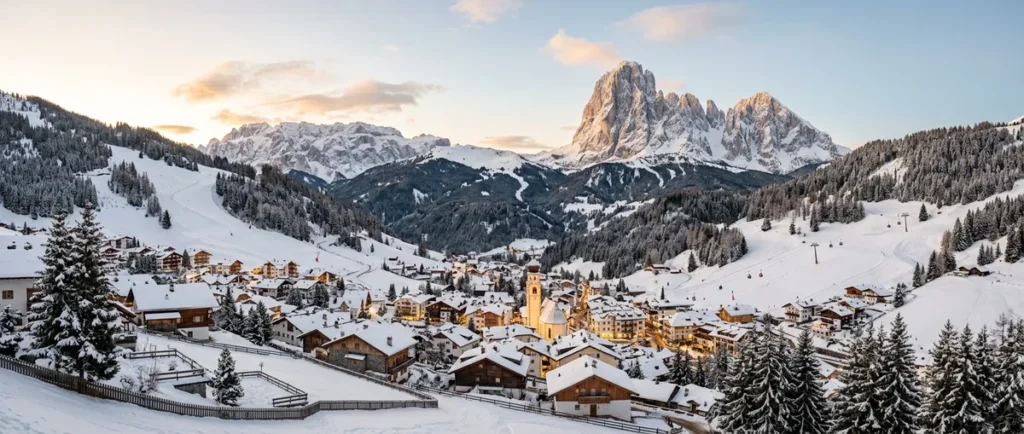
Canazei is one of the most popular bases for a ski holiday in the Dolomites, and it’s easy to see why.
Set beneath the dramatic peaks of the Sella Group, it has direct access to some excellent skiing and is particularly well placed for exploring the Sella Ronda.
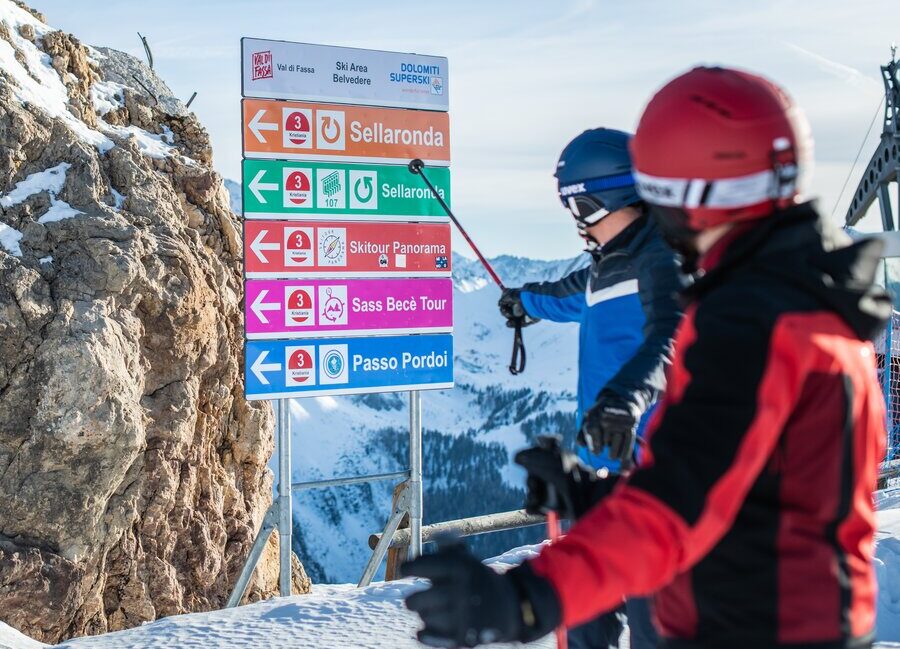
The main lift connection takes you up to the Belvedere ski area, where you can access a large network of pistes and join the Sella Ronda circuit.
From here, you can ski towards Arabba and Val Gardena, making Canazei a convenient starting point for exploring beyond Val di Fassa.
The village itself has plenty of accommodation, restaurants, bars and ski hire shops.
It’s a good choice if you like having everything close at hand after a day on the slopes, without staying in a resort that feels overly large.
Who is Canazei best for?
Intermediate skiers who want plenty of varied pistes.
Skiers keen to complete the Sella Ronda.
Couples and families looking for a lively village with good facilities.
Visitors who want to explore several Dolomites ski areas from one base.
Things to consider
Canazei can be busy during peak weeks, particularly around Christmas, New Year and February half-term.
It’s also worth knowing that the village sits below the main ski area, so you’ll generally use the lifts or local ski bus to get around, depending on where you’re staying.
Our tip:
If you want a base with excellent access to the Sella Ronda, a good choice of accommodation and plenty happening in the village, Canazei is well worth considering.
For a closer look, read our guide to [7 Days Skiing in Val di Fassa] and our [Sella Ronda skiing guide].
2. Val Gardena – Ortisei or Selva?
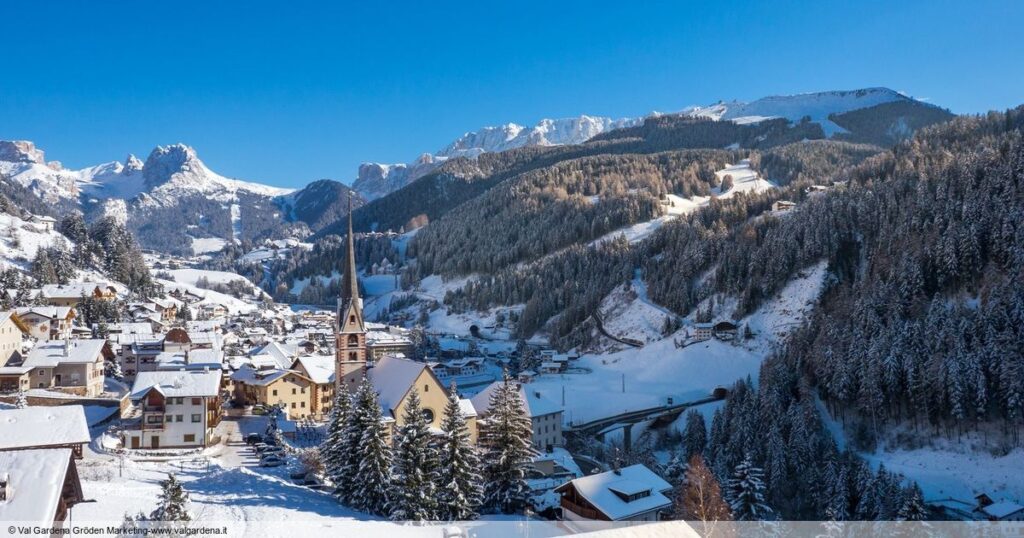
Val Gardena is one of the best-known ski areas in the Dolomites, with extensive skiing, excellent lift connections and some spectacular mountain scenery.
But when choosing where to stay, you’ll need to decide between its main villages, particularly Ortisei and Selva.
Both are excellent bases, but they suit slightly different types of ski holiday.
Ortisei – A Traditional Village with Plenty to Explore
Ortisei is a beautiful village with a lovely centre, traditional buildings, shops, cafés and restaurants.
It has a more relaxed feel than Selva and is a good choice if you want to enjoy the village as much as the skiing.
The lifts provide access to Seceda and the Alpe di Siusi ski area, giving you two very different skiing experiences.
Seceda is particularly well known for its spectacular views and long pistes, while Alpe di Siusi is a gentler area with wide, open slopes.
Ortisei is especially suitable for:
Couples looking for a relaxed ski holiday.
Families and skiers who enjoy gentler slopes.
Visitors who like browsing shops and enjoying cafés and restaurants.
Anyone wanting to combine skiing with time exploring a traditional Dolomites village.
One thing to consider is that Ortisei isn’t directly on the Sella Ronda circuit.
You’ll need to use the lift connections towards the other Val Gardena ski areas if you want to join it.
Selva – Best for Access to the Sella Ronda
Selva di Val Gardena is a particularly good choice if skiing is the main reason for your visit.
It sits higher up the valley and has excellent access to the main Val Gardena ski area and the Sella Ronda.
From Selva, you can head towards the Ciampinoi and Dantercepies areas, with connections towards Alta Badia and the other Sella Ronda resorts.
This makes it a convenient base if you enjoy covering plenty of ground during your ski holiday.
The village has a good selection of hotels, restaurants, bars and ski facilities, with much of the accommodation geared towards winter visitors.
Selva is especially suitable for:
Intermediate and advanced skiers.
Anyone wanting convenient access to the Sella Ronda.
Skiers who prefer to spend most of the day exploring different pistes.
Visitors who want to ski straight from or close to their accommodation.
Selva can be busy during peak ski weeks, and accommodation close to the lifts can be more expensive, so it’s worth booking ahead.
So, should you choose Ortisei or Selva?
If you want a traditional village, a relaxed atmosphere and access to Seceda and Alpe di Siusi, we’d look at Ortisei.
If your priority is getting out onto the slopes and joining the Sella Ronda with minimal fuss, Selva is the better choice.
For more details, take a look at our [7-Day Ski Itinerary in Val Gardena].
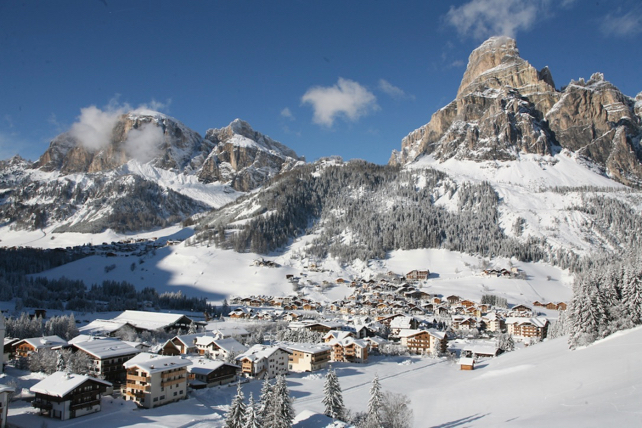
3. Corvara – Alta Badia
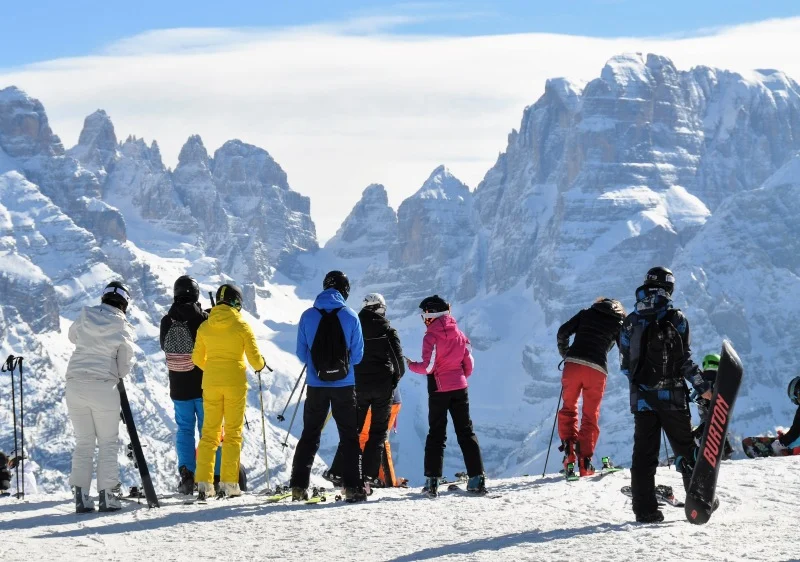
Corvara is one of our favourite places to stay in the Dolomites.
We’ve spent time here ourselves and found it a wonderfully relaxed base, with excellent skiing close by and easy access to the surrounding resorts.
Situated in the heart of Alta Badia, Corvara is particularly well positioned for exploring the Dolomites.
The local ski area has a great mix of wide, well-groomed pistes, while the lift connections make it easy to reach the Sella Ronda and neighbouring ski areas.
From Corvara, you can ski towards Colfosco, La Villa and the Pralongià plateau, or head around the Sella Ronda towards Val Gardena, Arabba and Val di Fassa.
The village itself has a good selection of hotels, restaurants, cafés and shops. It’s large enough to have plenty of choice, but still feels relaxed after a day on the slopes.
Why Choose Corvara?
Corvara is particularly well suited to:
Intermediate skiers who enjoy exploring different pistes.
Skiers wanting easy access to the Sella Ronda.
Couples and families looking for a relaxed village atmosphere.
Visitors who enjoy good mountain restaurants and a choice of places to eat.
Anyone wanting a central base for exploring Alta Badia and neighbouring ski areas.
Things to Consider
Corvara is a popular resort, so accommodation can book up quickly during Christmas, New Year and February half-term.
It’s also worth checking how close your accommodation is to the lifts, as the village spreads out along the valley.
Our tip:
We really like Corvara as a base because you have so much skiing within easy reach, but you can still enjoy a relaxed village at the end of the day.
If you want a resort that combines good skiing with restaurants, shops and easy access to the wider Dolomites, it’s definitely worth considering.
For more information, read our [7-Day Ski Itinerary in Alta Badia].
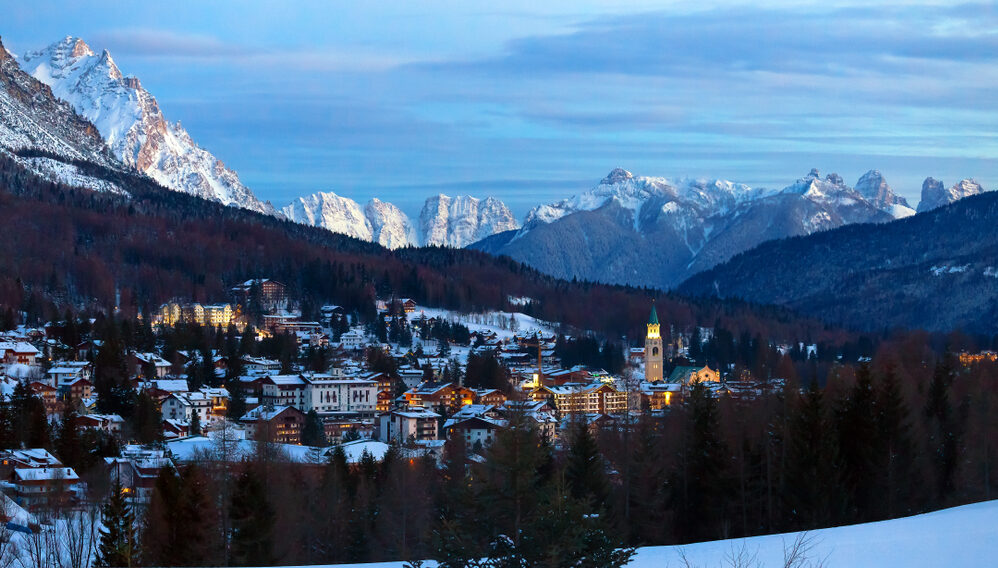
4. Cortina d’Ampezzo – A Different Dolomites Ski Experience
Cortina d’Ampezzo is one of the most famous ski resorts in the Italian Dolomites.
Surrounded by spectacular mountain scenery, it combines excellent skiing with an elegant town, a good choice of restaurants and plenty of places to stay.
Unlike Canazei, Selva and Corvara, Cortina isn’t directly connected to the Sella Ronda ski circuit. Instead, it has several separate ski areas, each with its own character.
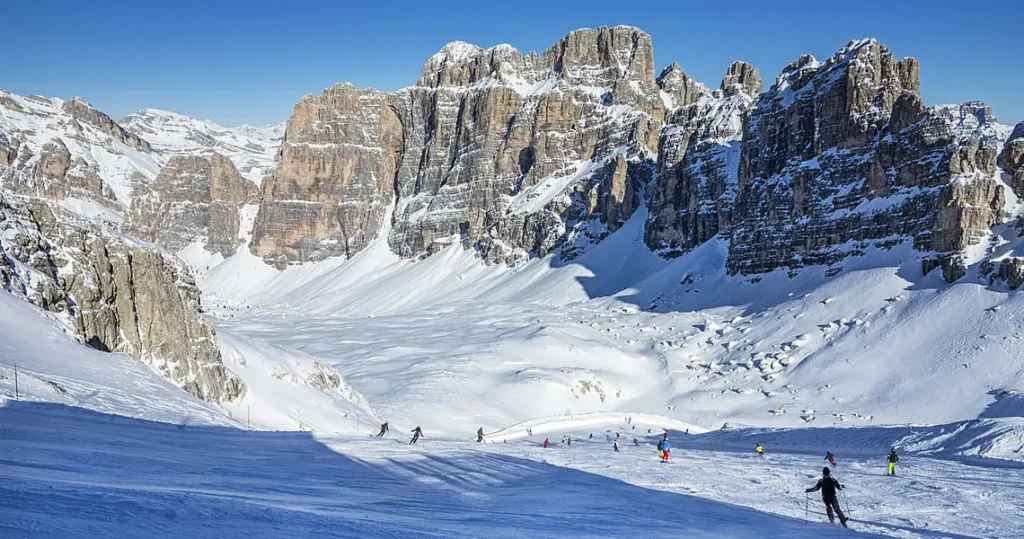
The main areas include Tofana, Faloria-Cristallo and 5 Torri-Lagazuoi.
You can enjoy a different part of the mountains on each ski day, although you’ll need to allow for local transport or ski buses when moving between some areas.
Why Choose Cortina?
Cortina is particularly well suited to:
Intermediate and advanced skiers who enjoy exploring different ski areas.
Couples looking for a stylish mountain holiday.
Visitors who enjoy good restaurants, cafés and shopping.
Skiers who want spectacular scenery and a town with plenty going on.
Anyone happy to plan their ski days around separate areas rather than one large connected circuit.
Things to Consider
Cortina is generally more expensive than some of the other Dolomites bases, particularly when it comes to accommodation and dining.
t’s also important to check where your hotel is located in relation to the lifts, as staying in the town centre doesn’t necessarily mean you can ski straight from your door.
If you want to ski the Sella Ronda, Cortina isn’t the most convenient base. You can travel to other areas, but it involves more planning and transport.
Our tip:
Choose Cortina if you want your ski holiday to be about more than just the kilometres of pistes.
You can enjoy several different ski areas during the day and return to a proper mountain town in the evening.
For a closer look, read our [7-Day Ski Itinerary in Cortina d’Ampezzo].

Where to Stay in the Dolomites: Accommodation Tips
Once you’ve chosen your preferred resort, the next step is finding the right place to stay.
The Dolomites have a wide range of accommodation, from luxury hotels with spas and wellness facilities to family-run guesthouses, apartments and traditional mountain hotels.
Prices can vary considerably depending on the resort, location and time of year.
Staying close to the lifts is convenient, but you may find better value a little further from the centre.
Here are a few things we’d consider before booking.
Stay Close to the Ski Lifts
If skiing is the main reason for your visit, location matters.
Staying within walking distance of a lift can make your mornings much easier, particularly if you’re carrying your own equipment.
Alternatively, look for accommodation with a reliable ski bus stop nearby or a hotel shuttle service.
Decide What Type of Accommodation Suits You
Think about how you want to spend your evenings and what facilities matter most.
Luxury hotels: Ideal if you enjoy spa facilities, swimming pools, wellness areas and restaurant dining after skiing.
Mid-range hotels: A good option if you want comfortable accommodation, breakfast and convenient access to the slopes without paying luxury prices.
Budget accommodation: Guesthouses, B&Bs and simpler hotels can help keep costs down, particularly if you’re happy to eat out or prepare some meals yourself.
Apartments and self-catering: Worth considering for families, groups and longer stays where having your own kitchen and living space is useful.
Book Early for Peak Weeks
Accommodation in the most popular Dolomites resorts can fill up quickly, especially during Christmas, New Year and February school holidays.
If you have specific dates in mind, we’d recommend comparing options early.
You may also find more choice if you’re flexible about which village you stay in.
Check What’s Included
Before booking, look carefully at what’s included in the price.
Some hotels offer half-board, which can be convenient after a full day skiing. Others include breakfast only.
Check whether ski storage, parking, wellness facilities and local ski bus services are included or charged separately.
Our tip:
Don’t choose accommodation based on photographs alone.
Check its exact location on a map, look at the distance to the nearest lift and read recent guest reviews.
A hotel that’s advertised as being in a ski resort may still involve a bus journey to reach the slopes.
Once you’ve settled on your preferred base, you can compare accommodation in each of our resort guides for more specific recommendations.
For more comfort and convenience, compare these car rentals: DISCOVER CARS
Where to Stay in the Dolomites: 24 Accommodation Recommendations
We’ve picked six places to stay in each of our four recommended areas, with options for different budgets.
From luxury hotels with spas to smaller family-run guesthouses, there’s a good choice depending on how you’d like to spend your ski holiday.
1. Canazei – Val di Fassa
Luxury
Locanda degli Artisti Art Hotel – A stylish boutique hotel with individually designed rooms, excellent dining and a strong focus on art and local character.
Hotel Cèsa Tyrol – A four-star superior hotel with an impressive wellness area, heated outdoor infinity pool and convenient ski shuttle.
Mid-range
Hotel Gries – A welcoming, family-run hotel with good dining, a wellness area and a shuttle service to the Belvedere lifts.
Hotel Pareda – A convenient choice close to the Belvedere lifts, with an indoor pool, spa and restaurant.
Budget
Hotel Oswald – A simple, family-run hotel in the centre of Canazei, with breakfast and half-board options.
Garnì Ciamorc – A smaller B&B-style guesthouse for visitors looking for a straightforward stay close to the village facilities.
More Accommodation in Canazei
2. Val Gardena – Ortisei and Selva
Luxury
Hotel Tyrol, Selva – A five-star mountain hotel with an excellent wellness offering, fine dining and a convenient base for skiing.
Alpenroyal Grand Hotel, Selva – A luxury hotel with extensive spa facilities, indoor and outdoor pools and a peaceful setting.
Mid-range
Boutique Hotel Planlim, Ortisei – A stylish boutique property with mountain views, comfortable rooms and wellness facilities.
Freina Dolomites Hotel, Selva – A smaller hotel close to the ski slopes, with a wellness area and a popular restaurant.
Budget
Hotel Garni Snaltnerhof, Ortisei – A traditional family-run guesthouse in a central location, handy for the village and its lifts.
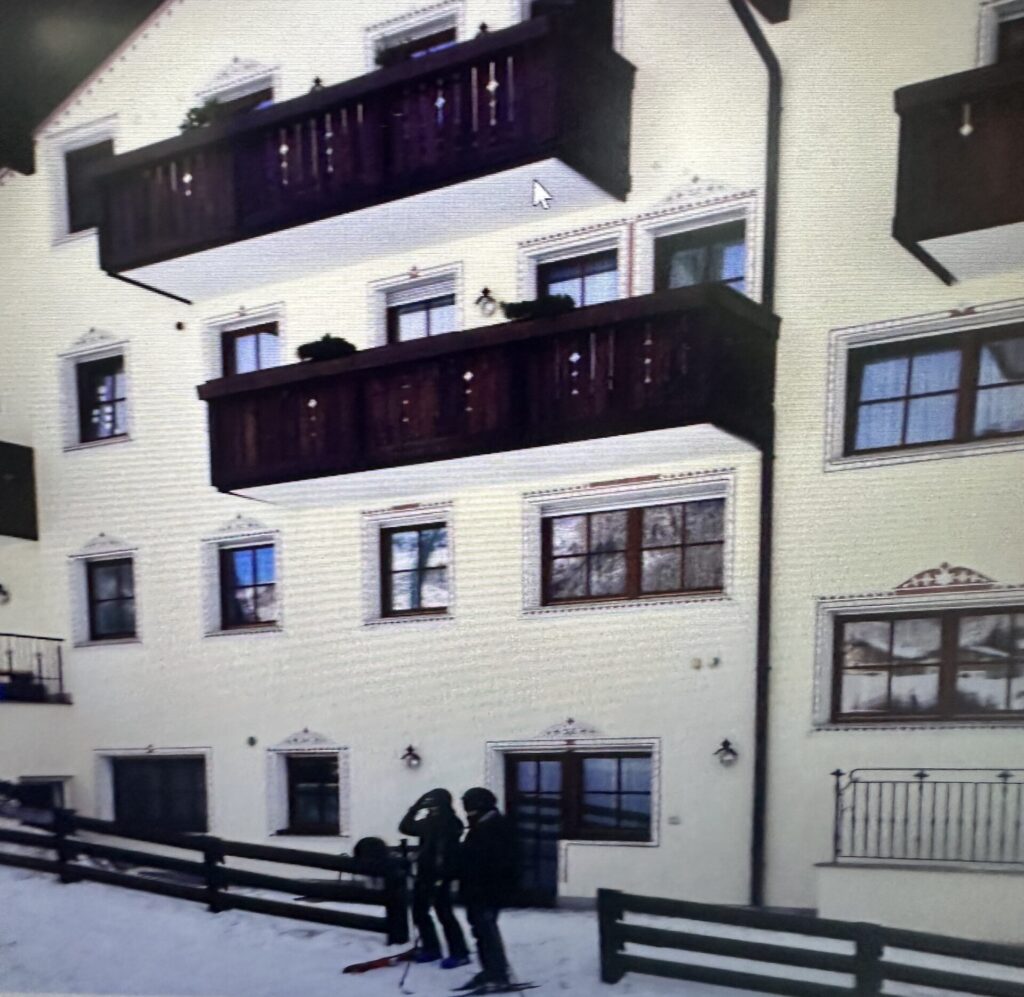
Garni Sayonara, Selva – Garni Sayonara in Selva di Val Gardena offers family rooms with balconies, private bathrooms, and mountain views. Ski to the door.
More Accommodation in Val Gardena
3. Corvara – Alta Badia
Luxury
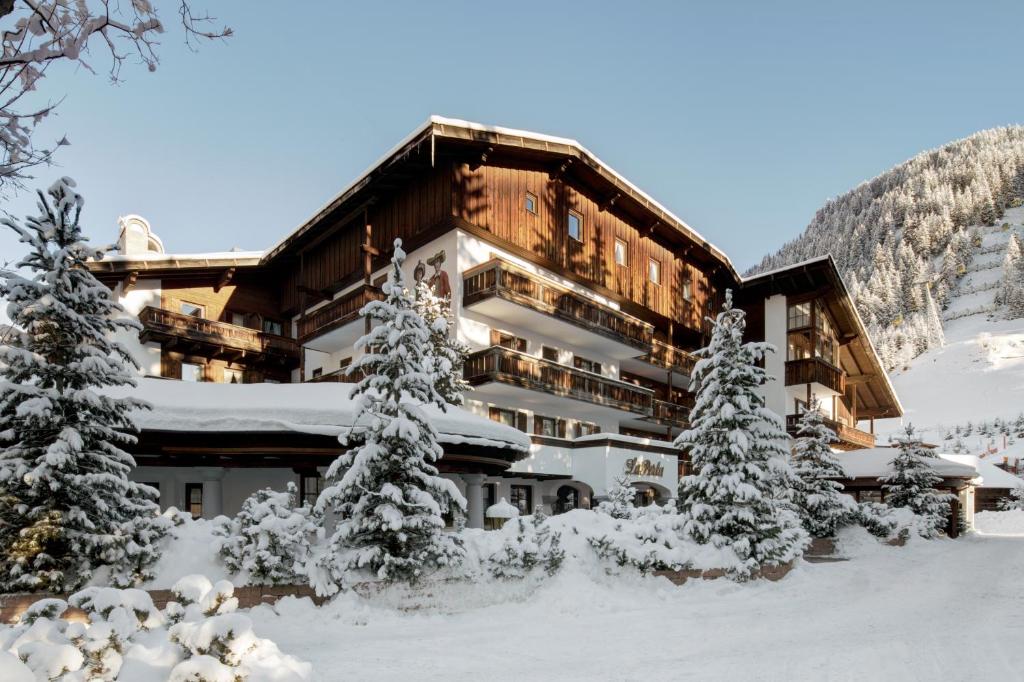
Hotel La Perla – A five-star family-run hotel beside the Col Alto lift, with beautiful interiors, excellent dining and a lovely wellness offering.
Hotel Sassongher – An established five-star hotel with mountain views, spa facilities and shuttle access to the ski lifts.
Mid-range
Hotel Col Alto – A four-star superior hotel in a convenient location, with a wellness area and easy access to the skiing.
Dolomites Lifestyle Hotel Marmolada – A central hotel with an Alpine feel, good dining and a convenient location for exploring Corvara.
Budget
Garni La Tranquillité – A family-run guesthouse offering a simpler stay in Corvara, with a convenient village location.
Garni Gabrieli – A smaller two-star guesthouse close to the centre, worth considering if you want to keep accommodation costs down.
Browse these other options in Corvara
4. Cortina d’Ampezzo
Luxury
Grand Hotel Savoia – A five-star hotel in the heart of Cortina, with elegant rooms, a spa and excellent facilities.
Rosapetra Spa Resort – A luxury mountain retreat with a substantial wellness area, swimming pool and a quieter setting outside the town centre.
Mid-range
Hotel Menardi – A traditional family-run hotel with mountain views and a convenient base for exploring Cortina.
Hotel Montana – A central hotel on Corso Italia, ideal for visitors who want shops, restaurants and the town’s facilities close by.
Budget
Hotel Villa Neve – A small, family-run guesthouse in a central location, worth considering for a simpler Cortina stay.
Hotel Oasi – A straightforward hotel close to the town centre, offering another option for travellers watching their accommodation budget.
More Accommodation in the Cortina
A final tip before booking:
Prices and availability change considerably throughout the winter.
Compare the properties for your actual travel dates, check how close they are to the ski lifts or ski bus, and look carefully at cancellation conditions.
Which Dolomites Resort Is Best for Your Ski Holiday?
With four excellent bases to choose from, the best resort really comes down to what you want from your ski holiday.
All four give you access to some fantastic skiing, but there are differences in their location, village atmosphere and the type of holiday they offer.
Here’s how we’d compare them.
| Resort | Best For | Skiing Experience |
|---|---|---|
| Canazei – Val di Fassa | Sella Ronda access and exploring | Varied pistes and several connected ski areas |
| Selva – Val Gardena | Convenient access to the Sella Ronda | Extensive skiing and excellent lift connections |
| Ortisei – Val Gardena | Village atmosphere and relaxed skiing | Seceda and Alpe di Siusi |
| Corvara – Alta Badia | A relaxed base with excellent access | Wide pistes, mountain restaurants and Sella Ronda connections |
| Cortina d’Ampezzo | Scenery, restaurants and town life | Several separate ski areas with different terrain |
Our Recommendations
If you want to ski the Sella Ronda: Choose Canazei, Selva or Corvara.
All three give you convenient access to the circuit, although your exact starting point and lift connections will depend on where you’re staying.
If you prefer a traditional village:
Look at Ortisei or Corvara.
Both have lovely village centres, restaurants and plenty to enjoy after skiing.
If you’re travelling with less experienced skiers:
Ortisei is worth considering because of the gentler slopes around Alpe di Siusi.
Alta Badia also has plenty of wide, well-groomed pistes.
If you’re an intermediate skier who likes exploring: Canazei, Selva and Corvara are all excellent choices, with access to extensive skiing across the Dolomites.
If you want a stylish town as well as skiing:
Cortina is the obvious choice.
It has a different feel from the other resorts, with a lovely town centre, restaurants and shopping alongside its separate ski areas.
So, Where Would We Stay?
For a first Dolomites ski holiday, we’d narrow the choice down to Canazei, Selva or Corvara if skiing the Sella Ronda and exploring the connected ski areas are priorities.
Corvara would certainly be high on our list. Having stayed there ourselves, we love its relaxed feel and the fact that so much skiing is close by.
However, if you’d prefer a more traditional mountain town with a different style of skiing, Cortina or Ortisei could be just what you’re looking for.
Getting Around the Dolomites
One of the things to consider when choosing where to stay in the Dolomites is how you’ll get around, particularly if you want to explore more than one ski area.
The good news is that you don’t necessarily need a hire car.
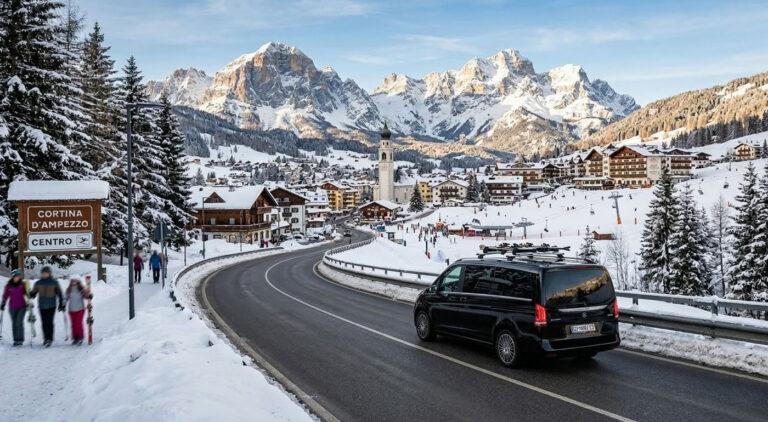
Many of the main ski resorts have local ski buses, and there are public transport connections between several towns and villages.
Getting Around Without a Car
If you’re staying in Canazei, Val Gardena or Corvara, you can enjoy a great deal of skiing without needing to drive.
Local ski buses connect many accommodation areas with the main lifts, while the lift network gives you access to neighbouring ski areas.
Cortina also has local ski bus services connecting the town with its main ski areas, although you’ll need to pay a little more attention to transport when planning your days.
If you’re flying into Italy, it’s worth checking airport transfers and local bus connections before booking your accommodation.
Should You Hire a Car?
A hire car can be useful if you want more flexibility, particularly if you’re staying outside the main resort villages or planning to visit different parts of the Dolomites.
However, if your main reason for visiting is skiing, you may find a car unnecessary.
Parking can be limited in busy resort centres, and you’ll need to consider winter driving conditions, snow and mountain roads.
For more comfort and convenience, compare these car rentals: DISCOVER CARS
Our Advice
For a straightforward ski holiday, we’d choose accommodation close to a lift or a reliable ski bus stop and avoid hiring a car unless you have other plans.
Before booking, check the location of your hotel, how frequently the ski bus runs and whether your accommodation provides a shuttle service.
It’s also worth checking the local transport timetables for your travel dates, as services can vary throughout the winter season.
The Best Time to Visit the Dolomites for Skiing
The main ski season in the Dolomites usually runs from early December until early April, although opening and closing dates vary between ski areas and depend on snow conditions.
The best time to visit depends on what matters most to you.
Are you looking for quieter slopes, reliable snow, fewer crowds or a little more sunshine?
Here’s what to expect throughout the season.
December – Christmas and New Year
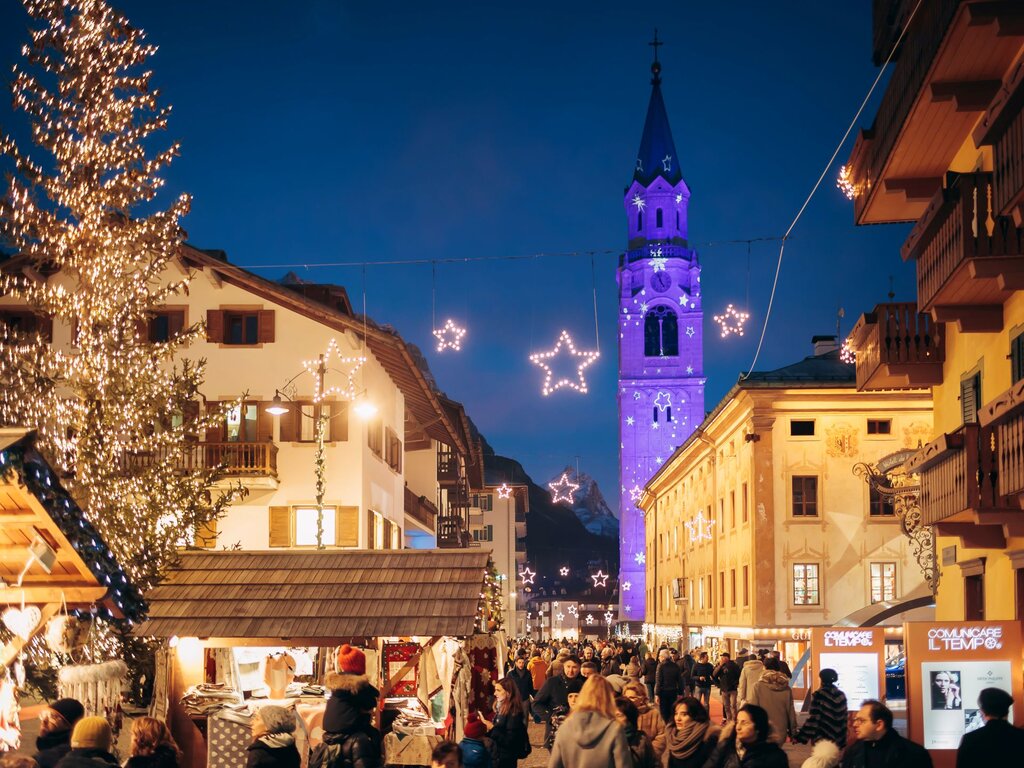
December is an exciting time to visit the Dolomites, particularly if you enjoy the festive atmosphere in the mountain villages.
The Christmas markets, decorated streets and snow-covered peaks can make this a lovely time for a ski holiday.
However, early-season snow conditions can be less predictable, especially at lower elevations.
Christmas and New Year are also among the busiest and most expensive weeks, so book accommodation well in advance.
January – Quieter Slopes and Good Skiing
January is one of our favourite periods to consider for a Dolomites ski holiday, particularly after the New Year crowds have gone home.
The slopes are generally quieter, temperatures are colder and the snow conditions can be excellent.
It’s a good month for intermediate skiers who want to explore the ski areas without the busiest holiday crowds.
February – Peak Ski Season
February is one of the busiest months in the Dolomites, particularly during school holidays and European half-term weeks.
Snow conditions are often good, and the longer days make for enjoyable skiing.
However, popular resorts such as Canazei, Selva and Corvara can become crowded, and accommodation prices are generally higher.
If February is your only option, booking early is a good idea.
March – More Sunshine and Longer Days
March is a lovely time to ski in the Dolomites.
The days are longer, the sunshine is often excellent and there’s a more relaxed feel as the season moves towards spring.
Snow conditions can still be very good, particularly on higher slopes, although lower pistes may become softer in the afternoons.
For many visitors, March is an excellent combination of enjoyable skiing and more pleasant temperatures.
April – End-of-Season Skiing
By April, the ski season is winding down, and some lifts and ski areas may have already closed.
Higher-altitude areas can still offer good skiing, but conditions become increasingly dependent on the weather and snow cover.
If you’re planning an April trip, check the individual resort closing dates before booking.
Our advice:
For a good combination of snow conditions, quieter slopes and enjoyable weather, we’d look at January after the New Year period or March.
Both can be excellent times to explore the Dolomites, although no month guarantees perfect snow.
We Can Help Plan Your Adventure
Custom Ski Itineraries in Europe Designed For You
Frequently Asked Questions About Where to Stay in the Dolomites for Skiing
1. What is the best place to stay in the Dolomites for skiing?
Canazei, Selva and Corvara are excellent bases if you want easy access to the Sella Ronda and surrounding ski areas.
Cortina is a great alternative if you prefer a stylish mountain town with several separate ski areas.
2. Which Dolomites resort is best for the Sella Ronda?
Selva, Corvara and Canazei are all excellent choices for skiing the Sella Ronda. Each has convenient lift connections to the circuit, making it easy to explore the surrounding Dolomites.
3. Is Canazei or Corvara better for skiing?
Both are excellent bases.
Canazei is a good choice for exploring Val di Fassa and accessing the Sella Ronda, while Corvara offers excellent skiing across Alta Badia, a relaxed village atmosphere and convenient connections to neighbouring resorts.
4. Is Val Gardena a good place to stay for skiing?
Yes.
Val Gardena is one of the best-known ski areas in the Dolomites, with extensive pistes and excellent lift connections.
Selva is particularly convenient for the Sella Ronda, while Ortisei is a lovely choice for a traditional village setting.
5. Is Cortina d’Ampezzo connected to the Sella Ronda?
No.
Cortina has its own separate ski areas and is not directly connected to the Sella Ronda circuit.
You can travel to the circuit from Cortina, but you’ll need to arrange transport rather than ski there directly.
6. Do you need a car for a ski holiday in the Dolomites?
Not necessarily.
The main resorts have ski buses and public transport connections, and many accommodation options are close to lifts.
If you choose your location carefully, you can enjoy a ski holiday without hiring a car.
7. When is the best month to ski in the Dolomites?
January after the New Year holidays and March are both excellent months to consider.
January often brings colder temperatures and quieter slopes, while March usually has longer days and more sunshine. Snow conditions vary each season.
8. How far in advance should you book accommodation in the Dolomites?
For Christmas, New Year and February half-term, we’d recommend booking several months ahead, particularly if you want a hotel close to the lifts.
For January or March, you may have more flexibility, although popular properties still book quickly.
For more comfort and convenience, compare these car rentals: DISCOVER CARS
Final Thoughts: Where Should You Stay in the Dolomites?
Choosing where to stay in the Dolomites really comes down to the kind of ski holiday you’re looking for.
Canazei, Val Gardena and Corvara are all excellent choices if you want to explore the Sella Ronda and enjoy the connected ski areas.
Cortina is quite different, with its own separate ski areas and a wonderful town to return to after a day on the slopes.
We’ve skied in several of these resorts over the years, and each has its own appeal.
However, Corvara would always be high on our list.
We love its relaxed atmosphere, the excellent skiing close by and how easy it is to explore the surrounding areas.
Our advice is to think about more than just the skiing.
Consider the village, restaurants, accommodation, lift access and how you want to spend your evenings.
Whichever base you choose, the Dolomites are a fantastic part of the Alps to explore on skis. We hope this guide helps you find the right resort and plan a ski holiday you’ll love.
Happy skiing!
Gary & Sally
Timeless Wanderers
PLAN YOUR SKI ADVENTURE
Booking a ski trip involves a range of reliable resources to ensure a smooth and enjoyable experience. I have listed below our favorite companies we use when we plan our ski holiday.
BOOK YOUR FLIGHT – GOING is a great search engine if you are flexible about your travel destination and dates. GOING is our new go to.
Booking.com– for accommodation, we rely on Booking.com for its extensive options and user reviews. We find they have the cheapest rates and offer payment options. In addition, VRBO is another terrific website for all types of accommodations.
Train Travel– to European ski resorts is convenient and scenic, popular trips include Glacier express to Zermatt, the Eurostar from London to the French Alps. We find Omio or Rail Europe are the best sites for booking trains in Europe.
Car Hire – we usually hire a car it offers us flexibility and convenience, allowing easy access to most resorts. Companies like Discover Cars or Rentalcars.com provide reliable options with winter equipment.
Travel insurance– Don’t ski without it. If you get hurt on the mountain it could cost you a small fortune if you’re not insured. We use SAFETYWING when my wife broke her ankle a few years ago in Wengen they were terrific.
Ski Equipment. – Bring your own ski gear, its usually cheaper and much better than renting, it ensures you have a perfect fit. Owning also saves time and money in the long run. Equipment like Skis, Pants and Jackets, Gloves, Ski-helmets and Thermal underwear” can all be bought online. You can purchase everything you need from BACKCOUNTRY
ARC’TERYX – is a go to reliable brand for outdoor adventure and travel, their wide range includes light weight durable, easy to clean travel gear.
Check out our RESOURCE PAGE for more additional planning.