7-Day Ski Itinerary in Val Gardena, Italy (2026/27)
Timeless Wanderers: Posted October 18, 2026
Planning Your 7-Day Ski Holiday in Val Gardena
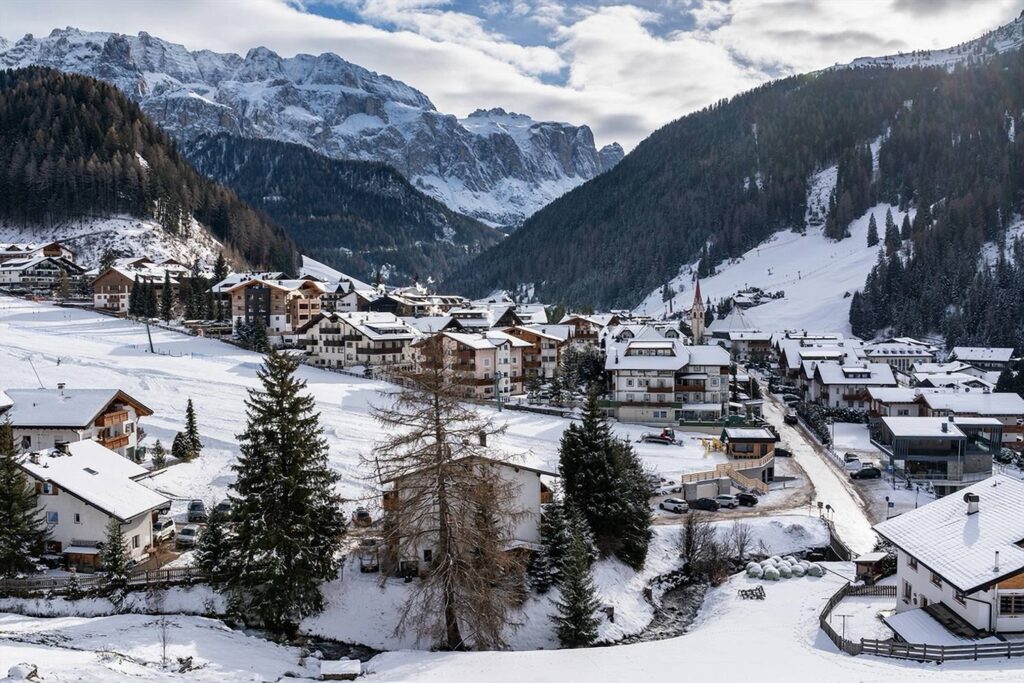
Val Gardena is one of the best-known ski destinations in the Italian Dolomites, and it’s easy to see why.
With three traditional mountain villages, an extensive network of ski runs and some of the most impressive scenery in the Alps, it’s a wonderful place to spend a week on the slopes.
For this itinerary, we’re using Selva di Val Gardena as our base, giving us easy access to the famous Sella Ronda, the Ciampinoi and Dantercepies ski areas, and the wider Val Gardena ski network.
Over seven days, we’ll explore different parts of the resort, take in some of its best-known runs, enjoy lunch in mountain huts and make time for the spectacular scenery along the way.
We’ll also include practical advice on ski passes, accommodation and getting around, so you can plan your own holiday with confidence.
Whether you’re an intermediate skier looking to explore more of the Dolomites or an experienced skier wanting a week of varied skiing, this itinerary will help you make the most of your time in Val Gardena.
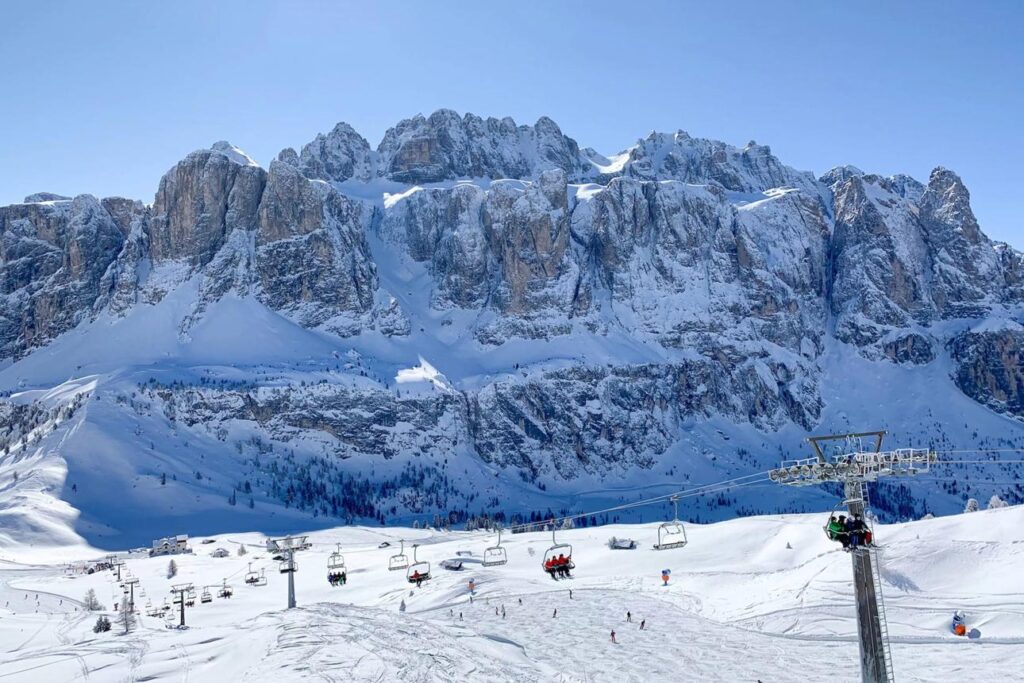
Understanding the Val Gardena Ski Area
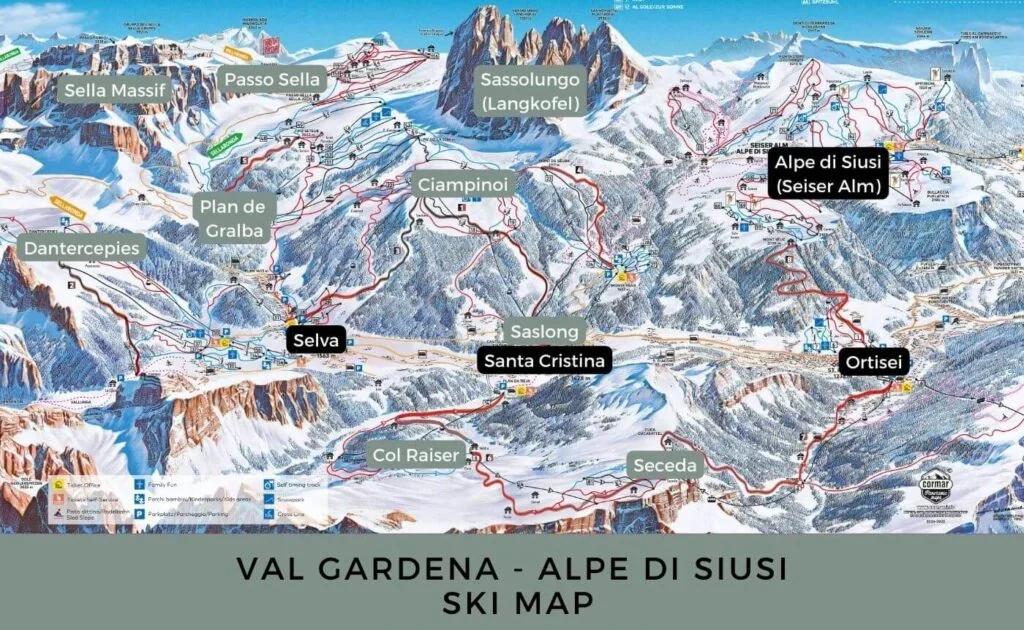
Before we get into the day-by-day itinerary, it’s worth understanding how the Val Gardena ski area is laid out.
Although the three villages of Ortisei, Santa Cristina and Selva are close together, each gives you access to different parts of the mountain.
Val Gardena is also part of the much larger Dolomiti Superski network, which means you can explore far beyond the local slopes during your stay.
The famous Sella Ronda ski circuit is directly accessible from Selva, making it an excellent starting point for exploring the surrounding Dolomite valleys.
We can plan your Dream Ski Trip to Europe: Custom Itineraries for the Perfect winter Holiday.
With over 25 years of experience skiing in over 50 different ski resorts in Europe, we can help you plan your perfect winter escape.
Planning a ski trip to Europe can be exciting, but choosing the right resort and organising the perfect itinerary can quickly become overwhelming.
That’s where we come in.
We offer a personalised planning service that helps you decide exactly where to ski, based on your style, budget, and experience.
“Plus, we can help you plan a fun week of European sightseeing around your ski trip, making your winter holiday easier, smoother, and full of unforgettable memories.”
“Let us plan your perfect trip with a custom itinerary designed just for you.
Fill out the form and let’s begin your dream.”
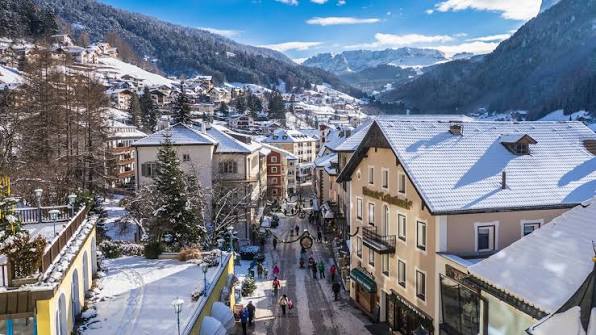
The Three Main Villages
Selva di Val Gardena
Selva sits at the head of the valley and is our chosen base.
From here, you can access the Dantercepies and Ciampinoi lifts, as well as the slopes towards Plan de Gralba and Passo Sella.
It’s particularly convenient for joining the Sella Ronda.
Santa Cristina
Santa Cristina is centrally located between Selva and Ortisei.
It provides access to the Saslong, Monte Pana and Col Raiser areas, with connections towards Seceda and the wider ski network.
Ortisei
At the other end of the valley, Ortisei provides access to Seceda and Alpe di Siusi.
Seceda is famous for its long, scenic descent towards Ortisei, while Alpe di Siusi is known for its gentler, more open slopes.
How Much Skiing Can You Do?
The Val Gardena and Alpe di Siusi ski area together have around 181 kilometres of pistes, with a good mix of easy, intermediate and difficult runs.
If you have a Dolomiti Superski pass, you can explore a much wider network of connected ski areas, including the Sella Ronda.
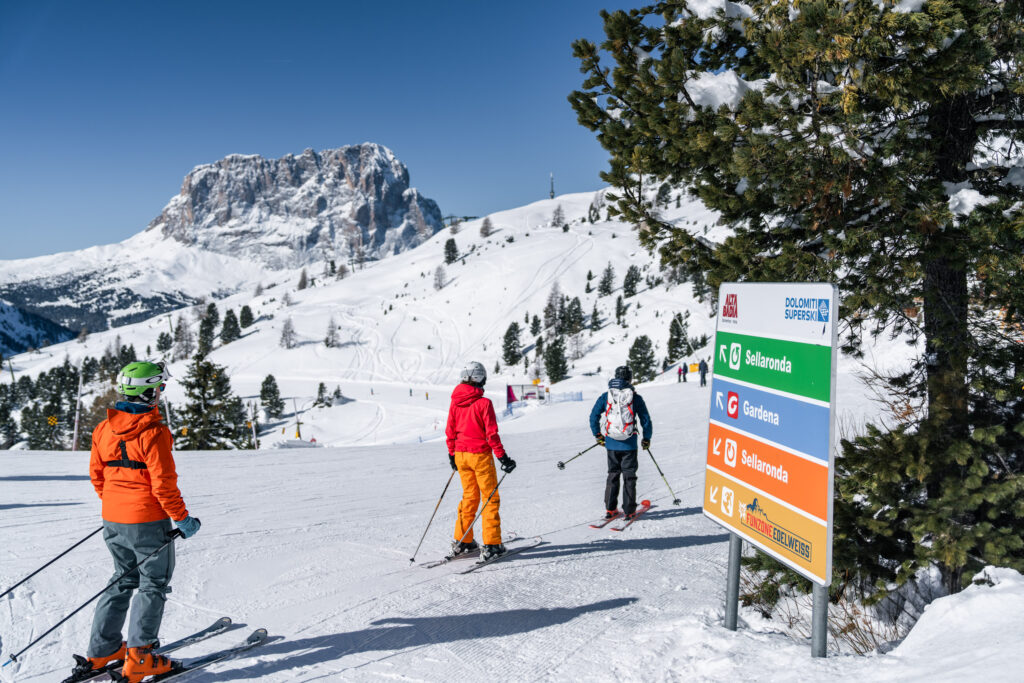
Your Day-by-Day Val Gardena Ski Itinerary
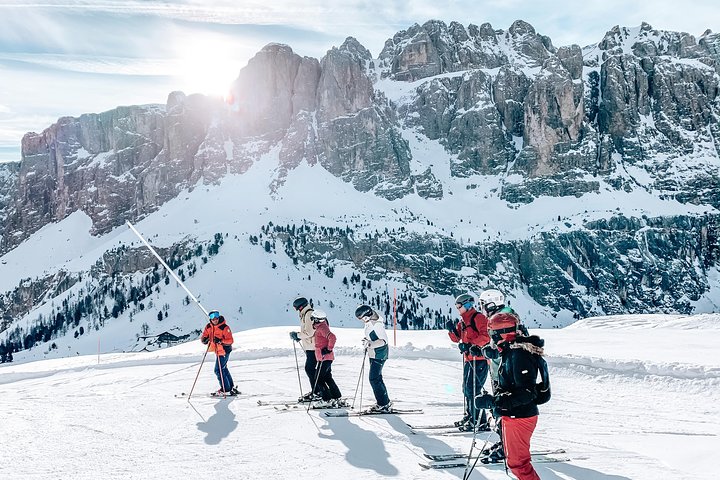
We’ll plan this around seven days in Selva di Val Gardena, with six full days of skiing and a little flexibility on the final day.
The aim is to explore the different sides of Val Gardena, include the Sella Ronda, and enjoy some of the fantastic mountain huts along the way.
I’ve designed this for intermediate skiers who are comfortable skiing red runs. Some days will be more demanding than others, and we’ll make sure there are options to adapt the routes.
Day 1 – Arrive in Selva and Get to Know the Local Slopes
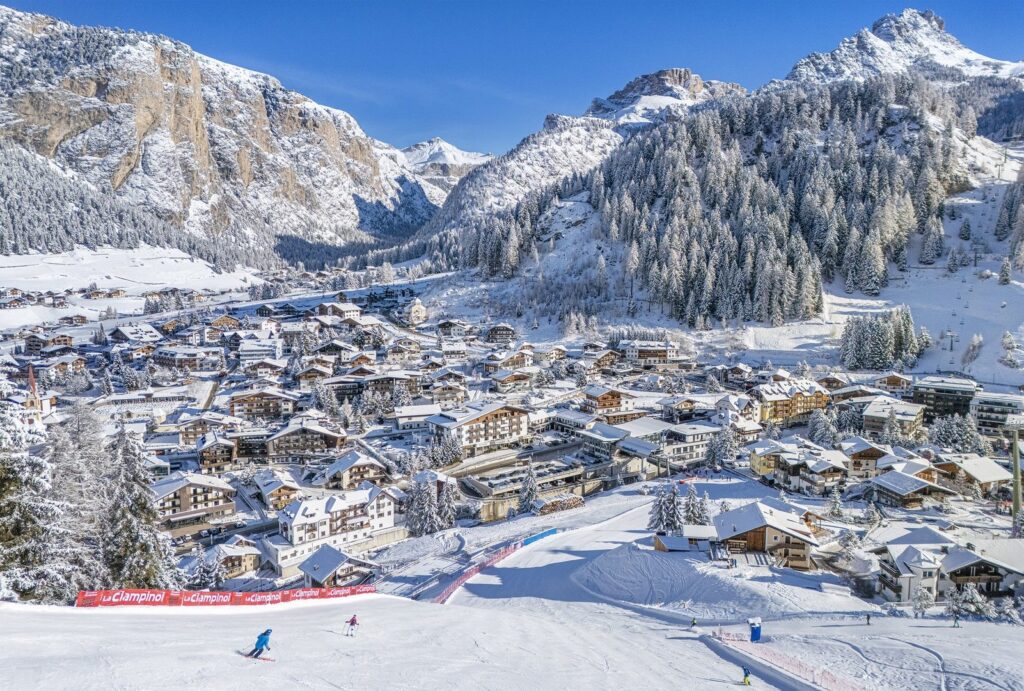
After arriving in Selva and checking into your accommodation, take some time to get familiar with the village and the ski area.
If you arrive early enough, collect your lift pass and head up towards Ciampinoi for a few gentle runs.
It’s a good opportunity to get your ski legs back, check your equipment and enjoy your first views of the surrounding Dolomites.
Don’t try to fit too much into your first afternoon.
You’ll have plenty of skiing ahead, and it’s worth getting an early night before the full days begin.
Our tip:
If you arrive late in the day, skip the skiing and enjoy a walk around Selva instead.
You can start fresh the following morning.
Day 2 – Explore Seceda and Col Raiser
Today we’re heading towards one of the most spectacular parts of Val Gardena: Seceda.
From Selva, ski towards Santa Cristina and use the local lift connections to reach the Col Raiser and Seceda area.
The Col Raiser gondola and the Gherdeina Ronda underground connection are useful parts of this journey, so check the current piste map before setting off.
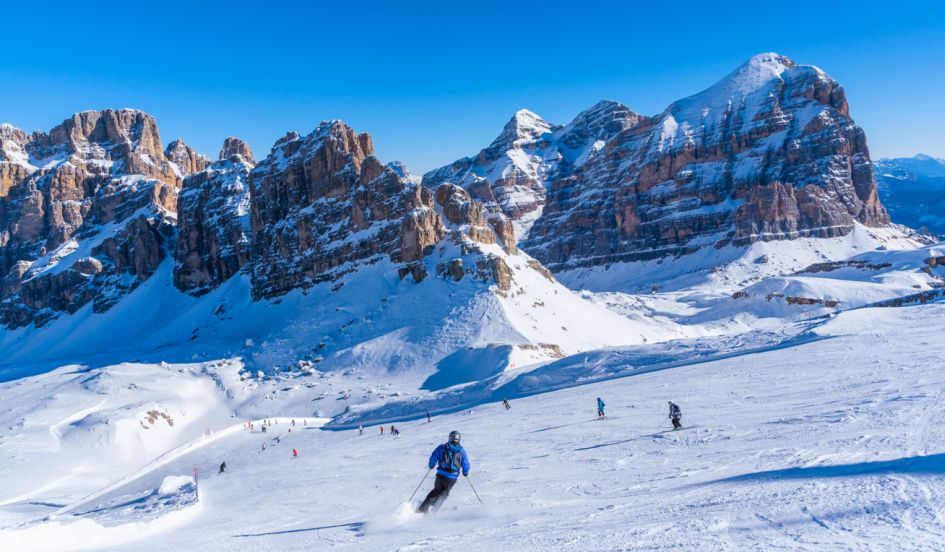
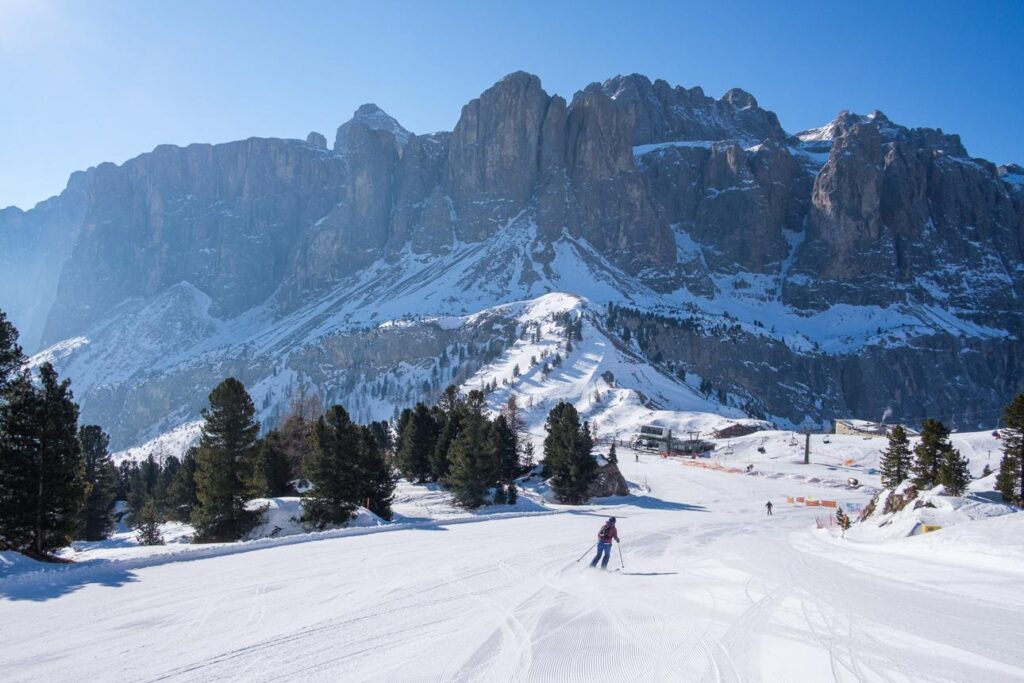
Once you’re up on Seceda, you’ll find wide open slopes and incredible views of the Odle mountain group.
It’s a wonderful area for intermediate skiers who enjoy long, sweeping runs.
One of the highlights is La Longia, the famous descent from Seceda down towards Ortisei.
At over 10 kilometres long, it’s the longest ski run in South Tyrol.
Allow plenty of time to enjoy it rather than rushing down.
After lunch, explore some of the surrounding slopes before making your way back towards Selva.
Keep an eye on lift closing times, particularly if you’re travelling across the valley.
Our tip:
Don’t miss the views from the top of Seceda. Even if you’re keen to get straight onto the runs, it’s worth stopping for a few photographs.

Day 3 – Ski the Sella Ronda
Today is one of the big days of the week. From Selva, you’re perfectly placed to ski the famous Sella Ronda, one of the best-known ski circuits in the Dolomites.
The circular route takes you around the Sella mountain massif, connecting four valleys and their ski areas:
Arabba
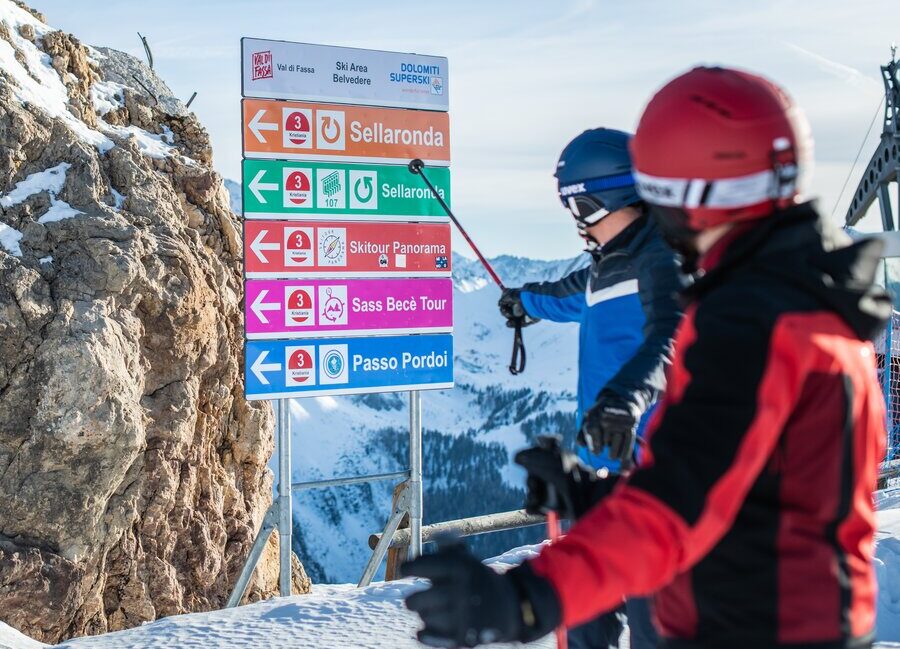
You can ski the circuit in either direction, following the orange signs for the clockwise route or the green signs for the anticlockwise route.
Both directions have plenty to enjoy, with a mixture of pistes, lifts and spectacular mountain scenery. Allow most of the day, particularly if you want to stop for lunch and take photographs along the way.
Our tip:
Start early and keep an eye on the time. You need to allow enough time to complete the circuit and return to Selva before the connecting lifts close.
Day 4 – Ciampinoi, Saslong and Plan de Gralba
After yesterday’s longer ski tour, today we’ll stay closer to home and explore more of the local Val Gardena slopes.
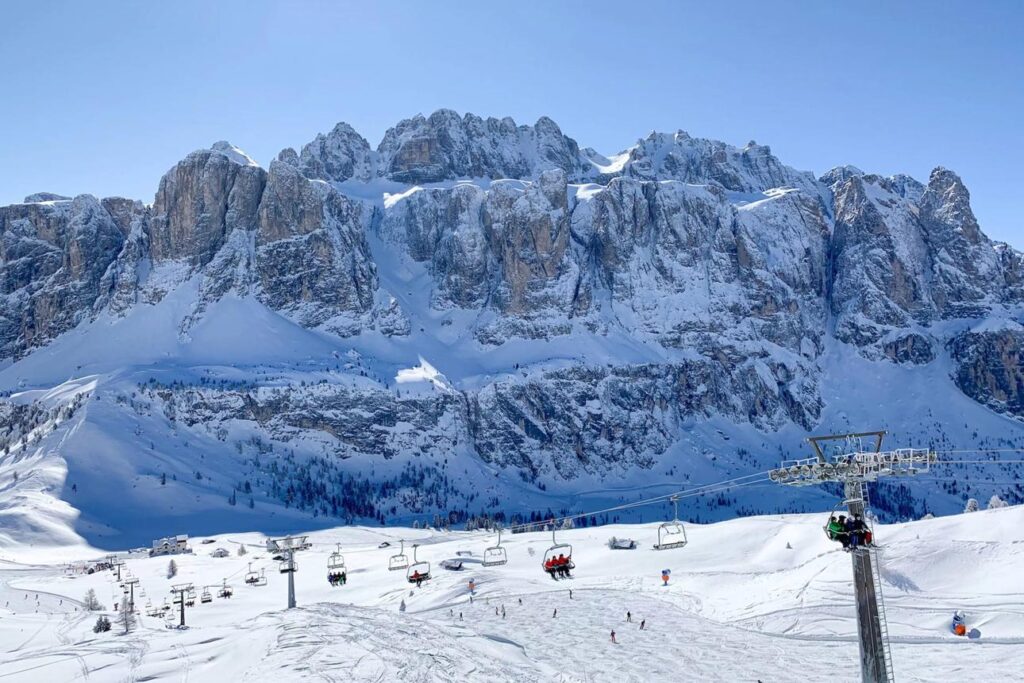
Start by taking the Ciampinoi gondola from Selva.
From the top, you’ll find several runs offering different levels of difficulty, with connections towards Santa Cristina and the Saslong area.
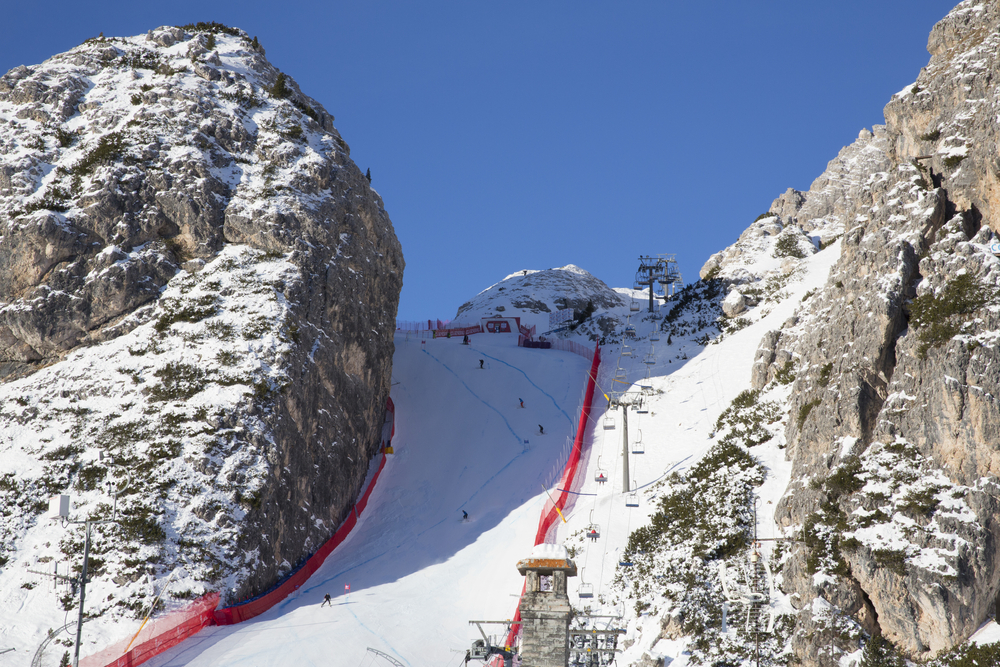
The Saslong is one of the most famous ski runs in the Dolomites, hosting the annual men’s Alpine Ski World Cup downhill race.
It’s a challenging piste, so stronger intermediate skiers may enjoy trying it, while others can choose easier alternatives in the surrounding area.
Later, head towards Plan de Gralba and explore the slopes beneath the Sassolungo massif.
This is a lovely part of the resort, with plenty of opportunities to stop for lunch and enjoy the mountain views.
Our tip:
If you want to ski the full Saslong, check the piste conditions first. It is not a run to tackle simply because it’s famous.

Day 5 – Spend the Day on Alpe di Siusi
Today we’re taking a change of pace and heading to Alpe di Siusi, Europe’s largest high-altitude Alpine meadow.
Unlike some of the steeper slopes around Selva and Ciampinoi, Alpe di Siusi is known for its wide, open pistes and gentler terrain.
It’s a lovely place to enjoy a relaxed day of skiing, particularly if you fancy a break from the more demanding runs.
The easiest approach from Selva is to travel across to Ortisei and take the gondola up to Alpe di Siusi.
Check the transport arrangements before you leave, as this is a separate part of the ski area rather than a direct ski connection from Selva.
Once there, spend the day exploring the network of slopes and enjoying the views towards the Sciliar and Sassolungo mountains.
Our tip:
Make time for lunch at one of the mountain huts.
Alpe di Siusi is a lovely area to slow down and enjoy the scenery rather than clocking up kilometres.
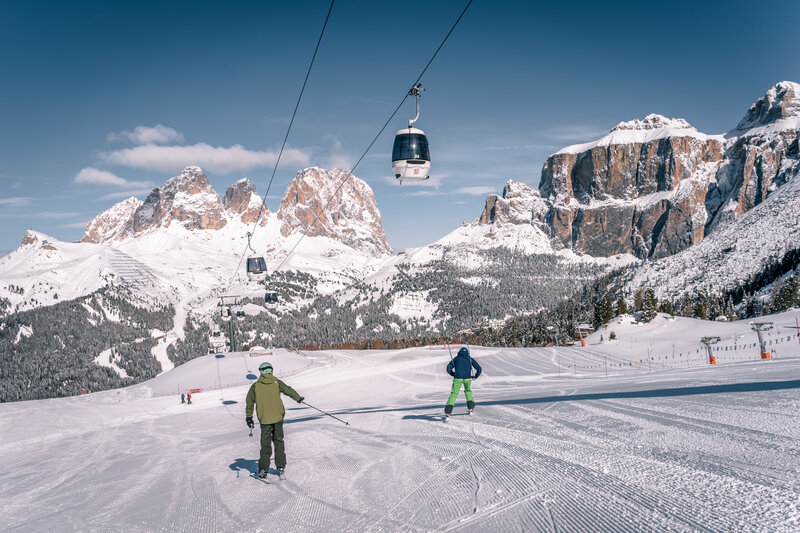
Day 6 – Dantercepies and the Passo Gardena Slopes
Today we’ll explore the Dantercepies side of Selva, which is another excellent area to spend a full day skiing.
Take the Dantercepies gondola from the village and head towards the slopes beneath the Cir peaks.
There are several runs to explore, including easier options and some more challenging pistes for confident skiers.
From this area, you can also ski towards Passo Gardena and enjoy the connections into the wider Dolomiti Superski network.
The scenery here is particularly impressive, with views across the Sella massif and the surrounding mountains.
It’s a great opportunity to enjoy some of the local runs without committing to another full-day circuit.
Our tip:
If you enjoyed the Sella Ronda earlier in the week, you’ll recognise some of the connections, but today you can take your time and explore the local slopes in more detail.
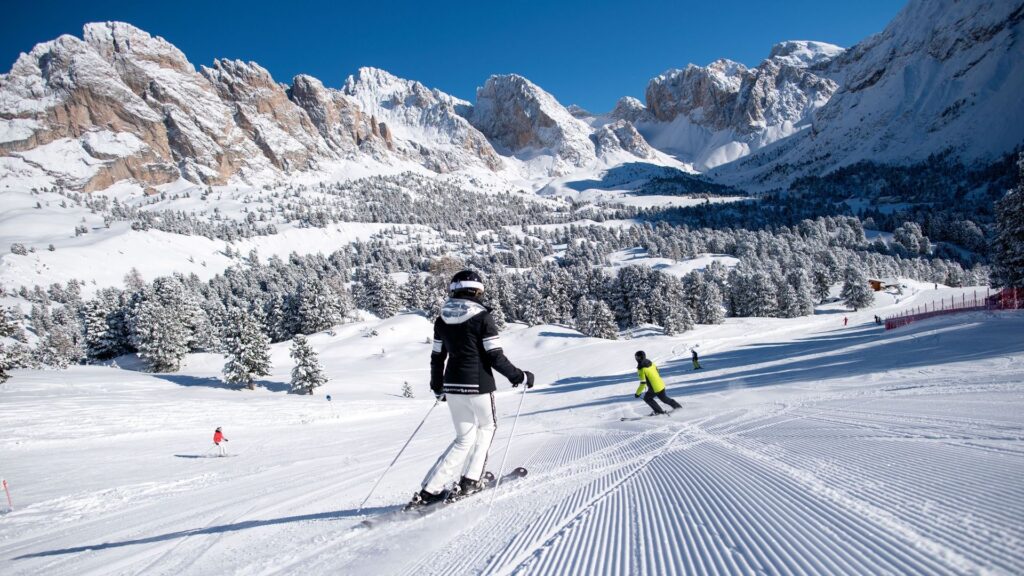
Day 7 – One Last Day on Your Favourite Slopes
For your final day, we’d leave the itinerary flexible.
By now, you’ll have explored several different parts of Val Gardena, so you can decide where you’d most like to spend your last few hours on the mountain.
Perhaps you’d like another run down Seceda’s La Longia, a few more laps around Ciampinoi, or a relaxed morning on the Dantercepies slopes.
If you haven’t had enough of the Sella Ronda, you could also revisit a favourite section rather than attempting the entire circuit again.
Finish the week with a long mountain-hut lunch and one last look at the Dolomites before heading back to Selva.
Our tip:
If you’re travelling home that day, check your departure time and leave enough room to return your equipment, pack and get to the airport or station.
You don’t want to spend your last morning watching the clock!
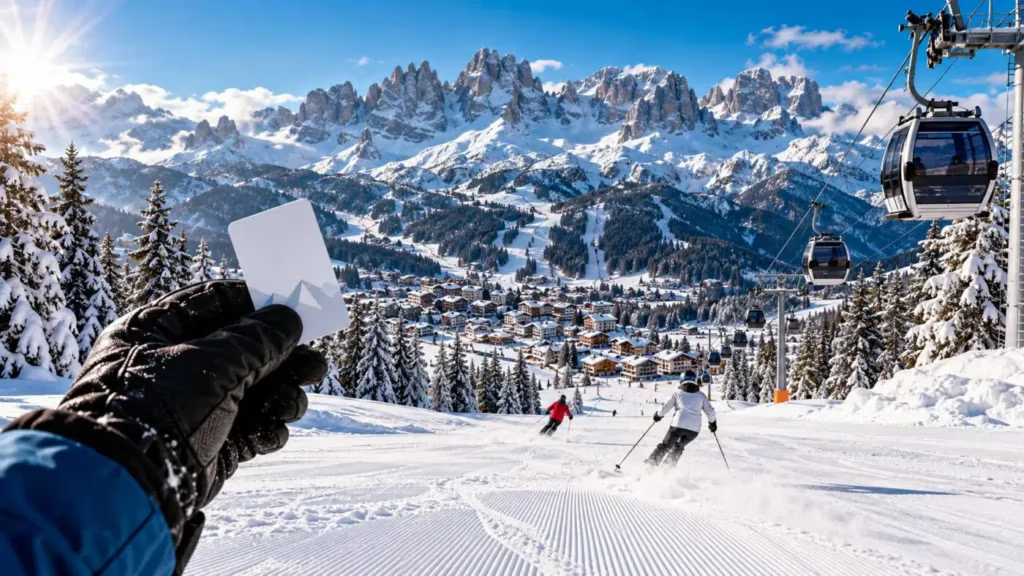
Ski Passes – Which One Do You Need for Val Gardena?
When planning a week’s skiing in Val Gardena, choosing the right lift pass is important.
There are two main options to consider: the Val Gardena / Alpe di Siusi pass and the Dolomiti Superski pass.
Which one is best depends on how much of the Dolomites you want to explore during your holiday.
Val Gardena / Alpe di Siusi Ski Pass
If you plan to spend most of your week skiing around Val Gardena, this local pass may be all you need.
It covers the Val Gardena and Alpe di Siusi ski areas, giving you access to the local lifts and pistes around Selva, Santa Cristina, Ortisei and Alpe di Siusi.
It’s a good option if you want to concentrate on the local slopes rather than exploring further afield.
Dolomiti Superski Pass
If you want to ski the Sella Ronda and explore other parts of the Dolomites, the Dolomiti Superski pass is the better choice.
It covers 12 interconnected ski areas, with approximately 1,200 kilometres of pistes and more than 450 lifts across the Dolomites.
With this pass, you can explore:
Arabba and Marmolada
And the other Dolomiti Superski areas.
For our seven-day itinerary, we recommend the Dolomiti Superski pass because we’re including the Sella Ronda and exploring beyond the immediate Val Gardena slopes.
Where Can You Buy Your Ski Pass?
You can purchase ski passes online through the official Dolomiti Superski website or at the ticket offices in the resort.
Buying online can save time when you arrive, particularly during busy periods such as Christmas, New Year and February half-term.
Our tip:
Before buying, check the current 2026/27 prices, pass conditions and any available online discounts. If you’re planning to ski the Sella Ronda, make sure you choose a pass that covers the full circuit.
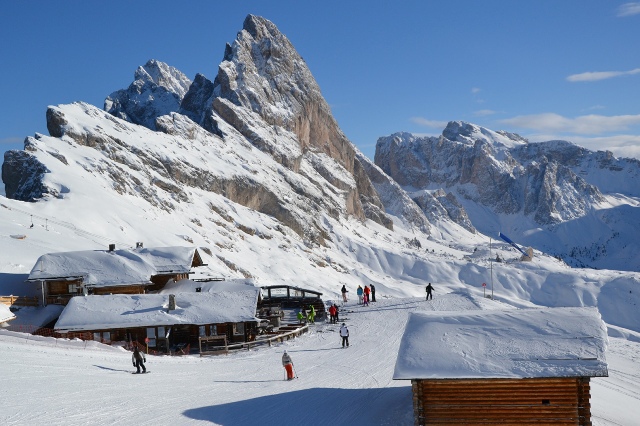
The Best Time to Ski in Val Gardena
Val Gardena generally has a ski season running from early December until early April, depending on snow conditions and the opening dates of individual lifts and slopes.
Each part of the season has something different to offer, so it’s worth choosing your dates carefully.
When Is the Best Time to Visit?
Early December – Opening Season
The ski season is scheduled to open on 4 December 2026, with lifts operating until 4 April 2027.
Early December can be a good time to find quieter slopes and accommodation offers, although snow coverage can be less reliable, particularly at lower elevations.
There is also a festive atmosphere in the villages as Christmas approaches.
Selva and Ortisei have Christmas markets, and the famous Saslong World Cup races bring extra excitement in December.
Late December to January – Christmas and Winter Skiing
Christmas and New Year are among the busiest periods in Val Gardena.
The villages are lively, the atmosphere is festive and the mountains are usually looking their best in winter.
January is generally a good choice if you prefer quieter slopes after the Christmas and New Year crowds have gone home.
Temperatures are cold, so wrap up warmly, particularly on exposed lifts and higher slopes.
February – Peak Ski Season
February is a popular month for skiing in Val Gardena, with good winter conditions and plenty of snowmaking support across the resort.
However, school holidays across Europe can make the slopes, lifts and accommodation particularly busy. If you have flexibility, try to avoid the busiest half-term weeks.
March – Longer Days and Spring Sunshine
March is one of my favourite times to consider a ski holiday in the Dolomites. The days are longer, the sun is warmer and you can enjoy lunch outside on a mountain terrace.
Snow conditions can still be very good, particularly at higher elevations, although lower slopes may become softer as the day progresses.
Val Gardena also has spring ski offers during March, so it’s worth checking the official deals before booking.
April – End of the Ski Season
The 2026/27 season is scheduled to finish on 4 April 2027. Early April can be enjoyable if the snow conditions are good, but some lower-altitude lifts and slopes may close earlier or have reduced operating periods.
Our Recommendation
For a good combination of snow conditions, quieter slopes and pleasant skiing weather, we’d look at mid-January or the first half of March.
If you’re planning your first visit and want the full winter experience, February is also a good option, provided you’re prepared for busier slopes and higher accommodation prices.
Our tip:
Whatever month you choose, check the snow report, lift opening information and weather forecast before travelling. Conditions can change considerably throughout the season.
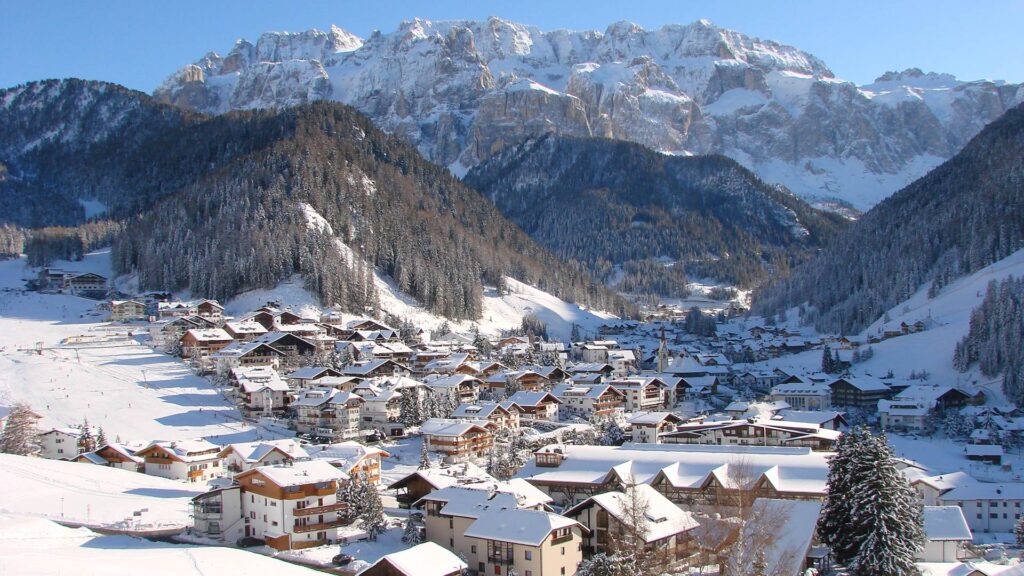
Where to Stay in Val Gardena
Choosing the right village can make a big difference to your ski holiday in Val Gardena.
Although Ortisei, Santa Cristina and Selva are all part of the same valley, each has a slightly different feel and offers access to different parts of the ski area.
For this seven-day itinerary, we’d recommend staying in Selva di Val Gardena.
It gives you convenient access to the Sella Ronda, Ciampinoi and Dantercepies, making it an excellent base for exploring the Dolomites.
However, if you prefer a quieter village or a different style of holiday, Santa Cristina and Ortisei are also worth considering.
Recommended places to stay in Selva di Val Gardena
I’ve picked a mixture of hotels, from high-end wellness stays to more straightforward accommodation.
Rather than label hotels as budget or luxury based only on their star rating, I’d compare prices for your travel dates before deciding.
Luxury accommodation
1. Granbaita Dolomites
A fie-star hotel in Selva with a wellness centre, swimming pool, restaurant and elegant rooms. It’s a good choice for travellers wanting a high-end stay close to the village and its ski facilities.
Excellent facilities for relaxing after a day on the slopes.
2. Savoy Dolomites Luxury Hotel
A four-star superior hotel with wellness facilities and particularly convenient access to the slopes. Its ski-in/ski-out location makes it an attractive option for guests who want to spend as much time as possible skiing.
Excellent for skiers who value convenient slope access.
Mid-range accommodation
3. Linder Cycling Hotel
A modern hotel in Selva with a garden, terrace and comfortable contemporary interiors. Despite its cycling focus, it also makes a useful base for exploring the Dolomites in winter.
A stylish option for travellers who want modern accommodation without necessarily choosing a traditional luxury hotel.
4. Hotel Monte44
A smaller property offering comfortable rooms, mountain views and a more intimate setting. It has received strong guest reviews for cleanliness, comfort and location.
Worth considering for travellers who prefer a smaller hotel rather than a large resort.
Budget-friendly accommodation
Best for skiers who want to keep accommodation costs down. Winter rates can still be substantial, particularly during school holidays.
5. Garni Martlhof
A guesthouse-style property in Selva with rooms featuring balconies and mountain views. Facilities include a garden, terrace and free private parking.
A simpler stay that may appeal to travellers who would rather spend their budget on skiing and exploring the Dolomites.
6. Hotel Belaval
A family-run three-star superior hotel in the La Selva area, offering a quieter setting, mountain views and practical facilities for winter guests.
A useful alternative for travellers looking for a smaller, less luxurious hotel in the Selva area.
Other accommodation in Selva di Val Gardena
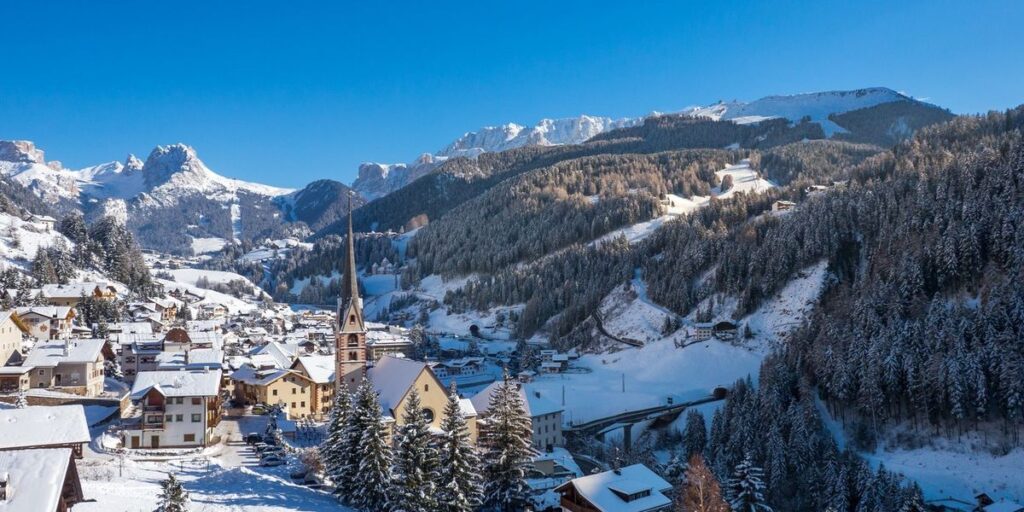
If you prefer to stay in another village
Ortisei
ADLER Dolomiti –
five-star hotel and spa in the pedestrian centre.
Hotel Angelo Engel –
family-run hotel with a central location and wellness facilities.
More accommodation in Ortisei
Santa Cristina
Hotel Touring –
a family-run hotel in the village centre.
Dorfhotel Beludei –
a smaller four-star superior hotel with mountain views.
Compare other Hotels in Santa Cristina
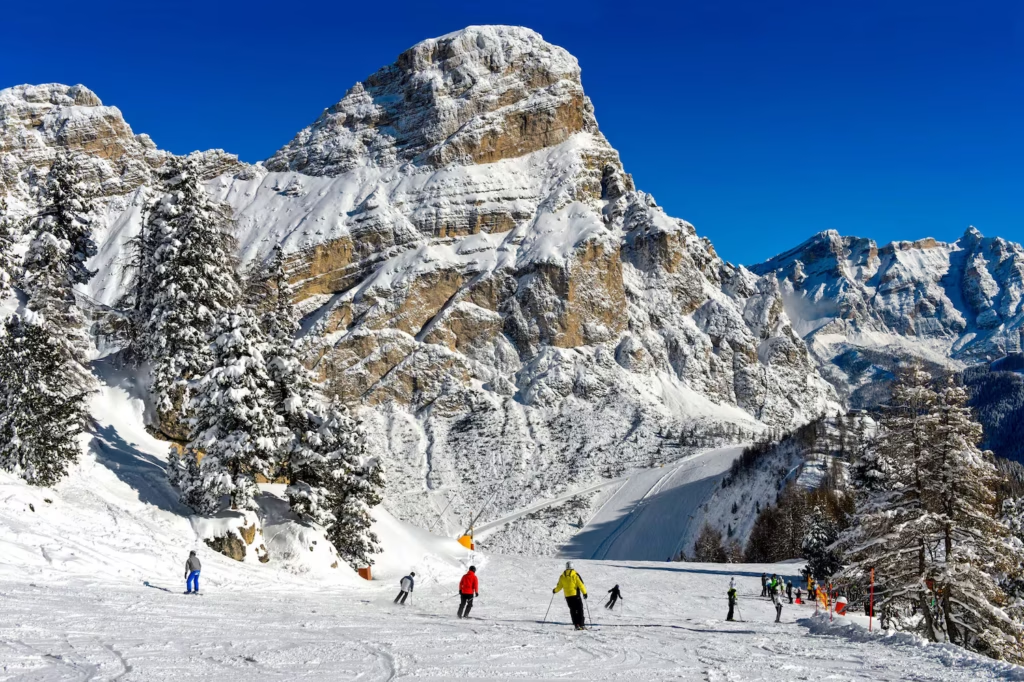
Read Our Full Guide On
Best Ski Areas in Val di Fassa, Italy: Where to Ski in 2026/27
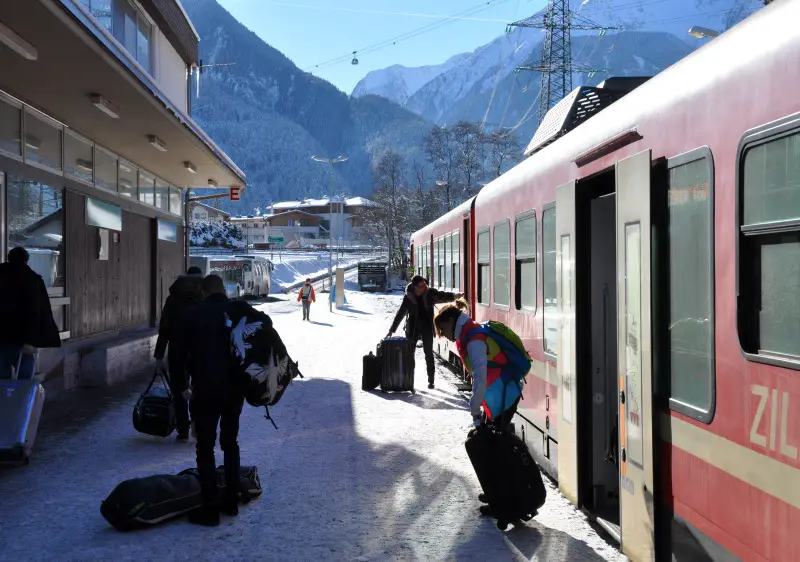
Getting to Val Gardena
Val Gardena is in South Tyrol, in northern Italy. The main village of Selva di Val Gardena is well connected by road, with several airports and railway stations within reach.
The best route will depend on where you’re travelling from and whether you plan to hire a car.
Travelling by Plane
There are several airports you can use when travelling to Val Gardena. The closest options include:
Airport | Approximate distance |
|---|---|
Bolzano | 40 km |
Innsbruck | 120 km |
Verona | 190 km |
Bergamo | 270 km |
Venice | 270–300 km |
Munich | 300 km |
Distances are approximate and depend on the route taken.
Bolzano Airport is the closest and can be particularly convenient if flight times suit you.
SkyAlps has published winter 2026/27 connections from several European cities, including London, Paris, Berlin and Copenhagen. Check the flight timetable before making your plans.
Travelling by Train
Travelling by train is a good alternative if you prefer not to hire a car.
The nearest railway stations are:
Ponte Gardena – approximately 18 km from Val Gardena.
Chiusa – approximately 23 km.
Bressanone – approximately 34 km.
Bolzano – approximately 40 km.
From these stations, you can continue to Selva by regional bus, taxi or pre-booked transfer. Bus 350 connects Val Gardena with Bolzano, Ponte Gardena and Bressanone.
For train journeys, visit Trenitalia or ÖBB to check connections and fares.
Airport Transfers
If you’re flying into one of the nearby airports, you can arrange a private transfer or look at shared shuttle services.
The official Val Gardena tourism website lists transfer options from airports including Innsbruck, Munich, Verona, Bergamo and Venice.
Visit Val Gardena’s airport travel information to compare the available options.

Driving to Selva di Val Gardena
If you’re hiring a car or driving from elsewhere in Europe, Val Gardena is reached via the Brenner motorway (A22).
Take the Chiusa/Val Gardena exit, then follow the SS242 towards Ortisei, Santa Cristina and Selva. The drive from the motorway exit takes you through some beautiful mountain scenery.
For more comfort and convenience, compare these car rentals: DISCOVER CARS
Our tip:
If you’re staying in Selva for a week and don’t plan to explore beyond the ski area, you probably won’t need a car.
Between the ski lifts, local buses and hotel transfers, getting around is quite manageable.
Getting Around Val Gardena
Once you’re settled in Selva, you can use the local bus network to travel between the three villages.
Many participating accommodation providers also give guests a Val Gardena Guest Pass, which allows free use of public transport in South Tyrol during the stay.
Check whether your accommodation includes it and which services are covered.
Practical Tips for Your Val Gardena Ski Holiday
After skiing in Europe for more than 25 years, we’ve picked up plenty of useful tips along the way. Some come from discovering wonderful resorts, while others come from learning how to make the most of our time on the mountain.
Here are a few things we’d recommend before heading to Val Gardena.
1. Book Your Accommodation Early
Val Gardena is a popular ski destination, particularly over Christmas, New Year and February half-term.
If you have specific dates or a hotel in mind, it’s worth booking well ahead.
Selva is especially convenient for this itinerary, so accommodation close to the lifts can save valuable time each morning.
2. Check the Lift Opening Times
When skiing across different parts of Val Gardena, it’s important to know when the lifts open and close.
This is particularly important when skiing the Sella Ronda or travelling between Seceda, Santa Cristina and Selva.
Always allow enough time to get back to your starting point before the connecting lifts close.
3. Start Your Ski Days Early
Getting onto the slopes early has several advantages. You’ll often find quieter pistes, freshly groomed snow and more time to explore before stopping for lunch.
This is especially useful on the Sella Ronda, where you’ll want a full day to enjoy the circuit without rushing.
4. Don’t Underestimate the Distances
Although the villages and ski areas are connected, Val Gardena covers a large area.
Some routes involve several lifts and connecting pistes, so it’s worth checking your route before setting off.
Download the official piste map or use the Dolomiti Superski app to help plan your day.
5. Make Time for Mountain Restaurants
One of the things we love about skiing in Italy is the mountain food.
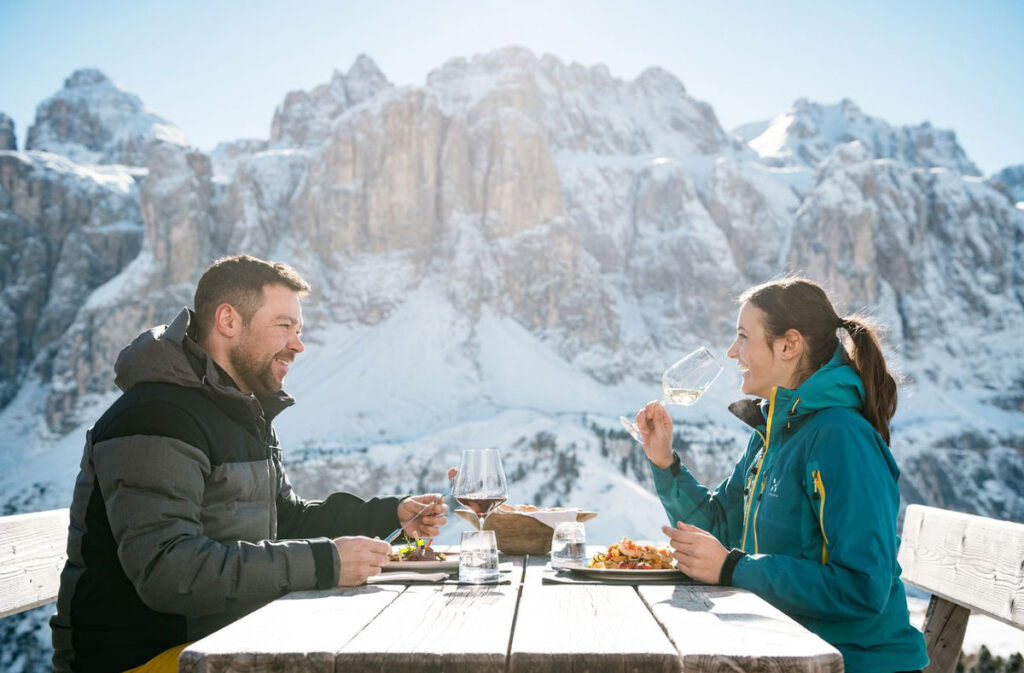
There are plenty of mountain huts and restaurants throughout Val Gardena where you can stop for a leisurely lunch. From traditional South Tyrolean dishes to Italian pasta and pizza, there’s plenty to enjoy.
Don’t spend your entire holiday rushing from one lift to another. Sometimes a long lunch with a mountain view is just as memorable as the skiing.
6. Dress for Changing Mountain Conditions
The weather can change quickly in the Dolomites, particularly at higher elevations.
We recommend dressing in layers, wearing good ski gloves and carrying a neck warmer. Sunglasses or goggles are essential, as the sunshine can be surprisingly strong on the snow.
7. Consider Ski Equipment Hire
If you’re travelling by plane, hiring your skis and boots locally can make the journey much easier.
There are several ski hire shops in Selva, and booking equipment online before arrival can save time during busy periods.
If you have your own boots, we’d always consider bringing them. Comfortable, well-fitting boots make a huge difference to your skiing holiday.
8. Check Your Ski Insurance
Make sure your travel insurance covers skiing and any activities you plan to enjoy.
Check that it includes mountain rescue, medical expenses and repatriation, as well as any exclusions relating to off-piste skiing.
It’s worth checking this before you leave home rather than discovering a gap in your cover on the mountain.
Frequently Asked Questions About Skiing in Val Gardena
1. Is Val Gardena suitable for intermediate skiers?
Absolutely.
Val Gardena has a good selection of blue and red runs, with plenty of opportunities for intermediate skiers to explore different parts of the resort.
Confident intermediates can also enjoy longer ski tours and the Sella Ronda.
2. How many days do you need to ski in Val Gardena?
We recommend spending at least five to seven days in Val Gardena.
A week gives you enough time to explore the local ski areas, complete the Sella Ronda and enjoy nearby destinations such as Seceda and Alpe di Siusi.
3. Can you ski the Sella Ronda from Selva di Val Gardena?
Yes. Selva is one of the best starting points for the Sella Ronda.
You can access the circuit directly from the village and choose either the clockwise or anticlockwise route around the Sella massif.
4. Which village is best to stay in Val Gardena for skiing?
Selva di Val Gardena is our first choice for a ski holiday because of its convenient access to the Sella Ronda, Ciampinoi and Dantercepies. Ortisei and Santa Cristina are also excellent alternatives.
5. What is the best month to ski in Val Gardena?
January and February are popular for winter skiing, while March brings longer days and more sunshine.
We particularly like the idea of mid-January or early March for a combination of good skiing conditions and fewer holiday crowds.
6. Do you need a Dolomiti Superski pass for Val Gardena?
Not necessarily.
The Val Gardena / Alpe di Siusi pass covers the local ski areas, while the Dolomiti Superski pass gives access to all 12 ski regions, including the Sella Ronda.
For this seven-day itinerary, we’d recommend the wider pass.
7. Is Val Gardena connected to other ski resorts in the Dolomites?
Yes.
Val Gardena is connected to several neighbouring ski areas through the Dolomiti Superski network.
You can ski the Sella Ronda and explore areas including Alta Badia, Arabba and Val di Fassa.
8. Is Val Gardena expensive for a ski holiday?
Val Gardena can be an expensive ski destination, particularly during Christmas, New Year and February half-term.
However, you can manage costs by travelling outside peak weeks, booking accommodation early, comparing different villages and choosing apartments or guesthouses instead of luxury hotels.
For more comfort and convenience, compare these car rentals: DISCOVER CARS
Should You Get Ski Travel Insurance?
(Short Answer: YES)
While ski resorts in Europe don’t legally require you to have travel insurance, buying ski-specific travel insurance is one of the smartest decisions you can make.
One accident or missed connection can cost far more than a full year of coverage.
If you want peace of mind on and off the mountain, ski travel insurance is essential.
As a traveller and skier myself, I’ve consistently found SafetyWing offers some of the best winter-sports coverage for international ski trips.
Best Ski Travel Insurance Companies for 2025/26
Two companies consistently stand out for skiers, each for different reasons.
1. SafetyWing
(Best for Long-Term Ski Travel & Affordability)
We personally use SafetyWing, and have since 2019.
It’s perfect for skiers spending multiple weeks or a whole season abroad.
You can get a Quote here.
When my wife broke her ankle skiing in Wengen, they were fantastic, they paid for all our expenses without any delay.
2. World Nomads
(Best for Adventure Coverage)
If you’re planning a trip that includes off-piste skiing with a guide, winter hiking, or multiple snow sports, World Nomads often provides broader adventure coverage.
They’re a favourite among travellers who want all activities covered under one policy.
Even experienced skiers will tell you — it only takes one icy patch to ruin both a knee and a bank account.
We Can Help Plan Your Adventure
Custom Ski Itineraries in Europe Designed For You
Final Thoughts
Val Gardena is a fantastic choice for a week of skiing in the Italian Dolomites.
With three lovely villages, an extensive network of pistes and access to the famous Sella Ronda, there’s plenty to explore without having to move accommodation.
We think Selva di Val Gardena makes an excellent base, particularly if you want to ski different areas throughout the week.
From the spectacular views at Seceda to the wide-open slopes of Alpe di Siusi and the famous runs around Ciampinoi, every day brings something different.
After more than 25 years of skiing around Europe, we’ve learnt that the best ski holidays aren’t always about covering the most kilometres.
It’s also about enjoying the mountain scenery, stopping for a good lunch in a mountain hut and having time to explore somewhere new.
We hope our seven-day itinerary helps you plan your own Val Gardena ski holiday.
Pack your skis, take your time and enjoy everything this wonderful part of the Dolomites has to offer.
Happy skiing!
Gary and Sally
Timeless Wanderers
PLAN YOUR SKI ADVENTURE
Booking a ski trip involves a range of reliable resources to ensure a smooth and enjoyable experience. I have listed below our favorite companies we use when we plan our ski holiday.
BOOK YOUR FLIGHT – GOING is a great search engine if you are flexible about your travel destination and dates. GOING is our new go to.
Booking.com– for accommodation, we rely on Booking.com for its extensive options and user reviews. We find they have the cheapest rates and offer payment options. In addition, VRBO is another terrific website for all types of accommodations.
Train Travel– to European ski resorts is convenient and scenic, popular trips include Glacier express to Zermatt, the Eurostar from London to the French Alps. We find Omio or Rail Europe are the best sites for booking trains in Europe.
Car Hire – we usually hire a car it offers us flexibility and convenience, allowing easy access to most resorts. Companies like Discover Cars or Rentalcars.com provide reliable options with winter equipment.
Travel insurance– Don’t ski without it. If you get hurt on the mountain it could cost you a small fortune if you’re not insured. We use SAFETYWING when my wife broke her ankle a few years ago in Wengen they were terrific.
Ski Equipment. – Bring your own ski gear, its usually cheaper and much better than renting, it ensures you have a perfect fit. Owning also saves time and money in the long run. Equipment like Skis, Pants and Jackets, Gloves, Ski-helmets and Thermal underwear” can all be bought online. You can purchase everything you need from BACKCOUNTRY
ARC’TERYX – is a go to reliable brand for outdoor adventure and travel, their wide range includes light weight durable, easy to clean travel gear.
Check out our RESOURCE PAGE for more additional planning.