Tailor-Made Tuscany Travel Planning for Discerning Travelers
Not a checklist. Not a template. A journey shaped by the place we call home.
There is a back road between Volterra and San Gimignano that most visitors never take.
It adds perhaps twelve minutes to the drive.
It passes through a village with a single bar, a church that is always open, and a view across a valley that stops you mid-breath even when you have seen it a dozen times.
We know that road because we live here. We added it to a client’s itinerary last spring and they wrote to us afterwards to say it was the moment that defined the trip.
That is what local knowledge actually looks like. Not a list of attractions.
Not a ranked collection of things to do. A quiet road, a small village, a view you would never have found on your own.
This is how we design custom Tuscany itineraries — and why living here changes everything about the experience we are able to offer you.
We Start With You — Not a Generic Template
Before we suggest a single town, we want to understand you. Not your budget category or your star rating preference, but how you actually travel.
Are you the kind of people who want to be in the main piazza for the evening passeggiata, or the kind who would rather eat early and watch the light fade from a countryside terrace?
Do you want the famous museums, or are you more interested in the market that happens on Tuesday mornings in a town most tourists pass through without stopping?
These questions matter because Tuscany is not one experience. It is many.
Florence and Lucca are forty-five minutes apart but they feel like different countries.
Siena is Gothic and dramatic. Montepulciano is refined and wine-soaked.
Volterra is ancient and slightly serious in a way that is deeply compelling once you settle into it.
Pienza is intimate and romantic in a way the bigger towns never quite manage.
We don’t ask where you want to go. We ask how you want to feel while you’re here. The answer to that question shapes everything else.
We Design Around How Tuscany Actually Works
On a map, Tuscany looks manageable.
In a car on a Tuesday morning in August, it is a different experience entirely.
The roads between hilltop towns are narrow and winding and genuinely beautiful — but they take longer than any mapping app suggests, particularly once you factor in the ZTL zones in historic centres that will charge you a fine before you have even parked.
Living here means we have made all the navigational mistakes (many times) so you do not have to.
We know which parking areas work for which towns.
We know which routes are worth taking slowly and which ones you can cover efficiently.
We know that arriving at San Gimignano after eleven in the morning in high season means fighting crowds for every photograph, and that arriving at eight means having the towers to yourself in the early light.
A well-designed Tuscany itinerary moves in a logical direction rather than zigzagging across the map.
A route that takes you from Florence through the Chianti countryside into Siena and down through the Val d’Orcia feels like a journey.
A route that takes you from Florence to Montepulciano to Lucca to Siena and back to Florence feels like exhaustion.
Tuscany rewards people who move slowly and in one direction. That’s the principle we build every itinerary around.
We Balance the Iconic With the Overlooked
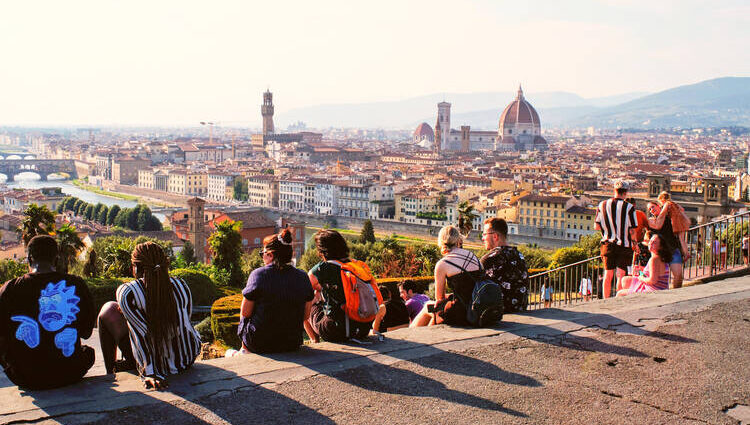
Florence is extraordinary and you should spend time there.
That is not a controversial position.
But a week in Tuscany that spends three days in Florence and four days rushing between Siena, San Gimignano, Montepulciano, and the Val d’Orcia is not a week well spent.
It is a highlights reel watched at double speed.
The towns that stay with people longest are often not the famous ones.
They are the places where you had an unplanned dinner and ended up staying two hours because the owner sat down with you.
The agriturismo outside Pienza where breakfast was served on the terrace and you watched the morning mist lift off the valley over your coffee.
The village square in a town whose name you had to look up afterwards because you had simply followed a signpost.
We build itineraries that make room for those moments.
That means not filling every day with major destinations.
It means pairing a big, stimulating city day with a quiet countryside evening.
We Help You Choose Where to Stay — And Why It Matters More Than People Realise
The single decision that shapes a Tuscany trip more than any other is not which towns to visit.
It is where to sleep. Accommodation is not just comfort — it is the anchor of the whole experience.
Get it right and the days fall into place naturally.
Get it wrong and you spend every evening driving further than you wanted to and every morning starting later than you planned.
Staying inside the walls of Lucca means you are in the town before the day visitors arrive.
You can cycle the ramparts at sunrise when they are almost empty and still reach breakfast before nine.
Staying outside Siena in the countryside means peaceful evenings and vineyard views — but also means driving to dinner and losing the spontaneity of being able to walk out and find something.
Staying in the Val d’Orcia means those postcard views every morning — but a car is non-negotiable and some of the best experiences require more forward planning.
We explain the trade-offs honestly, because living here means we have experienced them ourselves.
There is no universally right answer.
There is only the right answer for how you want to travel.
We Design Days That Feel Human
The most common mistake in Tuscany itinerary planning is trying to fit too much into each day.
We have seen itineraries — sent to us by people asking for help — that schedule five towns in a single day across a region where five towns might mean four hours of driving.
That is not travel. That is logistics with a scenic backdrop.
A day in Tuscany that works usually has one main focus, one or two supporting elements, and enough space in the middle to do something unplanned.
A morning in Siena.
Lunch in Monteriggioni at a trattoria where the pasta is made that morning.
A slow drive through the Chianti vineyards in the afternoon.
A glass of wine at the agriturismo before dinner nearby.
That is a day that feels full without feeling rushed. That is a day you will actually remember.
We Plan Around the Seasons — Because Living Here Teaches You To
Tuscany in late September feels completely different from Tuscany in late July.
In July the countryside is golden and dry and the towns are full and warm evenings go on until ten.
In September the harvest is happening, the light is softer and more horizontal, the tourist numbers drop noticeably after the first week, and the trattorias start serving the first truffles of the season.
In spring the landscape is green in a way that photographs rarely capture accurately — a vivid, almost implausible green that covers the hills between the hilltop towns and makes even an ordinary drive feel cinematic.
In winter the towns are quieter and the museums are emptier and the food is heavier and more comforting and the whole experience feels more local because most of the people around you are.
We plan differently for each season. Early morning sightseeing in summer and longer walking days in spring.
Harvest and truffle itineraries in autumn.
Food, atmosphere, and shorter days in winter.
Your itinerary should reflect the Tuscany you are actually going to arrive in, not a generic version of the region that exists at no particular time of year.
The Practical Side — Because It Matters More Than People Expect
Custom itineraries are not only about inspiration.
They are practical documents.
The difference between a beautiful holiday and a frustrating one is often not the destinations chosen — it is whether someone has thought through the logistics in advance.
We include driving times between towns, parking advice for each stop, guidance on which major sites require advance booking and which you can walk into freely, and notes on ZTL zones that catch visitors out every single season.
We flag the days when a particular town holds its market, and the restaurants worth reserving and the ones that are better found by wandering.
We tell you which sites need two hours and which need forty-five minutes and which are genuinely worth half a day of your time.
This is the part of travel planning that is unglamorous but essential.
It is also the part that most generic itineraries online skip entirely, because they are written by people who have visited rather than people who live with these logistics every week.
We Refine Until It Feels Right
The first draft of your itinerary is a starting point, not a finished document.
You might read it and realise you want to spend longer in one region and skip another entirely.
You might decide you would rather have one base for the whole trip than move every two nights.
You might want to add a cooking class or a wine tasting or remove a city you have already seen.
All of that is part of the process.
Custom means exactly that.
Your itinerary should feel like it was designed for you rather than adapted from a template someone else used last month.
We adjust and refine until it does.
Why Living Here Changes What We Can Offer You
There is a particular quality of knowledge that only comes from living somewhere over time.
Not just visiting it, not researching it thoroughly, but actually inhabiting it across seasons and years.
Knowing how the market in Lucca feels on a cold November Saturday compared to a warm June one.
Knowing which road to take out of Volterra when the main route is backed up with tour coaches.
Knowing which towns are magical for an overnight stay and which are better experienced as a two-hour stop.
That knowledge is what we bring to every itinerary we design.
Not a checklist of things to see, but an understanding of how Tuscany works — its rhythms, its roads, its seasonal character, its hidden places and its famous ones, and the particular way it reveals itself to people who are willing to slow down and pay attention.
If you want a Tuscany itinerary designed with that kind of understanding — personal, practical, and shaped by years of living in the region rather than passing through it — that is what we are here to offer.